
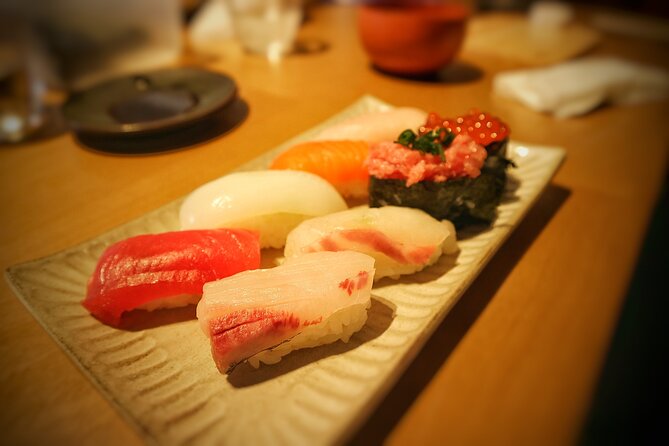
Review · TOKYO SUSHI CLASSES
Taisho Sushi Making Class in Tokyo
Fresh rice, precise cuts, zero fuss. This Taisho Sushi Making class teaches nigiri and gunkan with chef-style practice steps, right in central Tokyo. You start with model practice before touching real fish and rice, so even first-timers can keep up.
I love the vegan and vegetarian options, because you do not get pushed aside if you skip fish. You also get hands-on guidance, then a chance to eat your creations, with instruction in proper sushi-eating etiquette.
The main trade-off is time: it is an express workshop (listed at about 1 hour, marketed as a 90-minute experience), so you are learning the basics, not becoming a full sushi apprentice.
Key Highlights Worth Booking For

- Model grip practice first, so your nigiri shape and rice handling improve fast
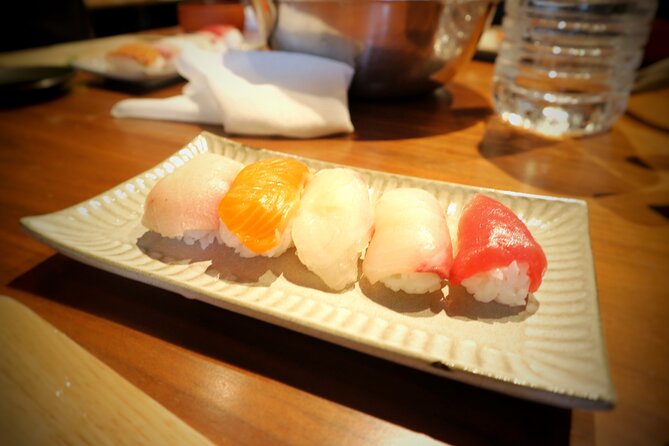
- Seasonal nigiri made with real fish and rice, with variety and quantity paced to keep you full
- Gunkan basics, including how to handle nori and which side matters
- Vegan and vegetarian options, so everyone can cook and eat
- Smallish class size (up to 50), which helps the room feel less chaotic
Where Taisho Sushi Making Fits In Your Tokyo Plan
Tokyo is famous for sushi, but your biggest problem after a few days is timing. You want the fix, but you also want something interactive, not just a rushed meal between train rides. This class is built for that reality.
The experience runs in Kōjimachi (Chiyoda City), starting at 1-chōme-4-4 Kōjimachi and returning back to the same meeting point. It is designed to be straightforward: a mobile ticket, near public transportation, and a single compact session rather than a day-long production.
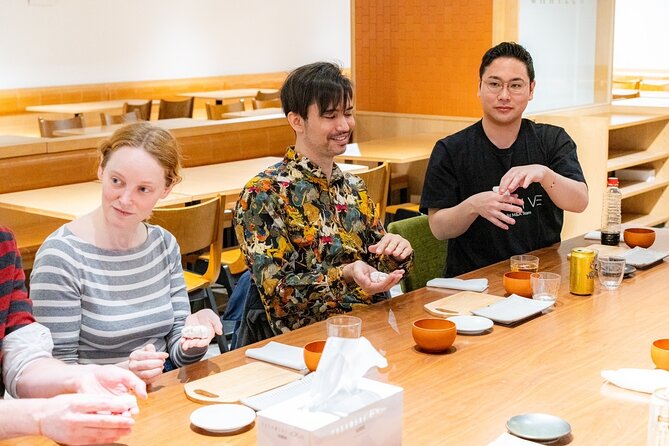
What I like most is the training approach. Instead of throwing you straight into “make sushi now,” you learn hand motions and grip using models first, then move to real ingredients. That matters because sushi is not just about taste. It is about texture, pressure, and shape. The class respects that reality.
More Tokyo tours and experiences for the shortlist


The Class Style: Chef Training Steps Without the Pressure
The provider describes the workshop as an authentic style similar to practices used in sushi chef training schools that can cost a lot more. You can feel the emphasis in the structure.
Here is the key sequence:
- You practice grip procedures using models
- You get a lecture on nigiri
- You repeat practice, then make nigirizushi using real fish and rice
- Later, you learn gunkan concepts and finish with eating
That first model step is more than a gimmick. Sushi making has physical habits that are hard to invent on the spot. If you’ve ever tried to shape rice and make it hold together neatly, you know how fast it can get messy. Starting with practice models lets your hands learn the basic grip and rhythm, so when the real rice shows up, it behaves more predictably.
For you, that translates into fewer “I ruined this” moments and more time enjoying the process and the results.
Nigiri Practice: How You Learn What Really Changes the Result
The nigiri part is the heart of the class. You will start with repeated practice, then move to real nigirizushi.
Step one: grip procedures (the model stage)
Before real fish and rice, you work through grip and handling with models. The class makes the point clearly: sushi is very difficult to do correctly out of the blue, so repeating this step is important.
This is where the workshop gives you real value. You are not just copying someone’s final product. You are building the physical habits that make sushi look right and eat right.
Step two: nigiri lecture and real fish
After the grip practice, you get a lecture on nigiri, then make nigiri with real fish and rice. The class also notes that the neta varies by season, which is exactly how sushi works in Japan. You are not getting a one-note demo. You are getting variety based on what’s available.
The pace is also designed to feel satisfying. The experience promises you can have a best variety and quantity of sushi in Japan, until you are full. That is important because an express class can feel like a snack. Here, the goal is that you finish with enough food to justify the time.






Sushi etiquette, not just sushi
You are also taught how to eat sushi properly, including etiquette. This is easy to overlook when you book a cooking class, but it matters. A lot of first-timers eat sushi like they’re handling regular food. Etiquette helps you appreciate texture and timing, especially when you’re making the pieces yourself.
Gunkan Lesson: Nori Sides, Rolling Tips, and a Fun Shape
If nigiri is about clean simplicity, gunkan is about shape and structure. It is described as something like a warship, and it is a great way to learn how sushi is built differently.
After practicing nigiri for a while, you receive a lecture on gunkan. The class mentions gunkan items like salmon roe and negitoro (crushed sea urchin), and also includes details that are usually not explained to casual diners.
Two practical tips you can actually use:
- You learn there is a front and back side to the nori
- You get tips on how to roll the nori
That matters because nori is not a generic wrapper. The side matters for texture, and rolling technique affects whether it stays tidy or turns brittle and awkward.
Even if you only plan to eat sushi after this and not cook at home, learning what you were doing wrong when ordering gunkan is useful. You start noticing why certain pieces hold together better.
What You Really Get for $109.01
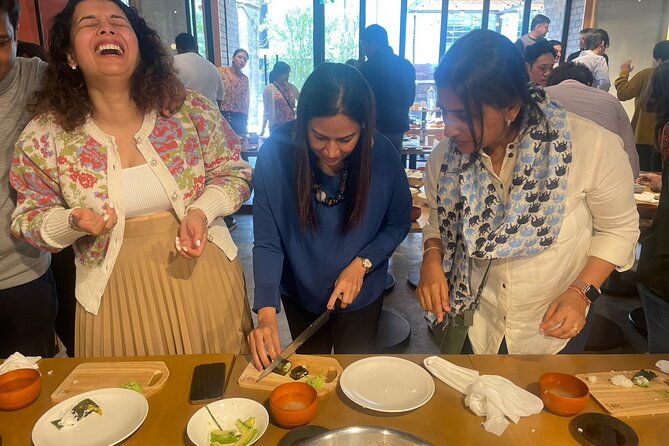
The price is $109.01 per person. At first glance, that may sound like a lot for one short session. But when you look at what is included, the value starts to make more sense.
You come empty-handed. The class provides all equipment and materials, which removes the usual “will I need to buy gear?” worry. You also get more than a one-time bite. The workshop ends with you eating what you make, so your money goes toward both instruction and a satisfying meal.
And the provider explicitly frames the method as training-school style. Even if you do not care about the comparison, the structure tells you the intent: model practice, then real nigiri and gunkan. That is more skill-building than a typical demo.
The final value check is simple. If you want a Tokyo sushi experience that feels hands-on, includes food, and gives you a few techniques you can reuse, this price is in the “reasonable for what you get” category.
Duration and Flow: Plan for a Tight, Focused Session
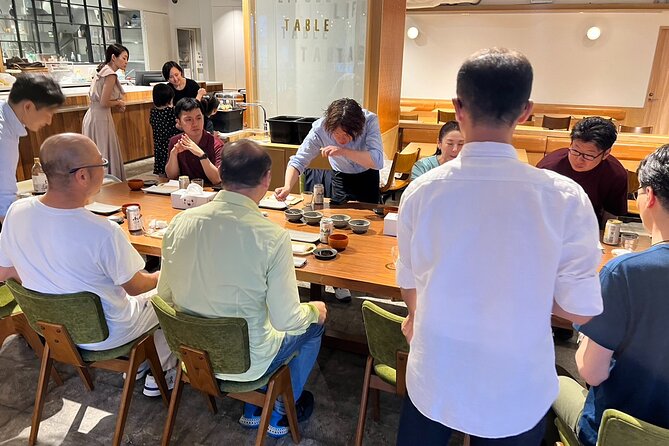
The experience is listed as 1 hour (approx.), but the provider also says it offers the best 90-minute sushi-making experience available. In practice, what this means for you is to expect an instruction-heavy session where you do not wander around. You’ll be working and then eating.
Because it ends back at the meeting point and stays in one location, you can treat this like a scheduled block in your day. You do not need a complicated route plan or a whole half-day.
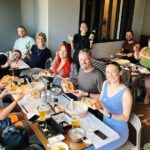
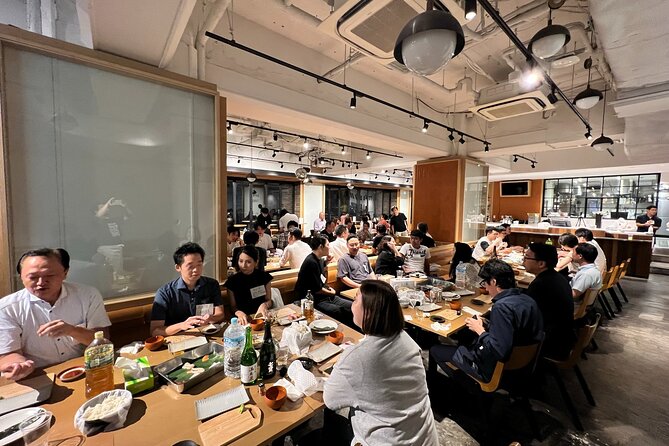
The class also has a maximum of 50 travelers. That is not tiny, but it is large enough to meet people and socialize, and small enough that you should not feel completely lost. For families and bigger groups, that size usually plays well because you can keep the pace moving without turning it into a free-for-all.
Where You Meet: Kōjimachi in Chiyoda City
You start at 1-chōme-4-4 Kōjimachi, Chiyoda City, Tokyo 102-0083, Japan, and you return there. That central location matters. Chiyoda City puts you in the part of Tokyo where getting around is usually manageable.
The experience is also described as near public transportation, which is one of those details that can save your schedule. Tokyo trains are easy once you’re oriented, and this kind of “one meeting point, no maze” class is ideal when you are juggling dinner plans later.
Who This Class Is Best For
This is a strong fit if you:
- Love sushi and want a hands-on way to understand how it’s made
- Are short on time, but still want more than a restaurant meal
- Prefer learning steps in sequence, starting with practice models
- Need vegan or vegetarian options and still want to cook and eat
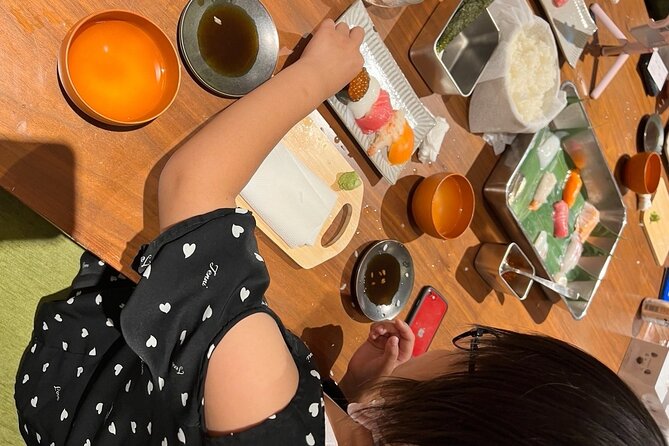
It is also a good choice if you’re traveling with family or a group, because the class structure supports people with different comfort levels. The model practice helps beginners catch up, and the final meal keeps everyone satisfied.
If you want a long, deep apprenticeship style over many days, this is likely not the match. The time limits mean you will learn fundamentals, not the full craft.
Should You Book Taisho Sushi Making?
Yes, with one smart expectation-setting note.
Book it if you want a fast Tokyo sushi skill boost: model practice for grip, nigiri with seasonal fish, gunkan with nori techniques, and clear etiquette, capped by eating what you make. The fact that it includes vegan and vegetarian options also makes it easier to bring travel companions with different diets.
Do not book it if you’re hoping for a multi-session, highly technical deep training program. It is express by design. You will leave with a stronger understanding and a few techniques, but not with chef-level precision.
FAQ
FAQ
How long is the Taisho Sushi Making class?
The duration is listed as about 1 hour.
Is the class really 90 minutes?
The provider describes it as a best 90-minute sushi-making experience, while the tour duration is listed as about 1 hour. Expect a short, focused session either way.
What is included in the class?
All equipment and materials are provided, and the experience ends with you eating what you make.
Do I need to bring anything?
No. The class is designed so you can come empty-handed, with equipment and materials provided.
Are vegan and vegetarian options available?
Yes. Vegan and vegetarian options are available for non-fish eaters.
What will I learn to make?
You will learn to prepare, roll, and eat sushi like a pro, including hand-made maki and nigiri basics. The class also includes nigiri practice and a gunkan lecture.
Do they teach sushi eating etiquette?
Yes. Instruction includes proper sushi-eating etiquette.
Where is the meeting point?
The start (and return) point is 1-chōme-4-4 Kōjimachi, Chiyoda City, Tokyo 102-0083, Japan.
Is there a limit on group size?
Yes. The activity has a maximum of 50 travelers.
Can I cancel for a full refund?
Yes, free cancellation is available. You can cancel up to 24 hours in advance for a full refund.
Is a mobile ticket used?
Yes. The tour includes a mobile ticket.
More Workshops & Classes in Tokyo

More Tour Reviews in Tokyo
Not for you? Here's more nearby things to do in Tokyo we have reviewed












Tokyo Sushi Classes, side by side.
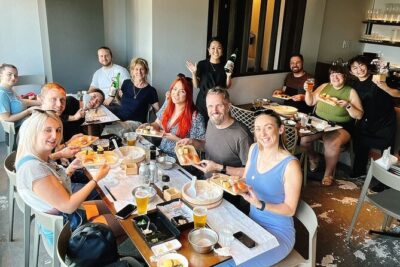 ★ 5.0Sushi Making Tokyo Roll and Authentic Japanese Sushi ClassFrom $593,971 reviews
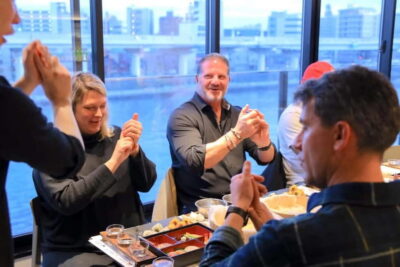 ★ 4.9Roll and Authentic Sushi Making Class in AsakusaFrom $581,957 reviews
 ★ 4.9Sushi Making Class in a Happi Coat near a Famous SpotFrom $421,377 reviews
 ★ 5.0Tokyo Sushi Making Class in Tsukiji with Professional ChefFrom $491,177 reviews
 ★ 5.0Tsukiji Fish Market Guided Tour and Sushi Making with Pro ChefFrom $104775 reviews
 ★ 4.9Tsukiji Fish Market Sushi Making Class with Pro ChefFrom $63506 reviews
 ★ 4.9Sushi Making ClassFrom $67390 reviews
 ★ 5.0Tokyo Tsukiji Fish Market Tour and Sushi Making LessonFrom $99390 reviews
This tour also belongs to