
Review · ASAKUSA TOURS
Tokyo: Asakusa Walking Tour with Japanese Comedian
Laughs help you learn Asakusa fast. This Asakusa walking tour turns temple and shrine sightseeing into a guided story you can follow without stress, led by stand-up comic Karate Comic Ryo. I like how you get a quick orientation plus a clean route through the Senso-ji area, and I like that the humor makes the history feel human, not like a lecture.
The one drawback is simple: it is a mostly on-foot tour in a place that can get crowded, especially near the main sights. If you want wide-open space for photos the whole time, plan around early hours.
At about 90 minutes, it is a smart way to see the big icons and the smaller details around them, without needing to study maps in advance.
Key highlights to know before you go
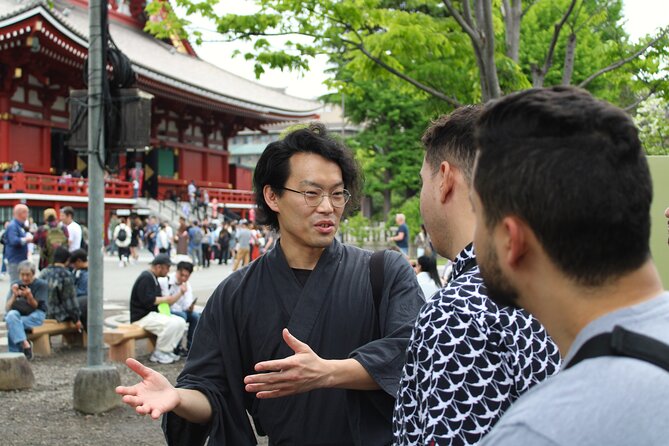
- A comedian guide (Karate Comic Ryo) who keeps the walk fun while explaining what you are looking at
- Small-group feel, capped at six people, with a maximum listed at eight
- A no-planning route that starts at the Asakusa Culture Tourist Information Center and ends at Sensō-ji main hall
- Temple-and-shrine focus with stops like Bentendo, the Bell of Time, Nitenmon Gate, and Asakusa Shrine
- A practical snack moment in Nishi-sando, with a chance to try melon-bread at 花月堂 (Kagetsu-do)
Why a comedian guide makes Asakusa easier to enjoy
Asakusa is one of those Tokyo neighborhoods where the sights are close together, but the meaning is not always obvious. With Karate Comic Ryo leading, you get the stories behind what you see, and you get them in an order that makes sense as you walk.
This is not just temple facts. The biggest win is that Ryo uses humor as a way to keep you paying attention. Even when you ask follow-up questions, he stays patient. One theme that comes up again and again is how easy it is to talk with him, including for families and teens.
English support looks strong based on visitor notes, and the pacing is friendly. You are not rushed through the gates like a checklist. You get time to stop, look up, and notice details that you would probably miss if you were solo.
You can also read our reviews of more walking tours in Tokyo

Start at the Asakusa Culture Center, then get your bearings
The tour begins at the Tokyo Cruise Asakusa Pier area, then moves to the Asakusa Culture Tourist Information Center. The first stop includes a visit to the 8th floor view for an overview of Asakusa.
This matters more than you might think. From up there, you can understand where the major streets and temple cluster sit in relation to you. After that, the walk feels logical, not like wandering. It is the travel equivalent of reading the map first, but without the headache.
Admission is free at this stop, and the time is short, about 10 minutes. That makes it a good opener, especially if you want to start strong and settle into the neighborhood quickly.
Kaminarimon and Nakamise Street, the easy entrance to old Tokyo
Next comes Nakamise Shopping Street, specifically the Kaminarimon area. This is the classic entry point into the Sensō-ji approach.
You get a chance to absorb the vibe right away: lantern-and-shopping-street energy, people moving in both directions, and a steady build toward the temple complex. The tour keeps this part compact at around 10 minutes, which is helpful when you are trying to avoid getting stuck in the thickest crowds.
Then it transitions cleanly into the religious landmarks. That change of pace is part of what makes the tour work. You go from shopping street intensity to calm temple details without feeling like you are switching activities mid-chaos.
Bentendo, the Bell of Time, and the statue details you will remember
Once you step into the central temple area, the tour focuses on specific spots that most visitors walk past without really noticing.
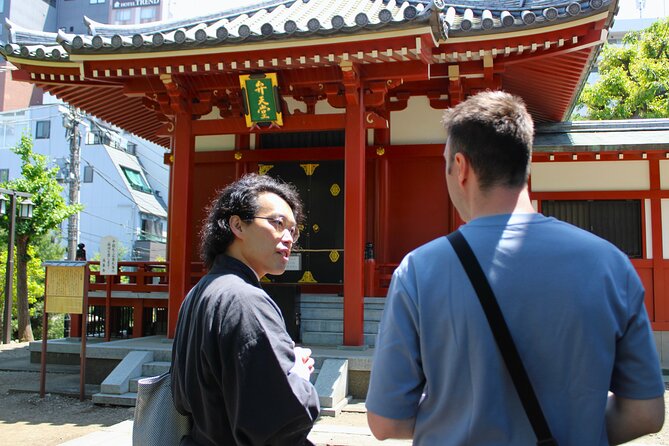
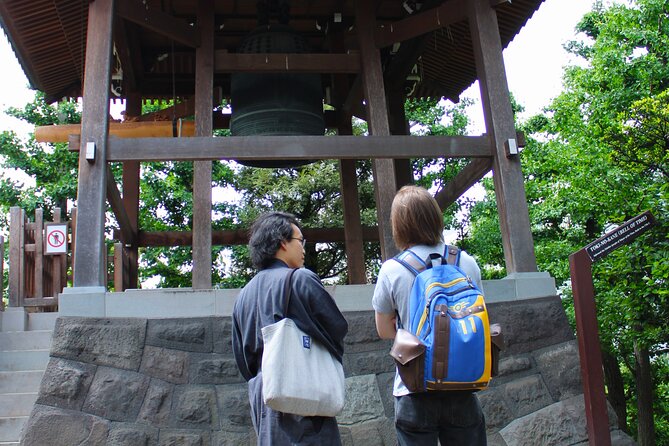
At Bentendo, you get a short stop to see the temple hall linked to the deity of art and prosperity. Then you move to the Bell of Time, located next to Bentendo. The Bell of Time is tied to Edo period life, when monks rang it regularly to let people know the time between roughly the 16th and 18th centuries.
These short stops are where the guided element pays off. The Bell of Time is small compared to the bigger headline structures, but the story gives it weight. You understand why it existed and what it meant for daily schedules.
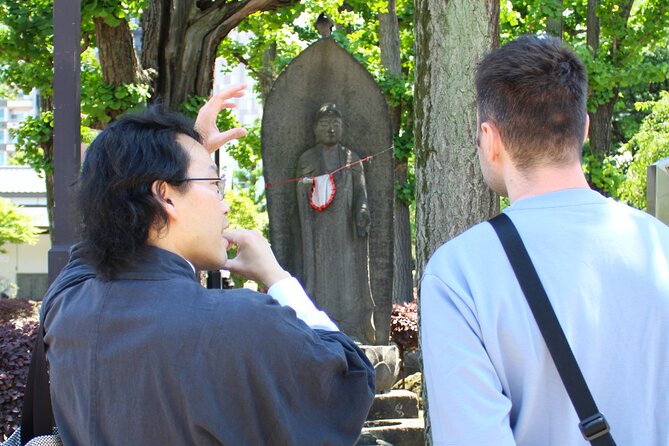
Another highlight is Nisombutsu. This spot is described as a calm area with two bronze statues and four stone statues of Buddhist deities, constructed in the 17th century. That is the kind of detail that sounds dry until someone points it out and tells you what you are looking at.
Everything at these stops lists free admission. So you are not paying for entry again and again, you are paying for interpretation and time.
Nitenmon Gate and Asakusa Shrine: power, tradition, and symbolism
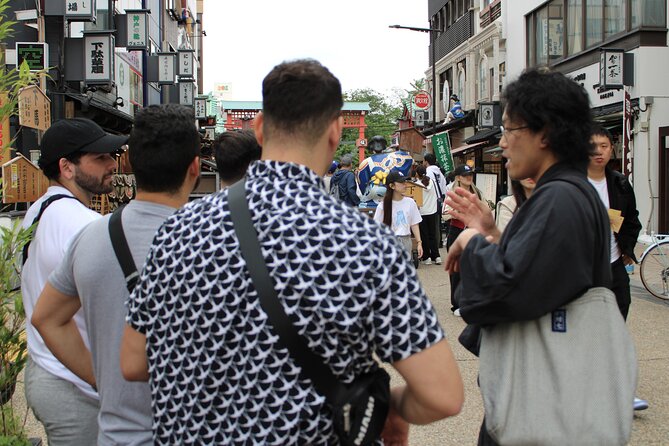
Nitenmon Gate is one of the best named stops on the route, and for a reason. To the right of the main hall, it is listed as a National Cultural Property in Japan, and it has a strong connection to the Shogun era. The gate was used as the Shogun’s gate, meaning only the general was allowed to pass.
This is a great moment to practice slow looking. The architecture is part of the story. If you only glance while walking past, you will miss what makes it special.
Right after, the tour shifts to Asakusa Shrine, which is connected to Sensō-ji’s origins through three deities. There is also mention of a garage for three large portable shrines that are carried through the area during local events.
That last detail is useful because it helps you connect the shrine complex to the living neighborhood around it. You are not just seeing buildings. You are seeing parts of the system that keeps traditions moving.






Yogodo and Awashimado: calmer stops with less obvious value
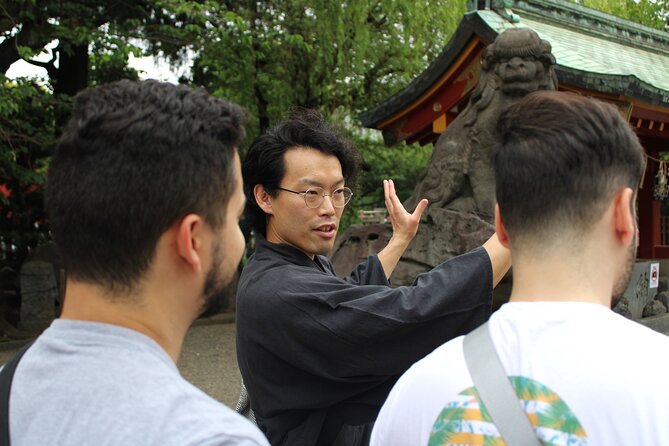
After Nitenmon Gate and Asakusa Shrine, the itinerary includes two additional temple-area stops: Yogodo and Awashimado. Each one is short, about 5 to 10 minutes.
What you can expect is a slower feel for the surroundings. These are not the loudest headline spots. They are the kind of places where a guide helps you notice the atmosphere and the religious layout instead of rushing to the most photographed points.
This is also where Ryo’s question-friendly style helps. If you care about how Buddhism and Shinto fit together in one neighborhood, these stops are often the moments where conversation gets more natural. The tour is paced so you are not stuck only listening. You can ask, look, and then continue.
Nishi-sando melon-bread and the gates that frame the main hall
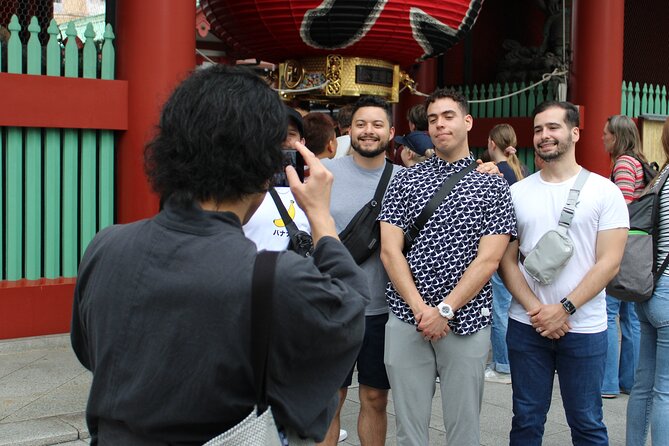
After walking through the temple complex and its quieter corners, the tour takes you toward the Asakusa Nishisando area.
This stop includes a practical food option. If you want a snack, the tour can drop by 花月堂 (Kagetsu-do) in Nishi-sando Shopping Street to try melon-bread. From the experience notes, that melon-bread recommendation lands well. It is a simple, local treat that fits perfectly into a one-and-a-half-hour outing.
Then you reach Hozomon, another gate landmark. It is described as having a pair of guardian statues in front of it. That framing is important because it guides your eye toward the heart of the complex.
Finally, the tour ends at Sensō-ji main hall. Sensō-ji is listed as Tokyo’s oldest temple with about 1,400 years of history, and the tour includes storytelling tied to Kannon Bodhisattva.
This is the finish line, but it is also a useful landing spot. If you want to keep exploring after the tour, you are already in the center of the action, without needing to figure out where you are on your own.
Some details you might hear along the way include explanations pointing out discreet, easy-to-miss elements. There are also mentions of a large Chinese character view and a story about paper fan tradition connected to a festival memorial. Those are the kinds of moments that make a guided walk feel worth it, even after the photos are done.
Pacing that works, plus time for photos and questions
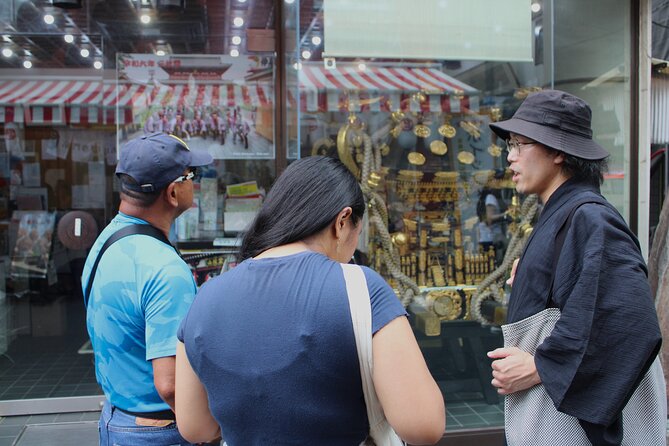
The duration is about 1 hour 30 minutes, approx. That length is ideal for two reasons.
First, it is short enough to avoid turning into fatigue. You cover a real section of Asakusa, but you are not stuck walking all day. Second, it gives you time to stop at the key points instead of speed-walking through them.
A common highlight from the experience notes is that the pacing feels right, with time to take photos. You also get room to talk. Ryo is described as patient, and people were able to ask a lot of questions while walking.
If you are the kind of traveler who likes to understand what you see before you move on, this format fits you. If you like to ask, listen, then ask again, a small group helps that flow.
The group size is part of why this works. The tour is small and capped at six people, with a maximum listed at eight. That keeps the guide accessible, and it helps with conversation.
Price and value: what $37.99 buys you in real time
The price is $37.99 per person. On paper, that is not just about sightseeing, it is about buying a guide plus a route plus interpretation.
Here is why the value can be strong:
- The major stops are listed with free admission tickets, so you are not stacking extra entry costs
- The guide brings context that you would otherwise need to research on your own
- The small-group format keeps you from feeling like a passenger on rails
The experience also lists mobile ticket access and mentions group discounts. Even if you only care about your own ticket, the mobile setup usually means less hassle once you arrive.
One more value factor is what the guide does with your attention. Instead of handing you facts and walking away, he points out what to look for and why it matters. When you leave with a mental map of what is Buddhist, what is Shinto, and what is tied to historical life, the price starts to feel reasonable fast.
Timing: start early for calmer streets and better photos
Timing is the cheat code for Asakusa.
One practical tip from the experience notes is to start in the morning. A starting time around 8am was used successfully to beat crowds and heat. By about 9am, more people show up. If you want a quieter Sensō-ji approach with fewer photo interruptions, choose an earlier slot.
There is also a note that markets open around 10am, so if your goal is maximum street buzz, you might prefer a later start. If your goal is smoother walking and fewer bodies in your frame, go earlier.
If you like flexibility, the guide also mentions being able to start a bit earlier if it helps guests. So if you are planning your day tightly, ask about timing when you book.
Who this tour fits best, and who might prefer DIY
This tour is a great match if you want a first-rate introduction to Asakusa without turning it into a full-day research project.
It fits especially well if:
- You are visiting Sensō-ji as a must-see and want more than surface-level photos
- You like guides who explain details and handle questions calmly
- You are traveling with teens or family and want humor plus context
- You want to avoid getting lost in a temple neighborhood with lots of gates and side areas
It might be less ideal if you strongly dislike crowds or you prefer long, unscheduled wandering with zero structure. Even in a small group, you still end up in the center of a famous temple area where foot traffic is part of the deal.
Also, it is mostly walking. The route is short enough for most travelers, and the tour lists that most people can participate. But if you have limited mobility, you will want to think carefully before choosing a walking tour format.
Should you book Karate Comic Ryo’s Asakusa walking tour?
If you want Asakusa done the smart way, I think this booking makes sense.
Book it if you like small-group attention, want the route solved for you, and enjoy learning through stories that include humor. You will see the major landmarks, plus you should come away noticing details you would have missed on your own, from gates to statue groupings and the small cultural traditions tied to the area.
Skip it only if you hate walking, dislike crowds, or you prefer a totally self-guided experience with no guide at all. Otherwise, this is a solid value, especially when you pick an early time slot and bring curiosity.
FAQ
How long is the Tokyo Asakusa walking tour with Karate Comic Ryo?
The tour lasts about 1 hour 30 minutes.
Where does the tour start and where does it end?
It starts at Tokyo Cruise Asakusa Pier (1-chōme-1-1 Hanakawado, Taito City, Tokyo) and ends in front of the main hall of Sensō-ji Temple (Sensō-ji 2-chōme-3-1, Asakusa, Taito City, Tokyo).
What group size should I expect?
The tour is capped at six people, and the maximum listed for the experience is eight travelers.
Which major sights are included?
The walk includes stops around Asakusa Culture Tourist Information Center, Nakamise Shopping Street at Kaminarimon, several parts of the Sensō-ji area (including Bentendo, the Bell of Time, Nisombutsu, Nitenmon Gate, Asakusa Shrine, Yogodo, Awashimado, and Hozomon), plus a stop in Nishi-sando shopping street, ending at Sensō-ji main hall.
Are admission tickets required for the stops?
The itinerary lists admission ticket free for the stops included in the tour.
Can I cancel for a full refund?
Yes. You can cancel up to 24 hours in advance for a full refund. If you cancel less than 24 hours before the start time, the amount paid is not refunded.
More Walking Tours in Tokyo

More Tours in Tokyo


More Tour Reviews in Tokyo
Not for you? Here's more nearby things to do in Tokyo we have reviewed












Asakusa Tours, side by side.
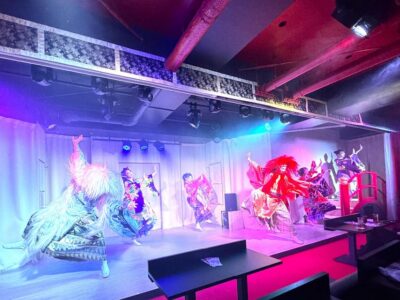 ★ 4.8Japanese Dance Cabaret Theater Asakusa-Kaguwa TicketFrom $492,270 reviews
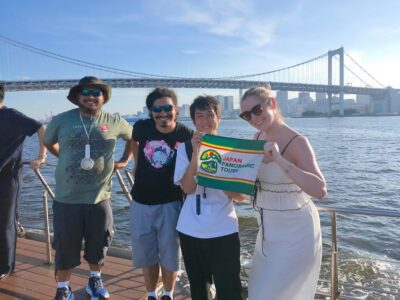 ★ 4.7Meiji Shrine, Asakusa, Skytree Bus Tour and CruiseFrom $1221,986 reviews
 ★ 4.9Roll and Authentic Sushi Making Class in AsakusaFrom $581,957 reviews
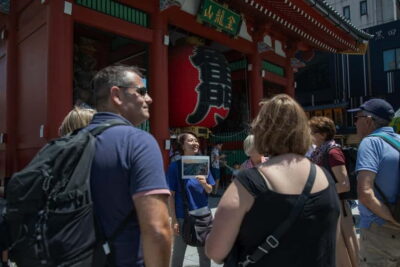 ★ 4.8Asakusa Walking Tour with Sensoji Temple VisitFrom $221,583 reviews
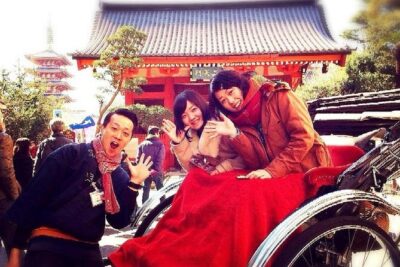 ★ 5.0Tokyo Asakusa Rickshaw TourFrom $421,375 reviews
 ★ 4.5Tokyo Panoramic 1 Day: Meiji Shrine, Asakusa, Odaiba and SKYTREE®From $851,222 reviews
 ★ 5.0Tokyo Go Kart: Asakusa, Skytree, and Akihabara **IDP MUST**From $99988 reviews
 ★ 4.7Asakusa, Skytree & Akhihabara Go-Kart City ExperienceFrom $96761 reviews
This tour also belongs to