
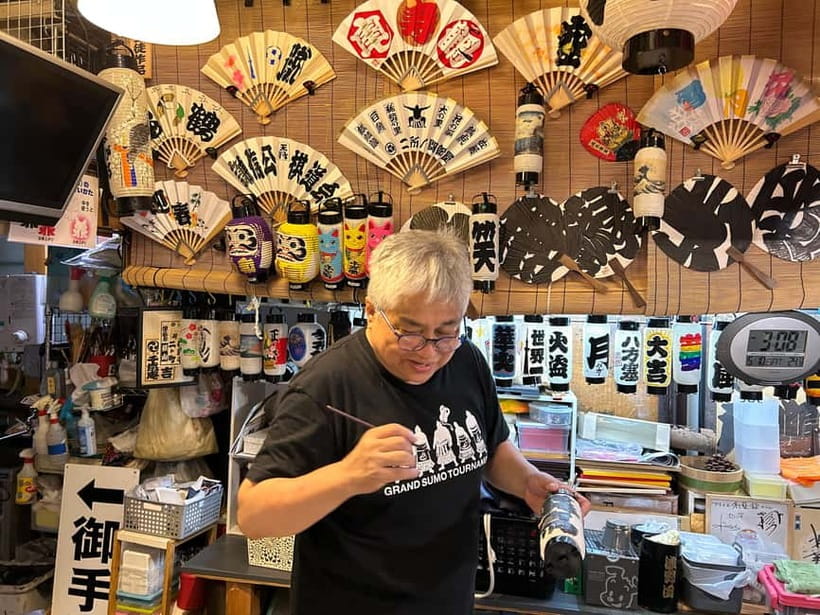
Review · ASAKUSA TOURS
Tokyo: Making a Lantern Workshop in Asakusa with a Craftsman
Tokyo does lanterns right, and you can make yours here.
In a traditional Asakusa-area workshop, I love the fact that you learn from a real lantern artisan and you actually leave with your own finished chochin. It is hands-on, local-feeling, and built around authentic materials like bamboo and washi paper.
Two things I really liked: first, the guidance felt personal, with helpers and interpreters who can slow things down when you need it. People I have seen referenced in past sessions include Rinka and Noriko, plus translation support such as David Park. Second, you are not just decorating, you are learning the craft logic, including what lanterns mean and how the materials work together.
One drawback to plan for: the workshop may involve ink or paint, so wear clothes you do not mind getting stained.
Key points before you go
- A real traditional atelier: you visit a 100-plus-year-old lantern workshop in the Asakusa/Sumida area.
- Materials are the deal: bamboo framing and washi paper are part of the hands-on process.
- You work with a chochin master: the teaching is done by lantern craftsmen, not just a casual demo.
- Take-home result: you keep your completed lantern, and you may also have time to buy a master-made one.
- Meeting point can change: during Grand Sumo Tournament periods, the workshop runs from a different venue near Ryogoku Kokugikan.
Entering A Lantern Atelier Near Tokyo Skytree
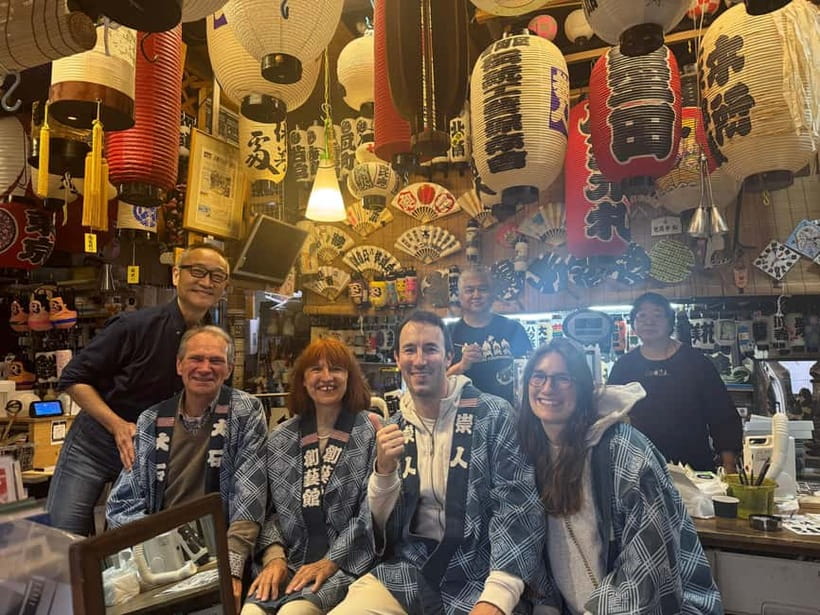
This workshop puts you in Sumida City, an area where Tokyo still feels like it has daily craft life, not just tourist polish. The meeting point is near Tokyo Skytree, and that matters for two reasons. It keeps the experience easy to slot into a day of sightseeing, and it places you in a neighborhood that actually supports this kind of work.
The workshop itself is described as a studio filled with lanterns hanging around the space. That is not just decor. It sets expectations: you are stepping into the working environment of the craft, where your lantern is one more piece coming to life in a place used to making chochin.
And yes, it is photo-friendly. You can take photos during the session, so you get both the memory and the visuals for later. The best part is that the photos make sense after you go, because you understand what you are seeing, not just what the lanterns look like.
More Tokyo tours and experiences for the shortlist



Meeting the Lantern Master, and Learning What a Chochin Means
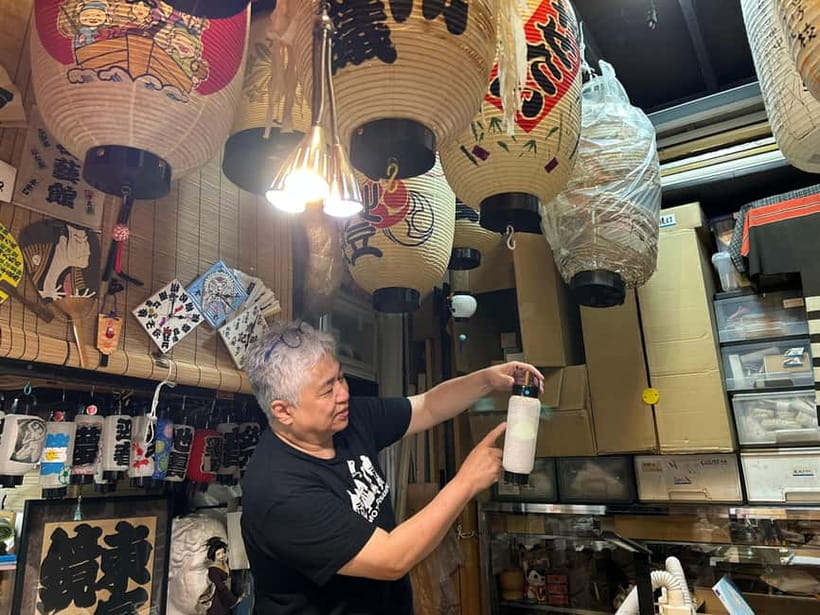
You start with context. The session introduces Japanese lanterns, known as chochin, including their origins and meaning. That background is not long-winded. It is meant to help you understand why the lantern is built a certain way, and why materials like washi paper and bamboo show up again and again.
Then the real value kicks in: you learn from a chochin master artisan and their team. You are not just following steps at a distance. You have an English-speaking guide or interpreter to help you communicate and keep the process moving, and the workshop is designed for no prior experience.
In the past, guides and translators have been friendly and chatty, like Rinka and Noriko, with language support from people such as David Park. Even if you do not catch the exact same names, the pattern is consistent: expect patient explanations and help when you get stuck.
The result is that you leave understanding the craft as something human, not mystical. That is how you can appreciate the next lantern you see in Tokyo, from festival streets to temple walks.
Your 2-Hour Lantern Workshop, Step by Step
The workshop runs 2 hours, which is a sweet spot. You get enough time to do real work, but not so much time that the session feels rushed or exhausting. For many people, it also feels like a great break after hours of walking around the city.
Here is what the flow typically looks like:
Step one: orientation and craft basics
You begin by learning about chochin, and you get a sense of what you are making and why. This is where the master’s explanations help you understand what to focus on, since lantern-making is more than coloring.
Step two: your materials and tools go to work
You use authentic materials such as bamboo and washi paper, along with glue and brushes. The workshop supplies everything, so you are not digging through Tokyo for supplies before your class.






Step three: building the lantern shape
You will work on assembling the lantern structure. Bamboo supports the form, and washi paper gives the lantern its lightweight, paper-woven feel. Expect a guided pace. If you need help, the guide and assistants are there to keep you moving through each step.
Step four: decorating, including lettering details
Some sessions include decoration that takes longer than people expect. One past participant specifically noted calligraphy-style work, and that it fit perfectly into the two-hour window. You might see similar lettering or design steps depending on your class flow and your choices.
Step five: finishing and taking it home
At the end, you take your completed lantern home. The experience also includes the option to purchase a professionally made lantern on-site, which is useful if you want a second piece, a gift, or something you can compare against your own handmade result.
One more practical note: the studio environment may include ink or paint. You do not have to be worried, but you should plan your outfit accordingly.
What You Take Home, and How to Think About Souvenirs
Your biggest takeaway is the obvious one: you get your completed lantern to take home. That is not just a keepsake. It is proof that you did something tangible in Tokyo, and it turns a memory into an object you can display.
A number of past participants also highlighted two things about the final product:
- The lantern quality is solid, because it is made in a craft setting.
- Finished lanterns are packaged carefully for travel home, so you are less likely to deal with damage after your class.
At the end, there is also an optional purchase of a professionally made lantern by the master. If you love your design but want a more intricate or professionally finished version, this is the time to grab it. Think of it as “commission versus creation.” Your workshop lantern is your work. Their lantern is their craft standard.
Price and Value: Is $96 Worth It?
At $96 per person for a 2-hour session, this is not a budget souvenir. So you should judge it differently than a sticker shop or a postcard stand.
Here is what you are paying for:
- Access to a 100-plus-year lantern atelier, not a pop-up demo.
- Instruction from a real craft team, including a chochin master artisan.
- Authentic materials that you would not want to source yourself in Tokyo (bamboo, washi paper, glue, brushes).
- A finished product you keep, with a careful take-home outcome.
When you add those pieces up, the price starts to make sense. You are paying for time plus materials plus skilled teaching, and you leave with something you cannot buy anywhere with the same story attached.
If you only want a pretty photo, you can do that cheaper. If you want a hands-on Tokyo memory that you will still see at home months later, this hits the sweet spot.
Getting the Meeting Point Right During Grand Sumo Weeks
Tokyo logistics are easy until the schedule changes. This workshop has one big wrinkle: the meeting point changes during Grand Sumo Tournament periods.
Why it matters: you do not want to show up at the regular workshop address and find a mismatch on the day. The experience does still happen, but the location shifts to a special venue.
Regular workshop location (most of the year)
〒130-0003 2-10-8 Yokokawa, Sumida City, Tokyo
This applies outside the official sumo tournament periods.
Special venue during Grand Sumo Tournament periods in 2026
The venue is in the Ryogoku Kokugikan area, and the meeting point becomes:
〒130-0015 1-3-20 Yokoami, Sumida City, Tokyo (Ryogoku Kokugikan, 1st floor)
The official 2026 tournament periods listed are:
- January 11-25, 2026
- May 10-24, 2026
- September 13-27, 2026
My advice: double-check your specific booking date right before you head out. It is the kind of detail that saves time and stress.
Who This Workshop Fits Best (And Who Might Skip It)
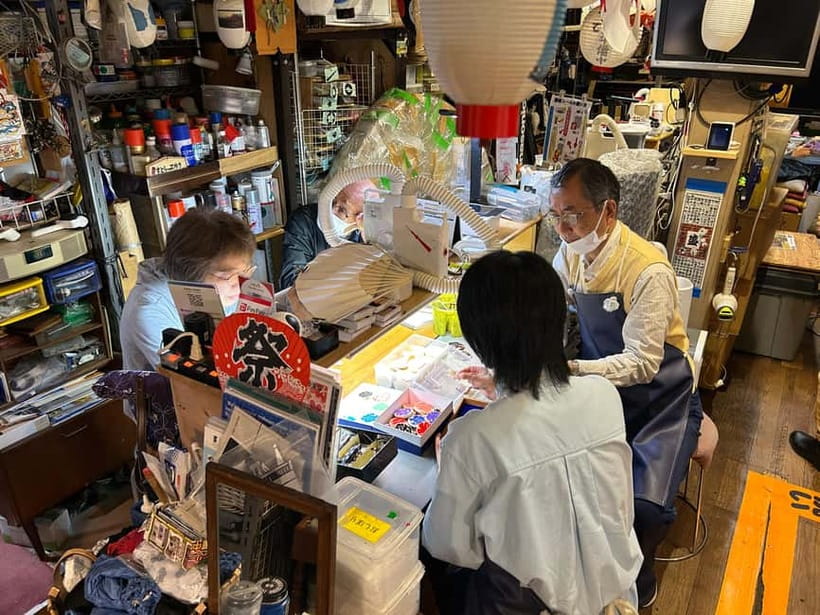
This is a hands-on, no-experience-needed class, and that makes it ideal for a wide range of people.
It is especially good for:
- Families with kids age 6 and up who want a creative activity with structure.
- Solo travelers who want a friendly, guided setting. One past participant specifically said they felt comfortable even coming alone.
- Creative types who want a real craft souvenir, not just a store-bought trinket.
- People who like learning about cultural objects with practical “how it’s made” context.
Things to watch:
- It is not suitable for children under 6.
- It may involve ink or paint, so dress for a possible mess.
- Pets are not allowed, and alcohol and drugs are not allowed.
If you hate getting your hands dirty, or you only want sightseeing with zero creative work, you might find this less satisfying. But if you enjoy crafts, even a little, this is the kind of Tokyo activity that feels personal.
Should You Book This Asakusa Lantern Workshop?
I think it is a strong choice if you want an authentic, hands-on Tokyo souvenir. The combination of a traditional 100-plus-year atelier, teaching by a chochin master artisan, and a take-home result you helped create makes the value feel fair for the price.
Book it if:
- You want something more meaningful than a typical souvenir.
- You like learning craft techniques with real materials.
- You are traveling at a time when you can easily reach the correct meeting point.
Skip it if:
- You are not interested in hands-on making.
- You would feel upset about ink or paint on clothing.
- You are traveling with a child under 6.
If you do book, do one simple thing: wear clothes you can comfortably sacrifice. Then you will enjoy the workshop, not stress about your outfit.
FAQ
How long is the Tokyo lantern-making workshop?
It lasts 2 hours.
Is prior experience required?
No. The workshop is designed for beginners, and there is no prior experience needed.
What is included in the price?
The package includes the guided lantern-making workshop, all materials (bamboo, washi paper, glue, brushes), an English-speaking guide or interpreter, and you take your completed lantern home.
Where do I meet, and can the location change?
Yes, the meeting point depends on your booking date. Outside Grand Sumo Tournament periods you meet at 〒130-0003 2-10-8 Yokokawa, Sumida City, Tokyo. During the official Grand Sumo Tournament periods in 2026, it moves to 〒130-0015 1-3-20 Yokoami, Sumida City, Tokyo (Ryogoku Kokugikan, 1st floor).
What should I bring?
You should bring a passport or ID card. You may also want to wear clothes that you do not mind getting stained since the workshop may involve ink or paint.
Is the workshop wheelchair accessible?
Yes, it is listed as wheelchair accessible.
More Workshops & Classes in Tokyo


More Tour Reviews in Tokyo
Not for you? Here's more nearby things to do in Tokyo we have reviewed












Asakusa Tours, side by side.
 ★ 4.8Japanese Dance Cabaret Theater Asakusa-Kaguwa TicketFrom $492,270 reviews
 ★ 4.7Meiji Shrine, Asakusa, Skytree Bus Tour and CruiseFrom $1221,986 reviews
 ★ 4.9Roll and Authentic Sushi Making Class in AsakusaFrom $581,957 reviews
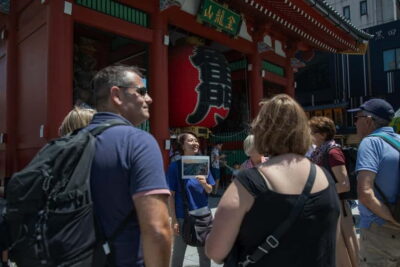 ★ 4.8Asakusa Walking Tour with Sensoji Temple VisitFrom $221,583 reviews
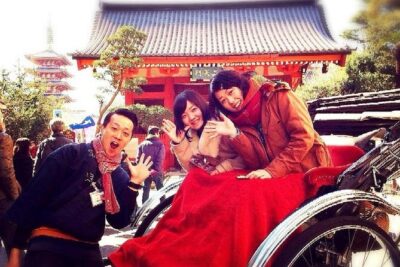 ★ 5.0Tokyo Asakusa Rickshaw TourFrom $421,375 reviews
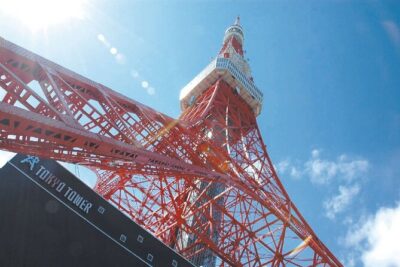 ★ 4.5Tokyo Panoramic 1 Day: Meiji Shrine, Asakusa, Odaiba and SKYTREE®From $851,222 reviews
 ★ 5.0Tokyo Go Kart: Asakusa, Skytree, and Akihabara **IDP MUST**From $99988 reviews
 ★ 4.7Asakusa, Skytree & Akhihabara Go-Kart City ExperienceFrom $96761 reviews
This tour also belongs to