
Review · TOKYO CITY TOURS
Tokyo: Mochi-Making Class in a Private Studio
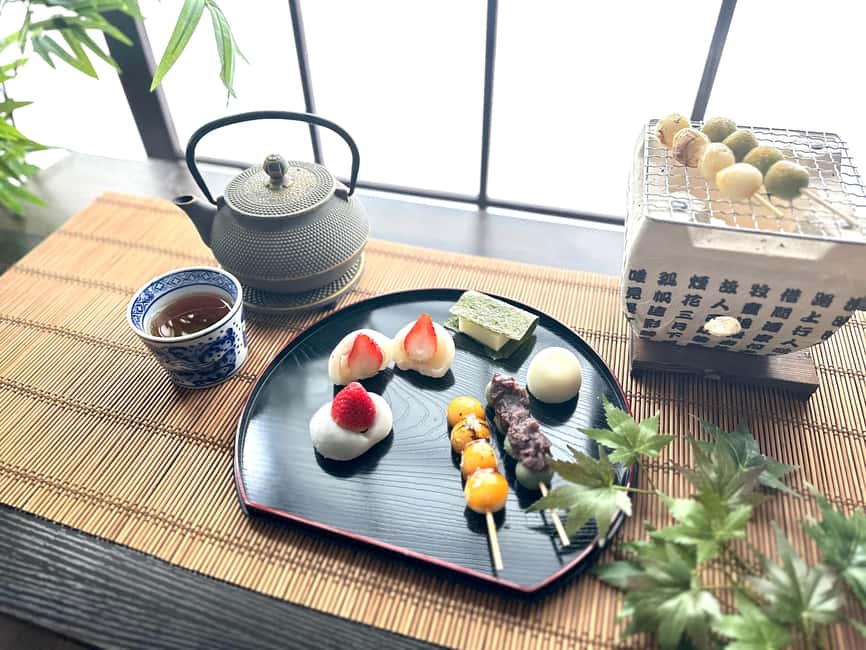
Tokyo turns mochi into a craft. This 2-hour class in a private studio in Honshu is built for hands-on learning, not just eating, with five mochi dishes made from scratch and served with green tea. I like that you get both the how and the why, including the cultural background, and you leave with a downloadable recipe you can actually use later.
Two things I really like: the small group size (up to 8) makes it easy to ask questions, and the instruction is led by warm, clear teachers, including names like Owa, Michiko, Ayumi, and Kiyoko. One consideration, because it’s a studio experience, is that it’s not suitable for wheelchair users, and you also need to be at least 4 years old to join.
Key Highlights You Will Feel Immediately
- Five mochi dishes from scratch in one 2-hour session, so you taste your own work
- Small-group teaching up to 8 people, so you get real guidance, not just a lecture
- Green tea pairing at the end, hot or cold, to match your pace and mood
- Cultural context tied to the process, so the snack has meaning, not just sugar
- Downloadable recipe file to recreate what you made at home
- Photo-taking session included, useful if you want a souvenir that is actually you with the sweets
A Mochi Class That Feels Like Skill Building, Not Just Food Fun
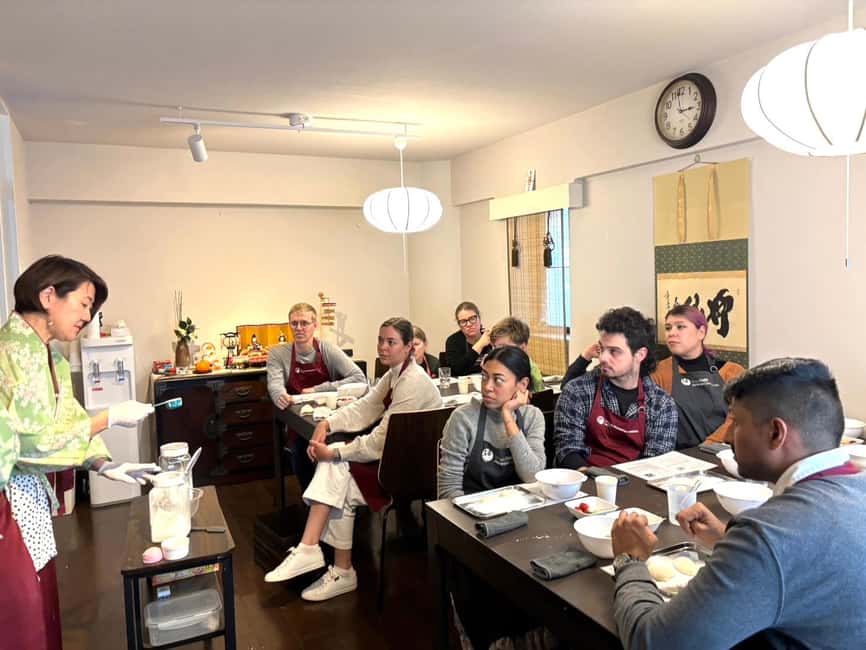
Tokyo has plenty of food experiences. This one is different because it is built around touching the dough and learning technique you can repeat. Mochi is simple in ingredients, but it is tricky in practice, so the class focuses on what your hands need to do, not just what you should taste.
I also like the tone of the instruction. The teachers are described as friendly and clear, and English support is part of the plan along with Japanese. In a class like this, that matters because mochi-making has a few key steps, and you do not want to guess when the texture is changing.
You should also know the class is family-friendly in spirit, not in access. Kids can join starting at age 4, but the venue is not listed as wheelchair accessible. If you are traveling with mobility needs, plan for that up front.
You can also read our reviews of more private tours in Tokyo

Your 2-Hour Flow: Making, Shaping, and Tasting Five Mochi Dishes
The schedule is designed to keep momentum. You start with instruction, then you move quickly into hands-on making. Mochi-making is tactile, and the class keeps you busy with shaping, forming, and learning how the dough behaves as you work.
Here’s what your time is built around:
- Learn mochi basics and cultural context at the start
- Make and shape mochi through the course, not just one batch
- Create five kinds of mochi dishes from scratch
- Taste the mochi with green tea at the end
- Get photos and a downloadable recipe to take home
The best part is the loop from making to tasting. You do not wait until the end to find out if something worked. With five variations in one session, you get multiple chances to adjust and understand textures, sweetness, and flavor balance.
At the end, you get to enjoy your creations with a cup of hot or cold green tea. That choice is small, but it helps. If you have a slower pace or you are sensitive to heat, picking the tea style that fits you makes the final tasting more comfortable.
One small practical note: strawberries might not always be used. The plan says other fruit will be used if strawberries are unavailable. So if strawberries are a must for you, treat it as a possible swap, not a guarantee.
The Cultural Part Is Not a Side Lecture
A good mochi class does more than teach a recipe. It explains why mochi shows up in Japanese life, from seasonal celebrations to everyday sweets. Here, the cultural background is part of the experience and is tied directly to what you’re doing.
I like this approach because it changes how you taste. If you know the role mochi plays, you are not just eating a sticky dessert. You’re tasting a food with context.
Some instructors also add personal touches. For example, Michiko is described as giving a fascinating overview of mochi’s history and cultural significance, and she also took time to listen to people’s reasons for visiting Japan. That kind of human, conversation-based teaching is what makes a short class feel warmer, even when you are moving quickly through steps.
You might also notice differences in teaching style depending on the instructor. Owa, for instance, is noted as explaining things thoroughly and sharing her calligraphy work. That is not required for the mochi to work, but it adds a quiet cultural layer that fits the theme without turning it into a show.
Green Tea Tasting: The Moment Everything Clicks
The class ends with tasting, and that matters. Mochi can be chewy and soft at the same time, and the flavor can shift depending on the filling and fruit. Eating your mochi with tea helps you understand texture and sweetness as a whole.
You get green tea with your tasting, and you can choose hot or cold. That is practical in Tokyo. If you are visiting during warm weather, cold tea helps you keep your focus on the flavors instead of the temperature.
This is also where the “from scratch” part really pays off. If you are thinking mochi is just something you buy in a store, tasting your own versions makes it feel different. You see how small changes in shaping and timing affect the final result.
Also, because five dishes are included, the tea pairing is a gentle way to reset your palate between types. You are not stuck tasting one flavor over and over.
Diet Notes That Actually Matter: Gluten-Free and Non-Dairy Option
This experience is listed as gluten-free, which is a big deal if you are sensitive. Mochi is often made with rice flour, so it can fit many gluten-free needs, but you still want to confirm the class is designed with that in mind. Here, the experience is explicitly gluten-free.
There is also a non-dairy option available. If you avoid dairy, this helps you avoid the awkward moment of wondering what is safe when the class serves different dessert styles.
One more practical point: the fruit used may change if strawberries are not available. The class still includes five mochi tastings, but the fruit element might differ. If you have a fruit allergy, the data you were given does not specify restrictions besides the fruit swap for availability. You should ask the provider directly if allergies are part of your needs.
More Tokyo tours and experiences for the shortlist




Price and Value: What $82 Gets You in Real Terms
At $82 per person for a 2-hour class, this is not the cheapest thing you can do in Tokyo. But it is not trying to be. You are paying for teaching, ingredients, and a guided process that turns into a finished edible outcome you can share right away.
Here’s what makes it feel more fair:
- Five mochi dishes made from scratch, not one bite-sized sample
- Green tea included with your tasting
- A downloadable recipe so you can repeat it later
- Photo taking session included, which is a simple bonus but still part of the experience
- Small group up to 8, which usually means more attention per person
If you just want mochi as a snack, you can buy it in Tokyo for far less. This class is for you if you want the skill and the story. The recipe file is the key value lever. A lot of food tours end when you leave. This one gives you something to carry forward.
Also, English support is included via the instructor. If you want to participate without worrying about language barriers, that is worth paying attention to.
Finding the Studio Near Family Mart (And Getting Inside)
Logistics are part of the experience, so here is the clean version.
Your building is to the right of a Family Mart convenience store. On the ground floor you should see a drug store and a hair salon. To enter, go up the stairs or use the ramp in front of the sign.
Inside access uses a building code detail: press 303 + enter on the bottom to get in. That’s the kind of small instruction that saves time if you arrive a little early and want to avoid wandering.
Because transportation is not included, you will need your own way there. In Tokyo, that usually means train and a short walk, but plan time for the final approach near the convenience store.
Who Should Book, and Who Should Skip
This is a strong fit if you want an active, hands-on Tokyo experience that works for multiple ages. The minimum age is 4, so families can join without it feeling like a rigid adult-only workshop. The class also feels good for anyone who likes learning by doing, especially if you like Japanese sweets but want to understand the technique.
It may be less suitable if:
- You use a wheelchair, since wheelchair users are not listed as suitable for the venue
- You are expecting a quick photo and a single sample, instead of shaping and making five dishes
- You want a low-cost activity, since $82 is a premium for two hours
If you have dietary needs, the class is listed as gluten-free and offers a non-dairy option. That helps a lot, but if your needs are more complex than those two categories, confirm directly with the provider before you go.
Should You Book This Mochi-Making Class in Tokyo?
I’d book it if you want a Japanese experience that is practical and repeatable. The combination of five dishes, guided shaping, green tea tasting, and a downloadable recipe makes it feel like you did something, not just watched something.
I’d skip it if accessibility is an issue for your group, or if you only want to eat mochi without learning the process. In that case, you’ll probably be happier with store-bought sweets and a more flexible schedule.
If you are on the fence, use this simple test: do you enjoy making things with your hands, even messy at times? If yes, this class is a very solid use of two hours in Tokyo.
FAQ
How long is the mochi-making class?
The class lasts 2 hours.
What is the minimum age to join?
The minimum age to enter the class is 4 years old.
Is the experience gluten-free?
Yes, the experience is gluten-free.
Is a non-dairy option available?
Yes, a non-dairy option is available.
Does the price include transportation to the venue?
No, transportation to the venue is not included.
How many people are in the group?
The class is limited to a small group of 8 participants.
More Workshops & Classes in Tokyo
More Private Tours in Tokyo



More Tour Reviews in Tokyo






Not for you? Here's more nearby things to do in Tokyo we have reviewed












Tokyo City Tours, side by side.
 ★ 5.01-Day Tokyo Bus TourFrom $12914,250 reviews
 ★ 4.5TOKYO SKYTREE® Admission ticketFrom $1311,192 reviews
 ★ 4.6teamLab Planets TOKYO Digital Art Museum Entry TicketFrom $259,779 reviews
 ★ 4.0Mt Fuji & Hakone Cruise, Drum Show Bullet Train 1 Day from TokyoFrom $1497,413 reviews
 ★ 5.0Shinjuku Food Tour (13 Dishes at 4 Local Eateries)From $866,603 reviews
 ★ 4.4Tokyo Mt Fuji 5th St & Hakone Cruise Bus Tour w/Bullet TrainFrom $1545,024 reviews
 ★ 5.0Flagship 2-Hours Official Street Go-Kart Tour – Tokyo Bay ShopFrom $644,974 reviews
 ★ 4.5From Tokyo: Mount Fuji Full-Day Sightseeing TripFrom $684,970 reviews
This tour also belongs to