
Review · TOKYO SUMO EXPERIENCES
Tokyo Sumo Culture Tour with Chanko-Nabe Lunch in Ryogoku
Sumo starts with your feet, not a TV remote. This Ryogoku walking tour mixes small-group access with real locations that shaped sumo over centuries, plus a chanko-nabe lunch that feels like part of the sport, not an add-on. You get a guided route that’s designed so you stay oriented while you learn what you’re looking at.
I like the small group size here, max eight, because the pace stays human and questions land well. I also love how the tour blends sumo sites with stories, from the shrine that honors sumo origins to the arena district that turns wrestling into local culture. Guides such as Taka, Jeff, and Aki-san have stood out for being clear and personable, which matters a lot when you are trying to understand a tradition that is full of rules and rituals.
One thing to keep in mind: this is not match-day action. You’ll mostly see stables, arenas, and ring spaces from outside or as set viewpoints, and some facilities can be closed depending on the day and timing, so if you are chasing practice sessions, manage expectations.
Key highlights you will actually use
- Max 8 people keeps this personal, so you can ask questions instead of just walking along.
- Ryogoku Sumo Town routing helps you connect the dots between stables, shrines, temples, and the tournament arena.
- Short stops with free admission makes it easy to sample multiple layers of sumo culture without spending your day in lines.
- Lunch at Tomoegata Chanko is built into the experience, so you leave fed and informed.
- No getting lost is a real perk, because the value is in following the guide, not navigating between obscure spots.
Ryogoku at 9:30: a small-group walk with a built-in guide
This tour starts at 9:30 am at Ryogoku Station, so you can build a full Tokyo day around it without dragging your schedule. The route is intentionally compact and walkable, which is key in a place like Ryogoku where sumo culture is concentrated but not always intuitive for first-timers.
The best practical advantage is the group size, up to eight travelers. In a small group, the guide can slow down when you look confused, and you do not feel rushed to keep up. Even better, the tour is described as “no getting lost,” meaning you are not expected to map your way between stable gates, shrines, and sumo landmarks. That matters in Japan, where it is easy to be technically “nearby” and still feel lost.
Another plus for planning, you get a mobile ticket and a guide-led route with multiple stops that are free admission. That combination usually means less logistical friction and more time absorbing what you came for.
More Tokyo tours and experiences for the shortlist
Hakkaku-beya and other stable windows: what you see, and what you do not
Your first stop is Hakkaku-beya Sumo Stable. The visit is short, and the description is very clear: you drop in and look at the stable from outside, where wrestlers live and train. So think of this as a respectful introduction, not a backstage pass.
Why that still works: sumo culture is not just the ring. It is the training environment, the routines, the architecture of discipline, and the way stables sit within their neighborhoods. Seeing a stable exterior helps you understand why sumo has deep local roots, especially in Ryogoku, where multiple stables cluster together.
This is also a good moment to notice what the guide emphasizes. At a stable stop, the conversation tends to move from what you can physically see to what you can infer, like how wrestlers’ day-to-day life shapes their identity in the sport.
A possible drawback, and it comes up because of timing, is that you should not count on full access to training sessions. This tour does not promise practice viewing, and some days can mean limited visibility at certain training facilities.
Nominosukune Shrine: sumo origins in a quiet, sacred setting
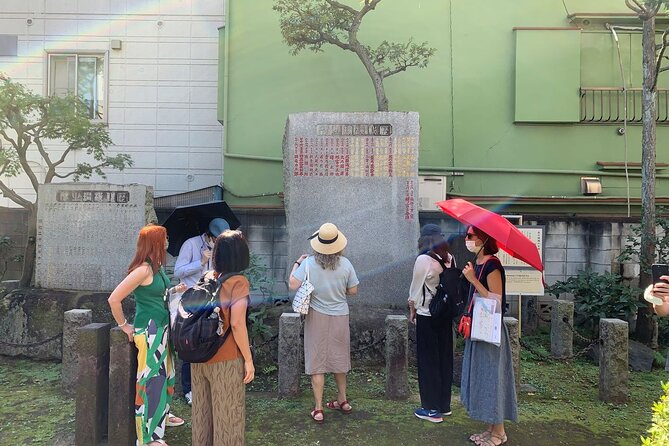
Next up is Nominosukune Shrine, a Shinto shrine where the founder of sumo is enshrined. The guide explains the origin story, including how the founder instigated sumo around 1500 years ago, and how the rules were refined into the form you recognize today.
This stop is not just mythology, it is context. When you learn the origin narrative and the idea of rule refinement over centuries, sumo stops feeling like a modern sport with old uniforms. You start to understand it as a ritual system that slowly hardened into formal competition.
I like this part because it gives you a framework for everything else you will see later. When you visit the arena spaces and the ring replica, you are no longer just looking at buildings and ropes. You are thinking about how tradition got codified.
Also, since the shrine visit is 30 minutes with free admission, it is a comfortable pacing break inside a walk-heavy day.
Ryogoku Kokugikan from outside: the tournament heartbeat of Tokyo
Then you look at Ryogoku Kokugikan, the sumo arena and tournament mecca. The key fact to grasp is that the grand sumo tournaments happen here three times a year. That scheduling detail makes the arena feel less like a landmark and more like a recurring civic event.
You also get stories about the arena itself, which is the kind of local knowledge you cannot easily pick up on your own from signage. Even from the outside, hearing how the arena functions in the rhythm of the sport helps you appreciate why Ryogoku carries such identity.
If you are hoping to see the full match setup or enter for an event, this tour is not framed that way. You are viewing the arena and absorbing the cultural gravity, not attending a tournament day. Still, for many people, this is the moment that makes sumo feel real in Tokyo.
Edo Noren: seeing a full-scale ring and feeling the old Tokyo vibe
At Ryogoku Edo Noren, the tour shifts toward atmosphere. The idea here is to feel old Edo, when Tokyo was known as Tokyo’s earlier name, and to see a full-scale sumo ring.
This stop is about bringing history into something physical. A ring replica gives you the proportions, the space, and the stage-like feeling that is hard to understand if you only watch televised bouts. When you know what the ring looks like at full size, the later stories about tournaments and social status land better.
The time here is 30 minutes, which is enough for the guide to talk through ring observations without you getting tired. It is also an easy, low-pressure segment, because it is mostly viewing plus explanation.






Ekoin Temple: sumo tournaments in the samurai-era world
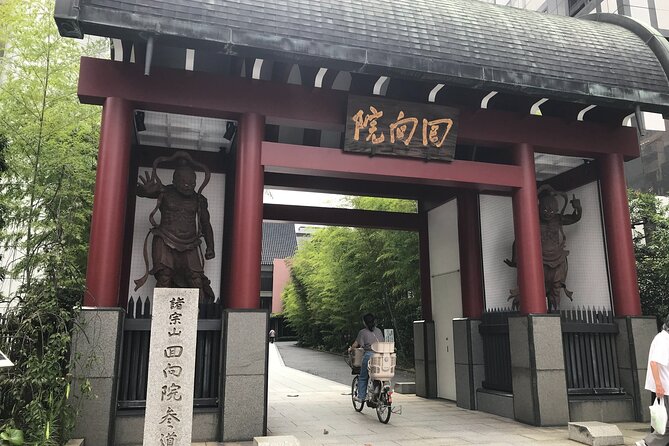
Next is Ekoin Temple, described as the venue of sumo tournaments during the Edo period. This matters because it reframes sumo. You start to see it not just as a sport with fans, but as something that fit into the social structure of pre-modern Japan.
The guide discusses the social status of wrestlers and how tournaments were held during that time. Even if you do not know much Japanese history going in, the concept is straightforward: the people and the institutions around sumo helped shape who wrestlers were allowed to be, how events were organized, and why the culture survived.
This stop is only 15 minutes, so you will not get a lecture length deep in any one topic. Instead, you get a quick, guided snapshot that connects the sport to broader society.
Kasuganobeya and wrestler-size bicycles: the daily-life details
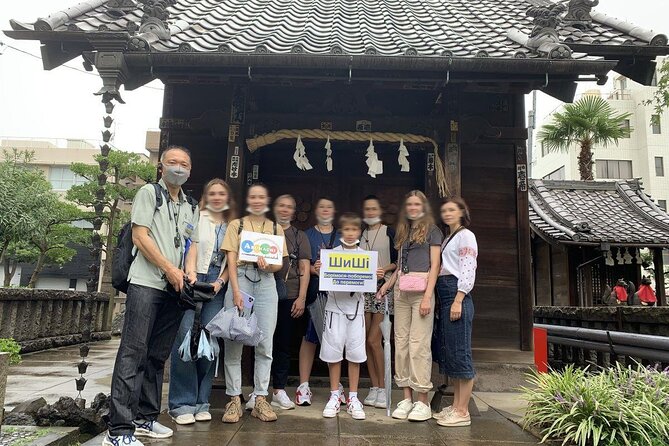
At Kasuganobeya, you visit a stable where a Bulgarian-born wrestler belongs. You also see the “wrestler-size” bicycles they use in daily life.
This is one of those details that makes sumo feel surprisingly modern. You are watching tradition, yes, but the story includes real logistics of daily training life. The bicycle detail is also the kind of thing that sticks, because it is visual and specific.
The visit is 15 minutes, so again it is a fast, focused segment. But it gives you what you want from a stable stop: a small glimpse of how wrestlers live beyond the ring.
If you are the kind of traveler who likes “how do they actually do it” questions, this is a highlight.
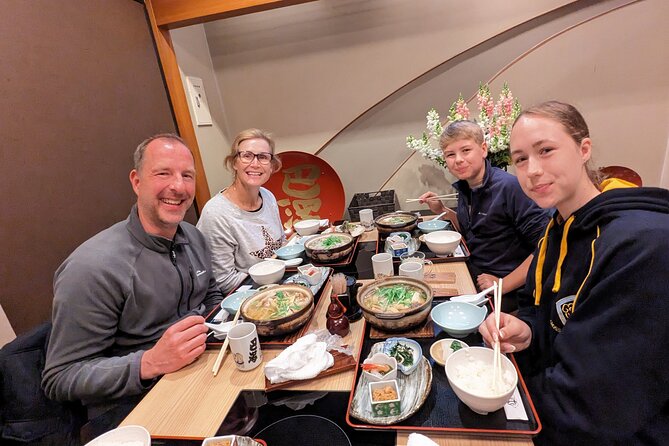
Tomoegata Chanko for lunch: the meal at the center of sumo life
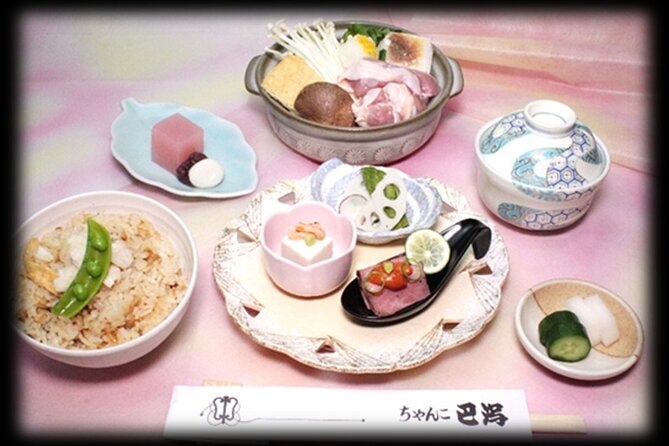
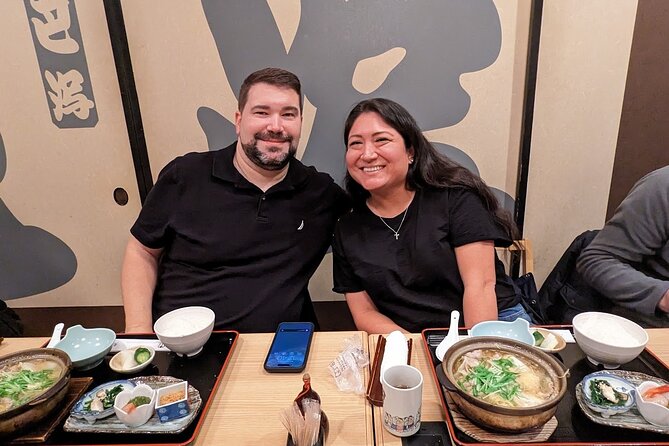
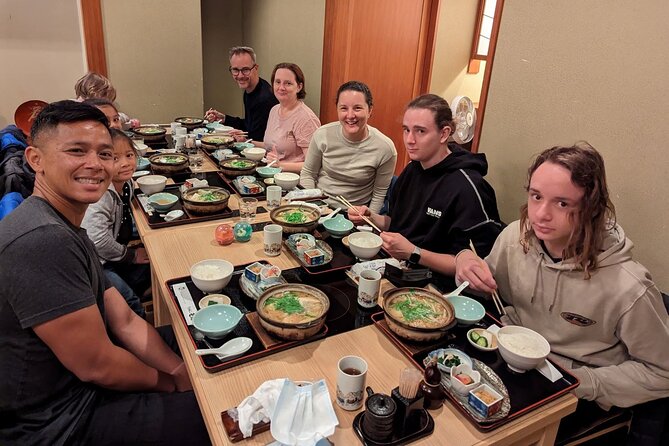
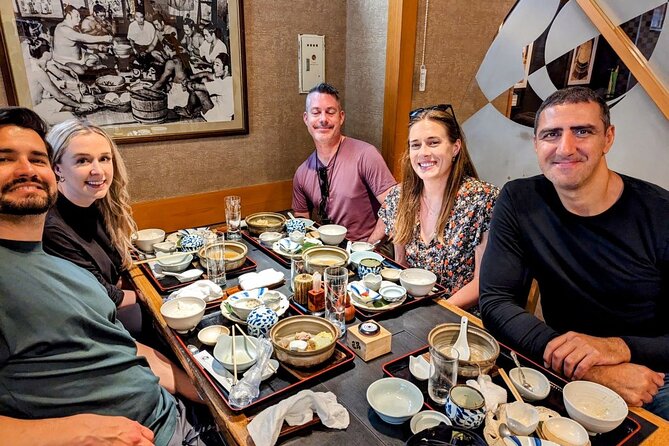
The tour ends with Tomoegata Chanko, where you get chanko-nabe lunch. This is billed as one of the best chanko-nabe restaurants in town, and more importantly, it is presented as a cornerstone of the sumo diet used to build weight and muscle for the physical demands of the sport.
I like that lunch here is not just food after sightseeing. It closes the loop. After you learn about stable life, tournament spaces, and rule origins, you sit down to eat the kind of hearty dish that supports the training body.
You also get an hour here, which is a real breathing space in a 3.5-hour tour. If you arrive hungry, you will likely leave satisfied, because the lunch is the centerpiece of what is included.
One practical note: alcohol is not included, so if you want beer or sake with your meal, you’ll need to budget for it separately.
Price and value: when $131.12 makes sense
At $131.12 per person, this tour is not the cheapest thing you can do in Tokyo. But the value is strongest if you care about explanation, not just checkmarks.
Here is where the money tends to earn its keep:
- A small group with a guide who brings the culture alive, not just location facts.
- Multiple free-admission stops across Ryogoku, so you are not stacking paid tickets on top.
- Lunch included, specifically chanko-nabe, which is a sumo-specific experience you would otherwise pay for separately.
Where you might feel the price more sharply is if your main goal is to see live training or a match. This tour does not include actual sumo viewing like practice sessions or tournaments. If your dream day is a full inside look at training, you may feel the time is tight for that purpose.
So I see this as best for people who want cultural understanding and a sumo-flavored day, not a guaranteed match-day spectacle.
Timing reality: Sundays, tournament periods, and closed doors
One practical consideration is timing. When the calendar is crowded, some sites can have limited access. The tour description is clear about what is included and what is not, but even with that, real-world opening hours can vary.
If you are traveling around major tournament periods and you land on a Sunday, it is smart to be mentally flexible about what you might see inside certain facilities. Some visits may end up more exterior or shortened than you hoped.
Also, if a museum or related space is closed on your specific day, it changes the feel of the route. In other words, this is a great guided day, but it is not an unbreakable promise of inside access.
My advice: decide what you want most, cultural context and chanko lunch, or live action. If it is the former, you are in the right place.
Who this Ryogoku tour is best for
This tour fits best if you:
- Want a guided introduction to sumo culture without hunting down a bunch of separate tickets.
- Prefer a tight, focused walk over a half-day of wandering.
- Appreciate cultural history, like the Edo era connections and how sumo tied into society.
- Are excited about eating chanko-nabe as part of the story.
It is less ideal if your top priority is seeing practice sessions or matches. The tour is structured for cultural learning and guided viewing, with the included lunch as a major payoff.
If you are traveling with kids or family, the small group format can help the day feel manageable, and the variety of stops keeps attention moving.
Should you book this Tokyo Sumo Culture Tour with chanko-nabe lunch?
If you want a sumo experience that feels grounded in real places, this is an easy recommendation. The combination of Ryogoku Sumo Town, a knowledgeable guide, multiple free stops, and an included chanko-nabe lunch gives you value that is more than just sightseeing.
I would book it if you are the type of traveler who enjoys learning why traditions exist, and you want the sport explained in plain language while you walk through the neighborhood where it lives. I would think twice if you are specifically chasing guaranteed access to active training or tournament viewing.
When you match your expectations to what is actually included, this becomes a very satisfying Tokyo morning that ends with a meal you will remember.
FAQ
How much does the tour cost?
The tour price is $131.12 per person.
How long is the experience?
It lasts about 3 hours 30 minutes.
What is the group size?
The tour has a maximum of 8 travelers.
Is lunch included?
Yes, chanko-nabe lunch is included.
Where does the tour start and end?
It starts at Ryogoku Sta. 1-chōme-4-29 Yokoami, Sumida City, Tokyo 130-0015 and ends at Tomoegata Chanko, 2-chōme-17-6 Ryōgoku, Sumida City, Tokyo 130-0026. The tour ends at the restaurant.
What time does it start?
The start time is 9:30 am.
Does this tour include watching actual sumo practice or matches?
No. It does not include actual sumo viewing like practice or matches.
Is hotel pickup and drop-off included?
No. Hotel pickup and drop-off is not included.
Can I cancel for a full refund?
Yes, you can cancel for a full refund if you cancel at least 24 hours before the experience start time.
More Lunch Experiences in Tokyo


More Tours in Tokyo

More Tour Reviews in Tokyo
Not for you? Here's more nearby things to do in Tokyo we have reviewed












Tokyo Sumo Experiences, side by side.
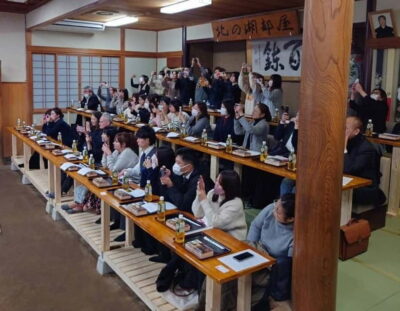 ★ 4.8Sumo Show and Dining ExperienceFrom $792,742 reviews
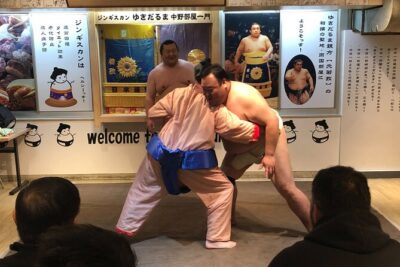 ★ 5.0the SUMO showFrom $891,960 reviews
 ★ 5.0Tokyo Shinjuku Sumo Show & Experience with PhotoFrom $791,750 reviews
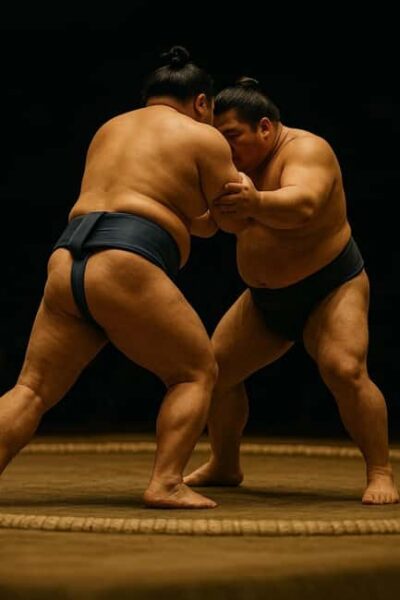 ★ 4.8Sumo Show and Experience in ShinjukuFrom $691,001 reviews
 ★ 4.7Luxury Sumo Show Experience & Japanese cuisine & DrinkFrom $103577 reviews
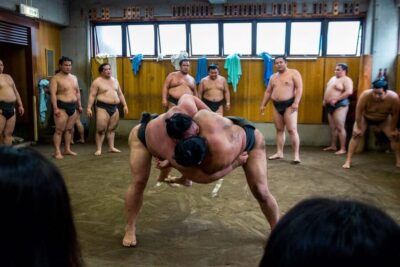 ★ 4.8Sumo Morning Practice Viewing TourFrom $81570 reviews
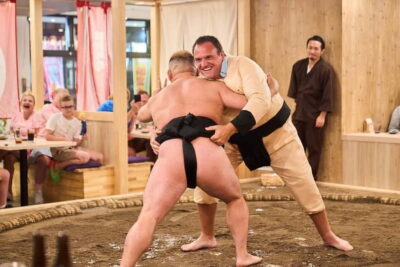 ★ 4.8Tokyo Sumo Experience: Chanko & Mochi with a Former ProFrom $103567 reviews
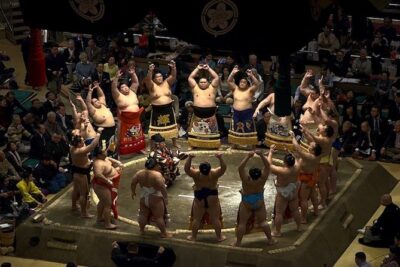 ★ 5.0Ultimate Sumo Tournament: Tokyo, Osaka, Nagoya, FukuokaFrom $184468 reviews
This tour also belongs to