
Tea ceremony, but make it personal.
Komaba Warakuan is a real working school setting, where you get a beginner friendly lesson tied to the tea tradition taught by the Kobori Enshu school. I love how the experience lets you choose your vibe with Rich tea or Light tea, so you can match it to your mood instead of doing one fixed routine.
What you’ll enjoy most is the mix of practice and atmosphere. You’ll be guided through the flow, then shown how to make tea step by step in a calm tea room setting, with traditional sweets included. One thing to plan for is location, the directions can be tricky, so give yourself extra time to avoid rushing.
Key highlights you can count on

- Two seating styles (Rich or Light) that change the tone, quiet focus vs bright conversation
- Small group size of 4, which helps the instructor keep the lesson clear
- Taught step by step, so you are not thrown into a performance
- Traditional sweets and Japanese tea included with the course
- Historical school context, linked to Kobori Enshu and instruction for the third Tokugawa shogun
- Tisha to tools you might use with Fukusa scissors provided (folding fan, paper, toothpick, etc.)
Komaba Warakuan: a Tokyo tea lesson with school lineage

If you only know tea ceremony from photos, you may expect something stiff and scripted. This experience is different because it is grounded in a school environment, not a stage. Komaba Warakuan is described as a school with a long teaching line, and it is connected to the Kobori Enshu school. It also reportedly served as a tea ceremony instructor role for the third Tokugawa shogun.
Why does that matter for you? Because the tone you get is not just about drinking tea. You are learning an operating method, the “how” behind the gestures, pace, and respect. Even if you do not know the terminology, the lesson format helps you follow along without feeling lost.
The small group size also supports this. When only up to four participants are in the session, the instructor can slow down for questions and correct details. That is where beginners usually feel the biggest difference between a good class and a big group show.
You can also read our reviews of more tours and experiences in Tokyo.



Rich tea vs Light tea: pick the mood you want

One of the smartest parts here is that you choose between two styles of course and seating. Both include Japanese tea and traditional sweets, but they aim for different energy.
With Rich tea, you get the hidden seat and a quieter setting. The description points to facing the tea calmly, so your attention stays on the movements and the tasting. This is a great choice if you want a reflective experience and you prefer manners with minimal small talk.
With Light tea, you sit in the seat of the sun. The atmosphere is described as bright and fun, and conversation is more lively. If you are traveling with friends, or you want the lesson to feel more social, this option matches that.
If you are unsure, I’d choose based on your first priority. Want calm and focus? Go Rich. Want friendly energy and easier conversation? Go Light. Either way, you still get the core lesson on making tea.
The 90-minute rhythm: what happens from arrival to the tea room
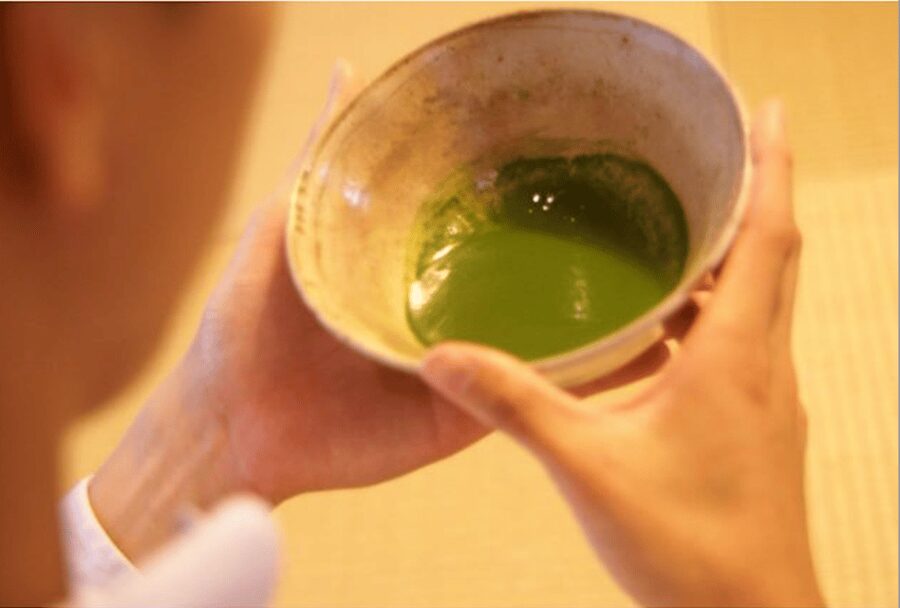
This ceremony is set up like a short lesson with clear steps, so you always know what comes next. The total time runs about 90 minutes to 2 hours, and you should check availability to see starting times.
Here is the flow you can expect:
First, when you arrive, the instructor explains the process flow. This matters more than people think. You are not just watching, you are learning what each step is for.
Next comes clothing. You will change into tabi socks immediately. Tabi are provided, and you are welcome to bring your own if you prefer your fit or your hygiene comfort. After that, you will be guided to the tea room through open ground.
Then the teaching starts. The instructor carefully shows you how to make tea. The session is structured for guidance, not trial and error.
Finally, the tea and sweets are part of the experience in a course format. Your time stays contained, so you are not wandering around wondering when the important part begins.
Practical note: the walk through open ground is part of the experience. Wear something you can manage easily, and plan to be a bit slower than you would on pavement.
What you learn when you make tea in a guided way
Tea ceremony can look complicated, especially if you are used to quick coffee rituals. Here, the core value is that you are taught how to make tea, not just shown how it looks.
During your lesson, the instructor teaches you the motions carefully. That is helpful for beginners because tea ceremony has lots of tiny details that are easy to miss if you are guessing.
You also learn through the tools used in the ceremony. Fukusa scissors are provided for the session. These can include items like a folding fan, paper, and toothpick-type tools, depending on how they are used in the flow. If you already have your own appropriate tools, you can bring them, but you are not required to.
I like this approach for you because it reduces pressure. You can focus on learning the sequence and the etiquette, even if you have never done this before.
And because it is a small group, you are more likely to get correction when something matters. That is where the lesson becomes genuinely useful instead of just pretty.
Traditional sweets and Japanese tea: included, and part of the lesson
You are not paying for tea only. Each course experience includes Japanese tea and traditional sweets. That combination is one of the reasons tea ceremony feels complete.
The sweets act like a bridge. They give you something to taste as you settle in, and they also help set the pace for the tea. In a quiet Rich tea session, sweets can make the waiting feel comfortable. In the more conversational Light tea session, sweets make it easier to talk while still staying respectful of the flow.
Either way, plan to take your time. If you rush the tea tasting, you miss the whole point of the ritual, even when the lesson is beginner friendly.



Small group of 4: why the lesson stays clear
This experience is limited to 4 participants. That is a big deal in Tokyo, where many “experiences” are really group performances.
In a group that small, you get:
- More attention during the steps
- More chances to ask questions during the teaching portion
- Less waiting around, because the instructor can manage pacing
- A calmer atmosphere, especially in the Rich tea option
You also likely feel less self-conscious. Tea ceremony etiquette can make people nervous, but a small group turns it into a practice session rather than a test.
Language matters: Japanese instruction and how to prepare
The instructor is Japanese, and the language listed is Japanese. That does not mean the experience is impossible if you do not speak Japanese, but it does mean you should expect instruction to be in Japanese.
My practical advice: go with a humble mindset and let your eyes do some work. When you are shown how to handle steps and tools, you can follow even without understanding every word.
If you are comfortable using a phone translator for basic phrases, that can help you confirm what is next. But you do not need to be fluent to enjoy a beginner lesson when the teacher demonstrates carefully.
Price and value: is $56 fair for 90 minutes to 2 hours?
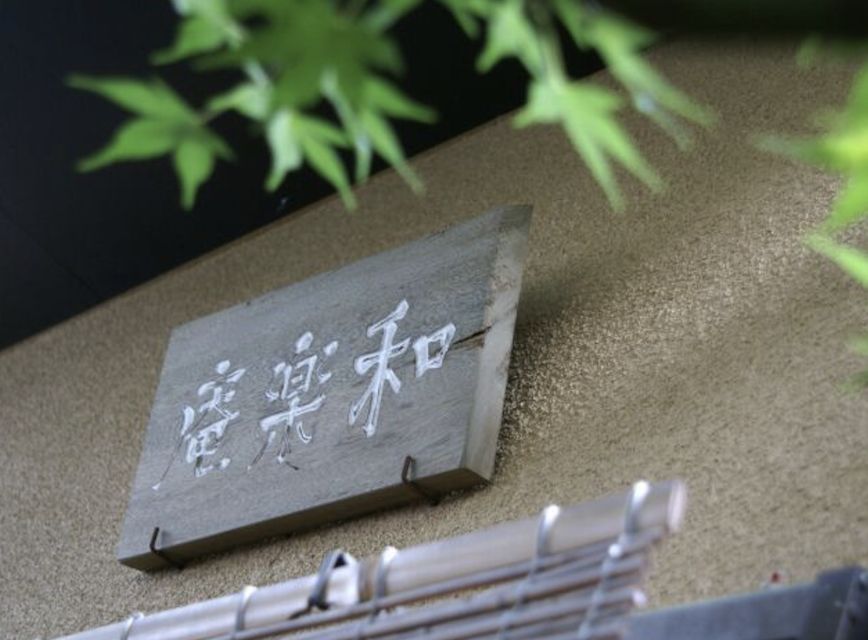
At $56 per person, you are buying a short guided class, with tea and sweets included, in a small group limited to four people. That is not just a tasting price. You are paying for instruction, materials provided during the lesson, and the structure of the ceremony.
Is it cheap? No. But it is also not an overpriced dinner experiment. The best way to judge value here is by what you get per hour: a guided tea-making lesson, course tea and sweets, and a low participant count that supports real learning.
The experience also includes tax and an experience fee, which keeps the math simple. If you compare it to activities that only hand you a cup and send you on your way, the value improves fast because you are learning a process.
If you prefer quiet focus, Rich tea may feel especially worth it, since you can settle into the calm. If you want conversation, Light tea can make the time feel more social and relaxed.
Location and arrival: plan for finding Komaba Warakuan
One practical snag that shows up is that directions can be tough. The location is not described as a walk-up kiosk. So treat this like a real destination.
Here is how I’d handle it:
- Plan to arrive early enough to find the spot without stress
- Save the address and any map pins before you leave your hotel
- Wear shoes that work for a short walk over open ground
If you show up late, you will miss part of the flow explanation. And once the ceremony starts, you want to be ready for tabi socks and the tea room walk.
Who this tea ceremony fits best
This is the kind of experience that can work for more than one travel style.
It is a great fit if you:
- Want a beginner friendly intro to tea ceremony etiquette
- Prefer a smaller, quieter lesson over a crowded demo
- Like historical cultural context, not just a souvenir activity
- Enjoy both tasting and learning
It can also work for families with older kids. One set of comments highlights it as educational and relaxing for children around 11 and 14. So if you are traveling with teens who can sit still for about an hour and a half, it can be a good cultural activity rather than a forced show.
If you are looking for nightlife energy or a fast, high-volume itinerary, this is probably not your thing. This ceremony is built for calm attention.
Should you book Komaba Warakuan? My decision guide
Book it if you want a guided tea ceremony that feels like a real school lesson, not a rushed tourist stop. The combination of small group size, step-by-step teaching, and the option to choose Rich or Light tea gives you control over the tone.
Hold off or reconsider if you:
- Know you struggle with finding small, less obvious locations
- Expect all instruction to be in English
- Want a super fast stop rather than a 90-minute to 2-hour learning session
If you can handle one short arrival challenge and you are open to Japanese-led instruction with visual guidance, this is a strong choice. You will come away understanding not just how tea is made, but how the ceremony asks you to slow down and pay attention.
FAQ
How long is the Tokyo tea ceremony at Komaba Warakuan?
The experience runs about 90 minutes to 2 hours. Exact starting times depend on availability.
What is the group size?
It is a small group limited to 4 participants.
How much does it cost?
The price is $56 per person.
Is tea and food included?
Yes. Each course includes Japanese tea and traditional sweets.
Can I choose between Rich tea and Light tea?
Yes. You can choose either Rich tea or Light tea.
What is the difference between Rich tea and Light tea seating?
Rich tea uses the hidden seat for a quieter, calm experience. Light tea uses the seat of the sun with a brighter mood and lively conversation.
What should I do when I arrive?
You will change into tabi socks right away, and then you will be led to the tea room through open ground.
Are tabi socks provided?
Yes, tabi socks are provided, and you may also bring your own.
What language is used during the lesson?
The instructor teaches in Japanese.
Is free cancellation available?
Yes. You can cancel up to 3 days in advance for a full refund.
More Tour Reviews in Tokyo
Not for you? Here's more nearby things to do in Tokyo we have reviewed












Tokyo Tea & Sake Experiences, side by side.
 ★ 5.0Traditional Tea Ceremony with a Tea MasterFrom $38528 reviews
 ★ 5.0Sake Tasting Masterclass in Shinjuku (8+ Varieties with a Pro)From $72271 reviews
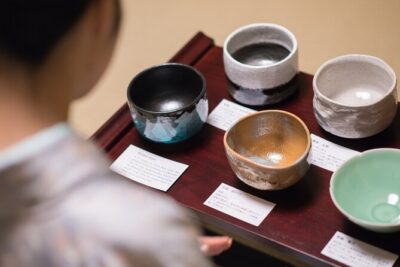 ★ 5.0Tea Ceremony Workshop in Tokyo by the Experienced InstrucorFrom $38189 reviews
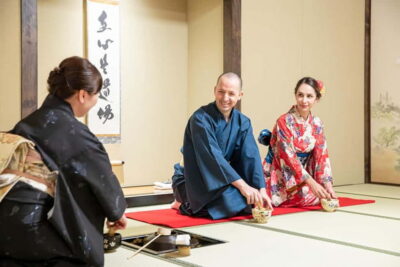 ★ 4.9Asakusa: Kimono Tea Ceremony with Matcha and SweetFrom $66153 reviews
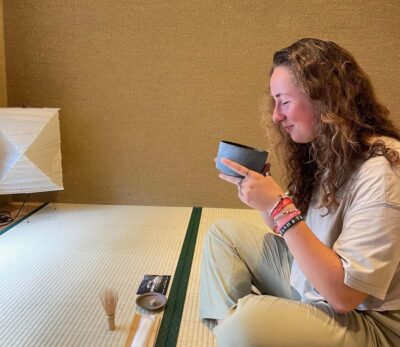 ★ 4.9Tea Ceremony Experience in a Private Tea Room in ShibuyaFrom $30125 reviews
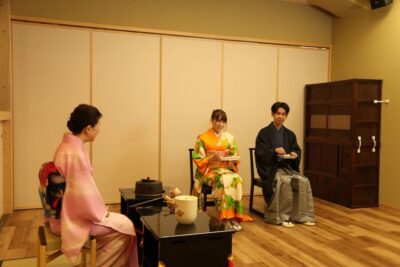 ★ 4.7Practicing Zen with a Japanese Tea CeremonyFrom $63105 reviews
 ★ 5.0Matcha Kimono Tea Ceremony in TokyoFrom $59104 reviews
 ★ 4.9Tea ceremony experience in Japanese-style room 60minFrom $4586 reviews
This tour also belongs to