
Review · TSUKIJI MARKET TOURS
10 kinds Sake Tasting Experience in Tsukiji with local!!
Ten pours of Tokyo sake, explained. This private 1 hour 30 minute Tsukiji experience has you sampling around 10 sake varieties while a local enthusiast turns the tasting into a lesson on brewing, drinking etiquette, and quality categories like Junmai and Daiginjo. I love the relaxed pace and real conversation, especially when the host helps smooth over any language gaps. One possible drawback: the meeting spot inside a busy area can be a little hard to find at first, so give yourself a few extra minutes.
What makes it work for most people is the mix of practical guidance and easy-to-follow structure. You start with the basics, then you move through different styles and regional differences, with small snacks between tastings to keep things comfortable. If you want sake culture without the stuffiness, this is an efficient way to get started in Tokyo.
Key Things I’d Prioritize on This 10-Kind Sake Tasting
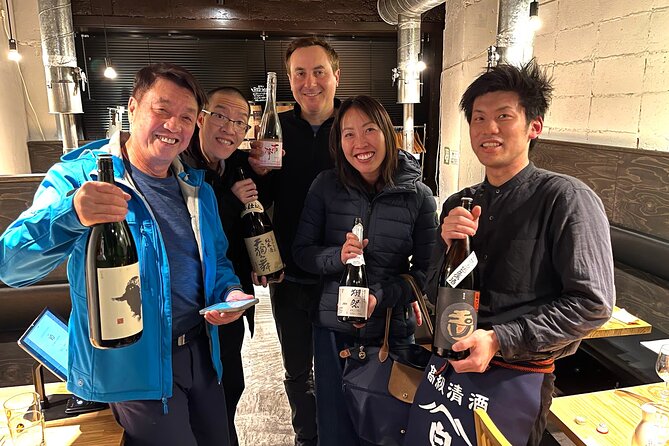
- Around 10 pours, paced for learning, not just drinking
- Etiquette plus labels, so you know what you’re tasting
- Junmai and Daiginjo explained in plain language
- Snacks between samples, like nuts and soy beans
- Private group format, with a guide who can handle language barriers
Why This Tsukiji Sake Session Feels Like Real Local Time
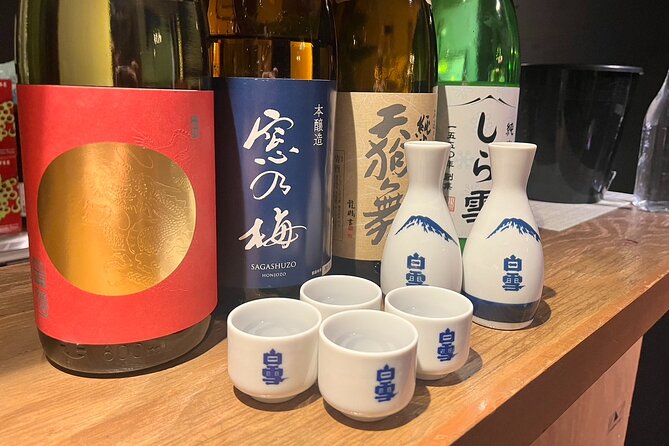
This isn’t a rushed, loud bar stop. You sit down with a guide and you taste in sequence, with explanations that connect the flavor to what’s happening in the brewery. In other words, you’re not just “sampling.” You’re building a simple map in your head.
I especially like that it stays casual and human. You can ask questions, and the host keeps the mood friendly rather than lecture-heavy. That makes it a strong choice if you’re visiting Tokyo for the first time and you want something cultural that still feels easy.
A second reason I like it: the experience is built around variety. Sake tastes can swing from light and clean to deeper and more intense, and learning the “why” helps you remember what you liked and why.
You can also read our reviews of more food & drink experiences in Tokyo

Brewing, Etiquette, and the Sake Terms That Actually Matter
Before you start tasting, the guide focuses on the basics of how to drink sake and the etiquette around it. That matters more than you’d think, because the “right way” changes the experience. When you understand how to hold and pour, what to pay attention to in aroma and flavor, and how to pace yourself, your tasting gets sharper fast.
Then you get the key labeling ideas that show up on bottles and menus. You’ll cover the sake quality classification system, including Junmai and Daiginjo. You also learn how sake is made at a general level, which helps you interpret the differences you notice in the glass.
One of the best parts is the regional angle. The guide explains how sake from different parts of Japan can taste different, so you stop treating every bottle like it’s the same category. Even if you only remember a few takeaways, you’ll be better at choosing what to order next time.
The Tasting Flow: About 10 Varieties, From Simpler to Fancier
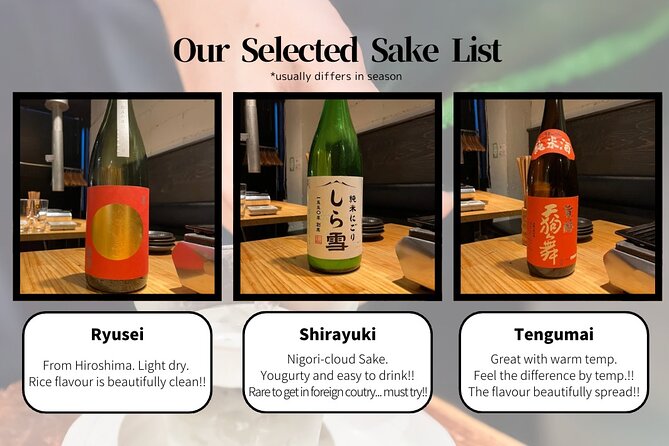
The core of the session is the flight. You’ll taste multiple sake styles, around 10 varieties total, and you’ll usually start with the lighter end and move toward higher quality as the set progresses. That sequence helps your palate adjust and keeps you from getting overwhelmed too early.
You should expect the tasting to be structured rather than chaotic. The guide offers explanations as you go, pointing out what to notice in each sample. The goal is that you can taste the differences, then connect them back to things like style and classification.
One practical tip I’d follow: pace yourself. At around 10 samples in 90 minutes, it’s very doable, but it helps to slow down between pours. The snacks also help, but your best bet is to treat it like a lesson with small sips, not like a drinking contest.
Snacks and Handouts That Make You Feel Caught Up
A big part of why this experience earns such strong ratings is the support around the tasting. You get handouts and information sheets that cover the basics and the terms you’re hearing during the session. That’s useful because it lets you re-check the ideas later, when you’re back in your hotel.
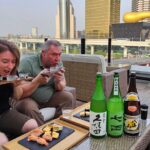
There are also snacks during the tasting. One common pairing includes nuts and soy beans, served between samples. That’s not just for comfort. It helps reset your palate so the next sake doesn’t blur into the last one.
If you’re the type who likes to learn and then immediately apply it, this format works well. You can take the paper notes home and use them when you’re walking into a sake shop or ordering at a restaurant later in the trip. It turns one evening into a longer-lasting skill.
Learning Sake With a Real Chef-Style Host, Like Matsu
The guide is part of the charm. In at least one instance, the host is a chef at Nomuno, and the explanations come with that hands-on tone you get from people who work with food and drink all day. Another named guide you may run into is Matsu, and the style there is clear, friendly, and conversational.
You’ll also notice that the guide can adjust to your pace. If you’re curious and want more detail, you can ask. If you’re newer to sake, the host breaks things down into simpler comparisons so you still follow.
English support is a real strength here. One person noted that the guide spoke English very well, and that’s a big help if you want to ask questions without worrying about communication. For many visitors, that is the difference between a tasting that feels like entertainment and one that feels like education.
You can also read our reviews of more drinking tours in Tokyo


Where You Meet in Tsukiji (And How to Not Lose Time)
You meet at a single location and you return there at the end. The start point is listed as Wagyu Yakiniku & Sake all-you-can-drink Niku-no-Himalaya to nomuno, 2-chōme-13-2 Shintomi, Chuo City, Tokyo 104-0041.
This matters because you’re not doing a multi-stop route. You’re showing up, getting settled, tasting, and leaving. That’s great if you prefer tight plans and minimal transit.
The one caution: the meeting spot can be a little tricky to find at first, so don’t plan to arrive at the last second. Give yourself breathing room, especially if you’re dealing with jet lag or you’re also trying to locate the exact entrance. Once you’re inside, the experience is straightforward.
Private, 1 Group at a Time, With Room to Ask Questions
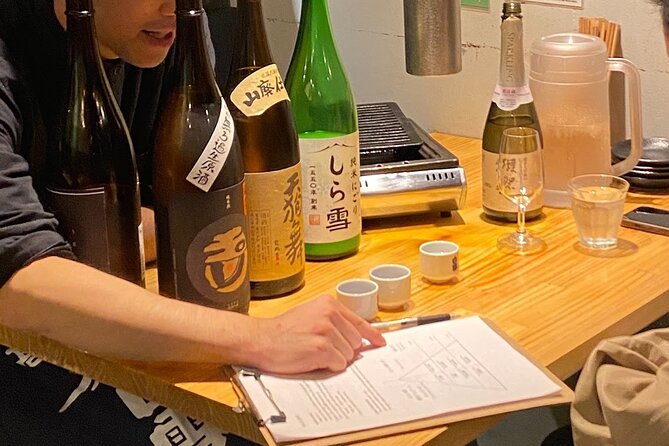
This is a private tour/activity, meaning only your group participates. That’s a major value point, because you get more direct attention from the guide. Instead of repeating yourself or waiting your turn, you can ask questions when they naturally come up.
It also changes the tone. With a private setup, the guide can tailor the pace and the explanations. If you’re there with friends or family, you can trade reactions as you taste, which makes it more fun and memorable.
Another practical plus is language support. The description notes the guide can help with language barriers, and in real conversations that tends to mean you get clearer answers and less guessing. For a first sake experience, that confidence is huge.
Price and Value: Is $62.40 Worth It?
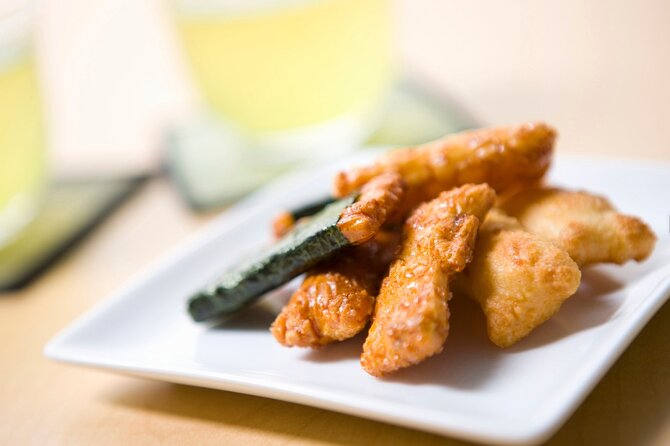
The price is listed at $62.40 per person for about 1 hour 30 minutes, and the session includes around 10 sake samples plus snacks. On paper, that might look like a simple tasting. In practice, you’re paying for three things: guidance, structure, and translation of sake labels and brewing concepts into something you can actually use.
If you’ve ever bought sake in a shop and then felt stuck, you’ll understand the value here. The guide helps you connect what you taste to the categories on the bottle. That turns the next purchase into an informed choice.
Also, because it’s private, the cost is easier to justify if you have a group. If you’re traveling with at least one other person, the per-person cost can feel more reasonable compared to booking multiple separate experiences elsewhere in Tokyo. At the same time, even solo, you’re not paying for a big crowd setting. It’s one-on-one style learning.
Who This Tsukiji Sake Tasting Is Best For
This experience is a strong fit for first-timers who want real context. If you’ve had sake before but you couldn’t explain the difference between styles, the Junmai and Daiginjo focus will help.
It’s also ideal for foodies and curious culture travelers. You get the etiquette and the brewery basics, then you taste the outcomes in your glass. That combo works well if you like experiences that teach, but you still want it to feel relaxed.
You’ll probably enjoy it even more if you like conversation. The host-led format makes questions natural, and the private group setup means you won’t feel like you’re interrupting a schedule.
If you only want a casual drink with no instruction, you might find this more educational than you expected. But if you’re open to learning while you taste, it’s a very efficient use of time in Tokyo.
Should You Book This 10-Kind Sake Tasting in Tsukiji?
Book it if you want a guided introduction to sake that actually helps you choose better next time. The combination of around 10 varieties, clear explanations of quality classifications, and snacks keeps the experience both fun and practical. I also think the private format is a big deal, especially if you want to ask questions and get answers in real time.
Skip it only if you’re not interested in learning the basics of brewing and etiquette. Since the whole structure is built around teaching and guided tasting, this won’t be the best fit for people who want zero explanation and zero structure.
If you’re planning your Tokyo days and you want one activity that feels local but still easy to enjoy, this is a smart bet.
FAQ
How long is the sake tasting experience?
It lasts about 1 hour 30 minutes.
How many sake varieties will I taste?
You’ll taste around 10 different sake varieties during the session.
Is this a private tour or shared group?
This is a private tour/activity. Only your group will participate.
Where do I meet the guide?
You meet at Wagyu Yakiniku & Sake all-you-can-drink Niku-no-Himalaya to nomuno at 2-chōme-13-2 Shintomi, Chuo City, Tokyo 104-0041, Japan. The activity ends back at the meeting point.
Do I get a mobile ticket?
Yes, the tour includes a mobile ticket.
When will I receive confirmation after booking?
Confirmation is received within 48 hours of booking, subject to availability.
Is it easy to get to using public transportation?
Yes. The meeting point is near public transportation.
What is the cancellation policy?
Free cancellation is available. You can cancel up to 24 hours in advance for a full refund.
More Drinking Tours in Tokyo

More Food & Drink Experiences in Tokyo

More Tour Reviews in Tokyo


Not for you? Here's more nearby things to do in Tokyo we have reviewed
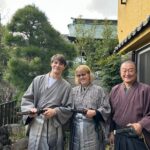




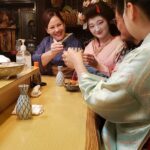


Tsukiji Market Tours, side by side.
 ★ 5.0Tokyo Tsukiji Fish Market Food and Culture Walking TourFrom $993,184 reviews
 ★ 5.0Tsukiji Fish Market Food and Walking tourFrom $301,724 reviews
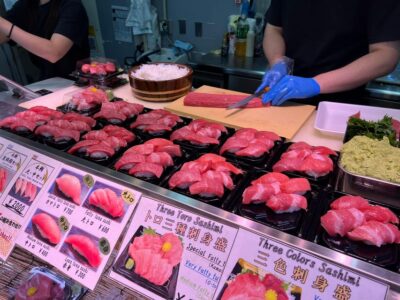 ★ 4.9Tsukiji Fish Market Guided Walking TourFrom $221,397 reviews
 ★ 5.0Tokyo Sushi Making Class in Tsukiji with Professional ChefFrom $491,177 reviews
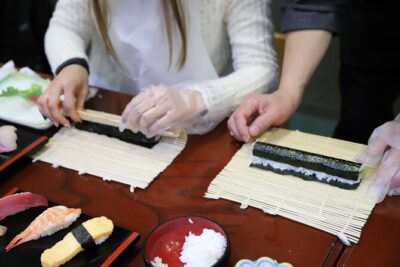 ★ 5.0Tsukiji Fish Market Guided Tour and Sushi Making with Pro ChefFrom $104775 reviews
★ 4.7Tsukiji Fish Market Food and Culture Walking TourFrom $96757 reviews
★ 5.0Tsukiji Fish Market Guided Tour and Sushi Making with Pro ChefFrom $104775 reviews
★ 4.7Tsukiji Fish Market Food and Culture Walking TourFrom $96757 reviews
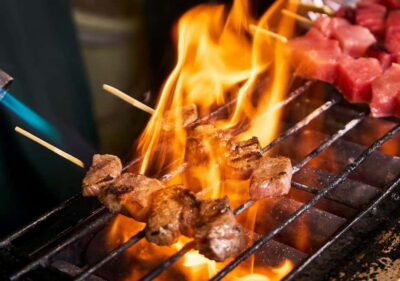 ★ 5.0Tsukiji Fish Market: Street Food & Culture Walking TourFrom $33669 reviews
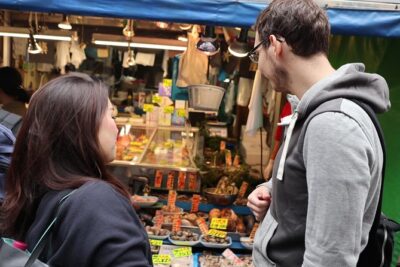 ★ 5.0Tsukiji Fish Market Small-Group Food Walking TourFrom $87621 reviews
This tour also belongs to