
Review · SHIBUYA TOURS
Tokyo: Shibuya Crossing & Hidden Streets Walking Tour
Shibuya hits hard in two hours. This tour starts with the thought-provoking Myth of Tomorrow mural, then hits Shibuya Crossing in a way that helps you feel the district fast. I especially like how it connects modern chaos with a human message of hope, so you are not just collecting photos, you are understanding the place through Myth of Tomorrow.
What I also like is the guide-led pacing and context. Guides such as Loc, Kumi, and Rio often get praised for explaining what you are looking at, plus helping with practical photo spots, even for solo visitors.
One thing to consider: the meeting point at SABON Shibuya Mark City, Mark City 3rd floor, can be tricky on your first day, so you need to arrive early and watch for the sign.
Key things I’d circle before you book
- Myth of Tomorrow: a mural stop at Shibuya Station that frames the tour with a message about nuclear impacts and hope
- Shibuya Crossing photos: guided photo stops so you are not guessing where to stand
- Nonbei Yokocho: old Tokyo alley vibes that feel lived-in, not staged
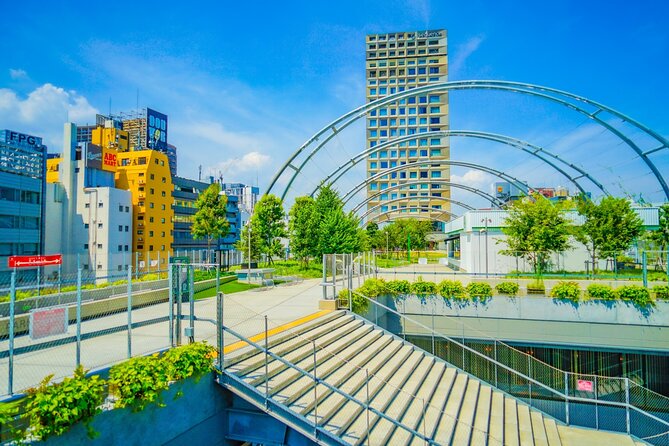
- Miyashita Park: a multi-level urban break from the street grind
- Center Gai and Maruyamacho: youth energy and modern nightlife areas in one smooth route
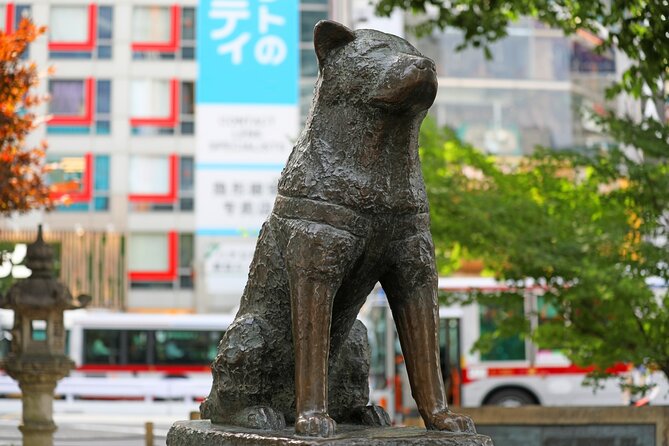
- Hachiko Memorial Statue: a symbolic finish right in the middle of it all
Finding the start fast at SABON Shibuya Mark City (3rd floor)
You start at SABON Shibuya Mark City. The key detail is location: the meeting point is inside Mark City on the 3rd floor. If it is your first day in Tokyo, this is the only part that can slow you down, because Shibuya is a maze of entrances and levels.
The good news is the tour is run by a live English guide who will hold a sign. Still, do not treat that as a safety net. Give yourself extra time, because the start is not designed for late arrivals.
Practical tip: once you are at Mark City, look for the floor signs and head to the 3rd floor before you try to message anyone or hunt around. In Shibuya, every minute matters.
You can also read our reviews of more walking tours in Tokyo


Myth of Tomorrow by Taro Okamoto: starting with meaning at Shibuya Station
The tour kicks off with a photo stop and short guided visit focused on Myth of Tomorrow. This is a mural by Taro Okamoto located near Shibuya Station.
I like this opening because it tells you what kind of Shibuya you are about to see. You get the futuristic, neon-adjacent Tokyo, yes. But you also get a reminder that big city life is tied to real history. The mural’s message addresses nuclear impacts and leans toward hope, so the first stop sets a thoughtful tone before the sidewalks get loud.
Expect the guide to point out what you should notice, not just where the mural is. Even if you usually skip art stops, this one works because it connects to the wider Shibuya story: modern crowds on the surface, human emotions underneath.
Shibuya Crossing: how to watch the world’s busiest intersection without panicking
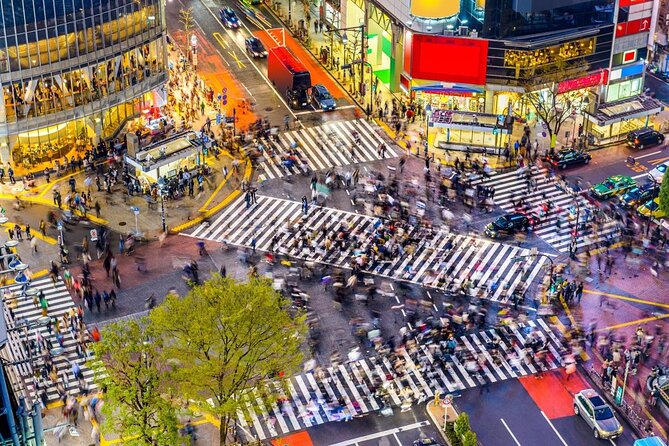
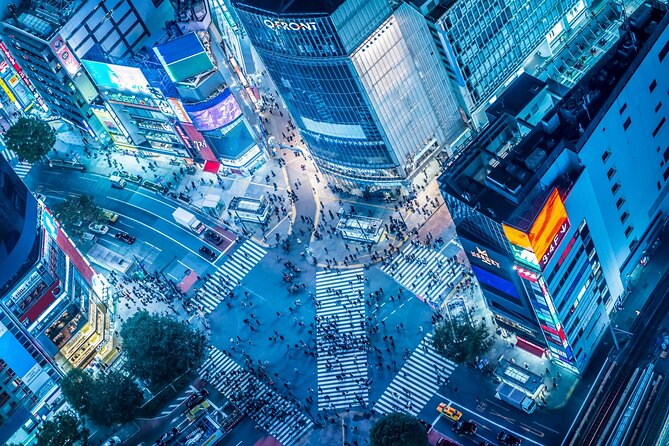
Next up is Shibuya Crossing, the famous scramble at the heart of the district. This is where the tour earns its name. You get a photo stop plus a guided walk that helps you understand what is happening at street level.
Here’s the real value: when you are standing near the crossing, it is easy to feel like you are in the wrong spot, or you end up photographing nothing but commuters’ shoulders. A guide helps you find viewpoints, time your shots, and move with purpose instead of freezing.
For solo travelers, this part tends to be extra important. Guides like Loc are known for taking time with photos, including helpful angles at the crossing itself. You also get context that makes the crossing more than a spectacle.
My small advice: if crowds make you stressed, keep your phone ready but focus on the flow first. The crossing moves fast, and you want to stay in control of where you are standing.
Nonbei Yokocho: old Tokyo side streets where local life feels real
After the big intersection, the tour shifts into older Tokyo atmosphere with Nonbei Yokocho, often linked with a nickname that points to its past nightlife culture.
This stop is guided and short, but it is the kind of stop that changes your mental picture of Shibuya. Instead of towering signage and wide lanes, you get narrow lanes and a more intimate street feel. It is the contrast that makes it click: Shibuya is not only one image, it is multiple layers close together.
What to expect on foot:
- a quick guided introduction to the alley’s character
- time to look around and absorb the textures of the street
A small consideration: if you are expecting a long wandering food crawl, this is not that format. The tour gives you the atmosphere and the context, then moves on. That works well if you want variety in a limited time window.
Miyashita Park: a multi-level breather in the middle of the city
Then the walking pace gives you a break at Miyashita Park. You will spend about 20 minutes here, with guided stops to show you what makes the place useful in real daily life.
Why this stop matters: Shibuya can tire you out quickly. Miyashita Park functions like an urban pause button. It is multi-level, so you can see the district from different heights, and you can reset your energy before the last stretch of the route.
I like how this stop balances the tour. It is not all street grit and photo chaos. You get a place to step back, look around, and catch your breath without leaving Shibuya.
If you are traveling with family or you want a moment to sit, this is usually the portion that feels most comfortable. Even if you do not sit, you will likely appreciate the change in tempo.






Center Gai: youth culture and street-level Tokyo energy
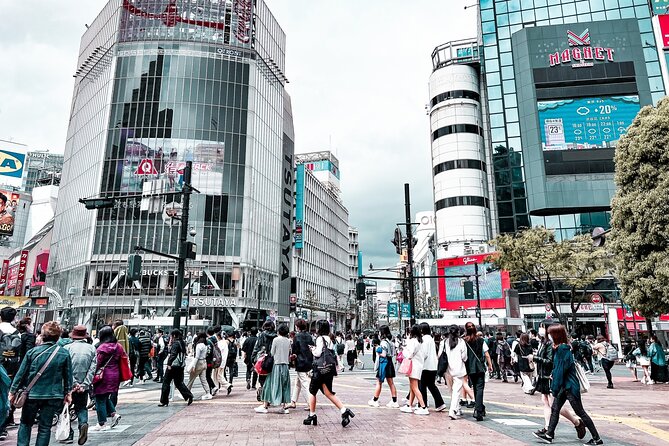
From Miyashita Park, you head to Center Gai. This is one of Shibuya’s best-known areas, tied to youth culture and everyday street life.
You get a guided visit plus a short window to see the area as it functions now: busy storefronts, active pedestrian flow, and a sense that Shibuya is always producing new trends. The tour framing helps, because you learn what makes Center Gai feel distinct within Shibuya, rather than just recognizing it from photos.
This is also a great stop for asking practical questions. A good guide will explain where people tend to gather, how the area is laid out, and what to prioritize if you only have one or two hours after the tour.
Maruyamacho: historical streets turned into modern nightlife lanes
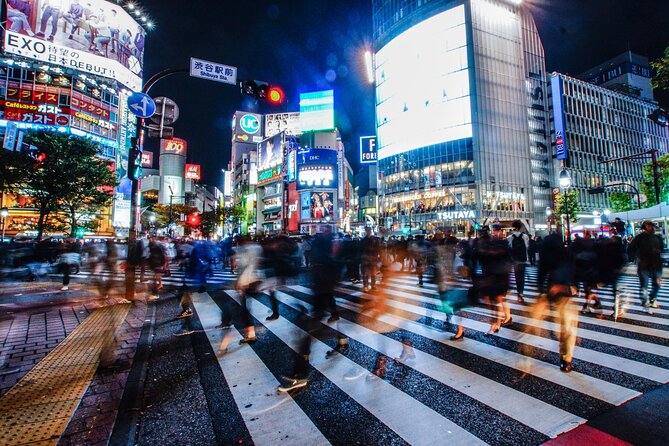
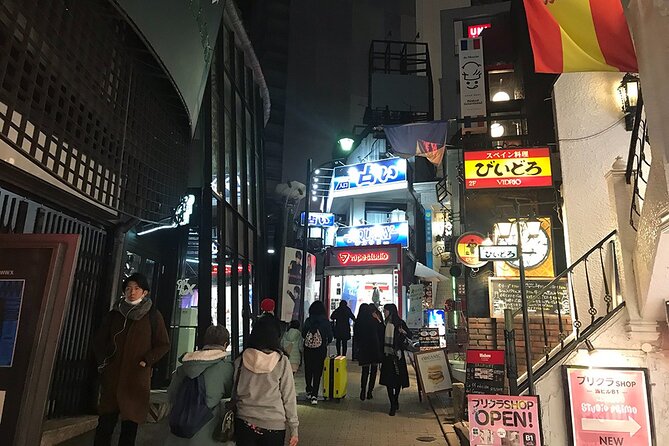
Next comes Maruyamacho, another shift in tone. The route brings you into historical streets that have become a hub for modern nightlife.
I like this section because it shows you how Tokyo reuses space. The streets feel older, but the atmosphere is contemporary. That mix is something you can miss if you only do the major Shibuya landmarks.
Expect:
- short guided walking through the area
- context on why this street zone works for nightlife today
A consideration: nightlife zones tend to be louder and more crowded than daytime shopping areas. If you are sensitive to noise, keep your expectations realistic and use the earlier park stop to recharge.
Hachiko Memorial Statue: the loyalty finale in the middle of Shibuya
The tour ends at the Hachiko Memorial Statue. This is one of the most iconic symbols in Shibuya, strongly associated with loyalty.
Ending here is smart for two reasons. First, it ties the tour back to a central Shibuya landmark that is easy to revisit later on your own. Second, it gives you a satisfying emotional note after stops that range from reflective art to energetic street scenes.
You do not need a long visit. What matters is the moment of arrival, because you finish right where most people would like to be, in the heart of the action, with your bearings slightly clearer than when you started.
Price and value: why $22 can make sense for a first Shibuya day
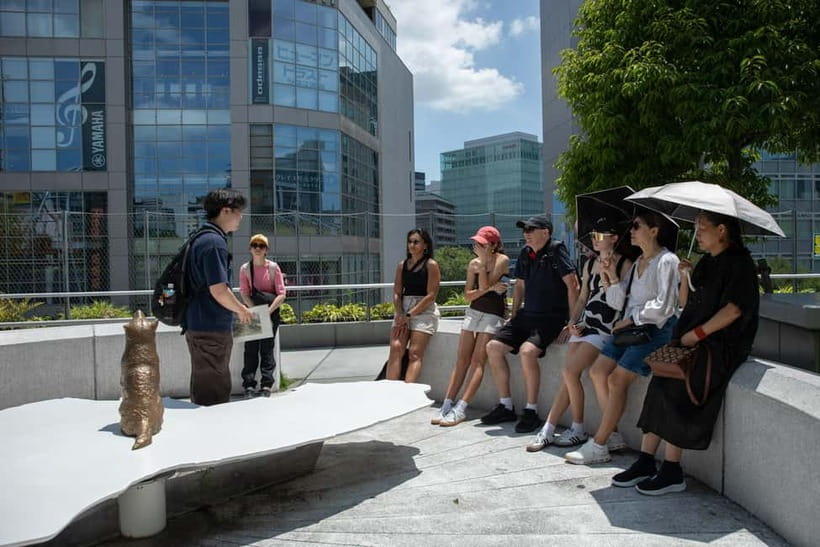
At $22 per person for about two hours, this is priced like a focused orientation tour, not a half-day sightseeing production.
Here is how I think about value:
- You get multiple Shibuya zones in one walk, so you are not bouncing around the city planning each stop.
- You get a live English guide, which is the main multiplier for places like Nonbei Yokocho and Center Gai. Knowing what you are seeing makes your photos better and your time more efficient.
- You finish at a landmark you can use for later navigation, the Hachiko statue.
If you are spending only a single day in Tokyo, or even only a couple of hours in Shibuya, paying for a guide is often cheaper than spending that time getting lost. In Shibuya, getting lost can cost you more than money. It costs energy.
If you already know Shibuya well and you only want the crossing, this may feel like more than you need. But for a first-time Shibuya day, it usually lands well.
What the guide quality adds, from Loc to Kumi to Rio
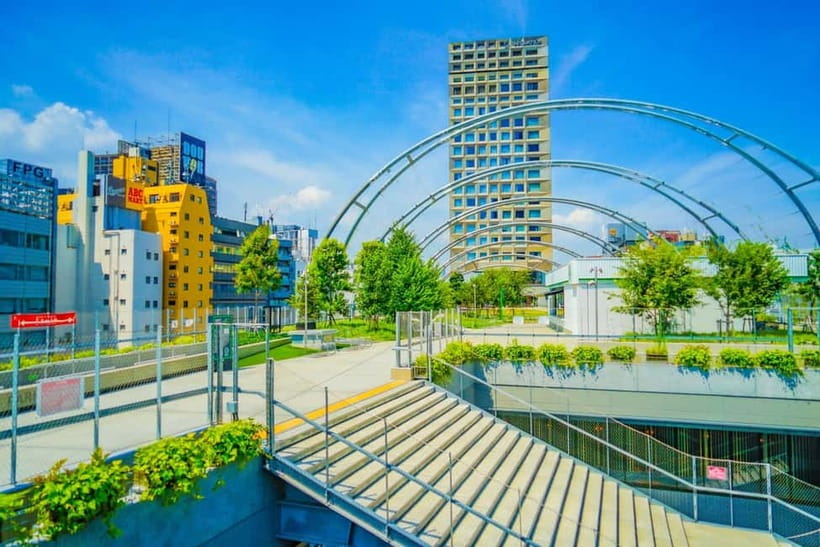
A pattern shows up with this tour: guides consistently prioritize communication, context, and practical help.
Names that come up with strong impressions include Loc, Kumi, Rio, Gray, Zach, Daichi, and Ryo. While each guide brings their own style, the common thread is clear explanations and willingness to answer questions. Several guides also help with photo-taking, which matters a lot at Shibuya Crossing, where solo travelers often struggle with angles and timing.
One more practical thing: this tour format often supports flexible pacing. That can be a big deal if your day is packed or you need to slow down for photos, questions, or simply your feet.
Who should book this Shibuya crossing and side-streets walk
This tour fits best if you:
- are visiting Shibuya for the first time and want a smart route
- want both iconic Shibuya Crossing and smaller streets like Nonbei Yokocho
- like learning short, clear context while you walk
- are traveling solo and want help getting photos at major points
- have limited time, but still want to cover the major emotional sides of Shibuya
It may be less ideal if you:
- hate walking and prefer slow, standalone sightseeing
- only care about one or two landmarks and would rather spend all your time there
- want a deep museum-style experience, because this is a neighborhood walk, not a slow indoor tour
Practical tips so you enjoy every stop
A couple of simple moves make a big difference on a two-hour walking tour in Shibuya.
- Wear comfortable shoes. You are moving between districts and crossing busy pedestrian areas.
- Bring a light rain layer if your dates are unpredictable. The tour has still worked during light rain for at least some participants, so a compact umbrella or hood is a good idea.
- Charge your phone ahead of time. You will likely want photos at Myth of Tomorrow and at Shibuya Crossing.
- Arrive early at the meeting point. Mark City 3rd floor can be easy to miss if you rush.
Most importantly, stay open to contrasts. Shibuya goes from reflective mural to crowd scramble to quiet alley feel to park reset, and that is the whole point.
Should you book this tour?
Yes, if you want a fast but meaningful introduction to Shibuya that balances big sights with smaller streets. The route gives you the iconography, the local alley vibe, and a guided explanation that helps everything click.
If your schedule is tight, this is one of the better ways to buy back time. For a first Shibuya day, the $22 price tag feels reasonable because you are paying for route logic and a guide who helps you see more than a list of landmarks.
If you want, tell me your travel dates and whether you prefer daytime or evening vibes, and I’ll suggest what to pair with this walk for food and one or two extra Shibuya stops.
FAQ
Where does the tour start?
The meeting point is SABON Shibuya Mark City, inside the building called Mark City on the 3rd floor. The guide will be holding a sign.
How long is the Shibuya walking tour?
The duration is 2 hours.
How much does it cost?
The price is $22 per person.
Is the tour guided in English?
Yes, it is a live tour guide in English.
What is the first featured stop besides Shibuya Station?
The tour includes a Myth of Tomorrow stop, with a photo opportunity and guided visit.
Do you visit Shibuya Crossing?
Yes, there is a photo stop and guided visit at Shibuya Crossing.
Are Nonbei Yokocho and Miyashita Park included?
Yes. Nonbei Yokocho is included with a guided visit, and Miyashita Park is included with a longer guided visit.
Where does the tour end?
The tour finishes at the Hachiko Memorial Statue.
What is the cancellation policy?
Free cancellation is available up to 24 hours in advance for a full refund.
Is there an option to reserve without paying immediately?
Yes. You can reserve now and pay later, which means you pay nothing today.
More Walking Tours in Tokyo


More Tours in Tokyo


More Tour Reviews in Tokyo
Not for you? Here's more nearby things to do in Tokyo we have reviewed












Shibuya Tours, side by side.
 ★ 5.0Official Street Go-Kart in ShibuyaFrom $763,435 reviews
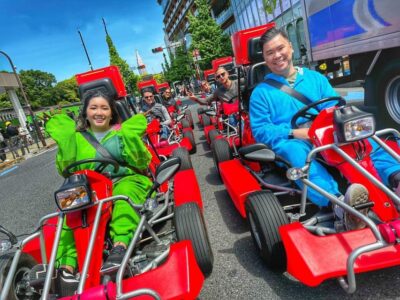 ★ 4.9Street Kart Experience in ShibuyaFrom $741,484 reviews
 ★ 5.0Shibuya Meltdown Nightlife Tour: All-You-Can-Drink Bar HoppingFrom $1061,058 reviews
 ★ 5.0Shibuya Official Street Go-Kart in Shibuya AnnexFrom $69972 reviews
 ★ 5.0Shibuya Food Tour (13 dishes and 4 Eateries)From $77770 reviews
 ★ 5.0Best of Shibuya Food TourFrom $217612 reviews
 ★ 4.8Shibuya Highlights Walking TourFrom $19601 reviews
 ★ 4.7Premium Go-Kart Tour with Tower & Shibuya CrossingFrom $116528 reviews
This tour also belongs to