
Review · SHINJUKU TOURS
Discover the History of Shinjuku Gyoen – Private Walking Tour
Shinjuku Gyoen is one of Tokyo’s smartest breaks. This private walking tour pairs Shinjuku Gyoen National Garden sights with clear historical commentary, so you see how the grounds shifted from a feudal estate to an imperial garden and finally a public park. I especially like the focus on specific landmarks, like the Former Imperial Rest House (Kyū Yōkan Gokyūsyo), plus the way guides help you spot great garden photo angles without wasting time.
You’ll walk at a steady pace for about 2 hours, with a moderate fitness level suggested. One possible drawback to plan around: the admission ticket is not included, so you’ll want to budget for that extra cost before you arrive.
Key highlights you will actually feel in the park
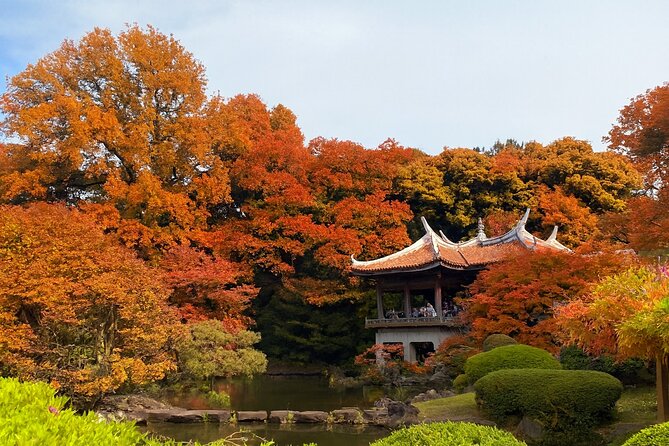
- Imperial to public story, told on the ground as you move between rest houses and garden areas.
- Former Western-style Rest House viewing that adds a different architectural chapter to the same grounds.
- Greenhouse time that makes sense, not just a pass-through stop.
- Goryōsho Pavilion viewpoints for scenery and calm breaks in the walk.
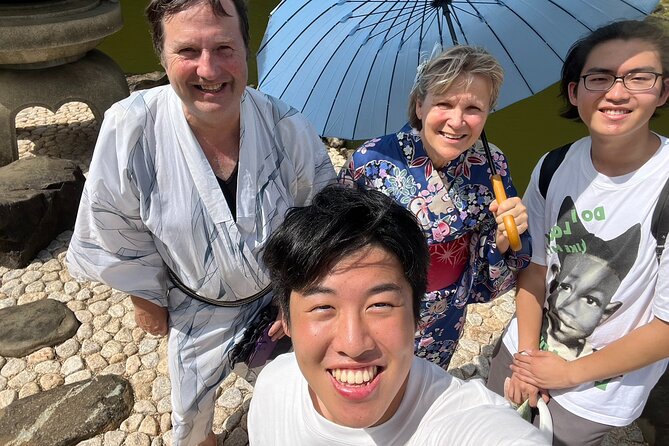
- Photo help from guides like Mao and Yu, including patient aiming and multiple spot options.
Shinjuku Gyoen National Garden, and the “one park, three eras” idea
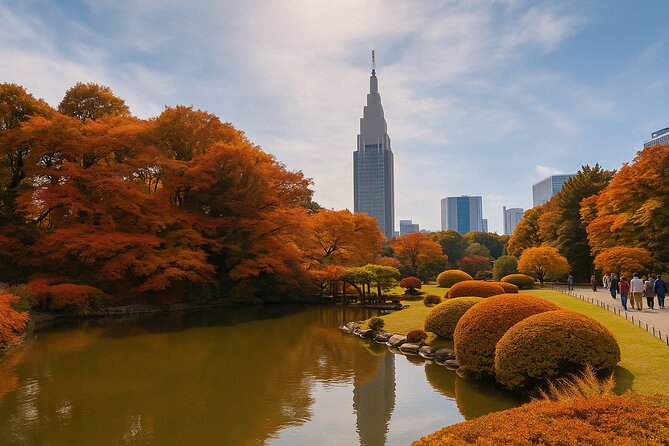
Shinjuku Gyoen has a rare feel in Tokyo. It is not just pretty paths and seasonal color. The whole place is a timeline you walk through, with key buildings and garden styles tied to changing power and changing access.
What I like about this tour format is that it keeps the story practical. You are not stuck listening in one spot. You move between landmarks while the guide explains why the grounds were redesigned again and again, from a private estate setting to an imperial garden, then eventually to a public space. That context makes the small details hit harder, like why certain rest house locations matter, or why a garden area feels more formal than you expected.
The tour also gives you a reason to slow down. Even if you like parks, Tokyo parks can feel like you are just speed-walking to the next view. Here, the guide’s job is to make each stop feel connected, so you come away with a mental map instead of a pile of photos.
You can also read our reviews of more walking tours in Tokyo


Getting oriented at Shinjuku Gate before you wander off course
Your walk starts at Shinjuku Gate, 11 Naitōmachi, Shinjuku City, Tokyo 160-0014. That matters, because Shinjuku Gyoen is big enough that arriving without a plan can mean backtracking later. A guide helps you get your bearings early, so you spend your energy where it counts.
You will want to show up with two basic expectations:
1) You are there for a historical walk, not a museum tour.
2) You are there for a guided route through multiple garden areas, not a quick highlight loop.
The “private tour” part is also a real advantage in a park like this. You can ask questions as you go. If you want more time on a pond edge, or less time in a crowded zone, the guide can adjust within the general flow. The pace is meant to fit a moderate fitness level, so plan on comfortable walking and some steady movement across the grounds.
Former Western-style Rest House, where the grounds show a different chapter
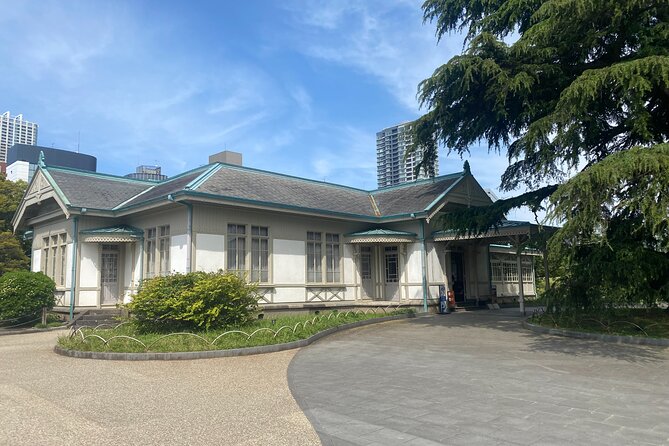
One of the first stops you will spend time with is the Former Western-style Rest House. This is a smart anchor point because it changes how you look at the rest of the garden.
Shinjuku Gyoen has Japanese garden areas, of course, but the presence of Western-style architecture reminds you this park was shaped by outside influences too. The guide’s commentary helps you connect that to how gardens and leisure spaces evolved for different leaders and eras. Instead of thinking of the park as one uniform style, you start noticing transitions, like shifts in structure, materials, and the way the space is staged for visitors.
A practical tip here: listen for the guide’s explanation of what you are looking at, then take a moment to frame your photo. Guides who are used to this park, like those described in the experiences you can read about, often point out spots that give you cleaner lines and fewer distractions. If you care about photography, this is where the time investment pays off.
The traditional garden areas, and the value of refined landscaping
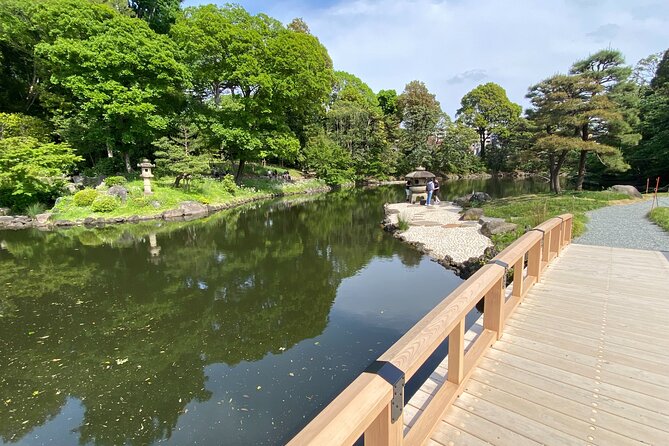
Between major buildings, you will move through traditional Japanese garden areas within the grounds. This is where the tour becomes more than history facts. Garden design is meant to be experienced in segments, with views that change as you walk.
Even if you already enjoy Japanese gardens, a guide helps you notice the choices behind what looks effortless. You learn what makes a path feel composed, how the arrangement supports a sequence of sightlines, and why certain areas feel more formal than others. That is how you turn a nice stroll into something you remember.
If you are traveling with someone who likes nature but not long lectures, you can treat this section as the “slow down and watch” portion. The guide can talk, but the design also speaks for itself. The best part is that you are learning without feeling dragged through a script.
Tropical greenhouse stop, a palate cleanser with a story behind it
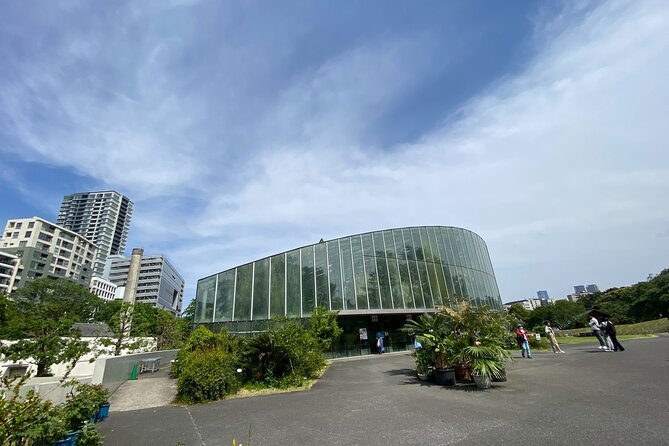
A tropical greenhouse stop is included in the route, and I think that is a smart move in a Tokyo park tour. After walking in landscaped garden areas, the greenhouse gives your eyes a break and your brain a reset.
The guide’s historical perspective is what makes this greenhouse stop more useful than a quick look at plants. Instead of thinking of it as just an attraction, you understand it as part of the estate and garden design logic. It becomes another clue in the park’s evolution, where different planting styles and controlled environments fit into the broader vision of how the grounds were used.
Even if you are not a plant person, you’ll likely appreciate the contrast:
- Garden pacing outside
- Controlled humidity and glass structure inside
- The guide tying it back to how the site functioned over time
Wear layers if you run hot or cold easily. Greenhouse environments can feel different from the open-air areas right around them.
You can also read our reviews of more private tours in Tokyo

Imperial Rest House (Kyū Yōkan Gokyūsyo), power you can see
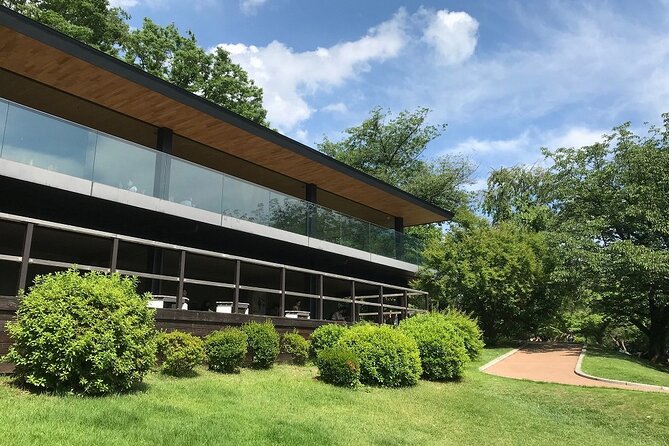
The Former Imperial Rest House, listed as Kyū Yōkan Gokyūsyo, is a centerpiece stop. This is where the tour’s “three eras” idea becomes very real.
You are seeing the physical evidence of how the grounds served leaders and how leisure spaces were designed for privacy, comfort, and controlled access. The guide helps you understand that this was not simply a building dropped into a park. It was tied to how the estate operated and how the grounds were arranged for specific kinds of use.
This is also where guides like Yu, praised for strong English and adaptability, tend to help you get the most out of your time. In a private setting, you can ask follow-up questions, and the guide can slow down if you want more detail. If you are the type who likes facts but not fluff, you’ll probably find the explanations hit the right level.
Photo note: rest house areas can have distracting background elements depending on season and crowd timing. A good guide can point out which angles keep the architecture clean, and where you can step aside to avoid blocking other visitors.
Goryōsho Pavilion, where the park gets scenic fast
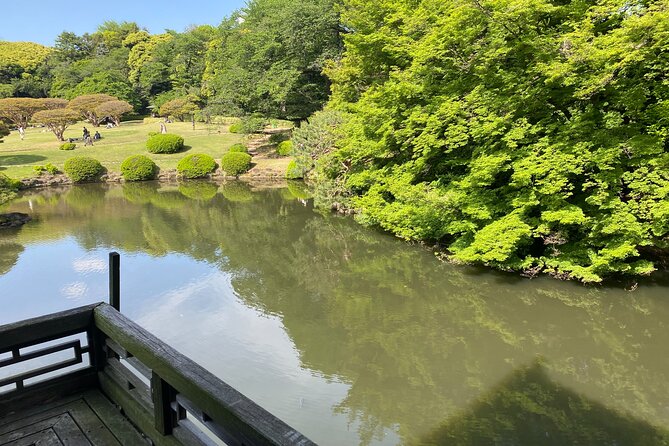
Another included highlight is the Goryōsho Pavilion. This is the kind of stop where the views do half the work, and the guide’s context does the other half.
Pavilions in garden settings are usually about framing. You stand, you look, and the environment becomes a designed picture. When the guide connects that purpose to the park’s history, the scene becomes more meaningful than just “pretty.”
I like this portion of the tour because it gives you a chance to breathe. Two hours can sound short, but a private walking tour that hits rest houses, gardens, and a greenhouse can feel like a lot. A pavilion stop brings the focus back to scenery and calm, and that makes the whole route feel balanced.
If you are traveling with friends who will later ask what you did in Tokyo that day, this is the moment you can point to. It is easy to describe, easy to remember, and the photos tend to look good even when you do not try too hard.
How the private format changes your 2-hour experience
This is a private tour/activity, meaning only your group participates. That changes everything in a big park.
First, you do not have to compete with a larger group’s tempo. Your guide can watch for when you are ready for the next stop, and when you want to pause for questions or photos. That flexibility shows up in the kind of feedback people mention about guides being patient, taking excellent photos for the group, and offering multiple options for where to stand.
Second, the guide’s English skills matter more in a private setting because you can ask more specific questions. When someone like Yu is described as having spectacular English, that is not just praise, it is a practical advantage. It means you can understand the historical commentary clearly, then translate it into what you are seeing in front of you.
Third, the guide can tailor your path a bit within the natural flow of the park. If you care about photography, you are more likely to get stop-by-stop suggestions. If you care about history, you can press for more explanation around a particular building.
Your baseline is about 2 hours. That is long enough to feel like you experienced the park, but short enough that you do not need to devote an entire day to it. For many travelers, that is the sweet spot.
Admission ticket, what it means for your budget
The tour includes an expert-guided walk, but the admission ticket is not included. That is worth thinking about when you compare value.
At $50.00 per person, you are paying for time, interpretation, and a route that strings the best landmarks together. If you were to go alone, you could likely buy admission and wander. The difference is what a guide adds:
- You learn what you are seeing, not just that it exists
- You know why certain buildings and gardens connect to each other
- You get photo help without trial and error
So you should plan on spending extra for admission separately. Once you factor that in, ask yourself a simple question: do you want a guided story with tailored photo spots in two hours? If yes, this price is easier to justify. If you want a totally self-directed day, you might prefer to DIY and spend that money on a longer stay or a different experience.
Logistics that help you enjoy it, not stress about it
The meeting point is Shinjuku Gate. The tour is near public transportation, which is a big deal because Shinjuku is not a place you want to fight for parking. The guide format also reduces decision fatigue. Instead of figuring out your route while you are tired from transit, you start with direction.
Confirmation is received at time of booking, which helps your planning. A mobile ticket is also part of the package, so you will not need paper printouts.
Finally, this tour allows service animals. If that applies to you, it is good to know upfront.
Who should book this Shinjuku Gyoen walking tour
This tour fits best if you want all of these:
- A guided way to understand how Shinjuku Gyoen evolved over time
- Time spent at specific landmarks like Kyū Yōkan Gokyūsyo, the greenhouse, and Goryōsho Pavilion
- Photo-friendly guidance, including recommendations on spots around the garden
- A private setup so you can move at a pace that works for your group
It also works well for first-timers to Shinjuku Gyoen who feel overwhelmed by the size of the park. If you love Tokyo but want a quieter, garden-focused break, this is a clean way to do it without giving up your whole day.
If you only care about wandering for atmosphere and you do not want to listen to historical commentary, you may be happier doing a self-guided visit. The tour shines when you want the story and the route.
Should you book this private Shinjuku Gyoen tour?
Book it if you value a guided historical route and you want the park to make sense in your head, not just look good on your camera roll. The strongest reason is the combination of landmark focus and practical guidance, with guides like Mao and Yu highlighted for photo tips, patience, and clear communication.
Skip it if you want a free-form, no-structure stroll and you are happy reading about the site yourself. Also keep your budget honest because the admission ticket is separate.
If you want a well-paced two-hour walk that connects architecture, garden design, and the park’s changing role in Tokyo, this private tour is a solid use of your time.
FAQ
How long is the Shinjuku Gyoen private walking tour?
It lasts about 2 hours.
Where does the tour meet and start?
The meeting point is Shinjuku Gate, 11 Naitōmachi, Shinjuku City, Tokyo 160-0014, Japan.
Is the admission ticket included in the $50 price?
No. The admission ticket is not included.
Is this tour private or shared with strangers?
It is private, so only your group will participate.
Do I get confirmation after booking?
Yes, confirmation will be received at the time of booking.
Are service animals allowed on this tour?
Yes, service animals are allowed.
Is the tour near public transportation?
Yes, it is near public transportation.
What fitness level do I need?
A moderate physical fitness level is recommended.
What is the cancellation policy?
Free cancellation is available. You can cancel up to 24 hours in advance for a full refund.
How far in advance is it usually booked?
On average, it is booked 58 days in advance.
More Walking Tours in Tokyo


More Tours in Tokyo






More Tour Reviews in Tokyo


Not for you? Here's more nearby things to do in Tokyo we have reviewed












Shinjuku Tours, side by side.
 ★ 5.0Shinjuku Food Tour (13 Dishes at 4 Local Eateries)From $866,603 reviews
 ★ 5.0Tokyo Bar Hopping Tour in Shinjuku (All-You-Can-Drink + Dinner)From $1063,587 reviews
 ★ 4.9Shinjuku Food Tour (15 Dishes and 4 Eateries)From $852,033 reviews
 ★ 5.0Best of Shinjuku: Izakaya Food Tour (4 Stops, 14+ Tastings)From $921,863 reviews
 ★ 4.9Shinjuku Local Bar and Izakaya Guided Walking TourFrom $341,794 reviews
 ★ 5.0Tokyo Shinjuku Chopsticks Making ClassFrom $201,763 reviews
 ★ 5.0Tokyo Shinjuku Sumo Show & Experience with PhotoFrom $791,750 reviews
 ★ 5.0Tokyo Night Foodie Tour in Shinjuku – Seasonal Sushi, Wagyu BeefFrom $1111,161 reviews
This tour also belongs to