
Review · ASAKUSA TOURS
Tokyo Asakusa & Senso-Ji Walking tour With A Guide
Tokyo feels like two cities at once. Asakusa is where old Japan and everyday life meet, and a private guide helps you see both. I like the value of real local guidance, especially the practical ideas you get for what to do next, and I like the clear highlights loop through Senso-ji, Nakamise, and the surrounding backstreets. One caution: at $53, you will want your guide to match your interests, because a few guests have felt the walk could use more explanation.
You meet in Asakusa, then you walk a tight circuit for about 2 hours. You get a private, exclusive group, English live guiding plus French, Spanish, and Italian, and the tour can be customized. I still suggest you go in with a couple of questions ready, so the answers are tailored and you get the most out of the time.
Key highlights to look for
- Private, exclusive pacing: no waiting around for a large group.
- Guide-led stories: cultural context for Senso-ji and the area around it.
- Photo stops that help you orient: including a Tokyo Skytree viewpoint.
- Nakamise Street time: snacks and souvenirs without feeling lost.
- Sumida Park reset: a quieter river-side break, often with seasonal cherry blossoms.
- Customization for your needs: including flexibility with the route.
Why Asakusa is the right place to start
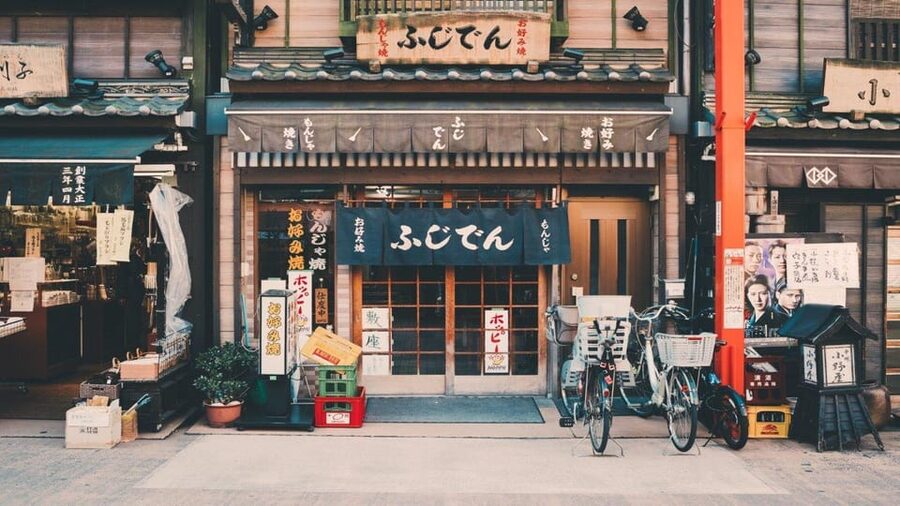
Asakusa works because it is not just a temple stop. It is a working neighborhood. You get the vibe of Tokyo that goes beyond the skyline, where people run errands, buy small things, and walk like the day is normal.
A good guide turns that into something you can actually read. You learn what to notice at Senso-ji, how Kaminarimon fits into the whole experience, and why the Nakamise shopping street matters beyond being a souvenir strip. The payoff is that you walk away with a mental map of the area, not just photos.
You can also read our reviews of more walking tours in Tokyo

The practical shape of a 2-hour private walk
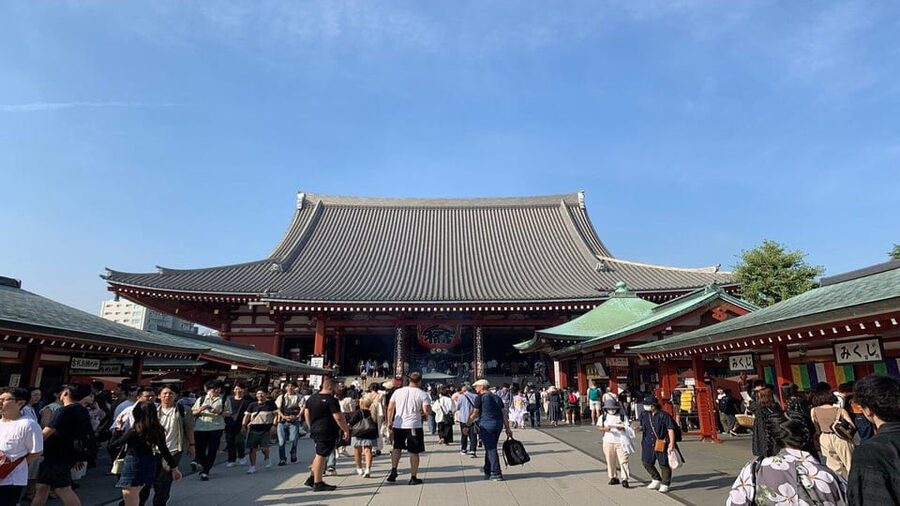
This is a private walking tour for a group that stays exclusive, so you are not stuck in a slow moving line behind other people. It runs around 2 hours, which is perfect if you want something meaningful without burning half a day.
Because it is guided in multiple languages (English, French, Spanish, Italian), you should have an easier time asking quick questions as you go. And because it is customizable, you can steer toward what you care about most, like temple routines, shopping street etiquette, or the way locals use the river area.
Quick note: the tour does not include food or drinks, so plan a snack break either before or after. Comfort matters too. Asakusa streets can mean short bursts of walking that add up.
Finding the meeting point in Asakusa, and what to do with it
You meet at the front of Asakusa, at 1 Chome-8-13 Nishiasakusa, Taito City, Tokyo 111-0035. This area is close to the sights you actually came for: Senso-ji, Nakamise Shopping Street, and the big red lantern at Kaminarimon.
That matters for two reasons. First, you waste less time commuting through Tokyo. Second, it makes the tour feel like a smooth transition from train day to walking day. If you are arriving by subway, it helps to give yourself a few extra minutes so you do not start the tour already stressed.
Photo stop at Tokyo Skytree: a smart orientation moment
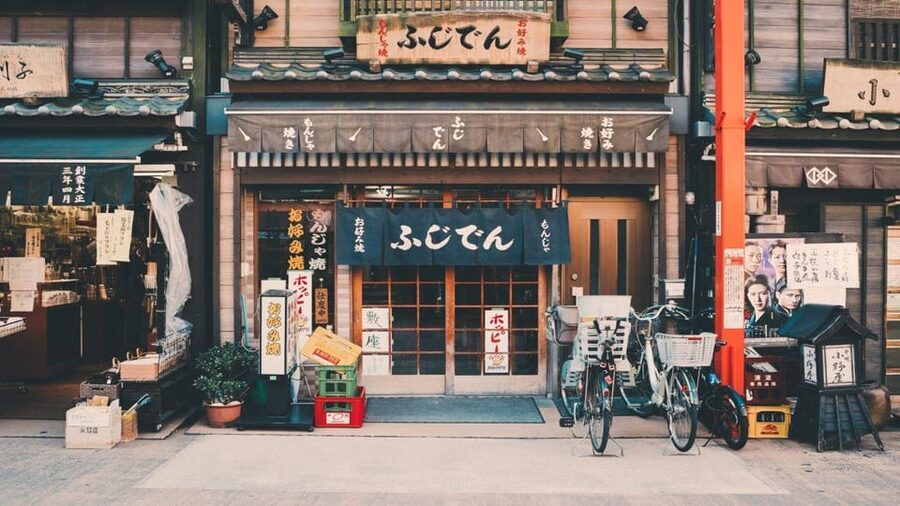
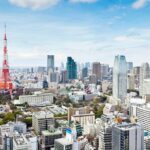
One of the first stops is a Tokyo Skytree photo stop. Even if you have already seen Skytree from far away, this kind of viewpoint helps you understand where you are in the city grid.
Why I like this segment: it gives you a visual anchor early. Later, when you are walking around Senso-ji and down Nakamise, you start spotting how the area connects to the modern skyline, especially along the Sumida River side.
Also, it is a low-pressure moment. You get a few minutes to frame a photo and adjust your pace. If you come in expecting a pure temple-and-market route, this stop is a nice reminder that Asakusa sits inside a living modern city.
Asakusa streets and a photo stop: how to read the neighborhood
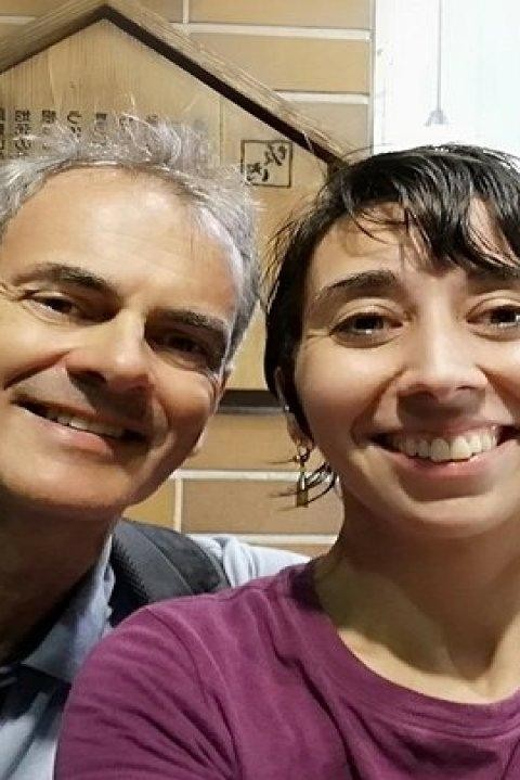
After the Skytree viewpoint, you move into Asakusa itself, including a photo stop and guided walking through the streets around the district.
Here is what you should pay attention to with a guide:
- How the street layout shapes where crowds gather.
- Where tradition is still visible in the small details, not just the big signboards.
- How the energy changes as you move from main sight lanes into calmer backstreets.
This is where a private format helps. If you want to linger for a shot, you can. If you want to cut straight to quieter streets for daily life, you can also do that. A couple of guests specifically appreciated the ability to respect their needs, which is a big deal in a place where crowds can make timing tricky.
You can also read our reviews of more guided tours in Tokyo
Nakamise Shopping Street: snacks, souvenirs, and what to buy
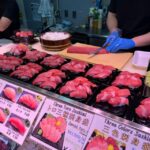
Nakamise Shopping Street is one of the best parts of Asakusa, and a guide helps you do it without getting pulled into chaos. You walk through this traditional market lane lined with stalls selling Japanese snacks, souvenirs, and small crafts.
What makes this stop useful with a guide is not just finding things to buy. It is understanding what you are looking at. You can ask what is worth trying, what is more for browsing, and how to move through the lane without losing the rest of your route.
One practical tip: go in with a budget and a rough list. Nakamise has plenty of tempting edible options, but the tour itself does not include drinks or food. If you know you want one snack and one souvenir, you keep the tour rhythm instead of turning it into a full shopping session.
Sumida Park: your mid-walk reset along the river
You also get time at Sumida Park along the Sumida River. Depending on the season, the park may be decorated with cherry blossoms, which adds that soft, calm break to the day.
Even when there are no blossoms, the river-side pause matters. Crowds and temple streets can drain you. This is a breathing point where your photos look different too, with wider angles and a calmer background. It is also a good moment to ask follow-up questions your guide saved for the walk, like practical advice on getting to your next stop in Tokyo.
If you are sensitive to walking fatigue, Sumida Park is a lifesaver. It helps you reset before the final stretch to Senso-ji.
Sensō-ji and Kaminarimon: what your guide should point out

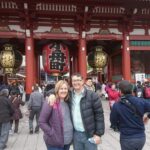
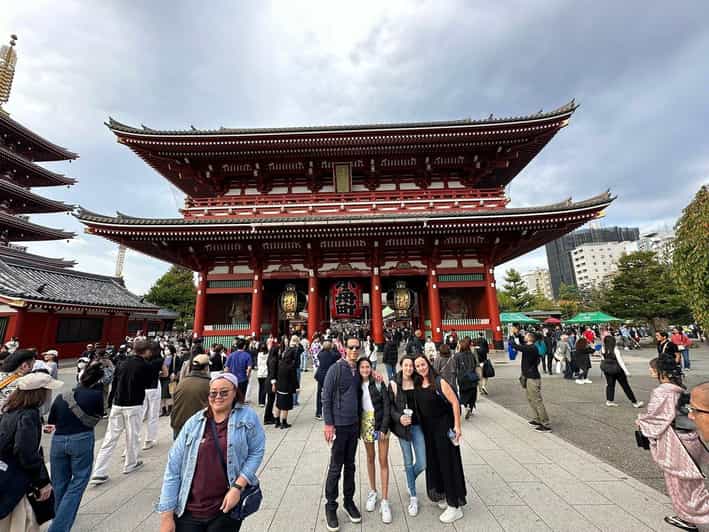
The centerpiece is Sensō-ji, described as Tokyo’s oldest temple, with a guided path that includes the approach to Kaminarimon Gate. Kaminarimon is famous for its colossal red lantern, and seeing it in person gives you instant scale. You feel like you are entering a major landmark, not just a small shrine.
This is also where the guide’s storytelling becomes the difference between seeing and understanding. A strong guide shares cultural nuance and practical context, so you know what you are looking at and why it matters. One guide named Nicolas was noted for giving an especially instructive tour, with plenty of explanation about Japanese culture and history.
That said, there can be variation in how much narrative you get. A couple of experiences have mentioned that the walk may not provide enough explanatory framework. If your goal is deep context, I suggest you ask early, at the start of the tour, for specifics like:
- What traditions are most important here?
- What should I notice at Kaminarimon and the main approach?
- Where do locals tend to focus during their visit?
Private guiding works best when you steer it a bit.
Backstreets after the main sights: where the “local” feeling happens
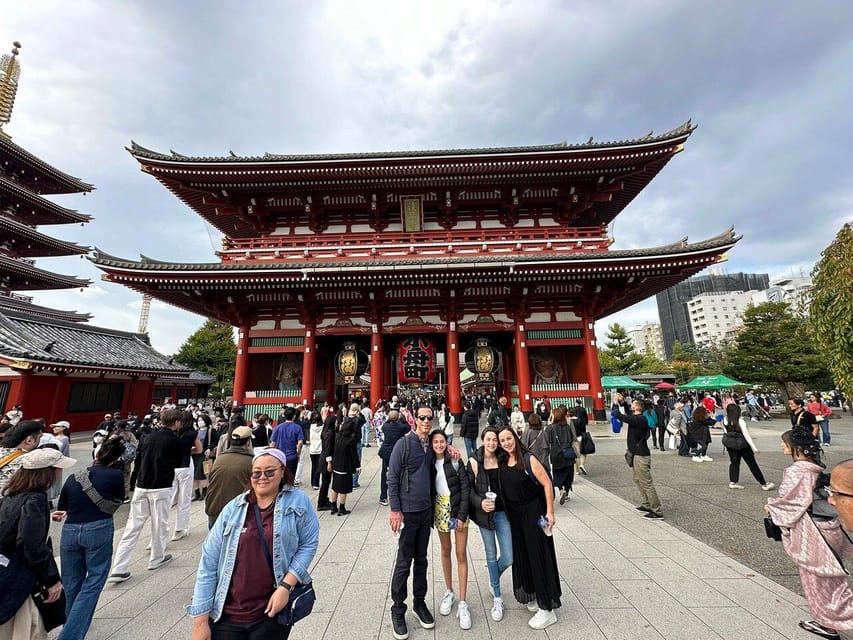
After the big-name areas, you also venture into Asakusa backstreets where daily life feels closer and the architecture looks more traditional. This part is valuable because it shifts you from tourist mode to neighborhood mode.
Instead of only walking where everyone takes photos, you get a chance to see quieter lanes and small details you might skip if you were on your own. You are also better positioned to understand the community side of Asakusa, not just the temple performance.
This is one of the reasons people often rate these tours well. You end the tour feeling like you understand the area’s rhythm, including where it feels most lived-in.
Price and value: is $53 fair for two hours?
$53 per person for a 2-hour private guide is not the cheapest way to see Asakusa, but it can be fair value if your priorities match what you get.
Here is how I judge the value:
- You save time. You are not figuring out the route or what to focus on.
- You get practical advice for other stops. One of the standout themes is that guides share useful ideas for what to do next around Tokyo.
- The group is private and exclusive, which makes the pacing feel smoother.
Where the value can wobble is expectations. If you expect a very detailed lecture style, and your guide keeps things light, the price might feel steep for what you got. If you prefer a friendly, flexible walk with story highlights plus practical direction, it tends to feel like money well spent.
If you care about the “value for content” part, tell your guide what you want early. It is the simplest way to make sure the $53 turns into a satisfying experience for you.
Who should book this Asakusa and Sensō-ji private walk
This tour fits best if you:
- Want the main sights without spending time planning.
- Like learning while walking, especially around temple etiquette and local context.
- Prefer private guiding over joining a large group.
- Want practical recommendations beyond the temple, like where to go next.
It can also work well for couples, first-time Tokyo visitors, and anyone who wants a manageable half-afternoon plan.
If you are the type who already knows the area and just wants photos, you might feel limited by the short duration. In that case, you may prefer a self-paced temple and shopping-street wander. But if you want someone to help you read the neighborhood and make quick decisions, this is a strong choice.
Should you book this private Asakusa and Sensō-ji walk?
Yes, if you want a focused, well-paced introduction to Asakusa with a guide who can explain what you are seeing and help you plan the rest of your day.
Book it especially if:
- You want private, exclusive time.
- You would benefit from a guide sharing ideas for other Tokyo stops.
- You like mixing the major landmark moment at Senso-ji with market streets, Sumida Park, and quieter backstreets.
Skip it or think twice if you:
- Need lots of food time included, because food and drinks are not part of the tour.
- Want a very specific deep-dive theme and you are not comfortable steering the guide a bit.
If you go in with a couple of questions and a comfortable walking mindset, you should come away with a clear feel for Asakusa and a plan for what to do next.
FAQ
How long is the Asakusa and Sensō-ji walking tour?
The tour lasts about 2 hours.
Is this a private tour?
Yes. It is a private, exclusive walking tour with no one else in your group.
Where do we meet?
You meet at the front of Asakusa, located at 1 Chome-8-13 Nishiasakusa, Taito City, Tokyo 111-0035.
What will we see during the walk?
You’ll visit or stop at key Asakusa sights including Tokyo Skytree (photo stop), Asakusa, Sumida Park, and Sensō-ji Temple, including the approach area featuring Kaminarimon Gate.
What language is the tour guide available in?
The live guide is available in English, French, Spanish, and Italian.
Is food or drink included?
No. Drink or food is not included.
Is the tour wheelchair accessible?
Yes, the tour is wheelchair accessible.
Can I get a refund if I cancel?
Yes. You can cancel up to 24 hours in advance for a full refund.
More Walking Tours in Tokyo
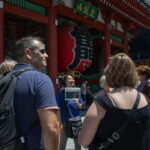
More Tours in Tokyo





More Tour Reviews in Tokyo


Not for you? Here's more nearby things to do in Tokyo we have reviewed












Asakusa Tours, side by side.
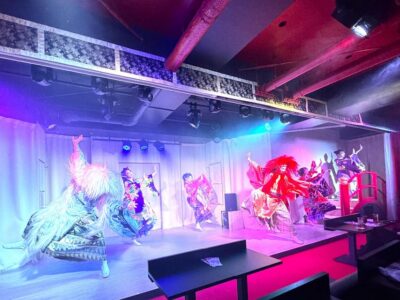 ★ 4.8Japanese Dance Cabaret Theater Asakusa-Kaguwa TicketFrom $492,270 reviews
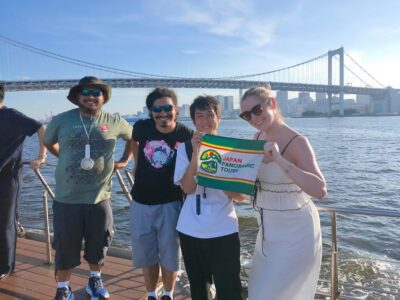 ★ 4.7Meiji Shrine, Asakusa, Skytree Bus Tour and CruiseFrom $1221,986 reviews
 ★ 4.9Roll and Authentic Sushi Making Class in AsakusaFrom $581,957 reviews
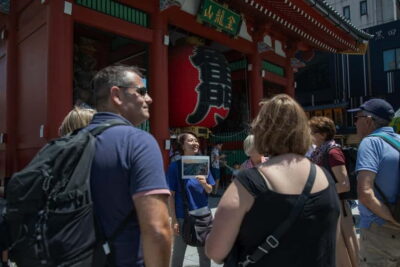 ★ 4.8Asakusa Walking Tour with Sensoji Temple VisitFrom $221,583 reviews
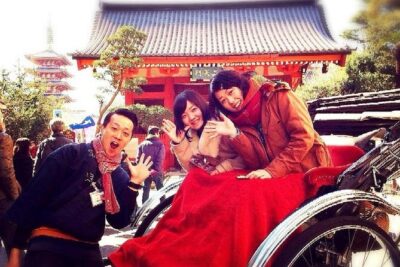 ★ 5.0Tokyo Asakusa Rickshaw TourFrom $421,375 reviews
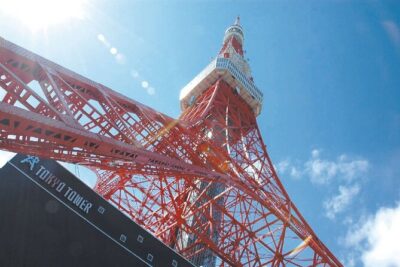 ★ 4.5Tokyo Panoramic 1 Day: Meiji Shrine, Asakusa, Odaiba and SKYTREE®From $851,222 reviews
 ★ 5.0Tokyo Go Kart: Asakusa, Skytree, and Akihabara **IDP MUST**From $99988 reviews
 ★ 4.7Asakusa, Skytree & Akhihabara Go-Kart City ExperienceFrom $96761 reviews
This tour also belongs to