
Review · TOKYO CITY TOURS
Tokyo Castle & Imperial PalaceーShogun Walking Tour
Walls, gates, and stories in central Tokyo. This small-group walk traces the Edo-period security plan around the Imperial Palace grounds, with an English guide explaining samurai duty and Japan’s 2,600-year imperial legacy. I love how small-group format keeps the pace interactive, and I like that the focus stays on details you can see right there, like turret shapes and guardhouse layouts. Guides such as K, Keiko, Ai, Tomo, and Anju are repeatedly praised for turning those stone-and-wood structures into clear, fun explanations.
One key consideration: you should expect a security check and some uphill walking plus stairs, even though most stops are outdoor viewing points. The Emperor’s residence itself is not open to the public, so you are there for the palace perimeter, Edo Castle ruins, and gardens, not for an inside look at where the residence is.
Key highlights that make this tour click
- Small group of up to 10 for better questions and faster explanations.
- English-only tour, with no Japanese language support, so plan accordingly.
- Edo Castle defenses you can see, including turrets, gates, watchtowers, and multiple guardhouses.
- Garden time with koi and seasonal plants at Ninomaru Garden.
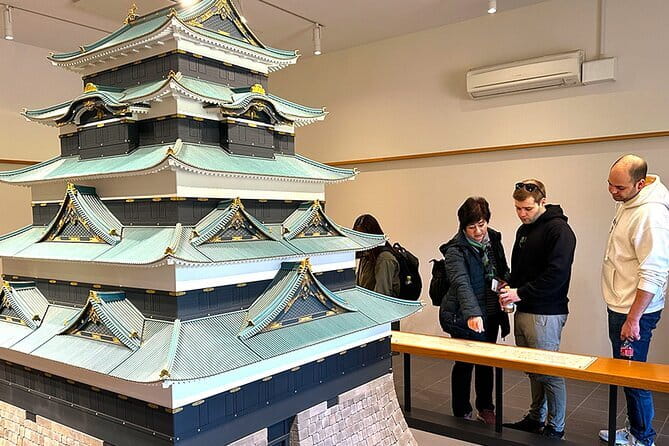
- A quick museum stop with a scale model of the former Edo Castle.
- End point timing works well, finishing by a ginkgo-lined avenue before Tokyo Station.
Why this 2-hour Imperial Palace walk is worth your time
Tokyo can feel like a blur of neighborhoods, shopping streets, and station exits. This tour slows everything down in a good way. In about two hours, you walk the perimeter spaces where Edo Castle security was staged, then soften your brain with traditional garden scenery and koi.
At $23.88, it is not just “a nice stroll.” What you are buying is interpretation. You are paying for an expert guide to connect stone walls, gate placement, and watchtower sightlines to how the shogun’s stronghold was protected. And because the group is capped at 10, you are less likely to get stuck with blank stare questions.
It also helps that every stop on the route is listed as free admission. That means your money goes toward the guidance, not ticket juggling.
You can also read our reviews of more walking tours in Tokyo


Price and value at $23.88, what you really get
For the price, I think the value comes from three places.
First, the route is tightly planned. You hit multiple Edo-era defense elements in a short time, instead of hopping randomly between highlights. Second, the commentary is the whole point. The structures are interesting on their own, but the tour turns them into a system you can follow. Third, it is a small-group format, so you are not stuck listening while everyone else asks questions and you lose track.
A bonus for first-timers: this kind of orientation walk is useful early in your trip. If you plan to see other Tokyo landmarks later, the Imperial Palace grounds help you understand the city’s historical layers, from shogun-era power to the continuing imperial presence.
Meeting at Kokyo Gaien, then walking into the Edo security story
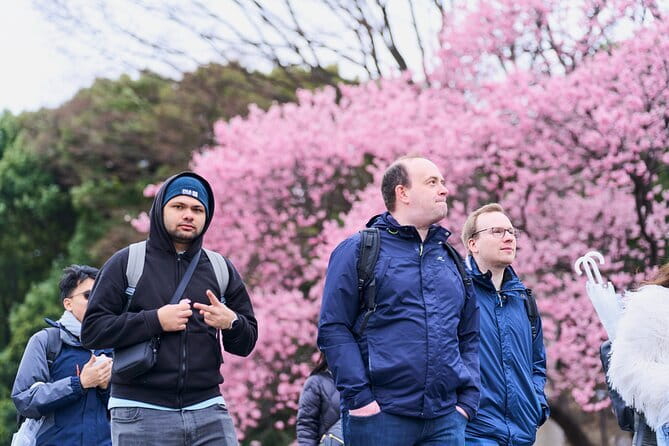
You meet at Starbucks Coffee at Kokyo Gaien Wadakura Fountain Park. That’s a practical choice, because it is easy to find and easy to regroup if anyone arrives a few minutes late.
From there, the tour moves through a sequence that feels like going around a fortress wall. The stops are mostly short blocks, often around 10 minutes each, so you never feel stuck at a single spot. The pace also makes it easier to keep your footing, even with steep slopes and stairs mentioned as part of the overall walking.
Most of the route is outdoors, and in warmer months it can get sunny. I recommend you treat this like a walk-through summer signage: water, hat, and comfortable shoes are your friends.
Sakurada Tatsumi Yagura, seeing a turret and the security logic

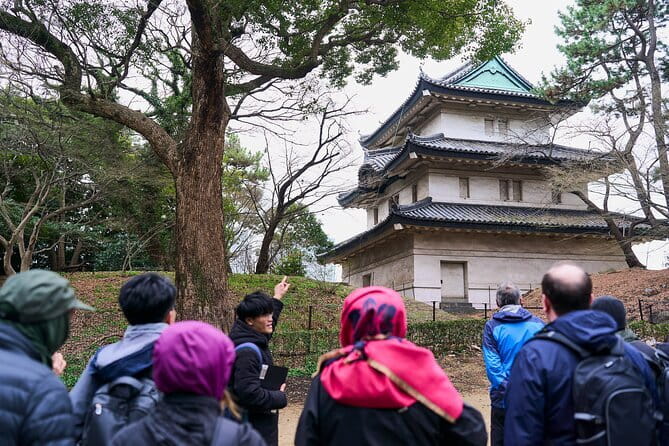
The first stop is Sakurada Tatsumi Yagura, where you can see a surviving turret from the Edo period. A turret is not just a cool photo angle. When a guide explains its placement and how it relates to surrounding defenses, it starts to feel like you are reading a plan laid out in wood and stone.
The best part here is the “why it mattered” framing. You learn about security systems that still protect the Imperial Palace today, using the Edo-era structure as a visual anchor.
Why this works for you: turrets are usually just architecture to most visitors. With interpretation, you see how architecture controls movement, sightlines, and monitoring.
Kokyo Otemon Gate, two massive entrances and a protective design
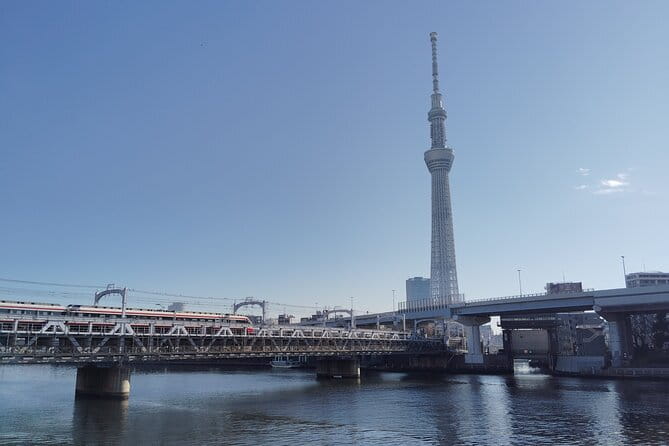
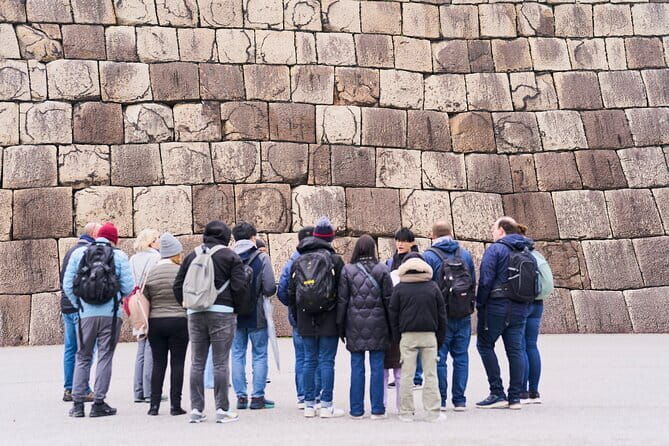
Next you approach Kokyo Otemon Gate, where you will see two massive gates and stone walls from the original castle. Gates are where defenses become visible, because you can watch the geometry of control: where people funnel, where guards can observe, and where “approach” becomes “inspection.”
This is where the shogun-era defense story comes into focus. The guide explains how design elements helped protect the shogun, and you get a sense of why not all gates are equal.
Photo tip: gates and stone walls can look similar from one angle. Try a step to the side when your guide gives you the explanation, so you capture both the frontal look and the side perspective.




Constable Guardhouse, Hyakunin Bansho Guardhouse, Obansho Guardhouse
After the gates, the route turns into a study of guardhouses. This is the part I find most satisfying, because it makes the fortress feel staffed and lived-in, not just abandoned stone.
At the Constable Guardhouse, you learn about a smaller outpost used by lower-ranking samurai. The key value is understanding that “security” is not only elite warriors. Even lower-ranking roles had meaning, and the placement of a small guardhouse suggests specific responsibilities.
Then you move to the Hyakunin Bansho Guardhouse, described as a larger guardhouse where many samurai were stationed. This stop adds scale. It helps you see how security could expand across a site rather than being concentrated in one dramatic location.
Finally, the Obansho Guardhouse brings the story closer to the inner gate, with a focus on higher rank samurai and their duties. Together, these guardhouse stops show how roles can change by location, and how hierarchy fits into physical space.
If you tend to love military-style history, this trio hits hard in a good way. You do not need to memorize names of units. You just watch how the structure suggests the job.
Fujimi-yagura, a watchtower with an outlook
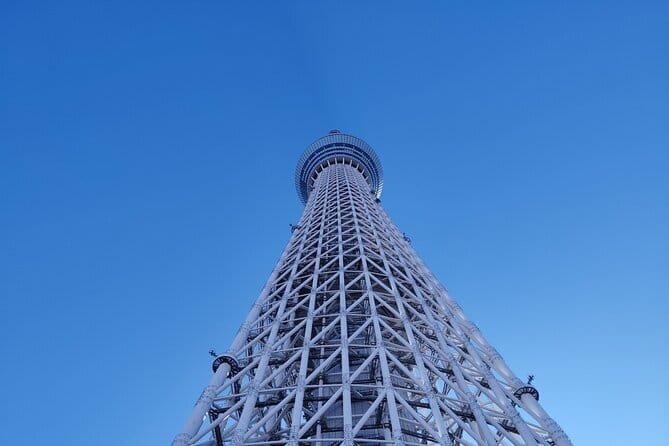
At Fujimi-yagura, you are in watchtower territory. This stop is about viewpoint and surveillance, basically the idea of “who sees first.”
A watchtower overlooking the area helps you understand why height and sightlines mattered in a fortress. Even if you are not a history nerd, it is easy to get the logic once the guide ties it back to security needs of the Edo Castle era.
This is also a nice break from crowding at gates. From a tower viewpoint, your brain can rest, and your eyes can scan.
Kokyo Sannomaru Shozokan, a scale model plus a simple shop stop
The route includes Kokyo Sannomaru Shozokan, where you can see a scale model of the former Edo Castle. For me, this is one of the most useful stops on any walking tour. After seeing gates, guardhouses, and towers on the ground, the model helps you connect the dots.
You also get a souvenir shop with palace-related goods. That’s not essential, but it can be handy if you want something more meaningful than random postcards.
One practical thought: if you like shops, go early enough that you do not feel rushed. If you dislike shopping, treat it as a quick add-on and return your attention to the garden section.
East Gardens at the Imperial Palace, the former main tower site
The East Gardens of the Imperial Palace highlight the Edo Castle ruin area, specifically the former site of the main tower. This is where the tour addresses absence. You learn why the tower is no longer standing, and you see what remains today.
Ruins can be frustrating if you do not know what to look for. With a guide, you get the “imagined map” back. The missing tower becomes part of the defensive story, not just a gap in the scenery.
This stop is also a good reminder that historic defense systems were not only about stopping attacks. They were about sustaining control over time, day after day, even when the structures themselves would eventually change.
Ninomaru Garden, seasonal plants and a koi pond pause
The walk ends in a gentler mood at Ninomaru Garden. This is a traditional Japanese garden with seasonal plants and a pond with koi. After stone walls and defensive positions, this kind of setting feels like exhaling.
This is also a smart choice for your energy. You have spent most of the tour focused on structure. Here, you can shift into slower observation, take photos without feeling like you are photographing a defensive diagram, and enjoy the calmer pace.
If you want a quick “Tokyofied” cultural moment beyond streets and vending machines, this garden stop delivers.
The ginkgo-lined avenue near Tokyo Station, a clean end point
The tour concludes in front of the ginkgo-lined avenue stretching out before Tokyo Station. That matters more than it sounds. It is a very easy place to continue your day, whether you are heading to another neighborhood, grabbing lunch, or planning your evening logistics.
A ginkgo-lined approach also makes the ending feel intentional, like the tour deposits you right at the city’s next chapter.
What to expect from the guides, based on common standouts
The guides rotating through this tour have a strong track record, and many of the highest marks come from clear, engaging storytelling. Names that show up often include K, Ai, Tomo, Keiko, Anju, and Yuuko, with a repeated theme: they explain the purpose behind the buildings, not just the dates.
One detail I’d call out is interaction style. Several guides are praised for answering questions easily, and some even use visuals like laminated layouts or flashcards. That is great for you if you learn better with pictures than with long verbal timelines.
There is also a small mention of comfort support on hot days, like cooling sweets or menthol napkins. It is not guaranteed, but it signals that guides sometimes plan for the real-world weather of a Tokyo garden walk.
Practical tips so your day stays comfortable
This tour is manageable for most people, but it does include steep slopes and stairs. Here’s how to set yourself up for an easy experience.
- Wear comfortable shoes with good grip. Even short stair sections can be slick or crowded.
- Bring water, especially in warmer months, because much of the route is exposed.
- Use a hat or umbrella for sun protection. You will spend enough time outside for weather to matter.
- Follow the Imperial Palace security rules. The tour notes a security check to enter the area, and says do not bring knives or alcohol.
- Expect the Emperor’s residence itself to be closed. You are seeing the public grounds and structures, not going inside the residence area.
If you do those things, you will get the full benefit of the tour instead of spending mental energy on discomfort.
Who should book this tour, and who might skip it
Book it if you want a structured way to understand Tokyo’s layers without getting lost in maps. This is especially a good fit if you like Japanese history, architecture with purpose, or shogun-era security stories.
It’s also a great “first Tokyo history” option. Many people find it clicks fast because it is only two hours, it is in the center of town, and you finish near Tokyo Station.
You might skip it if you prefer purely self-guided sightseeing. The tour includes interpretation and English commentary, and if you do not want that, you could still enjoy the grounds on your own. Also, because it is English only with no Japanese language support, double-check that English commentary is what you want.
Should you book this Tokyo Castle and Imperial Palace walking tour?
Yes, I think you should book it if you want your Imperial Palace visit to feel like more than a pretty park. The value here is the way the tour turns gates, turrets, guardhouses, and the main tower ruin into one clear security narrative of Edo Castle, plus a calm garden ending.
I’d especially recommend it if you enjoy asking questions, because the small group size makes that realistic. If your main goal is fast sightseeing with zero structure, then you may find the guided interpretation unnecessary. But for most people who want meaning with their photos, this one is a strong buy at $23.88.
FAQ
FAQ
How long is the Tokyo Castle and Imperial Palace Shogun Walking Tour?
It runs for about 2 hours.
What is the group size limit?
The tour is described as a small-group experience with up to 10 people.
Is the tour offered in English?
Yes, it is conducted in English only, and Japanese language support is not available.
Where do you meet, and where do you end?
You start at Starbucks Coffee in Kokyo Gaien Wadakura Fountain Park. The tour ends back at the meeting point area, near the ginkgo-lined avenue before Tokyo Station.
What stops are included on the route?
You will see Sakurada Tatsumi Yagura, Kokyo Otemon Gate, Constable Guardhouse, Hyakunin Bansho Guardhouse, Obansho Guardhouse, Fujimi-yagura, Kokyo Sannomaru Shozokan, the East Gardens of the Imperial Palace (Edo Castle ruin area), and Ninomaru Garden.
Is the Emperor’s residence open during the tour?
No. The Emperor’s residence is not open to the public.
Do I need to go through security, and are there restrictions?
Yes, there is a security check to enter the Imperial Palace area. The instructions say not to bring knives or alcohol.
Will there be stairs and slopes?
Yes. The tour notes that you will need to walk up steep slopes and stairs.
Is cancellation free if my plans change?
Free cancellation is available. You can cancel up to 24 hours in advance for a full refund. If you cancel less than 24 hours before the start time, the amount paid will not be refunded.
More Walking Tours in Tokyo


More Tours in Tokyo


More Tour Reviews in Tokyo
Not for you? Here's more nearby things to do in Tokyo we have reviewed








Tokyo City Tours, side by side.
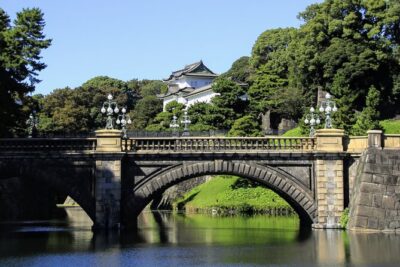 ★ 5.01-Day Tokyo Bus TourFrom $12914,250 reviews
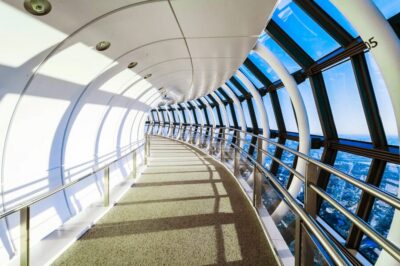 ★ 4.5TOKYO SKYTREE® Admission ticketFrom $1311,192 reviews
 ★ 4.6teamLab Planets TOKYO Digital Art Museum Entry TicketFrom $259,779 reviews
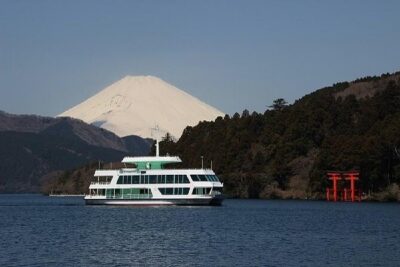 ★ 4.0Mt Fuji & Hakone Cruise, Drum Show Bullet Train 1 Day from TokyoFrom $1497,413 reviews
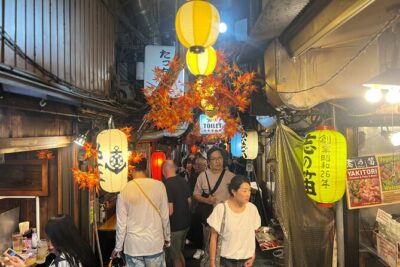 ★ 5.0Shinjuku Food Tour (13 Dishes at 4 Local Eateries)From $866,603 reviews
 ★ 4.4Tokyo Mt Fuji 5th St & Hakone Cruise Bus Tour w/Bullet TrainFrom $1545,024 reviews
 ★ 5.0Flagship 2-Hours Official Street Go-Kart Tour – Tokyo Bay ShopFrom $644,974 reviews
 ★ 4.5From Tokyo: Mount Fuji Full-Day Sightseeing TripFrom $684,970 reviews
This tour also belongs to