
Great Buddha plus seaside city stops make this day trip feel like a two-for-one. I like the private hotel pickup and drop-off, and you also get a focused sequence of Kamakura sights that hit the big name temples fast, including the Great Buddha of Kamakura. It is a smart way to see more than Tokyo, without doing the whole logistics headache yourself.
One drawback to plan around is that not everything is automatically included. Meals and entrance fees are not part of the price, and you will do some walking at several stops, so it is not the easiest day if you want a no-steps sightseeing day.
Key Things That Make This Trip Worth Your Time
- A tight Kamakura temple route that includes Kōtoku-in, Hase-dera, Tsurugaoka Hachimangu, and Hokokuji Bamboo Forest in one smooth loop
- Sankei-en Garden’s preserved Japanese homes inside a botanical park setting, giving you cultural texture beyond just views
- Yokohama waterfront time in Minato Mirai, with time to look up at the 296 m Landmark Tower
- A mix of old and new food culture, with Yokohama Chinatown and a stop at Shin-Yokohama Ramen Museum
- A bilingual driver-guided experience, with water bottles and practical local tips to keep your day running clean
Why Kamakura and Yokohama Works as a 10-Hour Private Day
This is a rare kind of day trip that actually makes sense geographically. Kamakura sits close to Tokyo, and then you swing over to Yokohama, where the modern waterfront changes the feel of the day in a good way. You are not just bouncing between random points on a map, you are moving from classic temple Japan to a port city with big city energy.
You also benefit from the private setup. Instead of fighting train schedules and crowded transfers, you get a chauffeur who can sequence stops and keep the day paced. That is a real quality-of-life upgrade, especially when you want photos, short walks, and breaks without turning the day into a sprint.
The biggest thing to watch is timing. A full day here runs about 10 hours including commuting, so the schedule is designed to stay efficient rather than linger. You will have a little breathing room, but if you want to spend hours at one site, you may have to accept shorter stop times.
You can also read our reviews of more guided tours in Tokyo
Starting Strong at Kōtoku-in, Home of the Great Buddha
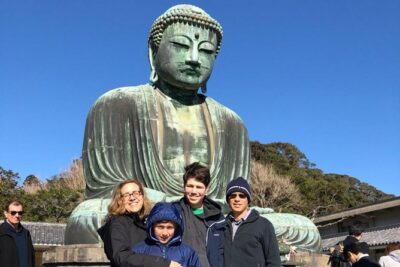
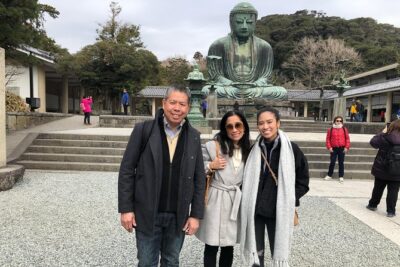
Kōtoku-in is the anchor stop, and it is an easy one to love. You will see the Great Buddha of Kamakura, a roughly 13 m bronze statue that has been standing since the 15th century. It is the kind of landmark that instantly gives you a sense of place, even if you do not know the background details before you arrive.
The stop is about an hour, which is enough to take in the main sight, get a few photos from different angles, and then move on before the next wave of crowds. That timing matters, because the rest of the day also stacks impressive locations.
Practical tip: wear comfortable shoes and be ready for short walks that add up. If you are sensitive to sun or glare, a hat and sunscreen help more than you think, since the morning light can be intense and you do not want to spend your best moments indoors.
Hase-dera, Tsurugaoka Hachimangu, and Hokokuji Bamboo Forest
After the Great Buddha, the day shifts into a classic Kamakura rhythm: temple grounds, shrine atmosphere, then a nature stop that feels like a reset button.
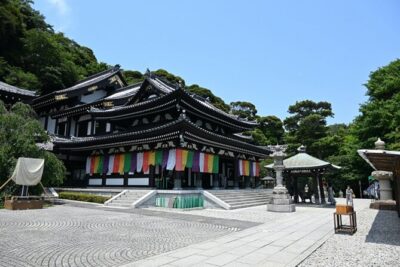
- Hase-dera: You get about an hour here, giving you time to enjoy the temple setting rather than just speed-walking through. The idea is to slow down for a bit and enjoy the atmosphere.
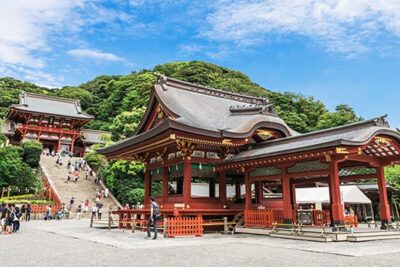
- Tsurugaoka Hachimangu: This shrine stop keeps the historical theme going and adds a different kind of cultural scene than the big statue. Again, about an hour is built in.
- Hokokuji Bamboo Forest: This is the photo stop many people remember most. The bamboo forest experience tends to feel calming, and it works well as a midday visual break before you head toward Yokohama.
One thing I like about this trio is the contrast. You are not only chasing one style of sight. You go from a monumental bronze icon to shrine grounds to a bamboo grove. That variety makes it easier to stay interested even if you arrive with only a casual interest in temples.
If you have limited mobility, the walking time across several stops can be tiring. The tour is not listed as suitable for wheelchair users, and pregnant travelers may also find it too much. If you are on the fence, think about your stamina more than your interest level.
Sankei-en Garden in Yokohama: Preserved Houses and Garden Time
Sankei-en Garden is scheduled for about an hour, and it is a smart choice because it is not only about scenery. It is a botanical park that includes preserved Japanese homes from different eras. That means you are seeing architecture and domestic history in a garden setting, which adds a different kind of meaning to your photo stops.
Here is the practical reality: garden appeal changes with season. One of the most useful pieces of advice from the experience data is that Sankeien-en can feel less worthwhile in December compared with spring or fall. If your trip is in winter, I would go in with adjusted expectations, and focus on the preserved homes and overall atmosphere rather than hoping for the same garden impact you might see later in the year.
How to make your hour count: move at a comfortable pace, take a few minutes at each preserved house area, then wrap with a final stroll for photos. Do not try to cover every corner like it is an all-day museum. The tour timing is built for a good sample, not a full day of garden research.
Yokohama Chinatown, Shin-Yokohama Ramen Museum, and Food Stops That Guide Your Day
Once you hit Yokohama, the vibe shifts. The day includes two food-related experiences, and they are great because they are optional in how you engage.
- Yokohama Chinatown: About 1.5 hours. This is enough time to walk the streets, browse shops, and snack if you want. Even if you do not eat a full meal there, the shopping and street scene give you a strong sense of place fast.
- Shin-Yokohama Ramen Museum: About an hour. This is a fun break from temple sightseeing, and it fits well toward the middle or later part of the day when your brain wants something lighter.
Meals are not included, so you will decide what to eat and where. That is not a flaw, it is flexibility. Chinatown is the kind of place where you can pick small items and keep moving, which matters if you are still going to Minato Mirai afterward.
If you want maximum value, plan your budget for snacks or lunch on your own. Also, if you are sensitive to spicy food, Chinatown menus can be bold, so it helps to know what you enjoy before you start ordering.
You can also read our reviews of more private tours in Tokyo
Minato Mirai and Landmark Tower for a Modern Finish
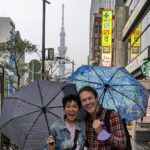
Minato Mirai is your final sightseeing mood shift, and it is an effective way to close the day. You will stroll the seaside district and get a chance to see the Landmark Tower, a 296 m tall building that dominates the skyline.
This part of the day is less about learning historical details and more about taking in the urban waterfront look, getting your last photos, and feeling how Yokohama carries itself as a modern port city.
The schedule also allows a short chunk of free time, about 30 minutes. That is helpful if you want to grab a drink, find a viewpoint, or simply slow down at the end of a long day. On a private tour, that small pocket of unstructured time can feel bigger than it sounds.
Price and Logistics: Getting Value Out of $474 Per Group
The price is listed as $474 per group for up to 6 people. Value depends on how many people you can actually fit in your group, because this is a private ride.
At the maximum size, that is roughly $79 per person. If you are traveling as 2 or 3 people, the per-person cost climbs fast. Still, private day trips can be worth it here because you are paying for four big things at once: hotel pickup and drop-off, a bilingual guide, guided stop management, and car time that would be a chore to coordinate on public transit.
One more value angle: entrance fees are not included. That means your total cost can rise depending on which paid sights you choose. The tour structure is meant to hit major highlights, but you should be ready for some on-site spending and plan accordingly.
If you hate surprises, review the stop list ahead of time and set a rough budget for entrance fees and any meals. If you like flexibility, you get to decide what to pay for and where to eat without feeling locked into one scripted meal.
Your Guide, Pace, and How to Stay Comfortable All Day
This is a live guide tour with English and Japanese support. The driver role matters because it shapes the pacing. In the experience data, guides like Kasim Ali and Qesm Ali are highlighted for things like safe driving, punctuality, and explaining what you are seeing in a way that makes the day feel smoother.
You also get practical extras: water bottles are included. That sounds small, but when you chain together temple grounds, gardens, and waterfront walking, hydration becomes part of comfort, not just a nice extra.
To get the best day out of it, you should pack for walking and sun. Bring comfortable shoes, a hat, camera, and sunscreen. Also note the simple rule: smoking is not allowed.
Because this is private, the pace can be more tailored than a group tour. Still, the day is built around set stop times, so it is not the format if you want to wander for hours without limits.
Who This Tour Fits Best, and Who Might Be Happier Elsewhere
I think this tour is ideal if you want a first-timer friendly day that still feels authentic. You get recognizable icons like the Great Buddha, plus temple variety, plus a preserved-home garden, then you pivot into Yokohama with Chinatown and modern Minato Mirai. It is a full sampler day, without making you piece together trains and transfers.
It can be less ideal if you want a slow, deep sightseeing day. Stop durations are planned to keep the route moving. If you are the type who likes to sit for a long time, explore side streets for hours, or treat each stop like an all-day event, you may feel slightly rushed at some points.
Also, it is not suitable for wheelchair users, and pregnant travelers are listed as not suitable. If either of those applies to your group, you will want a different plan that matches your needs more closely.
Should You Book This Kamakura and Yokohama Private Day Trip?
Book it if you want a smooth, efficient, private day that covers the core highlights of Kamakura and Yokohama in about 10 hours. The best reason to choose this format is the combination of hotel pickup, bilingual guidance, and a logical sequence of iconic stops. It is also a strong pick if you are traveling with up to 6 people and can share the group cost.
Consider skipping or adjusting expectations if you are traveling in a season when gardens look less impressive, especially for Sankei-en Garden in December. Also, go in knowing meals and entrance fees are on you, so your budget needs a little extra room.
If you want one day that feels like two destinations, with less logistics stress than you would expect, this is a solid choice.
FAQ
How long is the Kamakura and Yokohama private day trip?
The duration is approximately 10 hours, including commuting time.
Is hotel pickup and drop-off included?
Yes. Pickup and drop-off in Tokyo are included.
What are the main Kamakura sights on this tour?
You’ll visit Kōtoku-in (Great Buddha), Hase-dera, Tsurugaoka Hachimangu, and Hokokuji Bamboo Forest.
What will I see in Yokohama?
You’ll spend time at Sankei-en Garden, explore Yokohama Chinatown, visit Shin-Yokohama Ramen Museum, and stroll around Minato Mirai with a view of Landmark Tower (296 m).
Are meals included?
No, meals are not included.
Are entrance fees included?
No, entrance fees are not included.
What is the group size, and how does it affect the price?
The price is for a private group up to 6 people. If you have more than 5 people, a higher cost may apply.
What languages does the guide speak?
The live guide is available in English and Japanese.
Is the tour suitable for wheelchair users or pregnant women?
No. It is listed as not suitable for wheelchair users and pregnant women.
Can I get a refund if my plans change?
Yes. Free cancellation is available up to 24 hours in advance for a full refund.
More Private Tours in Tokyo
More Guided Tours in Tokyo
More Tour Reviews in Tokyo






Not for you? Here's more nearby things to do in Tokyo we have reviewed












Kamakura Day Trips, side by side.
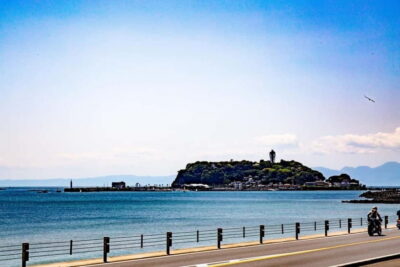 ★ 4.5Kamakura & Enoshima Day Trip including Temple TicketsFrom $581,375 reviews
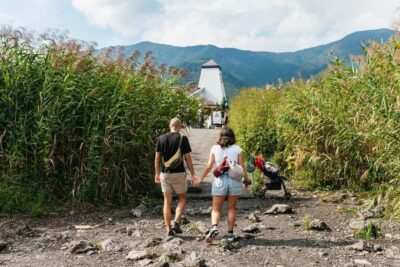 ★ 4.5Mt. Fuji, Kamakura, Big Buddha, & Lake Ashi Day TripFrom $49867 reviews
 ★ 4.5From Tokyo: Kamakura & Enoshima 1-Day Bus TourFrom $66189 reviews
 ★ 5.0Kamakura Historical Walking Tour with the Great BuddhaFrom $98129 reviews
 ★ 5.0Kamakura Private Tour: Temples, Nature, and the Great BuddhaFrom $98121 reviews
 ★ 5.0Kamakura Walking Tour – The City of ShogunFrom $35100 reviews
 ★ 5.0Kamakura 8 hr Private Walking Tour with Licensed Guide from TokyoFrom $20180 reviews
 ★ 4.1Kamakura & Enoshima Day Tour with Pickup & Train RideFrom $1361 reviews
This tour also belongs to