
Review · TSUKIJI MARKET TOURS
Tokyo: Private Tsukiji Fish Market Tour with 3 food stops
Three bites, two temples, one Tokyo attitude. This private Tsukiji Fish Market walk mixes three included food stops with a Shinto shrine and a Buddhist temple, guided by locals such as Shuto or Sowar. One possible snag: the market storytelling can feel light for people who want very deep context.
I like how the tour keeps things practical and flexible. You get a personal pace, and you can move faster or pause longer while your guide points out the parts that actually matter for first-timers. Still, if your top priority is heavy history, you may need to ask more pointed questions as you go.
Key things that make this tour worth your time
- Three included street-food tastings chosen to match Tsukiji’s food culture
- Private pacing, so you are not stuck matching someone else’s schedule
- Namiyoke Inari Jinja + Tsukiji Hongan-ji, a clear Shinto-to-Buddhist taste of Japan
- Real guide personality, including Shuto’s prayer guidance and Sowar’s flexibility
- Easy meeting and exit points, starting at Lawson Tsukiji 4 Chome Store and finishing at Tsukiji Station
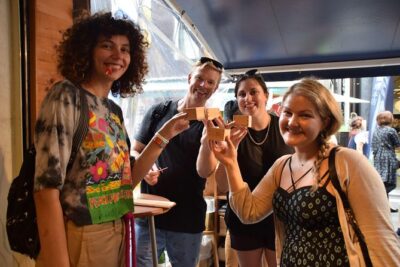
- Photos after the tour, so you can focus on eating and looking instead of filming
Tsukiji Fish Market, but with breathing room (private pace)
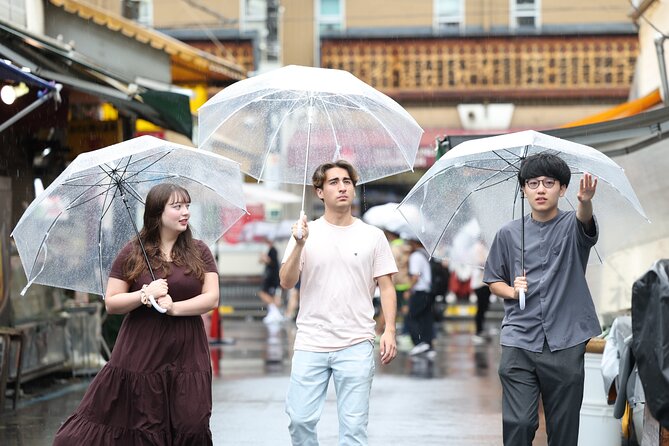
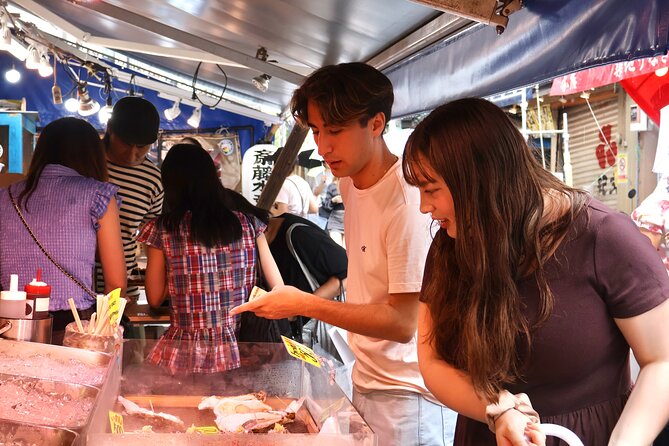
Tsukiji can feel like sensory overload in the best way, and this tour is designed to keep it fun instead of frantic. You spend about 2 hours walking, with a guide who stays with you one-on-one, meaning you are not competing with a group for attention or explanations.
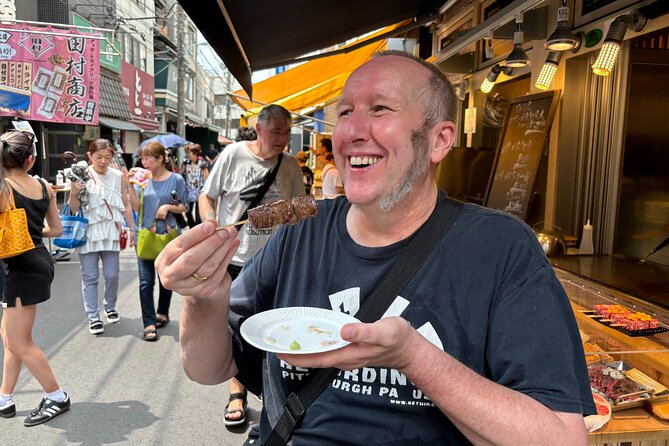
The heart of the experience is the three included food stops. That is the tour’s smart move: you do not spend the whole time hunting for the right stall, then ordering food you are not sure you will like. Your guide handles the selection and the flow, so you can actually enjoy the market instead of turning it into a self-guided stress test.
The other thing I like is the way the tour adds balance. Tsukiji is food-first, but you also get a Shinto shrine visit and a Buddhist temple visit. It gives you a more complete sense of Tokyo, where the daily sacred and the daily practical often sit side by side.
You can also read our reviews of more food & drink experiences in Tokyo

Meeting at Lawson Tsukiji 4 Chome Store, then ending at Tsukiji Station
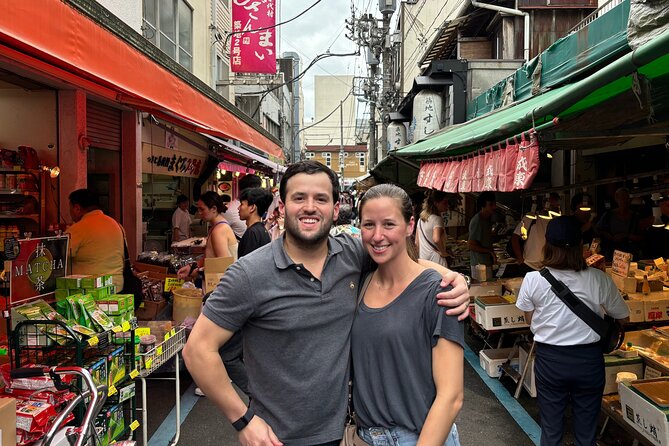
Logistics matter here because Tsukiji is a maze. The meeting point is clear: the guide stands in front of LAWSON Tsukiji 4 Chome Store. That kind of simple landmark helps you start calmly instead of wasting your energy searching around the wrong side of the area.
You also end where it is convenient. The finish point is 築地駅 (Tsukiji Station). That makes it easier to continue your day without needing to backtrack across the market area once you are done eating and sightseeing.
My practical advice: show up a few minutes early. The tour time starts from the scheduled meeting time, and if you arrive late, adjustments may be needed. You do not want the first moment of your tour to feel rushed.
海幸橋棟 first, then Namiyoke Inari Jinja (a quick sacred reset)
The itinerary starts with a short stop at 築地魚河岸 海幸橋棟 (about 15 minutes). Think of this as your warm-up. You get your bearings in the market zone before the tour shifts into shrine mode. It is a good tempo choice: small viewpoint-style moments early help you understand what you are actually looking at later.
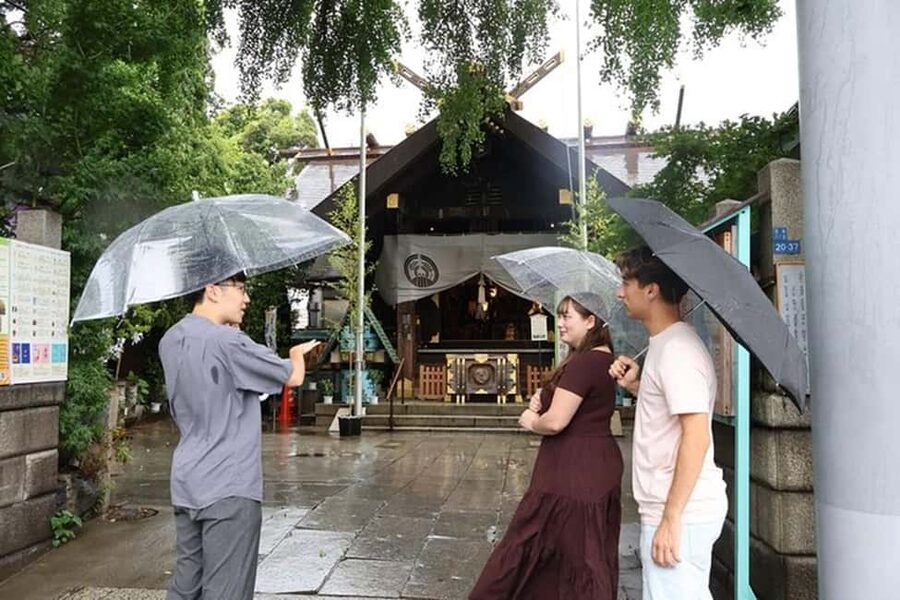
Then you head to Namiyoke Inari Jinja for around 10 minutes. This is not just a photo stop. One of the strongest highlights from the experience is that guides may explain how to pray respectfully. In one case, Shuto taught the group how to pray at both the shrine and the temple, which is exactly the kind of detail that makes a stop feel meaningful instead of awkward.
If you have never visited a Shinto shrine before, you will likely appreciate having someone translate the unspoken rules. You can still keep it simple, but having guidance helps you avoid doing the wrong thing.
Tsukiji Outer Market food stops: three tastings, less guesswork
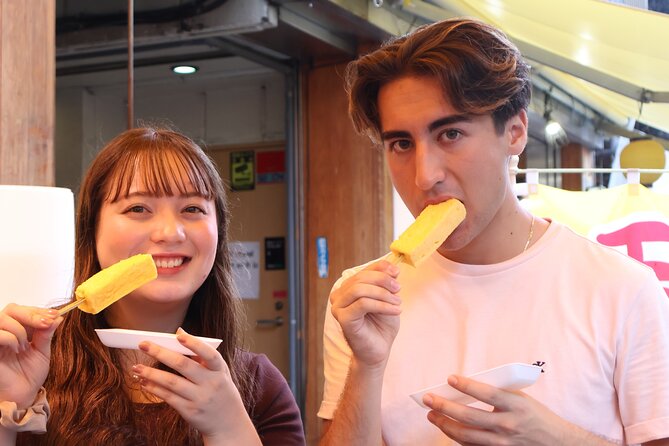
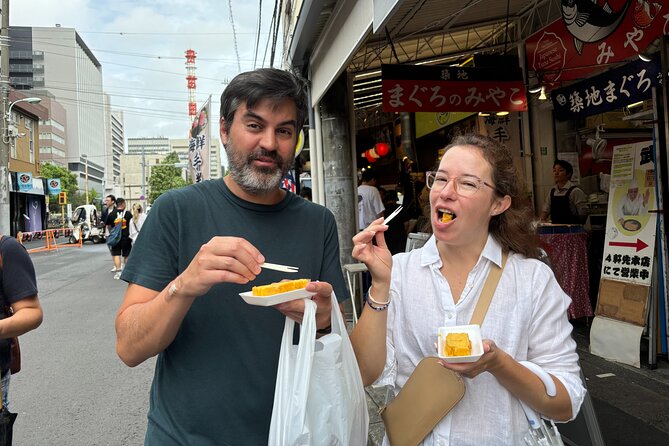
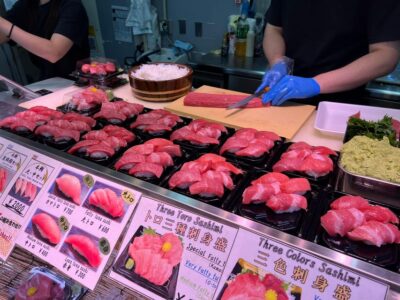
The longest part of the tour is Tsukiji Outer Market (about 55 minutes). This is where the experience earns its title as a “fish market” tour that is actually about food culture.
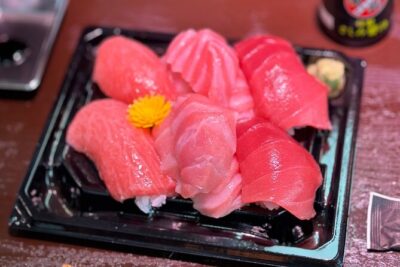
You are guided to carefully selected street food stalls for three must-try local foods, and those tastings are included in the price. You do not choose the menu, and you do not waste time deciding between ten options that all look great. Instead, you get the important advantage of local judgment, plus the social advantage of eating while someone explains what you are seeing.
Two guide details stood out in the feedback I saw:
- Shuto did more than describe food. He shared history, and he also pointed out local favorites.
- Sowar was willing to adjust the tour when timing was off for eating. One description noted he adapted because it was too early for the group to eat. That flexibility matters, because Tsukiji can be timing-sensitive and you do not want your “food tour” to feel stuck.
So here is how I would approach this part if you want maximum enjoyment. Go with a calm mindset. Expect to sample, not to eat a full meal. If you have dietary preferences, bring them up early so your guide can decide what fits best within the included food plan.
Also, keep an eye on your pace. Outer Market is active and you will likely stand, walk, and shift positions as you follow your guide from stall to stall. Comfortable shoes are not optional.
Tsukiji Hongan-ji temple sightseeing: the quieter half of the story
After the food focus, the tour slows down at Tsukiji Hongan-ji for about 30 minutes. This stop is your cultural counterpoint. Markets are loud, but temples give you a different kind of rhythm, one that feels more reflective.
Just as with Namiyoke Inari Jinja, the best part is when your guide helps you understand what to do and what you are looking at. Shuto, for example, was credited with teaching prayer at both the shrine and the temple. That kind of guidance is useful because you get to participate in a respectful way rather than just watching from the sidelines.
If you like experiences that mix everyday Tokyo with spiritual landmarks, this temple time is one of the more satisfying segments. It also helps balance the tour so you do not leave feeling like you only did a food-and-photos sprint.
More Tokyo tours and experiences for the shortlist

How 2 hours adds up in real life
A 2-hour walking tour sounds short on paper, but it feels just right for Tsukiji if you want structure. You are moving through multiple zones:
- a market-area introduction stop
- a shrine interlude
- the main street-food tasting block
- a temple sightseeing stop
- then you exit toward Tsukiji Station
Because it is private, your guide can manage the tempo. If you want slower, you can slow down. If you want faster, you can keep things moving. That matters in Tsukiji, where crowds, lines at stalls, and your own curiosity can change how fast time passes.
One consideration: a few people felt the market explanation could use more depth. So if you are the type who loves stories, history, and daily-life details, do not be shy about asking follow-up questions. Use prompts like:
- What makes this item local to Tsukiji?
- Why do people eat it this way?
- What should I pay attention to at this stall?
A good guide will adjust, and you are paying for the private attention.
Price and value: is $49 for 3 tastings and cultural stops fair?
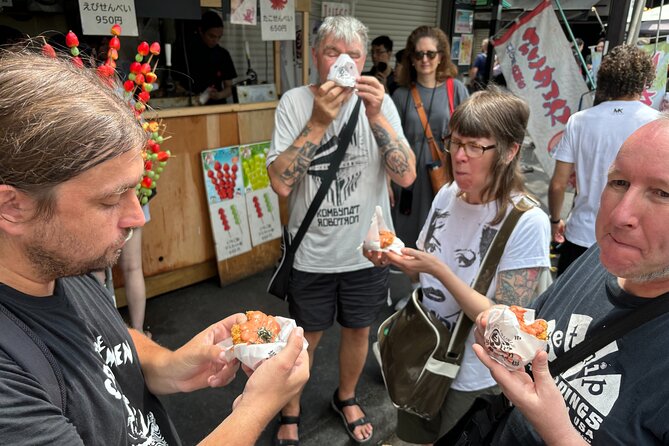
At $49 per person for a 2-hour private tour, the value comes from what is included, not just the duration. You get:
- three included local food tastings
- an expert local guide who stays with you throughout
- time at Namiyoke Inari Jinja and Tsukiji Hongan-ji
- photos during the tour sent to you after
The big economic question is food. Street-food costs in Tokyo can vary, and you could spend more than you expected if you walk in and order blindly. Here, you get three guided tastings already bundled in, which reduces decision fatigue and helps you control spending.
The one thing not included is any additional expenses. That is normal for tours like this, but it means if you fall in love with something and want extra, you will need to cover it separately. I treat that as a feature, not a flaw, because you can decide on the spot.
Who should book this Tsukiji private tour (and who might want more)
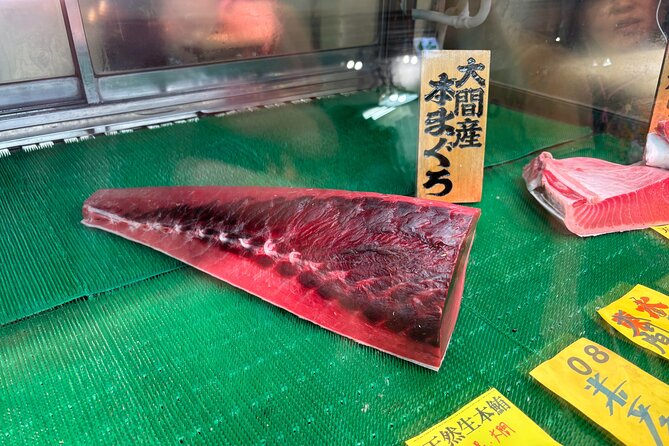
This tour is a great fit if you:
- want a first-time Tsukiji overview with food tastings you did not have to plan
- like a guided mix of food and culture (Shinto and Buddhist stops)
- prefer private pacing rather than speed-matching a group
- appreciate when a guide explains how to participate respectfully at religious sites
- want an experience with an English or Japanese-speaking guide
You might look elsewhere if:
- you want heavy, detailed history nonstop during the market walk
- you expect the guide to provide a very long storytelling lecture rather than practical walking guidance
But even then, the structure helps. You are still getting three tastings plus both shrine and temple visits in a compact time window.
Should you book the Private Tsukiji Fish Market tour with 3 food stops?
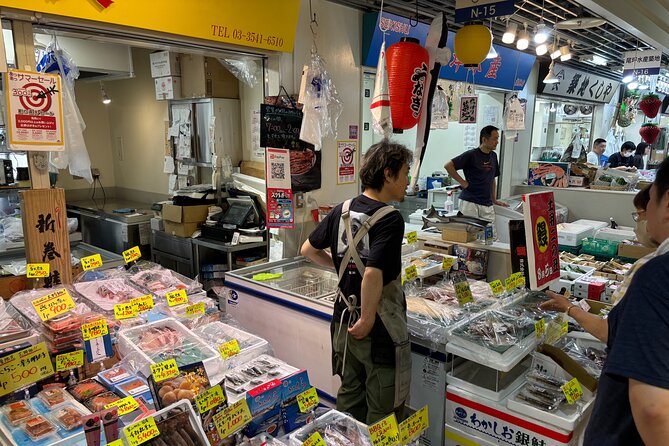
If your goal is to eat well in Tsukiji without turning it into a scavenger hunt, I would book it. The private format, the three included tastings, and the added Namiyoke Inari Jinja plus Tsukiji Hongan-ji stops make it feel like more than a quick food list.
I also think it is a smart pick for travelers who want guidance they can feel in the small moments, like learning how to pray respectfully. And if you like asking questions, you can probably push the market explanation further by steering the conversation.
Book it when you want a calm, guided Tsukiji day, not when you want a full-day deep-dive lecture.
FAQ
What is the duration of the Tsukiji private tour?
The tour lasts 2 hours.
How much does the tour cost?
The price is $49 per person.
Where does the tour start and end?
The meeting point is LAWSON Tsukiji 4 Chome Store. The tour finishes at 築地駅 (Tsukiji Station).
What is included in the tour price?
The tour includes a 2-hour walking tour, three must-try local foods, guidance from a local guide, and photos sent after the tour.
Are the three foods guaranteed to be available?
The tour includes three must-try local foods that are carefully selected by the local guide. If timing affects eating, the guide may adapt based on the situation.
Is this tour private?
Yes. It is a private group tour, so you are not joining other participants.
What languages are available for the live guide?
The live guide is available in English and Japanese.
Is the tour wheelchair accessible?
Yes, the tour is listed as wheelchair accessible.
More Food & Drink Experiences in Tokyo
More Tours in Tokyo





More Tour Reviews in Tokyo


Not for you? Here's more nearby things to do in Tokyo we have reviewed












Tsukiji Market Tours, side by side.
 ★ 5.0Tokyo Tsukiji Fish Market Food and Culture Walking TourFrom $993,184 reviews
 ★ 5.0Tsukiji Fish Market Food and Walking tourFrom $301,724 reviews
 ★ 4.9Tsukiji Fish Market Guided Walking TourFrom $221,397 reviews
 ★ 5.0Tokyo Sushi Making Class in Tsukiji with Professional ChefFrom $491,177 reviews
 ★ 5.0Tsukiji Fish Market Guided Tour and Sushi Making with Pro ChefFrom $104775 reviews
★ 4.7Tsukiji Fish Market Food and Culture Walking TourFrom $96757 reviews
★ 5.0Tsukiji Fish Market Guided Tour and Sushi Making with Pro ChefFrom $104775 reviews
★ 4.7Tsukiji Fish Market Food and Culture Walking TourFrom $96757 reviews
 ★ 5.0Tsukiji Fish Market: Street Food & Culture Walking TourFrom $33669 reviews
 ★ 5.0Tsukiji Fish Market Small-Group Food Walking TourFrom $87621 reviews
This tour also belongs to