
Review · SHINJUKU TOURS
Tokyo: Shinjuku Walking Tour with Godzilla Head
Godzilla starts the tour. This 2-hour Shinjuku walk strings together Tokyo oddballs and nightlife landmarks, from the giant 3D cat at Shinjuku East Exit to the rooftop Godzilla Head. I like how quickly it turns generic sightseeing into specific places with personality, but it is also loud, crowded, and a little overwhelming if you hate bustle.
Meet up with the guide holding a blue A4 board near Shinjuku East Exit Cat. From there, you keep moving on foot as all the stops are within walking distance.
For $32 for 2 hours, you are paying for a guide and a tight route through six different Shinjuku moods, and you do not have to cover any entrance fees. Just know food and drinks are not included, so you will want your own snack plan.
Key highlights worth planning around
- Hourly Godzilla Head roar: look up at the rooftop and time it when possible
- Shinjuku East Exit 3D cat: a futuristic photo stop right at the start
- Golden Gai alley labyrinth: narrow lanes lined with over 200 tiny bars
- Don Quijote chaos shopping: a discount store packed with snacks and souvenirs
- Omoide Yokocho yakitori lane: smoky post-war atmosphere that begs for a nighttime return
- Tak’s on-the-ground help: friendly, on time, great English, and he can adapt your pace
Shinjuku in 2 hours: why this route feels smart
Shinjuku can be a lot, even for repeat visitors. This tour works because it does not try to cover everything, it hits a few high-impact zones that show different sides of Tokyo in a short window.
You get a mix of spectacle, shopping, and nightlife streets. The walk also forces you to look up and look sideways, which is where Tokyo gets fun fast.
You can also read our reviews of more walking tours in Tokyo
Starting at Shinjuku East Exit Cat and getting oriented fast
You kick off at Shinjuku East Exit Cat, where Tokyo’s most futuristic cat sits above the city in 3D. This is a great start point because it gives you an easy visual landmark in the middle of a huge station area.
I like that the guide, Tak, sets the tone right away. You get context as you move, so you are not just hunting photos, you are learning how the neighborhood actually works.
Practical tip: when you see the cat, take a moment to check street layout and signage. Shinjuku can feel like a maze, and starting with a clear landmark helps you relax for the rest of the walk.
Don Quijote Kabukicho: loud shopping with real value
Next up is Don Quijote Shinjuku Kabukicho Store, a discount department store that is famous for being chaotic in the best way. It is packed from floor to ceiling with snacks, souvenirs, and the kind of random items that make you laugh while you buy a few essentials.
This stop is more than a gimmick. It is a practical way to load up on Japanese treats without turning your trip into a separate shopping mission. Since the tour price includes this visit but not food, you can browse first and decide what to eat later with your own budget.
Watch-outs: it is busy and visually intense. If you get overstimulated, go at a slower pace for the first few minutes, and focus on a short shopping list like one snack, one souvenir, and one drink for later.
Golden Gai: narrow alleys and over 200 tiny bars
Then you walk into Shinjuku Golden Gai, a cluster of narrow alleys known for more than 200 tiny bars. Writers and rebels once shared dreams and drinks here, and even if you are not chasing that exact vibe, the layout makes the atmosphere believable.
What I like about Golden Gai is how it rewards careful walking. Daytime visits can still feel like the heart of Tokyo nightlife because the lanes are tight, the facades are distinctive, and you get that old-school sense of secrets around every corner.
A good way to experience it is to slow down and watch how people move. In a place like this, small choices matter: which alley you enter, where you pause, and how long you look before stepping into the next bend.
Consideration: Golden Gai can be cramped. If you travel with mobility limits beyond what you can safely manage on foot, you will want to go easy here and rely on the guide’s pace.
Godzilla Head: the thrill of looking up at a rooftop icon
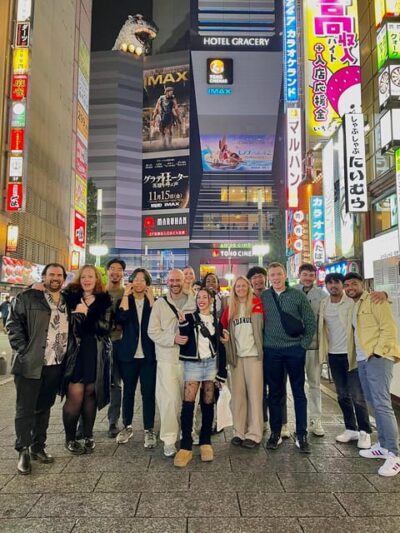
By the time you reach the Godzilla Head stop, the tour turns into pure Tokyo theatre. Godzilla is on a rooftop, and he roars every hour, so there is a strong chance the timing will line up during your visit.
I love this stop because it is visual and communal. People look up, phones come out, and for a moment the whole street feels like one big set.
Practical move: when you arrive, glance at the surrounding crowd and the time. You cannot control the exact minute, but you can make a better guess. If you notice the roar is near, hang back and take it in instead of rushing for photos.






Tokyu Kabukicho Tower: modern Tokyo in the middle of the mess
After classic Shinjuku energy, you get a contrast at Tokyu Kabukicho Tower. The tour takes you inside for a peek at Shinjuku’s newest landmark rising from the heart of Kabukicho.
This is a good “breather” stop. It breaks the day up with a more modern feel, and it also helps you understand why Shinjuku stays relevant: new structures go up right next to old street habits.
What to do here: keep your eyes open for design changes and how the building interacts with the street outside. Even without a long linger, that contrast makes the whole day make more sense.
Omoide Yokocho: yakitori stalls and post-war vibes
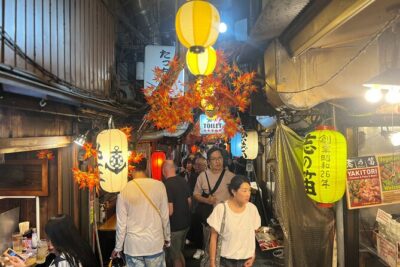
You end at Omoide Yokocho, a maze of yakitori stalls and post-war atmosphere. The idea is simple but effective: you walk into a lane that feels made for nighttime, with smoky energy and tight, lived-in corners.
I also like that this is where you get closure. Earlier stops cover spectacle, shopping, and alley-style nightlife. Omoide Yokocho ties it together with food-street atmosphere, even though food is not included on the tour.
Since it is the finale, you can use it as a launchpad. If the vibe clicks for you, plan to come back after dark, because this kind of street scene almost always hits harder at night.
One consideration: you will likely want to keep your movement flexible here. The stalls and lanes can get tight, so it helps to go with the flow instead of trying to see everything in one tight loop.
Price and value: what $32 buys you (and what it does not)
At about $32 per person for a 2-hour walk, the value is in the route and the guided context. You are paying to have someone connect the dots across multiple neighborhoods in a logical order, while also bringing you to very specific photo and atmosphere points.
Also, there are no entrance fees tied to the stops. That matters in Tokyo, where paid attractions can quickly add up if you are not careful.
What the price does not cover is food and drinks. That is not a problem, but it changes how you should plan. I suggest you treat shopping as your budget anchor at Don Quijote, then decide later whether you want yakitori at Omoide Yokocho with your own wallet.
What it feels like with a great guide, not just a checklist
The standout theme in the experience is the guide. Tak comes across as friendly and on time, and he is described as extremely knowledgeable with excellent English.
That matters because Shinjuku is not just landmarks, it is attitude. A good guide can explain what you are seeing in plain terms, tell you where to look and when to pause, and help you avoid turning the day into random walking.
One review also notes the experience can be customized. Even without seeing the exact tweaks in the details provided, the point is clear: you are not stuck following a silent script.
Who should book this Shinjuku walking tour
This tour is ideal if you want a compact, high-impact Shinjuku overview. It is especially good for first timers who are curious about pop culture icons like the Godzilla Head, plus people who enjoy alleyways, small-bar vibes, and street-level energy.
You will probably like it if you:
- Want an easy start with a clear meeting point and a short total duration
- Like mixing shopping with sightseeing, not doing them as separate days
- Enjoy looking up for Tokyo’s big characters and rooftop moments
Who should skip it or adjust expectations
You might want to adjust your plan if you dislike crowds or loud commercial areas. Don Quijote and the street scenes around nightlife zones can be intense, and the tour is designed for that energy.
Also, if your top priority is a quiet, slow cultural museum day, this route is not that. It is a street tour, full of neon-adjacent texture and fast-moving stops.
Should you book this tour?
If you want a fun, practical way to experience Shinjuku’s biggest characters and street moods in only 2 hours, this is a strong yes. The route hits six recognizable stops, with no entrance fees, and the guide support makes it feel less like wandering and more like understanding.
Book it if you like quirky Tokyo details, alley night vibes, and photo moments with context. Skip it only if you know you struggle with busy, loud shopping streets and tightly packed lanes, because that is part of the charm here.
FAQ
Where is the meeting point?
Meet the guide who is holding a blue A4-sized board.
How long is the tour?
The tour lasts 2 hours.
What stops are included in the tour?
It includes Shinjuku East Exit Cat, Don Quijote Shinjuku Kabukicho Store, Shinjuku Golden Gai, the Godzilla Head, Tokyu Kabukicho Tower, and Omoide Yokocho.
Are there any entrance fees for the locations?
No entrance fees are required for any of the locations.
Are food and drinks included?
No, food and drinks are not included.
Is the tour wheelchair accessible, and what languages are offered?
Yes, it is wheelchair accessible. The live guide is available in English and Japanese.
More Walking Tours in Tokyo
More Tours in Tokyo


More Tour Reviews in Tokyo
Not for you? Here's more nearby things to do in Tokyo we have reviewed












Shinjuku Tours, side by side.
 ★ 5.0Shinjuku Food Tour (13 Dishes at 4 Local Eateries)From $866,603 reviews
 ★ 5.0Tokyo Bar Hopping Tour in Shinjuku (All-You-Can-Drink + Dinner)From $1063,587 reviews
 ★ 4.9Shinjuku Food Tour (15 Dishes and 4 Eateries)From $852,033 reviews
 ★ 5.0Best of Shinjuku: Izakaya Food Tour (4 Stops, 14+ Tastings)From $921,863 reviews
 ★ 4.9Shinjuku Local Bar and Izakaya Guided Walking TourFrom $341,794 reviews
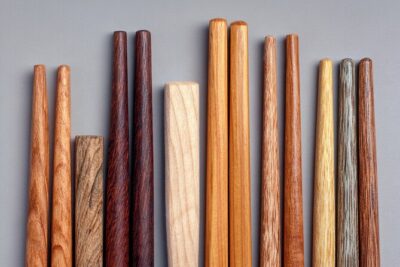 ★ 5.0Tokyo Shinjuku Chopsticks Making ClassFrom $201,763 reviews
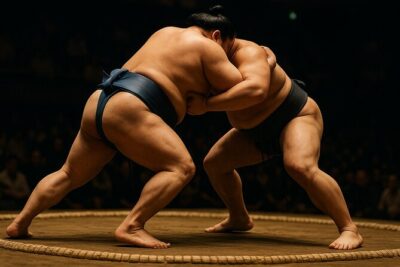 ★ 5.0Tokyo Shinjuku Sumo Show & Experience with PhotoFrom $791,750 reviews
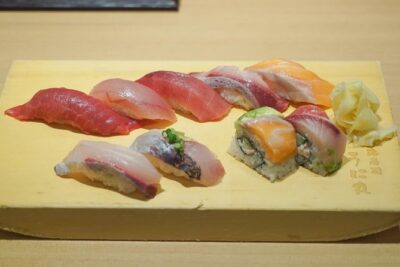 ★ 5.0Tokyo Night Foodie Tour in Shinjuku – Seasonal Sushi, Wagyu BeefFrom $1111,161 reviews
This tour also belongs to