
Review · TOKYO SUMO EXPERIENCES
Tokyo: Sumo Morning Practice -Stable Visit Tour with a Guide
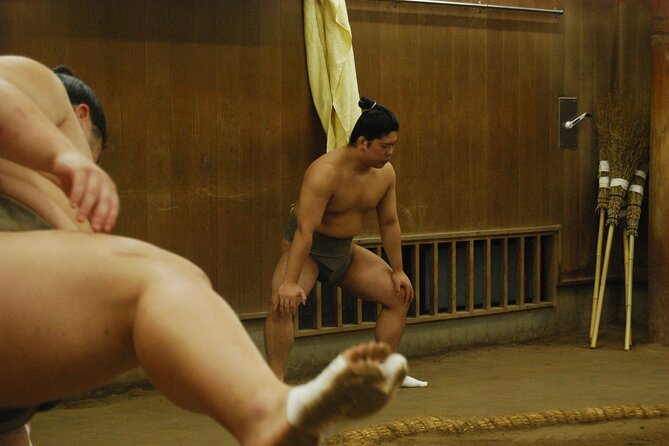
Tokyo sumo hits differently at dawn. This 2 hour stable visit gets you closer than the Kokugikan matches, so you can actually notice breath, faces, and the impact sounds of practice. I love that it feels personal and not like a museum stop, plus you get a real Q and A moment.
The tour runs with a small group (up to 10), and the coach’s voice can sound strong and harsh, which may surprise you at first. The main thing to consider: rules are strict inside the stable, including no flash photography and no video, and you also can’t bring snacks into practice.
Key Things You Should Know Before You Go
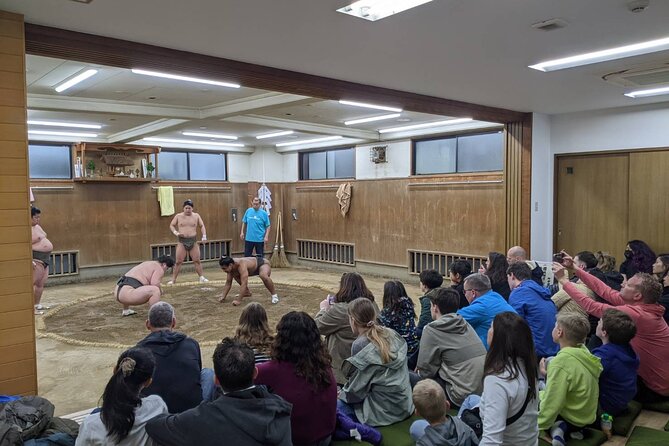
- You’ll be closer than Kokugikan and catch breath, facial expressions, and the sound of bodies colliding
- Small group size with a max of 10 travelers, which keeps the experience calm and focused
- No flash photography or video inside the stable, but photos without flash are fine
- No snacks or rice balls, only drinks with lids, so plan ahead before you arrive
- There’s time for questions and photo moments with the wrestlers after training
- A special brochure helps you connect what you see with how sumo works
Tokyo Sumo Morning Practice: Why This Stable Visit Feels Different
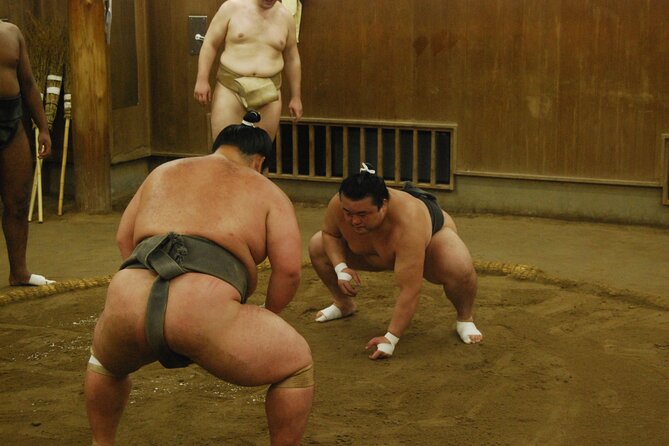
Big arena sumo is loud and choreographed for thousands of fans. A stable morning practice is different in a good way. Wrestlers and apprentices train every morning to preserve sumo and pass it on, so the session feels purposeful, not just performative.
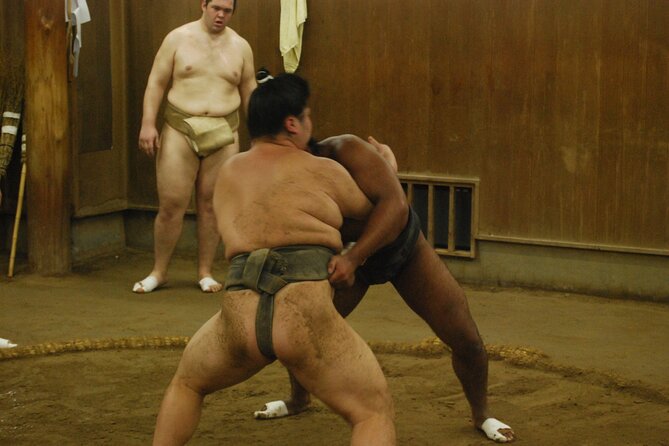
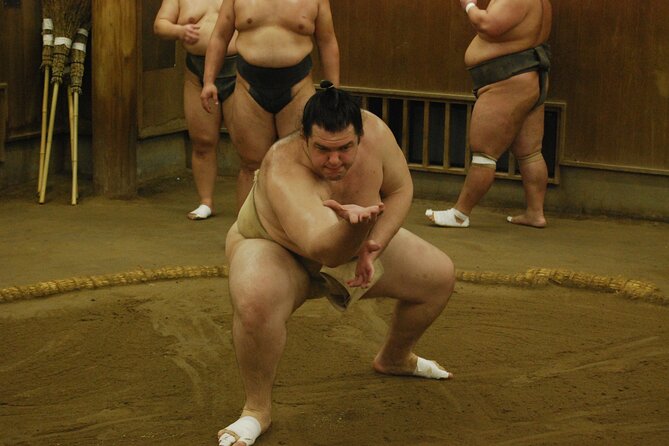
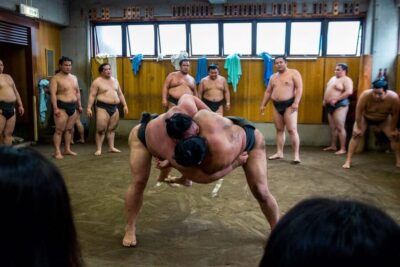
What makes this experience stand out is how close you get. You’re watching the practice from a distance that still lets you pick up details like breathing and tense facial expressions. You can hear the sounds from the collisions, which is part of what makes sumo training feel so physical and real.
I also appreciate the human structure here. You’re not only observing techniques, you’re seeing the rhythm of training and how the stable operates daily. That’s the kind of access most visitors to Tokyo never see.
You can also read our reviews of more guided tours in Tokyo
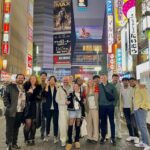
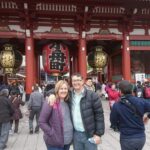
Getting to Oshiage by 8:30, and Why the Start Time Matters
This tour starts at 8:30 am. The meeting point is the Water section, 1-chōme-1-1 Oshiage, Sumida City, Tokyo 131-0045. The good news is it’s near public transportation, so you’re not wrestling with a complicated last mile.
The early timing matters because stable practice is part of a morning routine, not a scheduled show. Arriving on time helps you get settled before the training gets in full swing and keeps things respectful for the wrestlers and apprentices who need concentration.
The group size stays small, with a maximum of 10 travelers. In practice, that usually means less waiting, less crowd noise, and more space to follow what your guide is explaining while you watch.
The Real Star: Watching Practice Up Close for About an Hour
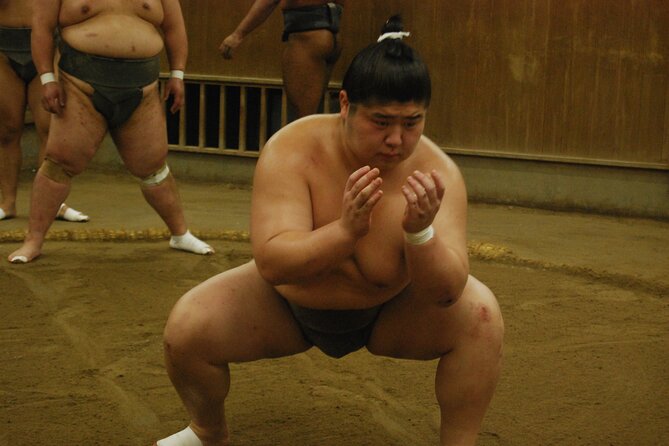
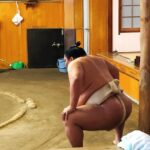
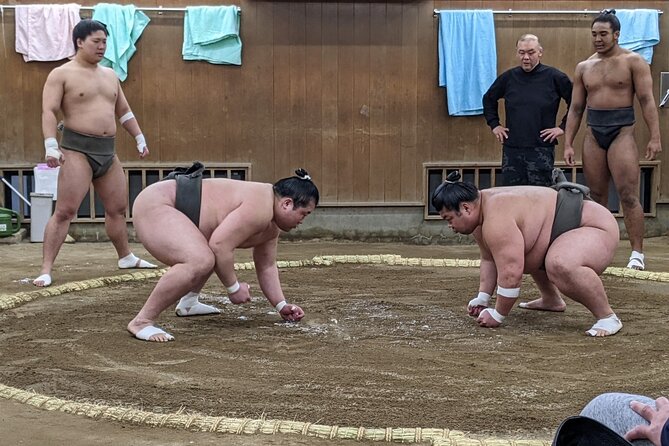
Your main training window is around one hour. You’ll visit a strong sumo stable in the Sumida area and watch practice as it unfolds. This is where you’ll notice how serious everyone is, from the apprentices following instructions to the wrestlers training with focus.
The experience is close enough that you’re not just seeing uniforms. You can pick up expressions and body tension. And you’ll hear the physical impacts as practice goes on, which gives you a much better sense of effort than you’d get from watching clips online.
One practical note: keep your attention on the moment. There’s a specific request to refrain from private conversation during the tour so the rikishi and apprentices can stay concentrated. Think quiet observer, not chatty sightseeing.
Coach’s Voice, Trust, and Why It Might Sound Harsh
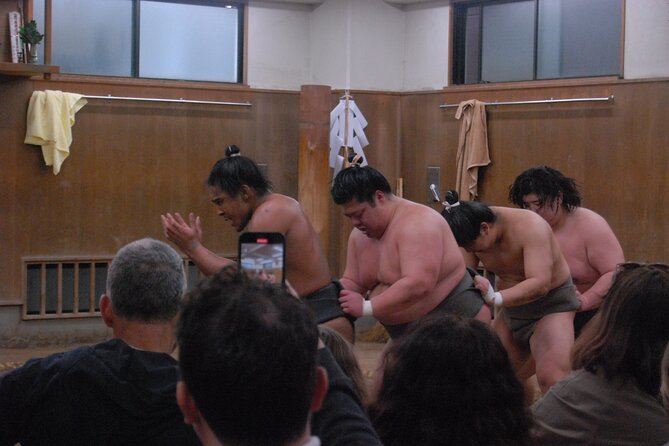
At one point, you’ll hear the coach. The coach’s voice is described as strong and harsh, and it can surprise you the first time you experience it. That reaction makes sense if you’re used to polished English-speaking tour guides and gentle museum narration.
But here’s the key, and it’s worth understanding: the harsh tone is part of what’s possible because of the trust built with students and the rikishi training alongside him. The stable’s identity depends on that working relationship, and it’s one reason the Ikazuchi Sumo Stable remains active.
For you as a visitor, this changes how you interpret what you’re seeing. You stop thinking of it as random yelling and start recognizing it as training communication, done daily within a system that keeps moving.
Photos, Video, and Respecting Stable Rules Without Stress
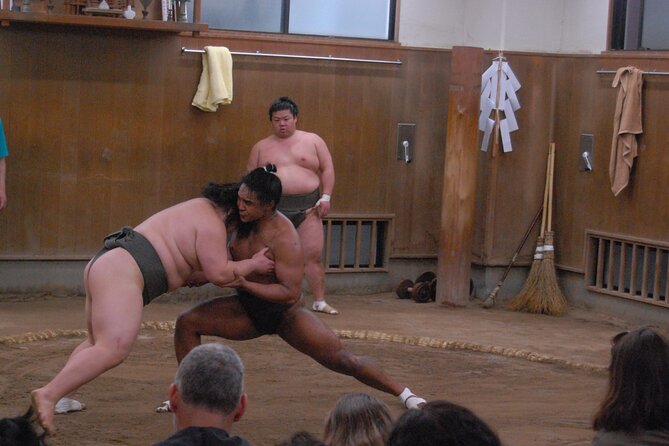
Inside the stable, the rules are clear. Video or flash photography is prohibited, and you should avoid that pressure right away by planning your phone settings before you enter. Photographs without flash are fine, so you can still capture images that show the atmosphere and the wrestlers in training.
Also, please don’t bring anything food-related into the practice area. Snacks, bread, rice balls, and other food are not allowed during morning practice. Instead, bring your own drinks with lids. That single detail can save you a lot of hassle, especially if you’re tempted to buy food nearby and snack while you wait.
If you want the photos to come out well, treat this like a low-flash environment. The goal is to avoid distractions and comply with the stable’s concentration needs. You’ll enjoy the practice more too.
More Tokyo tours and experiences for the shortlist
The Best Moment After Training: Questions and Photo Time
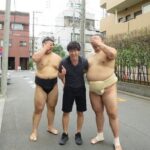
The tour includes a chance to take photos with the sumo wrestlers, and it’s not just a quick walk-by. There’s also time to ask a question at the end of the experience. That Q and A piece adds real value because it turns what you observed into something you understand.
I like Q and A formats in general, because you’re not limited to what the guide thinks is important. You can ask the thing that bothered you in the moment. For example, you can ask about practice routines or what you should pay attention to next time you watch sumo.
One small-but-important mindset shift: go in with questions you can ask politely and quickly. The stable environment is focused, so shorter questions keep the flow smooth for the rikishi and your guide.
What the Special Brochure Adds (Besides Paper)
The tour includes a special brochure, and I’d treat it as more than a souvenir. Since you’re seeing sumo practice up close, you need a way to connect details you notice with the bigger picture of how the sport is passed down.
A good brochure helps you recognize what you’re looking at, so you don’t leave with only surface impressions like big costumes and loud impacts. Instead, you can connect training behaviors to the idea that sumo is preserved and handed on through daily practice.
The brochure also gives you something to reference right after the tour. That’s when it’s easiest to connect dots, because the morning session is still fresh in your mind.
Price and Value: Is $82 a Good Deal for This Access?
$82 for about 2 hours might sound steep until you factor what you’re buying: access to a stable morning practice that you can’t easily replicate on your own as a casual visitor. This isn’t a generic walking tour where you pass by a building and move on.
You also get more than observation. The tour includes a guide, a special brochure, and time for photos plus an opportunity to ask questions. The small group size (max 10) also matters for value. It reduces chaos and keeps the experience focused, which is exactly what stable environments need.
So here’s how I evaluate the cost: you’re paying for proximity, structure, and explanation. If you love sports details, Japanese culture, or you simply want a rare everyday look at how sumo training really works, $82 feels like a reasonable trade for that access.
Who This Sumo Morning Practice Tour Suits Best
This tour fits best if you want an authentic Tokyo experience with actual practice, not a stage performance. If you like watching athletes train and you appreciate rules that protect concentration, you’ll probably have a great time.
It’s also a solid choice if you’re traveling with kids. The feedback I’ve seen emphasizes that families can find it fun and interesting, especially because there’s a Q and A moment that makes the experience interactive rather than passive.
On the other hand, if you hate strict rules about photography, sound, and food, you might find it more frustrating than rewarding. You need to be okay following guidance like no flash, no video, no snacks, and quiet conversation during practice.
Should You Book This Tokyo Sumo Stable Tour?
Book it if you want the closest realistic view of sumo training you can get in a short window. The combination of early access, small group size, and structured interaction (including photos and questions) makes it more than a look-see.
Skip it if you’re hoping for casual sightseeing flexibility. This is a real practice setting with real rules, and you’ll enjoy it more if you show up ready to behave like a respectful observer.
If your main goal is an authentic slice of Tokyo morning life tied to national sport, this one is a strong pick.
FAQ
How long is the sumo morning practice tour?
It runs for about 2 hours (approx.), with an hour of training observation at the stable.
What time does the tour start, and where do I meet?
The start time is 8:30 am. The meeting point is the Water section, 1-chōme-1-1 Oshiage, Sumida City, Tokyo 131-0045, Japan.
Is this a mobile ticket?
Yes. The tour uses a mobile ticket.
Can I take video or use flash photography inside the stable?
No. Video and flash photography are prohibited inside the sumo stable. Photos without flash are allowed.
Are snacks allowed during morning practice?
No. Snacks, bread, rice balls, and other food are not allowed during morning practice. Bring your own drinks with lids.
What is the cancellation policy?
You can cancel for a full refund up to 24 hours before the experience starts. If you cancel less than 24 hours before, the amount paid is not refunded.
More Guided Tours in Tokyo


More Tours in Tokyo





More Tour Reviews in Tokyo


Not for you? Here's more nearby things to do in Tokyo we have reviewed












Tokyo Sumo Experiences, side by side.
 ★ 4.8Sumo Show and Dining ExperienceFrom $792,742 reviews
 ★ 5.0the SUMO showFrom $891,960 reviews
 ★ 5.0Tokyo Shinjuku Sumo Show & Experience with PhotoFrom $791,750 reviews
 ★ 4.8Sumo Show and Experience in ShinjukuFrom $691,001 reviews
 ★ 4.7Luxury Sumo Show Experience & Japanese cuisine & DrinkFrom $103577 reviews
 ★ 4.8Sumo Morning Practice Viewing TourFrom $81570 reviews
 ★ 4.8Tokyo Sumo Experience: Chanko & Mochi with a Former ProFrom $103567 reviews
 ★ 5.0Ultimate Sumo Tournament: Tokyo, Osaka, Nagoya, FukuokaFrom $184468 reviews
This tour also belongs to