
Review · TSUKIJI MARKET TOURS
Toyosu Market Morning Tuna Auction and Tsukiji Food Tour with Licensed Guide
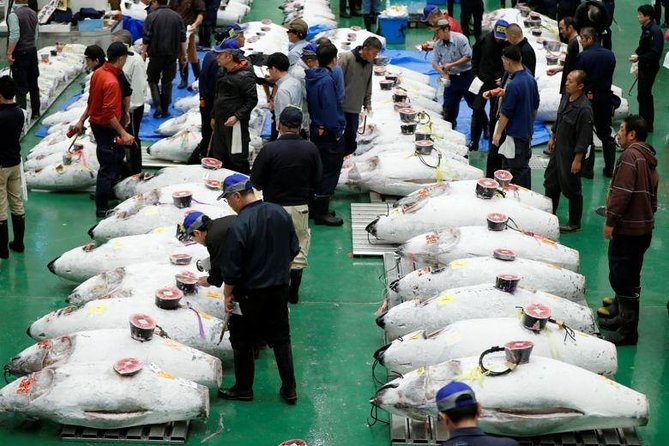
The tuna auction starts before breakfast.
This tour turns that early chaos into something you can actually understand, with a licensed guide and a viewing spot on a public deck at Toyosu. I especially love how you get context you would miss on your own, plus the practical feel for how Tokyo’s transit and market walking works before the crowds hit. The main drawback is simple: it’s an early 5:00 am start, and the best close-up viewing depends on lottery tickets you’re not automatically given.
You’ll spend about three hours moving between Toyosu and the Tsukiji area, with a guide who can tailor the walk to your interests. In the best cases, guides like Yoshii, Katsu (goreilo), and Toru really help you connect what you see to how fish business works today, not just what to photograph. The “consideration” part: you’ll pay extra for food, and you cannot count on getting to the auction floor itself.
If you want an easy morning with no stress, keep expectations realistic. This is a walking tour, it’s early, and the market is not designed for leisurely strolling. But if you care about tuna, Japanese food culture, and seeing the real machine behind what ends up on your plate, it’s a strong choice.
Key things I’d watch for on this tour

- Public-deck viewing at Toyosu: You’ll see the action from a public space, not the auction floor.
- Early start, clear payoff: The 5:00 am timing is what makes the tuna auction possible at all.
- Guides that explain the process: People like Yoshii and Katsu are praised for making the steps make sense fast.
- Tsukiji Outer Market time for snacks: You get a full hour in the outer market area right after the auction.
- Transit tips that save time: Some guides share route ideas like the Yurikamome line, including where to stand for a better view.
- Not included: observation deck lottery tickets: If you want a more exclusive viewing level, you need those tickets in advance.
A 5:00 am wake-up call that actually pays off
Tokyo has a way of making food feel like theater. The tuna auction is that theater, but it runs on daylight plus serious timing. This experience starts at 5:00 am, and that means you are there when the energy is real and before the market becomes a thick wall of visitors.
I like that the tour gives you a structured way to handle an environment that can feel overwhelming. You are not just wandering aisles hoping for the best angle. Your guide helps you understand what you’re looking at, which turns random motion into a story about supply, buyers, and how the fish system feeds restaurants.
One practical drawback is that you should be ready to move. Even if the tour is only about three hours, you’re walking early and paying attention constantly. If you’re the type who needs a slow start and a coffee first, you may feel rushed. But if you embrace the early hour, the auction view becomes the kind of moment you remember for years.
You can also read our reviews of more food & drink experiences in Tokyo


Toyosu tuna auction viewing, and what public means
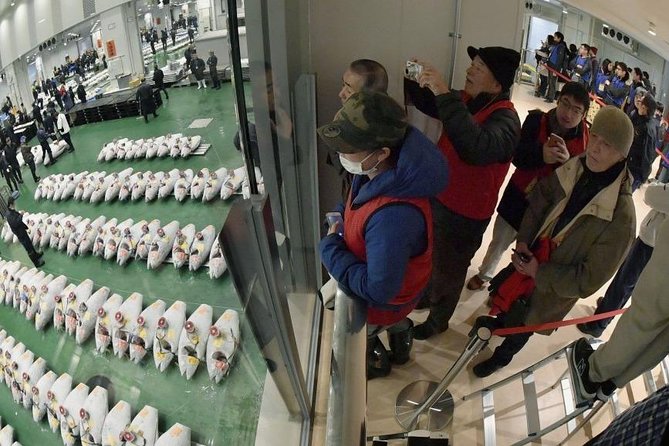
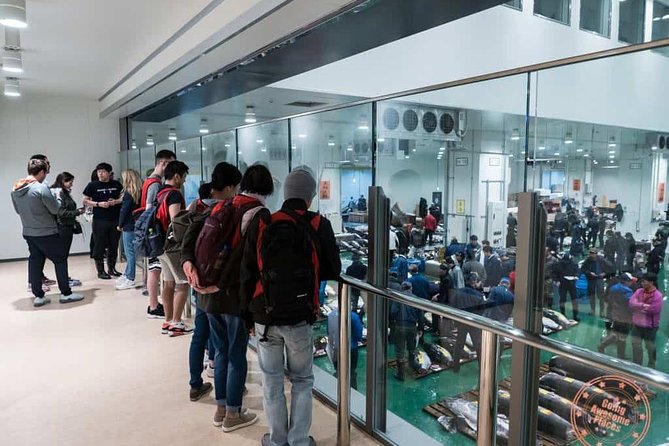
Here’s the key reality: you get to see the tuna auction from a public viewing area on the third floor. The tour includes that viewing, but it does not include the special observation deck ticket that you would need lottery access for.
That distinction matters for your expectations.
- You will see the bidding action, but you should not assume you will be at the closest possible angle.
- If you successfully apply for the observation deck lottery, you can aim for a more premium viewpoint, and the tour notes that groups tied to that deck are limited in size.
- The auction floor itself is not part of this experience for visitors, and guides help explain why.
In the experience of many people, guides do a strong job pointing you to the right spot at the right time. Still, one caution shows up in the feedback: viewing lines can be tight, and if your group arrives a bit late, the best angles may be taken. So treat the meeting time like it’s a train connection, because in practice it kind of is.
How the guide changes the market from chaos into a lesson
The value here is not only that you’re watching tuna get auctioned. It’s that you’re watching it with a translator who can explain the mechanics and the why behind the scenes.
People highlight guides such as Yoshii, Katsu (goreilo), Toru, Michio, Naoko, and Kenji for being organized, funny in a normal way, and able to answer the questions that pop up when you see how fast everything happens. One memorable detail: Katsu brought a binder with organized auction information, which helps you follow the process instead of feeling like you’re just taking photos.
You’ll also get the useful context that Toyosu replaced the older Tsukiji wholesale operations. More than the headline, the guides tend to explain how today’s process differs from what people imagine from the old market days. That is how you get something more than a sightseeing stamp.
And yes, the walk is also educational in practical ways. One of the strongest selling points is help using Tokyo public transportation. A guide even shared a route strategy using the Yurikamome line and recommended where to sit in the car for a better view, which is the kind of small tip that makes the rest of your Tokyo trip feel easier.
Stop at Toyosu: what you’re seeing in that first hour
After you meet your guide, the tour focuses on Toyosu Market, where the day’s wholesale activity happens. Toyosu opened in 2018 and took over the wholesale role that had been associated with Tsukiji. Even if you have read about the market before, it’s different in real life, mainly because it’s huge and production-paced.
In your first hour, your goal is to connect two things:
- the auction flow you saw from the public deck, and
- the scale of the wholesale operation around it.
Toyosu can feel less like a quaint market and more like an industrial system with food at the center. That’s not a bad thing. If you like food, you’re watching the part of the supply chain that makes “fresh fish” possible at lunch restaurants miles away.
What to watch for:
- You’ll want layers, because early mornings can feel cold.
- You should keep your phone charged. The auction action can be fast, and the best angles may not stay open for long.
- Don’t expect the tour to linger. The point is to catch the auction moment, then keep moving.
Also, remember that the tour includes viewing from public space, not the auction floor. So dress comfortably and focus on the experience, not trying to access restricted areas.
Tsukiji time: Outer Market snacks without the guesswork
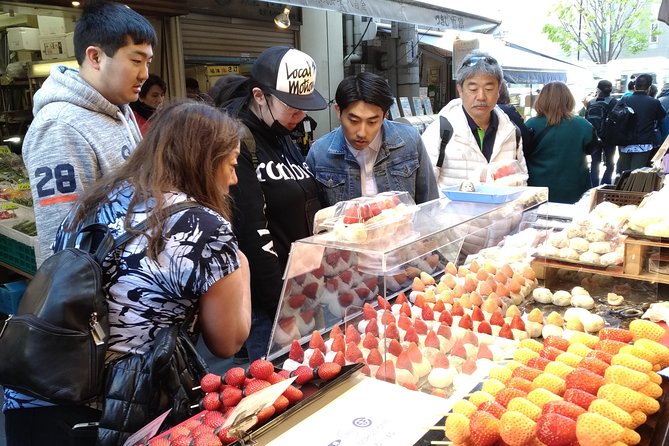
Next up is the Tsukiji Fish Market area, specifically the outer market zone, where you can browse and eat. This is where the trip stops feeling like a lesson and starts feeling like rewards. It’s also where you can buy small items, try snacks, and see the layers of food culture that tourists usually miss when they arrive later in the day.
You get about an hour here, and because the tour ends after the markets, you’ll likely want to treat that hour as your food window. The tour itself doesn’t include food, but many guides point people toward what’s worth your money.
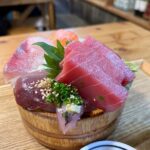
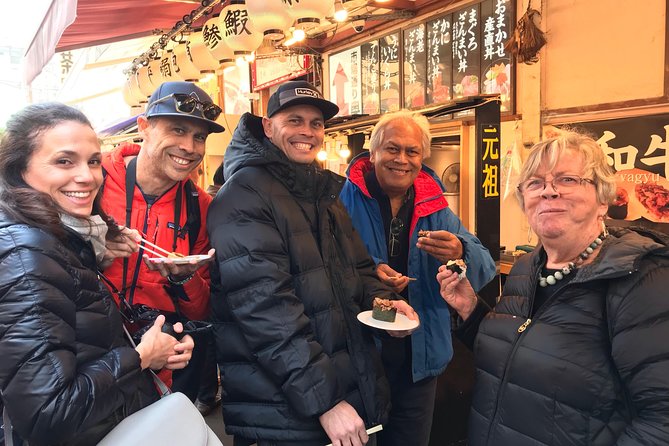
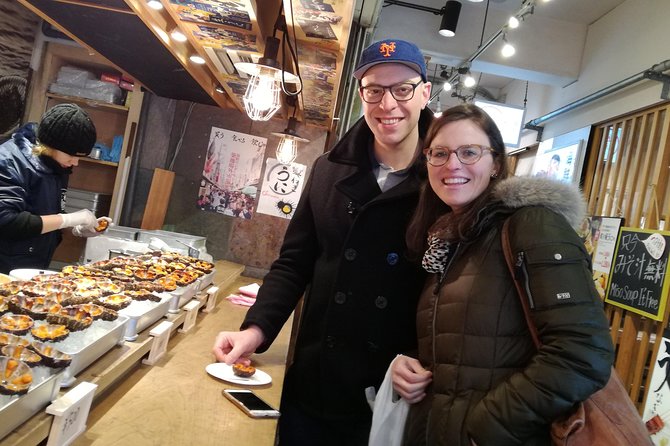
If you love tuna, the logic is simple: you just saw where the fish gets sourced, then you can look for how it turns into breakfast and small bites. People mention things like sushi breakfast, ramen, oysters, and maguro purchases in this outer-market time. Those are not included as part of the tour price, but the guide experience can make choosing where to spend your money feel much safer and faster.
One caution that’s practical, not dramatic: the market environment includes lots of shops, and not every purchase is a guaranteed win. If you buy souvenirs or knives, take your time, check the item carefully, and don’t let early-morning excitement rush you into a bad deal. One negative comment mentioned a quality problem with a shop purchase, which is a reminder to be smart.
More Tokyo tours and experiences for the shortlist

Walking, trains, and the Yurikamome tip that helps you feel local
This is a walking tour, and that changes how you plan your morning. You meet your guide at a selected pickup point, and the included “pickup and drop off” is described as on foot. In practice, some guides helped people from hotels and managed early arrival by taxi or car when trains were not ideal that early.
So what should you assume?
- You should be ready to walk some distance while staying close to the main market corridors.
- You should expect to be moving before normal crowds arrive.
- You’ll likely get practical transit guidance for the route between Toyosu and Tsukiji.
One of the more memorable transit tips in the feedback: using the Yurikamome line for a scenic route, and standing or sitting toward the front of the first car for a better view. Even if you don’t copy that exact strategy, the larger point is that your guide helps you understand what station to aim for and how to connect without wasting time.
If your Tokyo plan includes multiple neighborhoods in one day, this kind of guidance is more valuable than it sounds. You’ll spend less time staring at maps at 7:00 am.
Price and value: what $148.65 buys you, and what it does not
At $148.65 per person for about three hours, this is not a cheap morning. The question is whether you’re paying for food, or for expertise.
You’re mostly paying for:
- a licensed local English-speaking guide,
- the organized timing that makes the auction viewing work,
- a private, customizable experience, meaning your group gets attention, not just a herd path, and
- the translation of market reality into clear explanations.
What you should not expect the price to cover:
- observation deck lottery tickets (required separately if you want that level),
- transportation fees and any personal transit outside what’s implied by the walking route,
- food and drink,
- and admission upgrades for special decks.
In plain terms, it’s paying for your time and your access to context. You could visit Toyosu and Tsukiji on your own, but you’d lose the guided explanation of how the auctions and wholesale market operate today. You’d also risk arriving at the right place but missing the right angle at the wrong time.
One reason the guide portion gets praised is that the process moves fast. Several people mention that the guide helped them understand the auction flow, where to look, and how to follow what’s happening. If that’s the kind of value you want, this price is easier to justify.
If you mostly want pretty market photos and free wandering, you might feel it’s overpriced compared to self-guided time.
When Tsukiji shuts down for tours, plan a backup
There’s a seasonal note to take seriously: Tsukiji may be closed for tours in December and early January. If you’re traveling during those months, treat this tour as a “maybe” and have a backup plan for your food-market morning.
The good news is that the Tokyo area still has plenty of food to explore, but the specific auction-and-market timing is the whole point of choosing this experience in the first place. If you can’t do it, you might want to swap in a different culinary activity that still fits your schedule.
Who should book this tour, and who should skip it
This tour is a great fit if:
- you are a tuna and seafood fan,
- you want market context, not just sightseeing,
- you like mornings and can handle a 5:00 am start,
- you appreciate a guide who can answer questions and point out what matters,
- and you want a private setup with attention from a licensed professional.
It might not be the best fit if:
- you want food tasting included in the price, because meals are at your own expense,
- you need a slow pace and minimal walking,
- you are expecting auction-floor access, because viewing is from public space,
- or you are traveling in December or early January when tours may close.
Should you book? My straight answer
If your goal is to understand how Tokyo’s seafood system works, watch the tuna auction from the right kind of viewing, and finish with a smart Tsukiji outer market food stroll, I think it’s worth booking. The best guides, like Yoshii, Katsu (goreilo), Toru, and Michio in the feedback, make the whole morning feel organized, not chaotic. And the practical transit help means you get to carry that confidence into the rest of your trip.
I would hesitate only if you are hoping for included breakfast, auction-floor access, or a relaxed schedule. For that style of morning, a self-guided walk might feel cheaper. For the “show me the real process” crowd, this is a strong value.
FAQ
What time does the tour start?
It starts at 5:00 am, which is timed for the tuna auction.
How long is the experience?
The duration is listed as about 3 hours.
Is the tuna auction viewing included?
Yes. You watch the tuna auction from a public viewing area on the third floor.
Can I get access to the auction floor?
No. The tour viewing is from public space, and the observation deck lottery tickets are separate.
Are observation deck tickets included?
No. Observation deck tickets require a lottery application in advance, and they are not included in the tour price.
Does the tour include food or breakfast?
Food and drink are not included. After the tour, you can stay longer to grab breakfast on your own.
Is hotel pickup included?
Pickup is offered, and the tour notes that pickup and drop off are on foot. People’s actual meeting point is at a selected location in Tokyo.
Where does the tour end?
It ends at Toyosu Market or Tsukiji Fish Market, or at a desired place within the Tokyo area.
Is Tsukiji always open during winter?
Tsukiji may be closed for tours in December and early January, so check timing if you’re traveling then.
What is the cancellation policy?
You can cancel for a full refund up to 24 hours before the experience starts.
More Food & Drink Experiences in Tokyo
More Tours in Tokyo




More Tour Reviews in Tokyo


Not for you? Here's more nearby things to do in Tokyo we have reviewed












Tsukiji Market Tours, side by side.
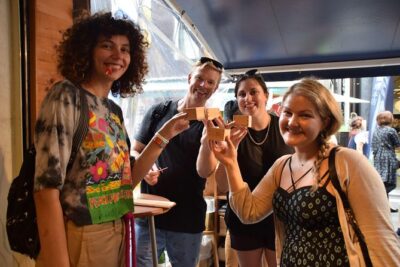 ★ 5.0Tokyo Tsukiji Fish Market Food and Culture Walking TourFrom $993,184 reviews
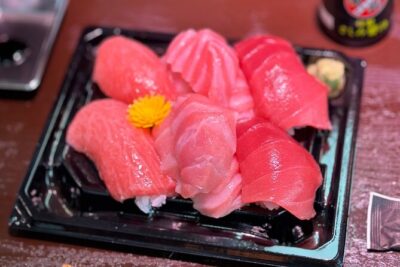 ★ 5.0Tsukiji Fish Market Food and Walking tourFrom $301,724 reviews
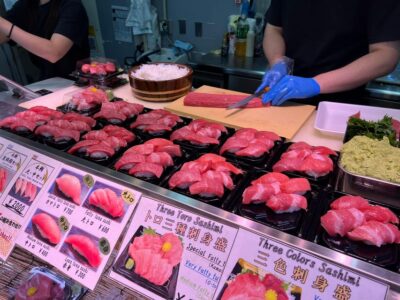 ★ 4.9Tsukiji Fish Market Guided Walking TourFrom $221,397 reviews
 ★ 5.0Tokyo Sushi Making Class in Tsukiji with Professional ChefFrom $491,177 reviews
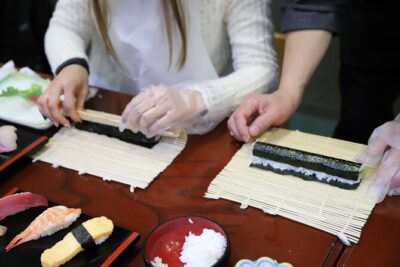 ★ 5.0Tsukiji Fish Market Guided Tour and Sushi Making with Pro ChefFrom $104775 reviews
★ 4.7Tsukiji Fish Market Food and Culture Walking TourFrom $96757 reviews
★ 5.0Tsukiji Fish Market Guided Tour and Sushi Making with Pro ChefFrom $104775 reviews
★ 4.7Tsukiji Fish Market Food and Culture Walking TourFrom $96757 reviews
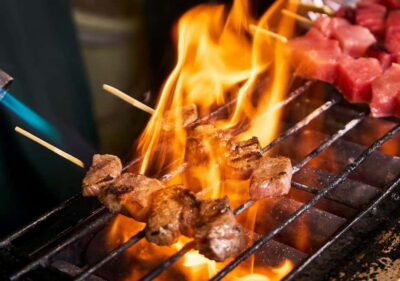 ★ 5.0Tsukiji Fish Market: Street Food & Culture Walking TourFrom $33669 reviews
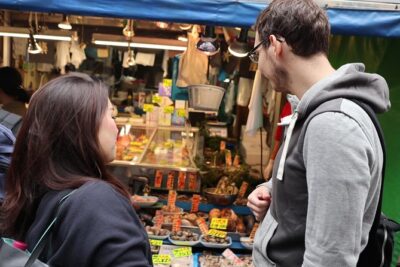 ★ 5.0Tsukiji Fish Market Small-Group Food Walking TourFrom $87621 reviews
This tour also belongs to