
Review · TSUKIJI MARKET TOURS
Tsukiji Fish Market Private Food Tour in Tokyo
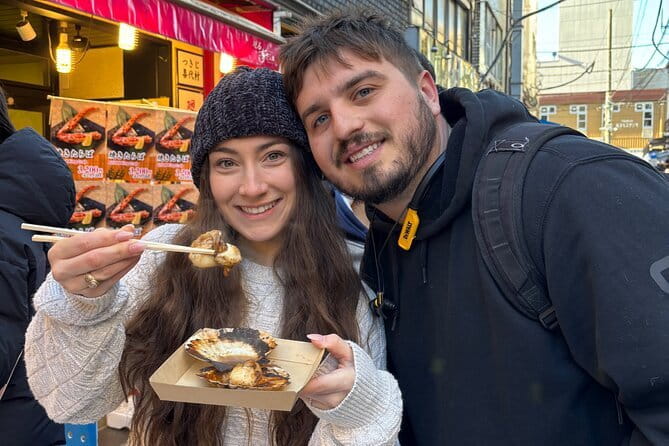
Tsukiji can be loud, confusing, and totally worth it. This private food tour keeps you moving through the area with a local guide, plus tastings included so you actually eat your way through Tokyo’s seafood world. I like that it combines a calm start at the Tsukiji Hongwanji Temple with straightforward market time, so the morning has rhythm instead of chaos.
My favorite part is the way the guide helps you choose what to order at the stalls. That means you are not stuck translating menus while crowds press in, and you get plenty of variety like sushi, sashimi, Wagyu, tamagoyaki, and even things like beef skewers and rice balls. One thing to keep in mind, Tsukiji gets busy, so you should treat the route like a busy walking tour, not a slow sightseeing day.
Key things I’d center in your planning
- Private by design: only your group, so you can match the food to your tastes instead of following a rigid script.
- Elly as the guide: multiple guests highlighted how warm, personable, and flexible she is, and how naturally conversations flow.
- Temple first, then food: you start at Tsukiji Hongan-ji Temple with a free stop that sets a respectful tone before the markets.
- Jogai Market choices: you get about 1.5 hours to taste options you pick, from sushi to Wagyu beef and tamagoyaki.
- Fish market browsing time: a short, focused window for seafood and produce so you do not waste time wandering.
- Timing matters: if you can, plan a morning visit, since many stalls start closing around 1:30 PM.
Why Tsukiji makes sense as a private food tour
Tsukiji is one of those places where the hype is real. But the hard part is less about the food and more about logistics. Without help, you can end up standing in lines that do not go anywhere, or pointing at menus while trying to decode what you are actually ordering.
A private guide changes the whole experience. You get navigation, ordering help, and on-the-spot suggestions, which is exactly what you want in a market built for regulars, not tourists. The tastings are included, so you are not just looking at food, you are sampling it through the day’s flow.
I also like that this is structured enough to keep you efficient, but flexible enough to match your appetite. You are not locked into one tasting route where you have to smile and swallow something you do not want. If your group wants more seafood, more cooked items, or a mix, you can usually steer.
You can also read our reviews of more food & drink experiences in Tokyo


Meeting at Hongwanji Temple: the calm start before the markets
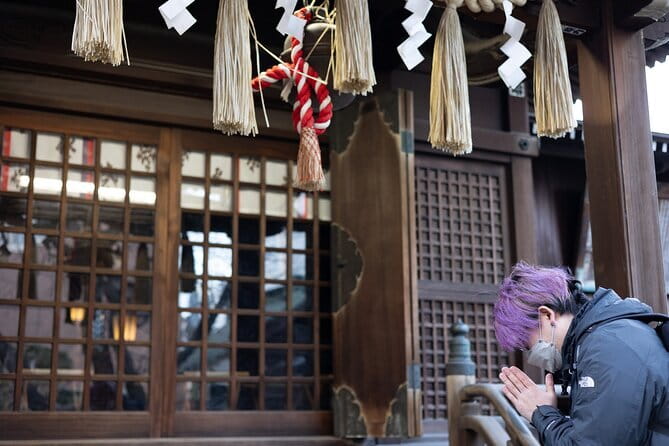
You begin at Tsukiji Hongan-ji Temple near Tsukiji, with a free admission stop of about 30 minutes. This first segment matters because it gives you a moment of structure before the market noise kicks in. You get guidance on how to do the cleansing and how the incense offering works, and you may even catch part of a ceremony while you are there.
Even if you are not a temple person, this start helps you switch gears. The market is intense, and people often walk in already hungry and stressed. Starting with a respectful routine makes the rest of the morning feel more intentional.
If you are traveling with kids, this first step can also soften the day. Reviews specifically mention the guide being patient with young children, and a calmer start makes that easier for everyone.
Jogai Market tasting time, from sushi to Wagyu
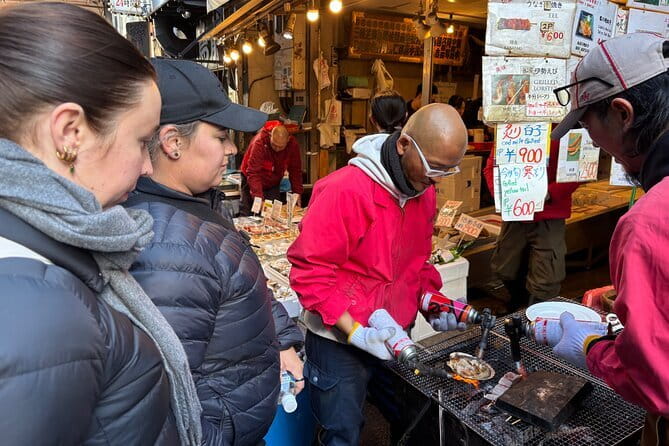
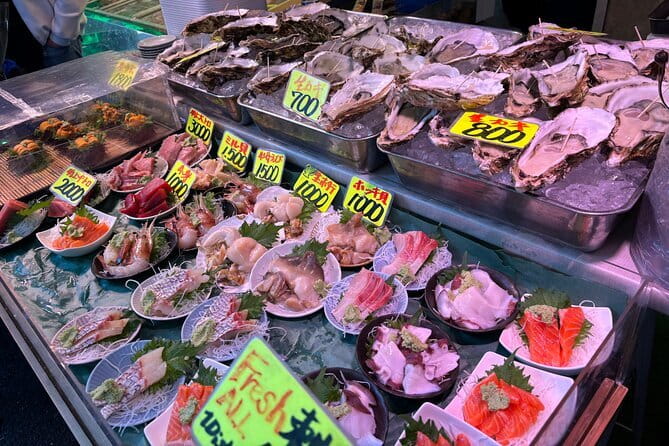
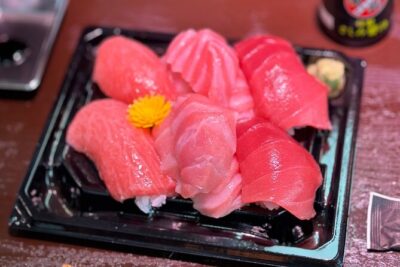
After the temple, you move into Tsukiji Jogai Market for about 1 hour 30 minutes of tasting time. This is where the tour turns into a food crawl, and it is also where a guide earns their pay. You get a chance to choose what you want from different stalls and eateries, with examples like sushi, sashimi, Wagyu beef, and tamagoyaki.
What you really gain here is decision support. Markets have a learning curve. You may see many similar-looking dishes, or you might not know what is a local specialty versus what is mostly for tourists. A guide helps you order with confidence, and you spend less time stuck on choices and more time eating.
I also like that the tour can handle real-world needs, like allergies. One guest described how the guide worked with them and supported communication with shop staff. That is a big deal in a crowded food hall where you do not have time to translate everything yourself.
Practical tip: go in with a light plan, but stay open. If you already know you want sushi and Wagyu, great. Still, try to leave room for one or two items you would not normally pick, since that is often where the memorable flavors happen.
Tsukiji Fish Market browsing, what you gain with a guide
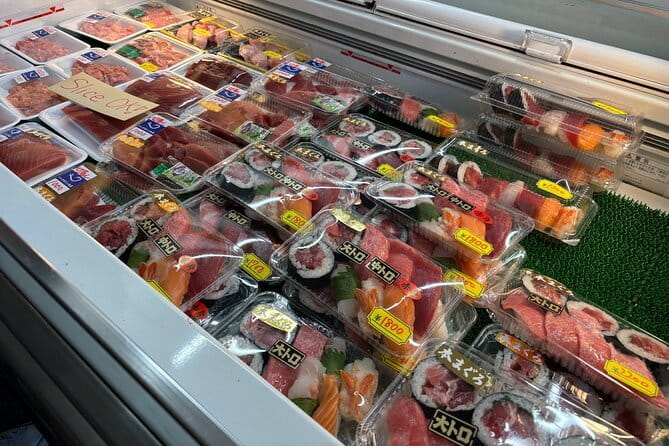
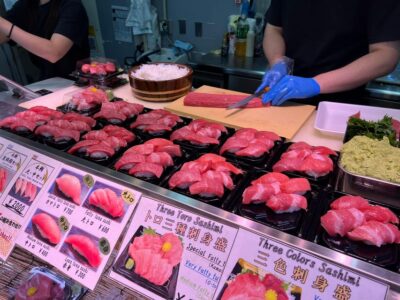
You finish with about 30 minutes at the Tsukiji Fish Market area, focused on high-quality seafood and produce. This short stop can feel simple on paper, but it works because the guide helps you see more in less time. In a place this large, “just walking around” can mean you never get to the parts you actually care about.
You can think of this segment as two things at once: a reality check for what a top-tier fish market looks like, and a chance to taste or sample with better context. The guide’s job is not only pointing things out, it is helping you understand what you are looking at so you can appreciate quality and handling.
One useful idea from other guests: if you are visiting for the full Tsukiji experience, plan around the market’s rhythm. Many stalls start to close around 1:30 PM, so a morning slot usually gives you more options and less rush. This tour’s structure also helps you catch a good portion of the market flow.
How long this takes, and when to go for less stress
The whole experience runs about 2 hours 30 minutes. That is long enough to feel like you did something special, not just a quick bite and a photo. It is also short enough that you can still do other Tokyo plans the same day.
You also want to consider crowd levels. Tsukiji’s busiest moments can make self-guided walking feel like a speedrun. A guided route reduces that stress because you are not constantly deciding where to go next.
If you can, target the morning. Multiple guests specifically recommended going early or right before the market winds down. If your schedule is tight, you can still make it work, but you will want to move at a market pace.
More Tokyo tours and experiences for the shortlist


Price and value: what $82.04 gets you
At $82.04 per person, the tour is not a budget snack. But it also is not just paying for someone to stand next to you. You are paying for time efficiency, ordering help, and tastings that are built into the experience.
In a place like Tsukiji, the hidden costs are time and mistakes. If you self-guide, you may end up buying the wrong thing, missing good stalls, or wasting money when you realize you misunderstood what you ordered. With a private guide, you reduce those guesswork problems fast.
I also see value in the “translation plus judgment” combo. The market is a maze of stalls and narrow options, and the guide’s suggestions help you eat more confidently. Guests also described the guide as warm and flexible, which adds another layer of value. A tour that matches your pace and preferences can feel worth it even at a higher price point.
What you can customize (and what to expect from the guide)
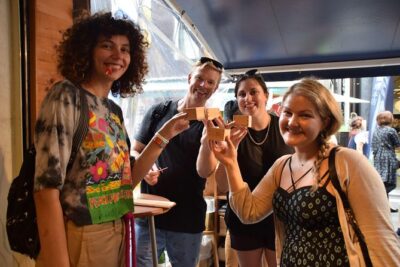
This is a private tour, so it is only your group. That matters because your guide can adjust the pace and focus. One family mentioned the guide was patient with a 4-year-old and a 2-year-old, and that kind of flexibility is hard to get on larger group tours.
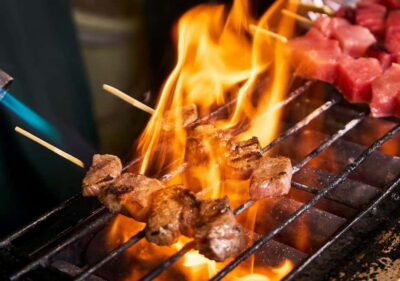
Food customization is also a theme. You can choose among items like sushi, sashimi, Wagyu, tamagoyaki, and more, plus the tour includes variety that can include things like beef skewers and rice balls depending on what you select. If your group has a strong preference, you can steer the sampling instead of forcing everyone into the same tastes.
One more nice touch from guest accounts: the guide can help with practical extras in the area, including translation support at specialty shops like knife stores. That is not something every market tour offers, and it can be helpful if you want a souvenir that is more meaningful than a packaged snack.
Logistics that make the morning easier

Your meeting point is at Tsukiji Hongan-ji Temple (3-chōme-15-1 Tsukiji, Chuo City, Tokyo). The tour is scheduled to end at Tsukiji Station (3 Chome-9 Tsukiji, Chuo City, Tokyo). There is also flexibility to designate a different end location within the time limit.
You will also receive a mobile ticket. That sounds minor, but it matters in Japan when you are bouncing between stations and walking long stretches. Less paperwork, fewer chances to miss a detail.
One last practical note: this experience is near public transportation. Tsukiji is easier when you approach it like a walk-first zone. You will cover ground on foot, so wear comfortable shoes and plan for short pauses, not slow browsing.
Should you book this Tsukiji private tour?
Book it if you want to eat more and stress less. The big reason to choose this format is the guide support: tastings included, smart ordering help, and smooth navigation in a place that overwhelms people fast.
I would also book it if your group includes picky eaters, kids, or anyone with an allergy. The guide’s ability to work with menu questions and support communication is a real advantage, especially when you are surrounded by stalls and you do not want to guess.
Skip it only if you are truly comfortable wandering Tsukiji on your own with strong Japanese language skills and you already know exactly what you want at specific stalls. If you have that plan, you might still enjoy the market. But if you do not, this tour gives you a shortcut to the good parts, without turning your morning into a stressful scramble.
FAQ
How long is the Tsukiji Fish Market private food tour?
The tour lasts about 2 hours 30 minutes.
Where does the tour start and end?
It starts at Tsukiji Hongan-ji Temple at 3-chōme-15-1 Tsukiji, Chuo City, Tokyo 104-8435, Japan. It ends at Tsukiji Station at 3 Chome-9 Tsukiji, Chuo City, Tokyo 104-0045, Japan.
Is this tour private?
Yes. It is a private tour, so only your group participates.
What tastings are included?
Tastings are included. You can taste a variety of Japanese foods in Tsukiji, with options such as sushi, sashimi, Wagyu beef, tamagoyaki, and other market favorites like beef skewers and rice balls.
Is there a temple stop, and is admission free?
Yes. There is a stop at Tsukiji Hongwanji Temple with admission ticket listed as free, and the stop lasts about 30 minutes.
Is cancellation free?
Yes. You can cancel up to 24 hours in advance for a full refund. If you cancel less than 24 hours before the start time, the amount paid is not refunded.
More Food & Drink Experiences in Tokyo
More Tours in Tokyo





More Tour Reviews in Tokyo


Not for you? Here's more nearby things to do in Tokyo we have reviewed












Tsukiji Market Tours, side by side.
 ★ 5.0Tokyo Tsukiji Fish Market Food and Culture Walking TourFrom $993,184 reviews
 ★ 5.0Tsukiji Fish Market Food and Walking tourFrom $301,724 reviews
 ★ 4.9Tsukiji Fish Market Guided Walking TourFrom $221,397 reviews
 ★ 5.0Tokyo Sushi Making Class in Tsukiji with Professional ChefFrom $491,177 reviews
 ★ 5.0Tsukiji Fish Market Guided Tour and Sushi Making with Pro ChefFrom $104775 reviews
★ 4.7Tsukiji Fish Market Food and Culture Walking TourFrom $96757 reviews
★ 5.0Tsukiji Fish Market Guided Tour and Sushi Making with Pro ChefFrom $104775 reviews
★ 4.7Tsukiji Fish Market Food and Culture Walking TourFrom $96757 reviews
 ★ 5.0Tsukiji Fish Market: Street Food & Culture Walking TourFrom $33669 reviews
 ★ 5.0Tsukiji Fish Market Small-Group Food Walking TourFrom $87621 reviews
This tour also belongs to