
Review · TOKYO CITY TOURS
Ueno and Yanaka Culture Art Walking Tour in Old Tokyo
Old Tokyo, sorted by culture and comfort. This Ueno and Yanaka walking tour strings together major museum time, shrine-and-temple breaks, and the quieter Shitamachi feel that most first-timers miss. I love the way the day switches gears from big-city landmarks to slower neighborhood streets, and you get a real guide-led explanation instead of wandering. One catch: it is several hours outdoors with lots of walking, so comfy shoes and weather readiness matter.
The value is strong for the price because museum admissions and the relevant shrine entry fees are included, plus you travel with a local English speaking guide for the full flow. It also runs with a small max group size of 15, which helps the pacing and makes it easier to ask questions. If you hate museums or you want zero walking, this day will feel long.
Key highlights at a glance
- Beth-led small-group day with a calm, question-friendly pace
- Ueno Park + temples and lake time as a breathing break from Tokyo traffic
- Ameyoko retro street stop with guided context, then time to choose lunch
- Yanaka Shitamachi atmosphere with shops and side streets that feel older than central Tokyo
- Art and neighborhood stops including a sculptor workshop and family house museum
- Yanaka Cemetery visit for Buddha statues and a peaceful reset before the final stretch
Ueno to Yanaka: why this part of Tokyo feels different
Most Tokyo itineraries chase the big neon, the wide avenues, and the skyline views. This route makes a different promise: trade the rush for places where Tokyo’s older layers show up in buildings, street corners, and daily-life details.
Ueno is a classic starting point because it mixes museum culture with open air. You spend time moving through Ueno Park, where temples and shrines sit alongside paths, trees, and the park lake. That park rhythm makes the day feel varied, not like one long museum slog.
Then you shift to Yanaka, a Shitamachi, lower-city neighborhood where the pace slows down. The streets here feel more human scale, with traditional architecture and small-shop energy. The tone changes again when the day turns toward the cemetery area, where the quiet actually sticks for a while.
You can also read our reviews of more walking tours in Tokyo


Getting to the start and finishing at Nippori
This tour starts at Ueno Station and ends at Nippori Station. Your best approach is to get to Ueno via the JR Yamanote Line, using the exit closest to the Park Gate exit. Starting at 9:30 am is early enough to enjoy Ueno before the heaviest crowds fully land.
Because there is no private vehicle used, you will be walking between stops for much of the day. That also means you should plan your shoes and your energy like it is a full day hike, not a quick sightseeing circuit.
The good news is that ending at Nippori can be convenient if you want to head onward to other northern areas of Tokyo without backtracking. You are also in a part of town that is easy to navigate by public transport once you finish.
The National Museum of Nature and Science: where the day gets big
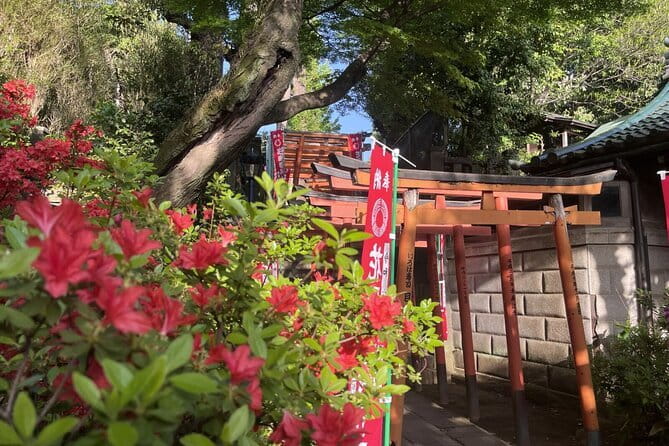
Stop 1 is the National Museum of Nature and Science, and the entry is included. This is a smart first stop because it gives you a strong indoor anchor early, when your feet are fresh and the weather is usually easier to deal with.
Expect an introduction to the museum’s history, then guided time focused on the main attractions. The highlights listed include a life-sized Blue Whale model and a steam locomotive, plus taxidermied specimens. Even if you are not a hardcore museum person, these kinds of centerpieces help you understand what you are seeing without needing to decode everything on your own.
A museum stop can be a drawback if you prefer streets and temples all day. Still, starting indoors makes the rest of the day feel more comfortable, since you will later spend hours outdoors in Ueno Park and around Yanaka.
Ueno Park temples and lake time: a break built into the itinerary

Stop 2 is Ueno Park, with about 1 hour 30 minutes. Admission is included here, and the tour focuses on temples, shrines, and nature within the park setting.
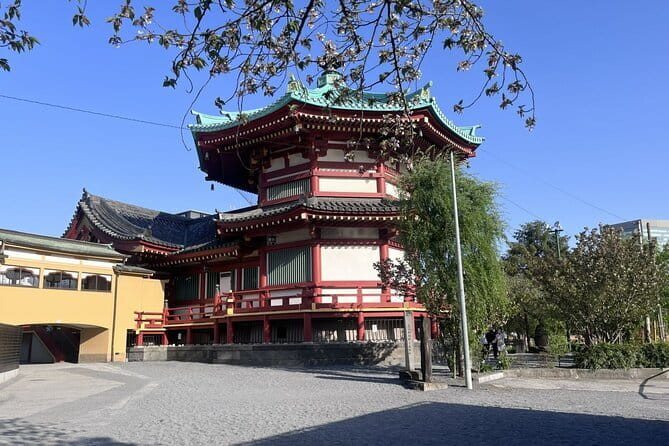
Ueno Park is one of those places where you can feel Tokyo’s contrast quickly. The city noise fades as you move along the paths, and you get that park-lake sense of space. This is also where you will likely notice more heritage architecture and religious structures up close rather than in postcards.
The practical benefit is pacing. After the museum’s concentrated attention, Ueno Park gives you a slower, more scenic rhythm. And because the tour is guided, you do not just pass by structures, you understand what they represent as you walk.
Ameyoko Shopping Street: retro energy and a lunch break with context
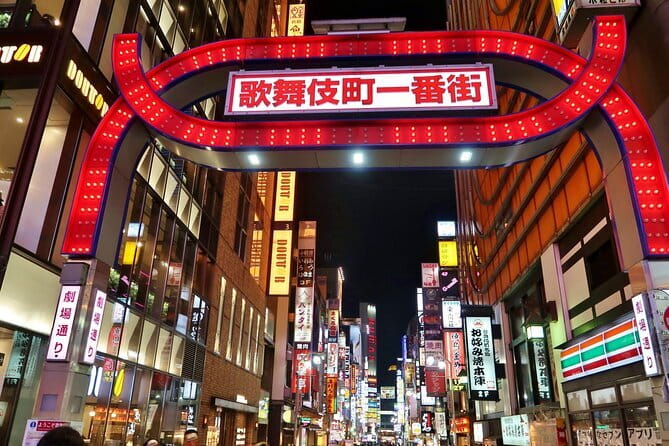
Stop 3 is Ameyoko Shopping Street, around 1 hour 20 minutes. This is a key Tokyo experience because it is loud, busy, and old-school in a way that many shiny shopping zones are not.
The tour includes guided context on the area’s history and significance, then you get a lunch break to explore and eat on your own. Food and drink are not included, so plan to budget for a meal here. The advantage is choice: you can pick something that matches your tastes rather than being locked into one stop.
If you get overwhelmed by crowds easily, take a breath before you enter the busiest parts of Ameyoko. Use your guide-led intro time to orient yourself, then step into the street with a simple plan for what you want from lunch.






Yanaka District: Shitamachi atmosphere plus an art stop that teaches you to look
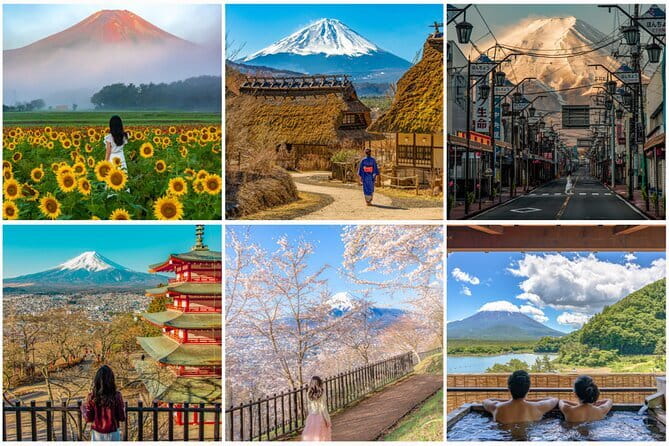
Stop 4 is Yanaka District, about 1 hour 10 minutes, with admission included. The itinerary includes a well-known museum tied to an acclaimed Japanese sculptor, described as both a workshop and family house.
This kind of place works well on a neighborhood day because it is not a generic museum box. You see art and craft connected to daily life and a home/work space rather than separated from it. That detail helps you understand why Yanaka feels personal and lived-in rather than staged.
After Ueno’s cultural big-ticket feel, Yanaka brings a gentler pace. You are not trying to win a checklist. You are learning how to notice the small things: streets that keep their form, corners where traditional architecture still shows up, and art spaces that feel connected to the community.
Yanaka Ginza: cat details, calm shopping streets, and easy wandering
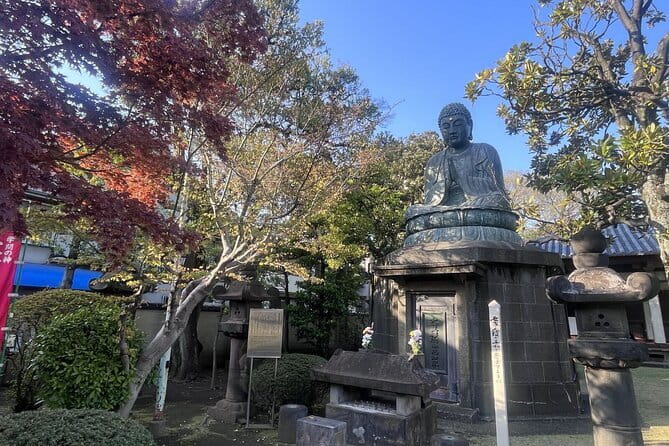
Stop 5 is Yanaka Ginza Shopping Street, about 1 hour, and it is free to enter. This is where the day becomes more stroll-friendly again.
Yanaka Ginza is known as Cat town, and you can look out for cat statues and cat themed items along the shopping stretch. It is not just about the cats, though. The bigger point is the feel of the shopping street: more relaxed, calmer, and less like a tourist funnel.
This is also a great moment for souvenirs that feel local rather than mass-produced. Because the time is guided but not strict, you can slow down or move ahead depending on what captures your attention.
Yanaka Cemetery: Buddha statues, quiet walking, and a soft landing
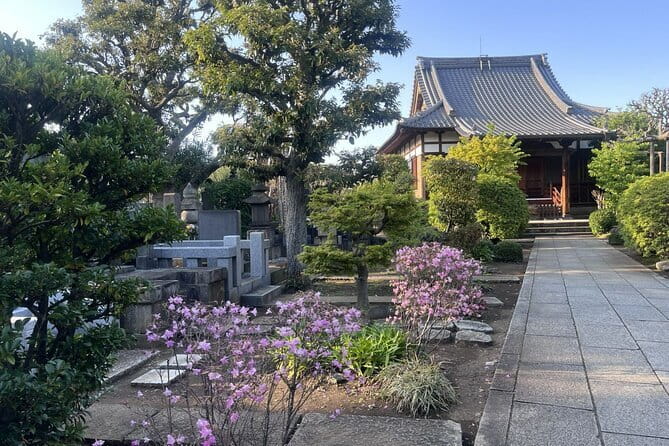
Stop 6 is Yanaka Cemetery and a Buddhist temple visit with impressive Buddha statues, plus time to walk through the cemetery area and along Sakura-dori. Admission at this point is free.
This stop can be surprisingly moving if you let it be. It is not an action-packed attraction, and that is the point. After shopping streets and museum time, the cemetery offers a reset, with a calm atmosphere and a sense of reverence.
If you prefer places that are purely scenic or purely lively, this might not be your favorite segment. Still, it gives the day depth, and it makes the Yanaka experience feel more complete than just street-level wandering.
The guide makes a real difference, especially with Beth
A big theme from the experience feedback is the quality of the guide. The guide’s name is Beth, and the tone in the reviews is consistent: she is kind, answers questions politely, and helps history feel real instead of turning it into a textbook lecture.
Beth also shows up in a practical way. One review notes the team handled a wrong meeting point situation with understanding, which matters because meeting points can be confusing in a big station like Ueno. Another highlights how the guide pointed out beauty and details in places you might otherwise skim past, like the museum building itself and its historical pieces.
With a small group max of 15, you also get more back-and-forth. That is especially useful when you want to know what you are looking at in temples, shrines, and older neighborhood architecture.
Time, walking, and how to stay comfortable
This is about a 7 hours 30 minutes day, with multiple stops and several hours of outdoor walking. That is not automatically a problem, but it changes how you should pack and plan.
Here is how I would think about it:
- Wear shoes you can walk in for hours, not just for a few photo breaks.
- Bring a layer for weather, since you will be outdoors for long stretches.
- Keep your lunch simple and nearby, because you may be moving steadily before and after the Ameyoko break.
Because the tour does not use a private vehicle, you should assume you are responsible for your own stamina. The guide can keep things moving, but they cannot turn this into a sit-down day.
Price and value: what $148.93 buys you
At $148.93 per person, this tour sits in the “structured day, paid guide” category rather than the “DIY neighborhood stroll” category. The value comes from three things you do not always get together.
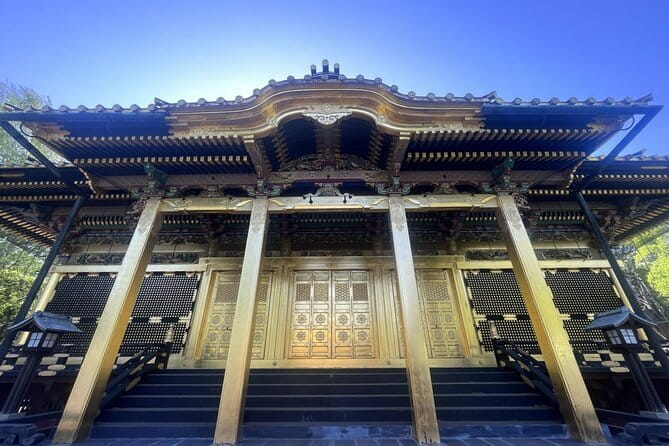
First, admission fees for museums and Toshogu Shrine are included. That matters because museum entry adds up quickly if you do multiple stops solo.
Second, you are not just paying for time, you are paying for interpretation. A guide helps you understand why these sites matter and what to notice, especially in places like Ueno Park and the Yanaka neighborhoods where the details can be easy to miss.
Third, the group size max of 15 keeps it from becoming a moving crowd. That makes the walking day feel more manageable and question-friendly.
If you already have museum entries in mind and you like walking with a plan, the price feels fair. If you prefer complete freedom, you could recreate pieces on your own, but you would lose the guided connections between sites and neighborhoods.
Who this tour suits best
This is a strong fit if you:
- Like cultural sights, especially museums plus temples and shrines
- Want an older Tokyo vibe with less of the usual tourist stampede
- Prefer a guided route where you can ask questions and get pointed to details
It is less ideal if you:
- Want minimal walking or lots of indoor time
- Dislike structured sightseeing days
- Are only interested in modern Tokyo highlights
Should you book this Ueno and Yanaka Culture Art Walking Tour?
I think this one is worth booking if you want a real old-Tokyo day with variety, not just a long photo walk. The guide, Beth, comes through strongly in feedback as a person who makes history understandable and who points out details you might otherwise overlook. The itinerary also balances indoor and outdoor time, and it includes museum and shrine admissions so you do not feel like every stop is an extra cost.
Book it early if you can. The fact that it is commonly booked far in advance suggests it fills up when people plan their Tokyo trips. And if you do book, go in ready to walk for much of the day, then treat the quiet stops like Yanaka Cemetery as your payoff.
FAQ
How long is the Ueno and Yanaka culture walking tour?
It runs for about 7 hours 30 minutes.
Where does the tour start and where does it end?
The tour starts at Ueno Station and ends at Nippori Station.
What meeting point should I use at Ueno Station?
The meeting point is listed as Ueno Station 7 Chome-1, Ueno, Taito City, Tokyo, and the closest exit is the Park Gate exit.
Is food included on the tour?
No. Food and drink are not included, and there is a lunch break during the Ameyoko stop.
Are museum and shrine tickets included?
Yes. Admission fees for the museums and Toshogu Shrine are included.
Which stops are included in the itinerary?
The tour includes stops at the National Museum of Nature and Science, Ueno Park, Ameyoko Shopping Street, Yanaka District (including a sculptor workshop and family house museum), Yanaka Ginza Shopping Street, and Yanaka Cemetery.
Do I need to bring train tickets for getting to and from the tour?
Train and transport before and after the tour are not included.
How big is the group?
The maximum group size is 15 travelers.
How will I receive my ticket?
The tour uses a mobile ticket. Confirmation is received at booking.
More Walking Tours in Tokyo


More Tours in Tokyo


More Tour Reviews in Tokyo
Not for you? Here's more nearby things to do in Tokyo we have reviewed












Tokyo City Tours, side by side.
 ★ 5.01-Day Tokyo Bus TourFrom $12914,250 reviews
 ★ 4.5TOKYO SKYTREE® Admission ticketFrom $1311,192 reviews
 ★ 4.6teamLab Planets TOKYO Digital Art Museum Entry TicketFrom $259,779 reviews
 ★ 4.0Mt Fuji & Hakone Cruise, Drum Show Bullet Train 1 Day from TokyoFrom $1497,413 reviews
 ★ 5.0Shinjuku Food Tour (13 Dishes at 4 Local Eateries)From $866,603 reviews
 ★ 4.4Tokyo Mt Fuji 5th St & Hakone Cruise Bus Tour w/Bullet TrainFrom $1545,024 reviews
 ★ 5.0Flagship 2-Hours Official Street Go-Kart Tour – Tokyo Bay ShopFrom $644,974 reviews
 ★ 4.5From Tokyo: Mount Fuji Full-Day Sightseeing TripFrom $684,970 reviews
This tour also belongs to