
If you like your Tokyo history served on foot, this walk fits. You spend two hours tracing Edo-era fortress leftovers around the imperial palace area, led by an English-speaking guide who points out details you would miss on your own. I especially like the stop-by-stop structure and how it helps you connect each gate, tower, and guardhouse to the bigger story of Edo Castle. I also like the limited-edition imperial snack, plus a simple drink from a nearby vending machine.
One important consideration: the Emperor’s residence itself is not open to the public, and you have to pass a security check to enter parts of the Imperial Palace area. So yes, the gardens and surviving structures are impressive, but you should not expect to wander freely around the private residence grounds.
You start at Starbucks near the imperial outer area, wear comfy shoes, and plan for outdoor walking in whatever weather Tokyo hands you. The payoff is a guided loop that turns stone walls and names like Honmaru and Ooku into something you can actually picture.
Key things that make this tour worth your time
- Limited-edition traditional snack at the Imperial Palace (not just a generic souvenir stop)
- English-speaking guide who shares details you likely will not find alone in guidebooks
- A focused 2-hour route built around Edo Castle remnants and palace-area landmarks
- Photo-friendly pacing, including places for photos during the walk
- A drink from a vending machine to keep the tasting easy and simple
Why the imperial palace area is the perfect history walk
Tokyo can feel like a blur, tower after tower. This tour gives your day a slower rhythm, with a clear sense of place. You’re in the Honshu core of Japan, in the area tied to the imperial palace and the older Edo Castle world that preceded it.
The big idea is that the Imperial Palace area is not just scenery. It’s a concentrated slice of how power worked in Japan, from the era when generals and shogun-related authority were centered in Edo. Even if you cannot enter every restricted space, you can still see enough remnants to understand why this spot mattered.
I also like that the tour is built for connection. Gates, guardhouses, gardens, and ruins are not treated like random photo stops. They’re presented as parts of a larger defensive and administrative layout, which makes the walk feel purposeful.
You can also read our reviews of more walking tours in Tokyo

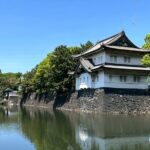

Starbucks start point and how to get your bearings fast
You’ll meet at スターバックス コーヒー 皇居外苑 和田倉噴水公園店. Your guide holds an air craft logo signboard reading Fantasy Travel, so you can find the group without guesswork.
This starting area is practical for two reasons. First, it gives you an easy pickup point that most people can reach without special planning. Second, it gets you into the imperial outer grounds area early, so the walking begins immediately instead of wasting time figuring out where to go.
Tip I strongly suggest: treat the first few minutes like warm-up time. Your shoes should be comfortable enough for a real stroll, because a good portion of the route is outside.
Security checks and what you should not expect to access
Here’s the truth that keeps expectations realistic: the Emperor’s residence is not open to the public. You still get access to parts of the Imperial Palace area, but you must pass a security check to enter.
So when people say this tour shows the imperial palace, what you’ll actually experience is the surrounding palace-area grounds and the surviving structures and layouts within the public access areas. The gardens are a highlight, and the historical structures are the point.
Also note two practical limits from the provided details. It is not suitable for wheelchair users, and pets are not allowed (with assistance dogs allowed).
The 2-hour route, stop by stop
The walk is built around a loop of recognizable landmarks and Edo Castle references. Total time is about two hours, with short visits and guided explanations at each stop. It’s paced so you can listen, look, and take photos without feeling rushed.
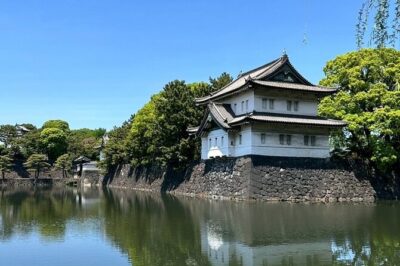
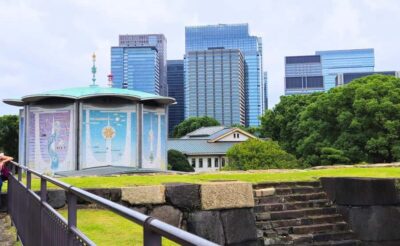
Sakurada Tatsumi Yagura
You start with Sakurada Tatsumi Yagura, a tower-related stop that sets the tone for what this area is really about: defensive architecture. Expect a quick guided explanation and time to look around, then move on.
Good to know: towers like this work best when you pause and look at how the structure fits into the layout. If you keep your phone out the whole time, you’ll miss the point of the story the guide is telling.
You can also read our reviews of more food & drink experiences in Tokyo





Ote-Mon Gate
Next is Ote-Mon Gate, another checkpoint in the area’s movement system. Gates are where you can mentally map circulation, entry points, and how people would have approached authority.
This is also a good spot for photo framing. Since the tour is designed with photo stops in mind, you’ll likely be shown where a clean shot is easier.
Constable Guardhouse
At Constable Guardhouse, the focus shifts from big structures to the people and roles that kept order. Guardhouses are small, but they add meaning. You stop seeing the site as walls only, and start thinking about how it operated day to day.
Hyakunin Bansho Guardhouse
Then you’ll visit Hyakunin Bansho Guardhouse. The name itself signals a connection to organized staffing, and your guide’s job here is to connect the terminology to what you see on the ground.
If you like details, this is the kind of stop where your understanding can jump. Small differences in location and function matter when you’re tracing a historical layout.
Ninomaru Garden
Now the mood changes with Ninomaru Garden. This is where the tour earns its “walk and breathe” reputation. The gardens are the part you remember with your senses, not just your notes.
A helpful expectation: even if some palace-related structures feel simple at first glance, the garden spaces are where the atmosphere lands. This is also where you’ll appreciate the value of a guide, because someone can point out what you should pay attention to beyond the obvious.
諏訪の茶屋 (Suwa no Chaya)
At 諏訪の茶屋 (Suwa no Chaya), you get a brief stop with a shopping element. This is a small opportunity to pick up something associated with the area.
The practical angle is time. You get about five minutes here, so if you want to browse, move quickly and decide fast.
都道府県の木
Next is 都道府県の木. This is a short sightseeing and walking stop, so think of it as a quick landmark pass that still matters for orientation.
If you’re the type who likes planting-related or symbolic details, you’ll probably enjoy this one. If not, keep moving, since the bigger moments are still coming.
Former Site of Edo Palace Ooku (Imperial Kitchen)
Then comes Former Site of Edo Palace Ooku (Imperial Kitchen). This is one of those stops that turns the tour into more than just architecture photos. You’re looking at a reference point tied to how daily life within power structures might have been supported.
Even with limited access, “former site” stops like this help you understand the layered history in the space. The guide can connect the dots between Edo Castle and the imperial palace context.
Edo Castle Ruins
At Edo Castle Ruins, the tour leans into what’s left behind. Ruins are the most honest kind of history stop because they don’t pretend everything is intact. What you see still teaches, especially when someone explains why the remnants matter.
This is also a natural pause point in your walking pace. Take a minute to absorb the area before the next defense-related structures.
Stone Hut Imperial Palace East Gardens
Next: Stone Hut Imperial Palace East Gardens. Stone structures can be easy to ignore if you’re only hunting for the “big” sights. But in a guided walk like this, they become clues. You’ll hear what the structure represents and why it fits the east gardens setting.
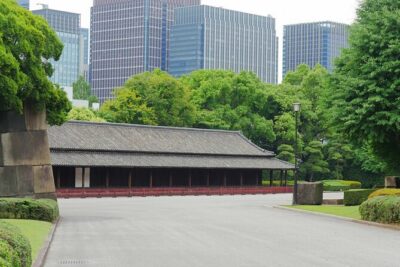
Fujimi-tamon Defense House
You’ll then reach Fujimi-tamon Defense House. A defense house is the kind of stop that benefits from listening. The name points toward function, and the guide helps you interpret what you see in a way that a guidebook often can’t.
Fujimi-yagura
After that is Fujimi-yagura, another tower element. By now, you’ve seen enough tower and gate context to understand how they work together. This is where your mental map starts to click.
Site of Edo Castle Honmaru (Main Hall)
At Site of Edo Castle Honmaru (Main Hall), the tour targets the core idea of Edo Castle authority. Honmaru means the main hall area, and your guide’s explanation helps you understand why this spot was central.
This is also a good moment to slow down and watch where the group gathers. Honmaru sites can be busy photo zones, but you’ll get guidance on where to stand for both views and photos.
中之門跡 (Naka-no-Mon ato)
Then you visit 中之門跡 (Naka-no-Mon ato). This is another “site of” style stop, which can feel abstract unless a guide adds context. Here, you’re using place names to build an understanding of movement and access points.
If you’re taking photos, consider taking one wider shot first, then a closer shot. It helps you remember where this stop sits in the bigger loop.
Obansho Guardhouse
Finally, you’ll reach Obansho Guardhouse. Ending with a guardhouse makes sense, because it brings you back to the theme of controlled entry and organized security.
When the tour ends, you’re not left with random highlights. You finish with a framework, a clearer mental model of how the area worked.
Return to the start point
You arrive back at スターバックス コーヒー 皇居外苑 和田倉噴水公園店. It’s a clean close that also makes it easier to keep your day moving without detours.
The snack and vending-machine drink: the part you’ll actually taste
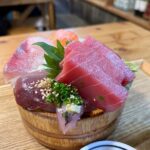
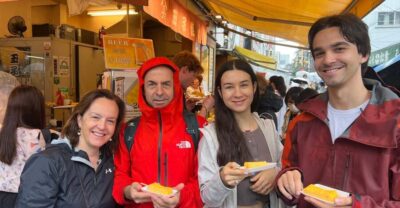
This tour includes 1 traditional snack only at the Imperial Palace, plus 1 drink from a vending machine near the store. That combination is simple on purpose. You get one food moment tied directly to the setting, and a practical drink to keep you comfortable during outdoor walking.
The snack is the standout because it’s limited edition for this experience. It’s not just a random bite you can find elsewhere. If you care about food as part of cultural context, you’ll appreciate that the tasting is tied to the palace-area experience rather than stuck on at the end.
If you’re picky about sweet vs savory, you might still want to check with the guide if you have dietary concerns, but the provided details only confirm that one traditional snack is included. Keep your expectations flexible, and enjoy it as part of the tour rhythm.
How the guide turns gates into stories
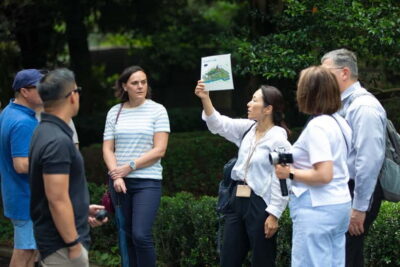
The quality here is all about the guide. You’ll get an English-speaking guide, and the tour includes photos and places for photos. That means you’re not just walking, you’re learning where to look and how to frame the moment.
From the guide names that show up again and again, Masa and Rini come up with a style that’s friendly and story-driven. There’s also mention of quirky humor and a willingness to chat, even about far-away places like Brazil. That matters more than it sounds. When a guide makes eye contact and answers questions, you end up absorbing more, not less.
Practical move: ask one question you actually care about. For example, ask how the role of towers and gates ties into the Edo Castle story you’re hearing. With a guide like Masa, the explanation tends to land because you’re steering it toward what you want to understand.
Price and value for a $19, 2-hour loop
At $19 per person for about 2 hours, you’re paying for three things: guided interpretation, access to the included snack moment, and a smooth route that loops through multiple named structures.
A big reason this feels like value is the structure. You cover many stops in a short time, including gate sites, guardhouses, garden space, and Edo Castle references. Without a guide, you could walk around the area, but it would be harder to connect what each stop represents.
You’re also getting more than a lecture. The tour includes a traditional snack and a drink, so the experience has a built-in payoff rather than feeling like only sightseeing.
If you’re on a tight itinerary, this is a tidy use of two hours. You get enough history to feel like you did something meaningful, without turning your day into a full half-day ordeal.
Who should book, and who might not
This tour is a great fit if you:
- want a guided walk that helps you read the imperial palace area beyond surface-level sightseeing
- like Edo-era context and you enjoy learning from details like gates and guardhouses
- want a small food moment tied directly to the setting, not a random add-on
It may not be a great fit if you:
- need wheelchair access, since it is listed as not suitable for wheelchair users
- prefer indoor, fully sheltered attractions, since much of the walk is outside
- travel with pets, since pets are not allowed
Also, keep these rules in mind for comfort and compliance: no weapons or sharp objects, no drones, and no alcohol or drugs.
Should you book the Tokyo Imperial Palace Historical Walk and Food Tasting Tour?
I’d book it if you want Tokyo history that you can actually follow on foot. The biggest win is the pairing of Edo Castle remnants with a guide who helps you connect the dots, plus a limited-edition snack that makes the experience feel special without being overcomplicated.
Skip it or choose something else if you’re hoping for full access to the private imperial residence itself. The residence is not open to the public, and security checks shape what you can see. You’ll still enjoy the gardens and the surviving structures, but manage expectations and treat it like a smart guided loop through the palace-area grounds.
If you’re the kind of traveler who likes a plan you can trust, this one is built for that. Wear comfortable shoes, bring a camera for photo spots, and come ready to walk and listen for two hours.
More Walking Tours in Tokyo

More Tours in Tokyo





More Tour Reviews in Tokyo


Not for you? Here's more nearby things to do in Tokyo we have reviewed












Imperial Palace Tours, side by side.
 ★ 5.0Imperial Palace and Shogun Historical Walking TourFrom $222,251 reviews
 ★ 4.9Imperial Palace Japanese History Walking TourFrom $32987 reviews
 ★ 4.9Imperial Palace and Shogun Walking TourFrom $16935 reviews
 ★ 5.0Imperial Palace East Garden and Edo Castle Walking Tour in TokyoFrom $25510 reviews
 ★ 4.8Imperial Palace East Gardens Walking TourFrom $19353 reviews
 ★ 4.5Imperial Palace, Sensō-ji Temple, & Tokyo Tower TourFrom $40339 reviews
 ★ 5.0Tokyo Castle, Imperial Palace, Shogun & Garden Walking TourFrom $31211 reviews
 ★ 4.7Edo Castle & East Garden of the Imperial Palace TourFrom $42112 reviews
This tour also belongs to