
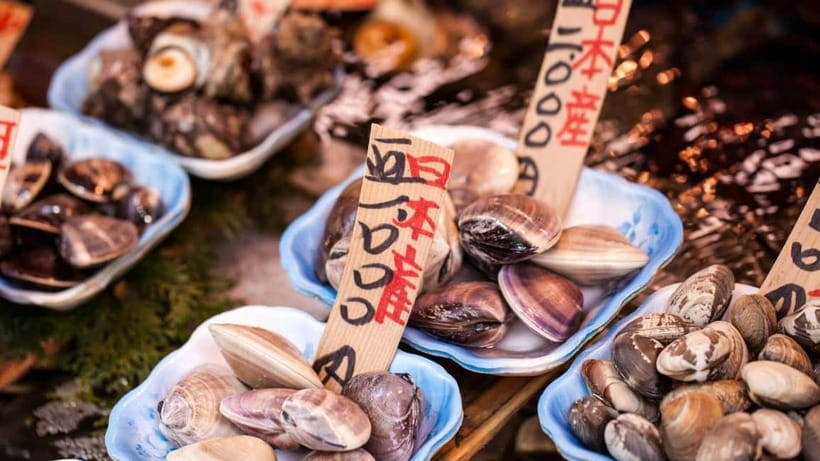
Review · TSUKIJI MARKET TOURS
Tokyo’s Kitchen: Tsukiji Market Food & Culture Walk
Tsukiji feels like Tokyo’s kitchen in motion. This 3 hour food and culture walk turns a crowded market into something you can actually enjoy, with two things I especially like: the guide-led tastings and the way the stop at nearby shrines connects food to Shinto and Buddhist roots. The only real drawback is that you will be tasting a lot, so arriving with a full breakfast makes the experience less fun.
What makes it work is the small group size, limited to 6 guests, and the fact that guides keep you moving without losing the human side of the market. Guides such as Mikki, Oku, Mihori, Shinto, Shino, and Yumi are repeatedly praised for welcoming pacing and for helping you understand what you are seeing, not just what you are eating. If you are hoping for nonstop behind-the-scenes access, know that you still get a lot of context, but it is not a full operational backroom tour.
Practical note: the market floors can be wet, so plan on closed-toe shoes and expect to stand and walk. Also, if alcohol shows up on the menu, Japan’s age rule matters, with drinks generally for those 20 and older.
Quick hits before you go
- Maximum 6 guests means your guide can actually answer questions while you taste.
- Kabuki Inari Shrine and Namiyoke Inari Jinja add a calm, cultural pause to the market rush.
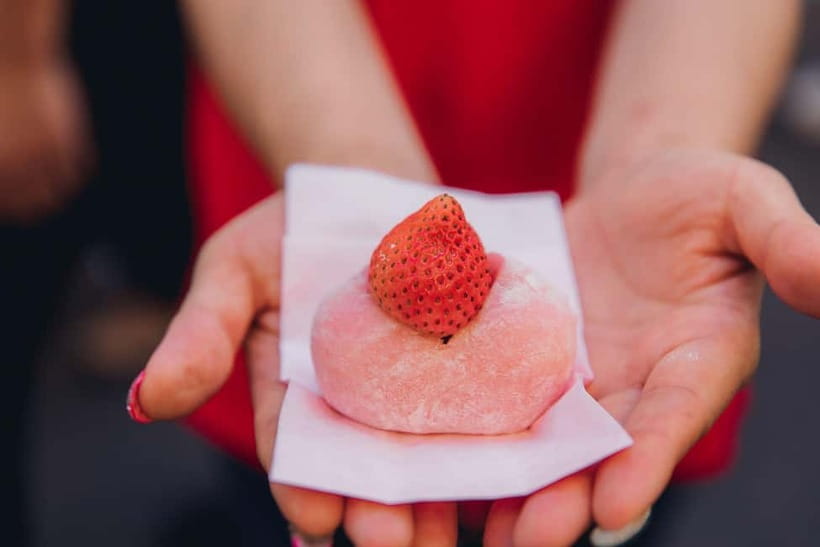
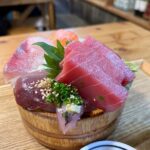
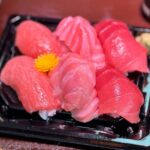
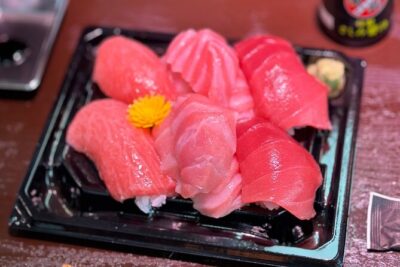
- Tsukiji Outer Market tastings include fresh sushi, street snacks, and seasonal wagashi.
- Sushi history plus Buddhist and Shinto connections gives meaning to the food.
- You finish at the Tsukiji Fish Market area, so you end where the energy is.
Why Tsukiji Outer Market still feels like Tokyo’s kitchen
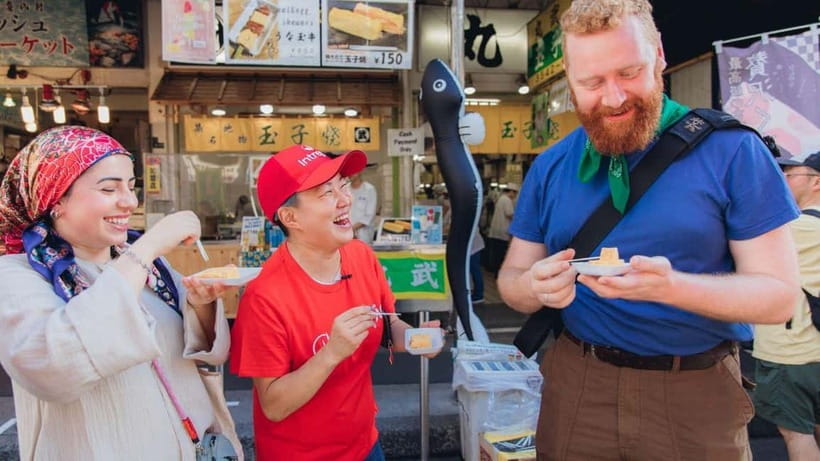
Tsukiji’s reputation is big, but the real reason this area works is simple: food is the point. The Outer Market is where you see people shopping for breakfast, lunch, and dinner staples, and where vendors treat daily commerce like a craft.
One practical detail I love about this tour format is that you get interpretation in real time. You are not wandering with no clue what to look for, you are tasting and learning side-by-side, so the market stops being intimidating and starts being interesting.
And yes, the tuna auction moved to Toyosu, but the market culture did not vanish. Your guide connects that shift to today’s scene, including how sushi history and market routines shaped what you see now.
You can also read our reviews of more walking tours in Tokyo


Meeting at Higashi-ginza, then heading for Kabuki Inari Shrine
You start at Higashi-ginza Station, Exit 3, on street level near the Kabukiza Theatre side of Harumi Street. The meeting spot is by a small shrine near a torii gate, so you have a clear visual landmark even if it is your first time around.
From there, the first stop is Kabuki Inari Shrine. This works better than starting by heading straight into the biggest crowds, because it sets a tone: you are about to enter a place that mixes work, respect, and routine.
Expect a quick cultural orientation from your guide. You will learn why shrines matter around markets, and you will pick up the basic idea of simple gestures locals use to show respect.
Kabuki Inari shrine, and how Shinto and Buddhist roots show up in daily food
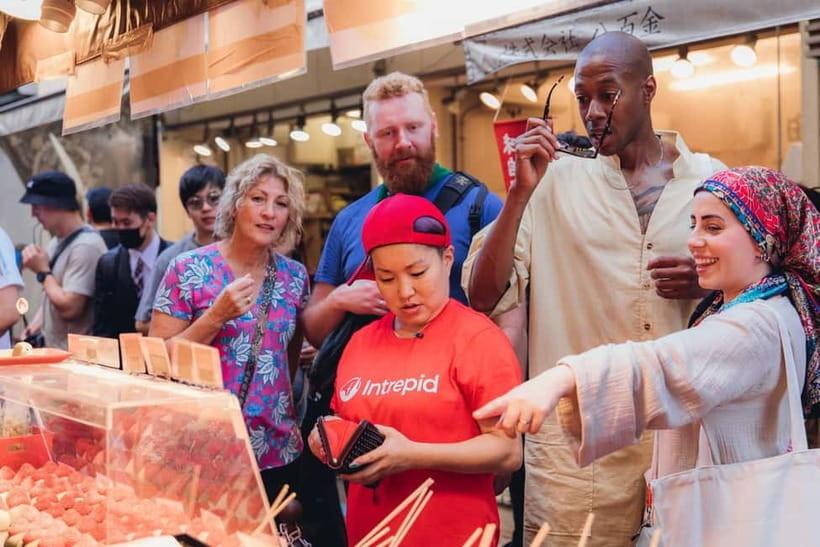
This tour’s cultural ingredient is not theoretical. You are taught how Shinto and Buddhist connections influence the way people think about food rituals and market life.
What that means on the ground is that you pause, you observe, and you learn small etiquette cues before you start eating. That pause helps you slow down just enough to notice details you might miss, like how shops and vendors respond to tradition and daily rhythm.
If you like cultural context that actually connects to daily behavior, this is one of the tour’s strongest points. Reviews repeatedly mention the shrine moments as a peaceful reset between tastings, and it is easy to see why once you are standing in the market noise.
Tsukiji Outer Market food stops: sushi, snacks, and wagashi
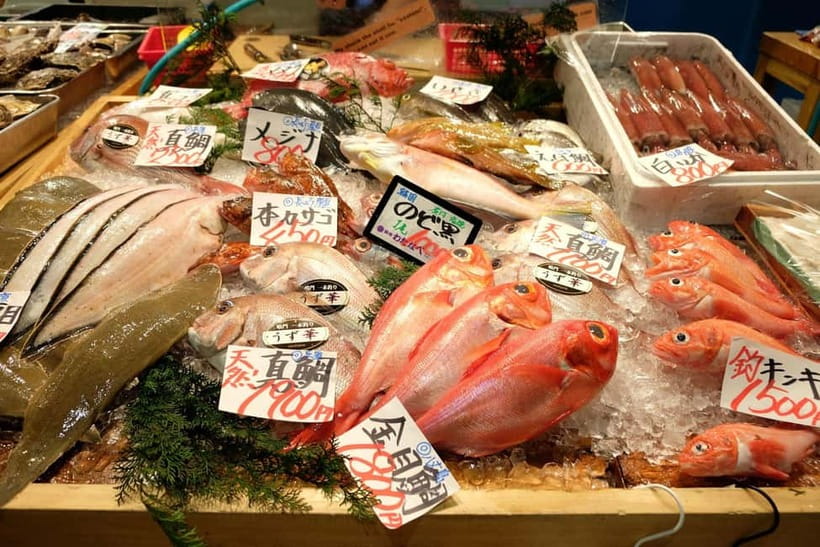
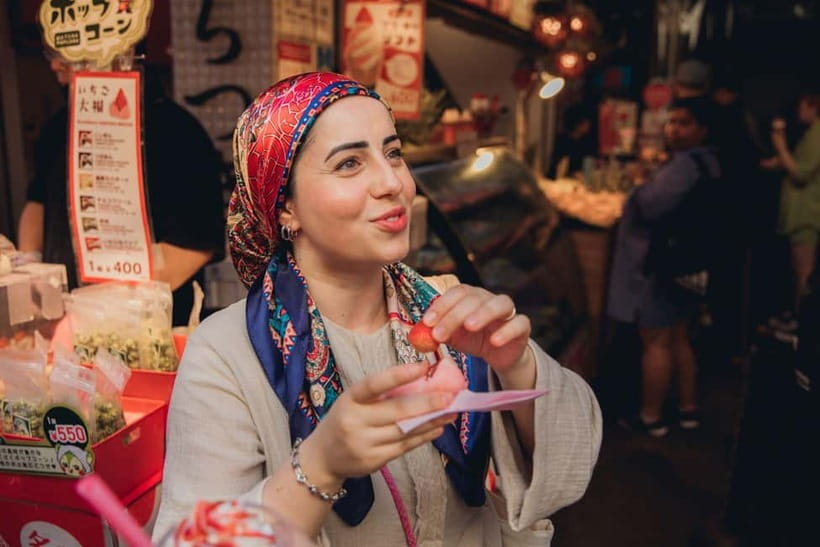
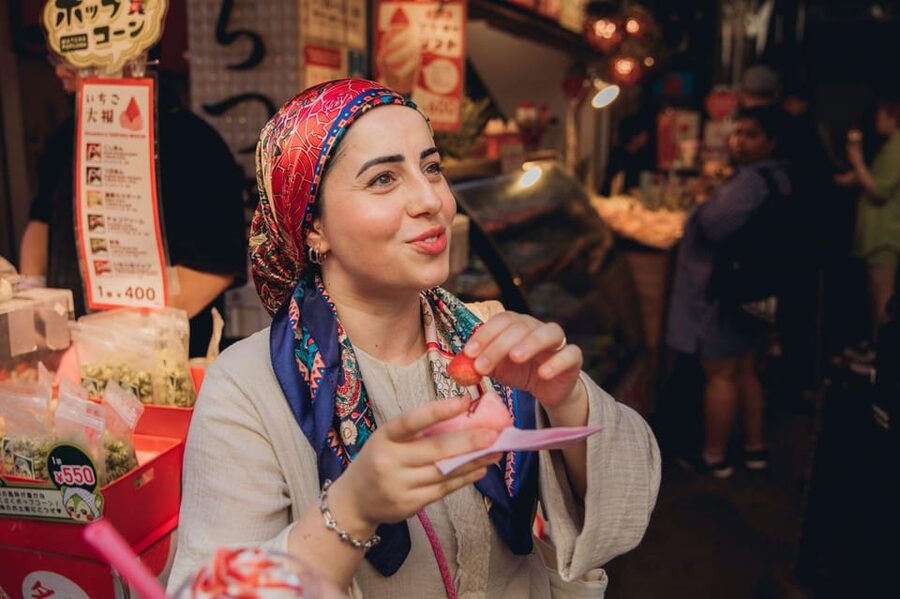
Once you enter the Tsukiji Outer Market, the guide becomes your translator, both linguistically and culturally. The stalls can feel like a sensory overload, but the small group keeps you from getting lost in the crowd.
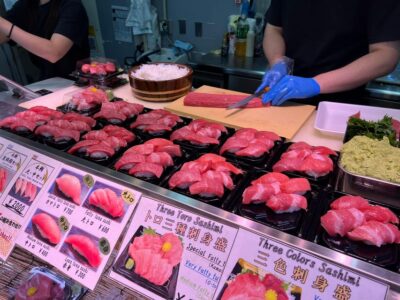
This part centers on tastings tied to what vendors do well. You can expect multiple samples, typically including fresh sushi, Japanese street snacks, and seasonal wagashi. Some tours include extra items in addition to the core lineup, and reviews mention things like tamago, dashi-based flavors, mochi, green tea, and sake.
Two things matter for your enjoyment here. First, the tastings are often small, so you should come ready to try, not locked into one big meal plan. Second, many guides pace you so you can move stall to stall without constant “wait in line forever” frustration.
A note on appetite: one review flat-out warns not to eat breakfast beforehand, because there is a lot to sample. At the same time, another review suggests you should not arrive starving, just ready to taste in small quantities. My practical take is this: treat it like a morning meal with training wheels, skip a heavy breakfast, and drink water so you stay comfortable.
You also get the human side of the market. Several reviews highlight that guides know vendors personally, and that you are greeted warmly while you move through different shops. That kind of familiarity changes the feel of the market from “tourist scramble” to “community visit.”
Sushi history lessons that make the stalls make sense
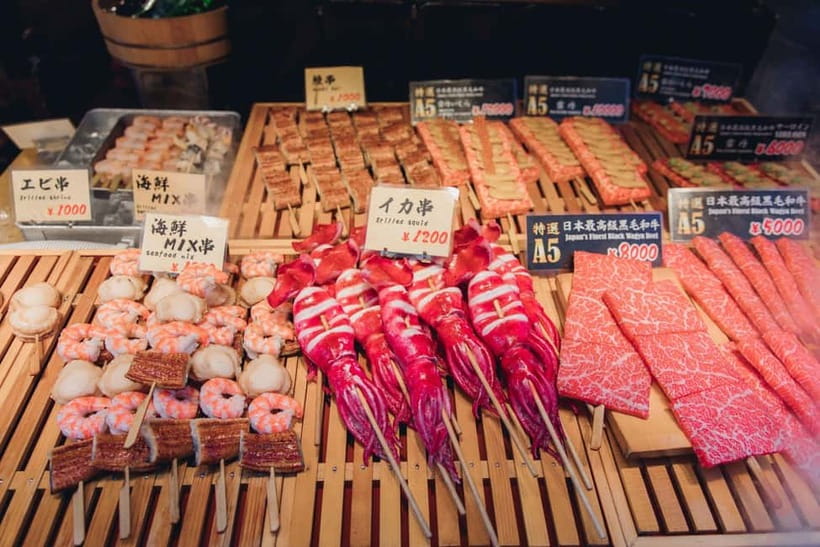
While you walk, you are not only eating. Your guide explains sushi history and how Tsukiji shaped the evolution of sushi culture over time.
One explicit point you learn is the market’s transition after the tuna auction moved from Tsukiji to Toyosu. That historical detail is not just trivia. It helps you understand why the area looks the way it does now, and why the Outer Market still feels like Tokyo’s everyday food engine.
You may also see what makes certain items distinct, like how tamagoyaki is made or why ingredients and preparation methods matter. Reviews mention behind-the-counter style demonstrations, including explanations with photos, maps, and simple models, which makes it easier to follow when your hands are holding a sample.
If you like learning while you eat, this is one of those tours where the facts stick because they connect directly to what is in front of you.
You can also read our reviews of more food & drink experiences in Tokyo



Namiyoke Inari Jinja: a cultural reset before you finish at the fish market area
After the Outer Market tastings, the itinerary adds another shrine stop: Namiyoke Inari Jinja. The purpose is to slow the pace again and help the cultural thread stay visible, not just forgotten while you chase snacks.
You will learn more about respectful gestures and customs. You might notice that the guide repeats key etiquette ideas in a way that feels practical, not lecture-like.
This shrine stop also gives your body a break. Tsukiji is active, and even a short walk means standing, weaving, and sampling. The shrine moment is short enough to stay on schedule, but it is long enough that you can actually catch your breath.
Finishing at Tsukiji Fish Market: what the end point gives you
The tour ends at the Tsukiji Fish Market area. Even if the famous tuna auction is no longer the headline, the district still carries that working-market energy, and ending here makes the morning feel complete.
Practically, finishing near the market area also sets you up well for what comes next. You will have a feel for the neighborhood and what kinds of shops are worth a second look later, without having to start from zero.
One thing to keep your expectations realistic: there is a comment in the review history about wanting more behind-the-scenes access. So if your main fantasy is seeing the market fully at work, this may feel more like market experience plus cultural context than a full operational tour. Still, you get meaningful “how and why” understanding, not just a walk with samples.
Price and value: why $80 for 3 hours can work
At $80 per person for about 3 hours, the value is in three places: the guided interpretation, the small group size, and the tastings.
First, the guide does real work. You are moving through a complex food ecosystem, and you need someone to explain what you are tasting, why it matters, and what to look for next. That saves you time and reduces the “what is this?” guessing.
Second, tastings are part of the price. The tour includes multiple samples such as fresh sushi, Japanese snacks, and seasonal wagashi, and reviews mention items like sashimi, sake, pepper cola tea, and other treats depending on the day. You also get the benefit of learning what you liked so you know what to seek later on your own.
Third, the small group limit is not a luxury for its own sake. When you are in a tight market lane, too many people means you miss stalls and lose the flow. Limited to 6 guests, you can stay together, ask questions, and keep moving.
One extra “value” layer is ethical and operational. This tour is described as carbon neutral and run by a certified B-Corp, which matters if you care about the footprint and the local approach behind the scenes. It does not replace good food, but it is a nice add-on.
Who this Tsukiji walk is perfect for
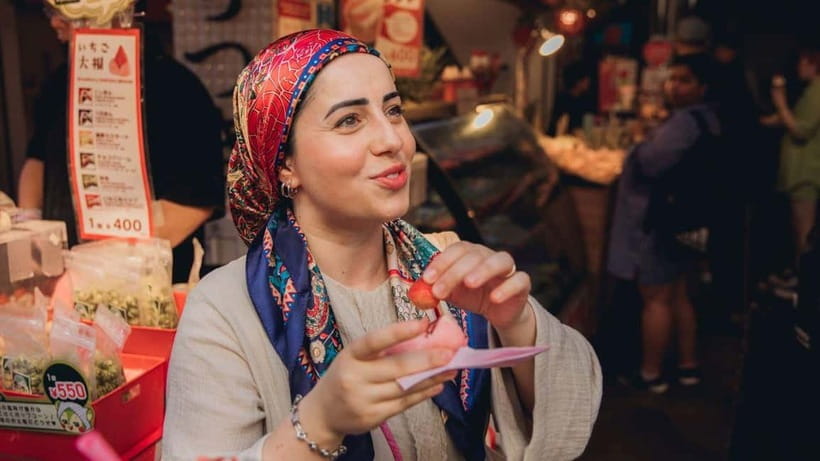
This tour fits best if you want Tokyo food culture with guardrails.
You will likely love it if:
- You are new to Tsukiji and want help spotting what is worth tasting.
- You like food that comes with context, like how sushi developed and why shrines tie into daily respect.
- You prefer a small group experience rather than being swallowed by a big crowd.
- You enjoy learning even when you are eating, not afterward with a textbook.
You might think twice if your priority is heavy behind-the-scenes access only. One review wanted more working-market views, and that expectation matters. Also, if you have a very sensitive stomach, keep in mind you will be trying many flavors in a short window, even if portions are small.
Tips to make the morning smoother (and tastier)
Tsukiji is a hands-on kind of place, and comfort affects how much you enjoy it.
- Wear closed-toe shoes because market floors can be wet.
- Plan around appetite. Skip a heavy breakfast, since the tour is built for repeated samples.
- If you have dietary needs, tell the operator ahead of time. Vegetarian and vegan options are available, though choices may be limited by what the market offers that day.
- If alcohol is part of the day’s tastings, note Japan’s age rule. Guests must be 20 or older to enjoy alcoholic drinks, with non-alcoholic alternatives for under 20.
Also, keep your questions ready. The best moments often come when you ask what you are tasting and how it connects to the culture lesson happening right then.
Should you book Tokyo’s Kitchen: Tsukiji Market Food & Culture Walk?
I would book it if you want a guided Tsukiji experience that feels like you understand the place, not just that you ate in it. The mix of Tsukiji Outer Market tastings, sushi history, and shrine customs gives you a morning that is both tasty and meaningful without turning into a long museum-style lecture.
Skip it only if you are chasing one specific goal like maximum behind-the-scenes access. If you care more about a smooth, small-group food route with clear cultural context, this is a strong way to start a Tokyo trip. Add closed-toe shoes, show up a bit hungry, and let the guide handle the hard part: turning chaos into a plan.
FAQ
How long is the Tokyo’s Kitchen: Tsukiji Market Food & Culture Walk?
The tour lasts 3 hours.
What is the group size?
It is a small group, limited to 6 guests.
Where is the meeting point?
You meet at Higashi-ginza Station, Exit 3, Tokyo Metro Hibiya Line and Toei Asakusa Line, at street level near the Kabukiza Theatre side of Harumi Street, by the little shrine with a torii gate.
Is the tour guided in English?
Yes, it includes a live English-speaking guide.
What tastings are included in the tour?
Multiple tastings are included, including fresh sushi, Japanese snacks, and seasonal wagashi.
Do you visit shrines during the tour?
Yes. The itinerary includes Kabuki Inari Shrine and Namiyoke Inari Jinja, with cultural explanations.
Are vegetarian or vegan options available?
Yes, vegetarian and vegan options are available, though choices may be limited due to the market. Let the operator know ahead of time.
What should I wear for Tsukiji?
Wear closed-toe shoes, since the market floors can be wet.
Are alcoholic drinks included, and is there an age requirement?
Alcohol is allowed only for guests age 20 or older. If you are under 20, you will be offered non-alcoholic alternatives.
Is it possible to cancel and get a full refund?
Yes, free cancellation is available up to 24 hours in advance for a full refund.
More Food & Drink Experiences in Tokyo
More Walking Tours in Tokyo
More Tour Reviews in Tokyo





Not for you? Here's more nearby things to do in Tokyo we have reviewed










Tsukiji Market Tours, side by side.
 ★ 5.0Tokyo Tsukiji Fish Market Food and Culture Walking TourFrom $993,184 reviews
 ★ 5.0Tsukiji Fish Market Food and Walking tourFrom $301,724 reviews
 ★ 4.9Tsukiji Fish Market Guided Walking TourFrom $221,397 reviews
 ★ 5.0Tokyo Sushi Making Class in Tsukiji with Professional ChefFrom $491,177 reviews
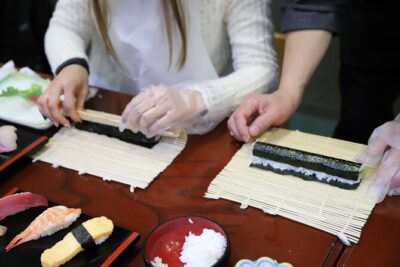 ★ 5.0Tsukiji Fish Market Guided Tour and Sushi Making with Pro ChefFrom $104775 reviews
★ 4.7Tsukiji Fish Market Food and Culture Walking TourFrom $96757 reviews
★ 5.0Tsukiji Fish Market Guided Tour and Sushi Making with Pro ChefFrom $104775 reviews
★ 4.7Tsukiji Fish Market Food and Culture Walking TourFrom $96757 reviews
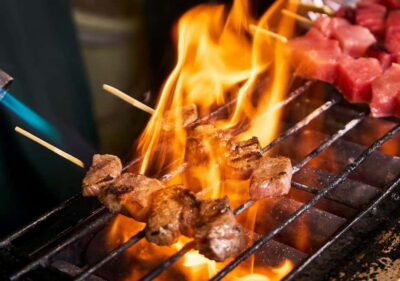 ★ 5.0Tsukiji Fish Market: Street Food & Culture Walking TourFrom $33669 reviews
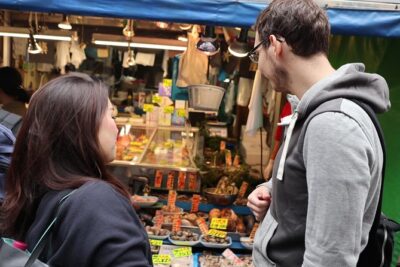 ★ 5.0Tsukiji Fish Market Small-Group Food Walking TourFrom $87621 reviews
This tour also belongs to