
Review · KAMAKURA DAY TRIPS
Kamakura Private Tour Great Buddha & Enoshima with English guide
Private temples and sea views, on your schedule. This private Kamakura and Enoshima full-day outing is built for flexible pacing and meaningful stops, guided in English from start to finish in a private luxury vehicle. You’ll move through Kamakura’s best-known spiritual sites, then shift gears to Enoshima’s island streets and ocean views, ending with Yokohama Chinatown and Sankeien Garden.
I like that the tour design feels calm and controlled, not like a frantic coach day where you’re always late. The one real consideration is extra costs: lunch isn’t included, and some sights have separate admission fees, including Hase-dera and Sankeien Garden.
Expect round-trip pickup plus a mobile ticket for a smooth start, and plan on a longish day (about 8 to 10 hours) with plenty of walking.
Key highlights worth planning around
- Private vehicle, not a crowd shuffle: your group rides together in an air-conditioned luxury car.
- English guidance that explains what you’re seeing: the tour includes an English-speaking pro guide and driver.
- Big-ticket spiritual icons first: the Great Buddha at Kotoku-in is a major early anchor.
- A real Kamakura-to-sea change of pace: bamboo, shrines, then Enoshima’s island streets.
- Yokohama in the same day: Chinatown and Sankeien Garden give you two very different atmospheres.
Why this Kamakura and Enoshima private day works better than a group bus
Kamakura and Enoshima are popular for a reason. You get old temples, famous religious statues, and ocean views that can feel like a mini reset from Tokyo. The catch is that on standard group tours you’re often herded on a tight timetable and then left to figure out the details yourself.
This version is different because it’s private. You’re not waiting for other people’s bathroom breaks, shoe changes, or photo stops. You can spend a little longer at the spots that click with you, and you can ask your English guide questions as you go. That matters in Kamakura, where the buildings, statues, and garden layouts can look similar unless someone gives you the story behind them.
The route also avoids the most common problem of day trips. You’re not just “going to temples.” You’re doing a full arc: Great Buddha, Kannon at Hase-dera, Tsurugaoka Hachimangu, Hokoku-ji bamboo, then Enoshima, then Yokohama. It’s one of those days where the scenery and mood change every stop, so it never feels repetitive.
The downside of a full-day plan is obvious once you see the schedule: you’ll be walking and climbing a bit through temple grounds and shrine approaches. If you know you tire quickly, consider building in slow moments during the tour rather than trying to power through everything at a sprint.
You can also read our reviews of more guided tours in Tokyo
Kotoku-in Great Buddha: what to prioritize at the first stop
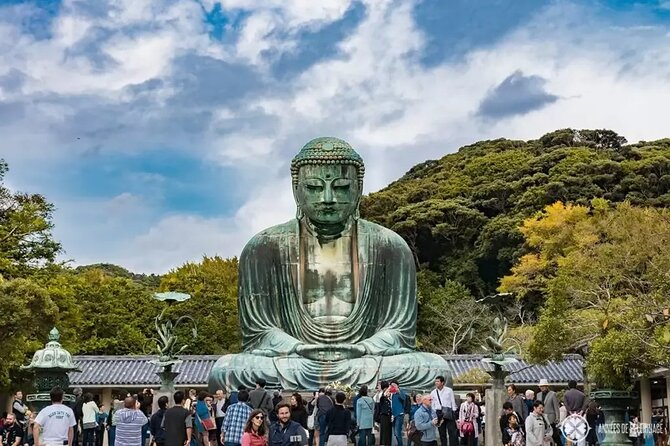
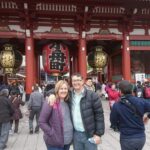
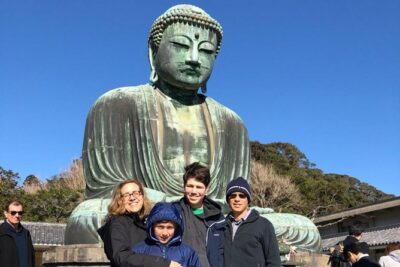
Your day begins at Kotoku-in, home to the Great Buddha of Kamakura. This bronze statue is over 11 meters tall, and it’s one of the main reasons people travel here in the first place. The timing is good, too. Hitting the Great Buddha early helps you keep your energy for later stops, and it gives you a strong “wow” moment before you start stacking smaller sights.
Because your admission ticket for Kotoku-in is included, you’re not burning time handling payments or ticket lines once you arrive. I’d still recommend a simple game plan once you’re there: look at the statue from different angles, take a moment to notice the scale against the surrounding space, and then watch how visitors move through the area. That helps you understand what parts of the grounds people typically linger on.
One practical detail: the Great Buddha stop is about 1 hour. If you like photos, you may want a bit of extra time, but the private format lets you adjust within reason.
Hase-dera and the eleven-headed Kannon: where the separate ticket matters
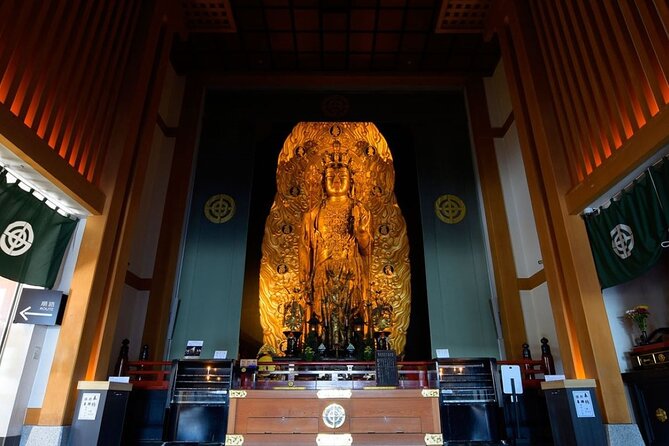
Hase-dera Temple is famous for its eleven-headed statue of Kannon, the Goddess of Mercy. The statue is wooden, and it’s described as one of the largest of its kind in Japan. You’re here for around 1 hour, and this stop has separate admission, so it’s one of the spots where you’ll want to budget a little extra.
What makes Hase-dera special is how the temple complex is set up for a slow approach. Even if you’re not religious, you’ll probably appreciate the focus on a specific figure and how the grounds guide your attention. It’s also a good place to ask your guide what the “eleven heads” means in the local tradition. That kind of context turns a statue from just impressive into meaningful.
If it’s raining or humid, this is also a stop where a guide’s pacing style helps. A patient, un-rushed tempo keeps you from feeling like you’re sliding between viewpoints. The tour information also indicates the day depends on good weather, so your guide may keep an eye on conditions and adapt where they can.
Tsurugaoka Hachimangu plus Hokoku-ji bamboo: the calm middle of the day
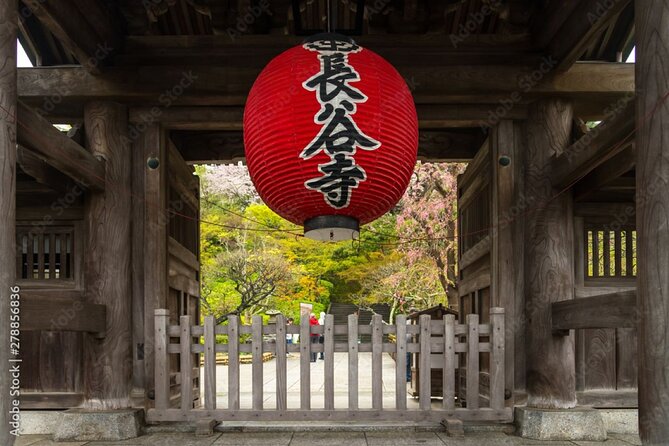
After Hase-dera, the itinerary moves into two different kinds of Kamakura atmosphere.
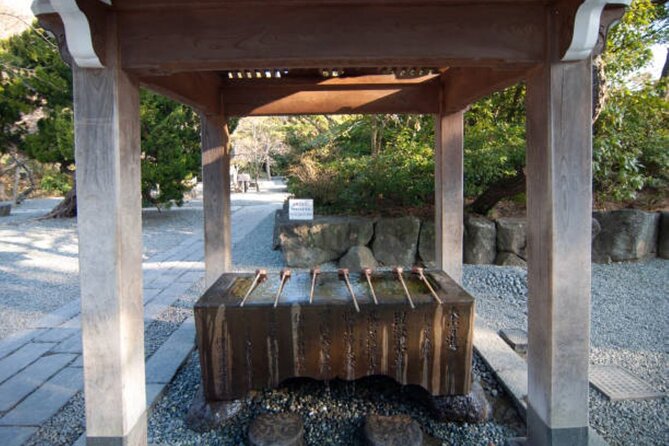
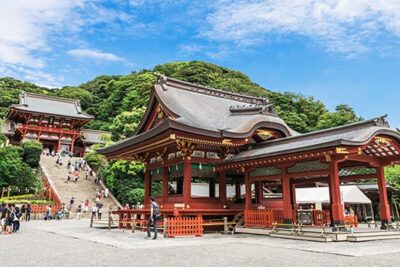
At Tsurugaoka Hachimangu, you’ll visit Kamakura’s premier shrine and spiritual heart. You’ll pass through a grand torii gate and get views over ponds with koi, plus elegant bridges that give the approach a scenic rhythm. This stop is also about 1 hour, with admission not included.
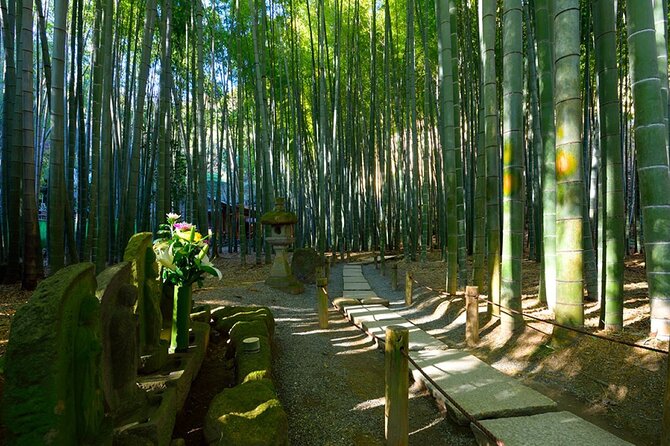
Then you shift to Hokoku-ji Temple, known for its bamboo grove. Hokoku-ji dates back to the 14th century, and it feels different from some other temple stops because it gives you that enclosed, quiet bamboo atmosphere right away. This is also where the tour description highlights a cultural twist tied to matcha, with a chance to drink famous macha green tea.
A tip for this “middle chunk” of the day: don’t over-schedule your energy. If you push too hard, bamboo groves can end up feeling like just another photo stop. Instead, slow down. Notice the sound changes under the bamboo, and use your guide to point out what you might be missing, like what makes this temple different historically or visually.
If you’re visiting in poor weather, this part of the day can still work well because bamboo and shrine approaches tend to feel atmospheric even when the sky isn’t perfect. Just keep in mind that the tour runs for a long day, so you’ll still want breaks.
Enoshima Island: seaside views, Fuji on clear days, and where time slips away
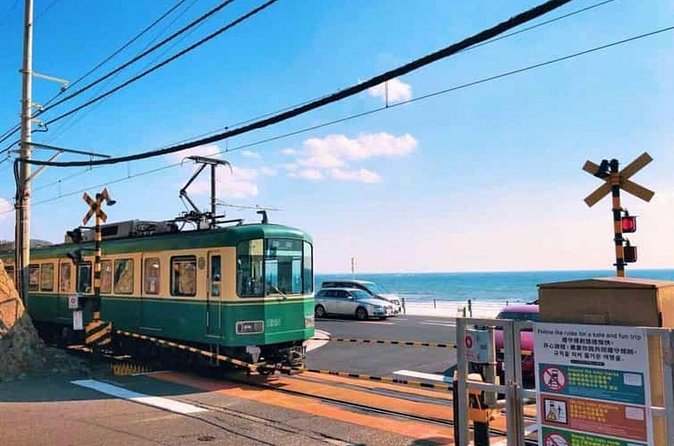
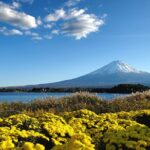
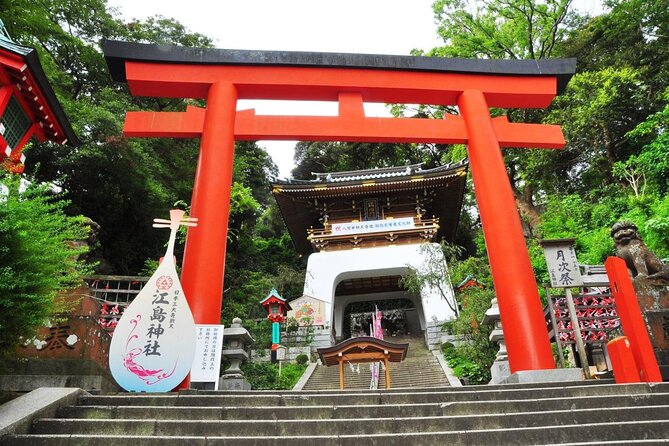
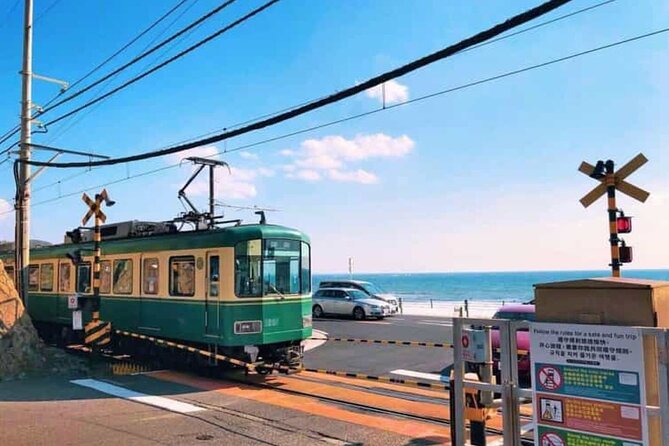
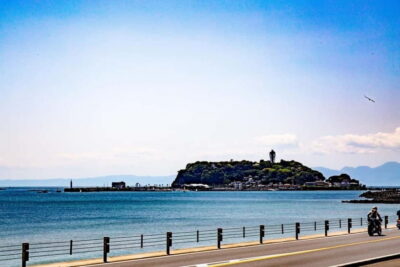
Enoshima is the coastal payoff. It’s located west of Kamakura, and the island is known for a mix of shrines and lively street areas. One of the best perks is the possibility of views of Mt. Fuji on clear days. You don’t want to count on it, but it’s worth keeping that lookout in your mental checklist.
Your time here is about 1 hour, and admission for Enoshima Island is free. That’s a nice value touch because you don’t pay to simply walk around, browse, and take in the ocean air. The island is also a place where you might want to linger at viewpoints, especially if the weather opens up.
Because your time is limited, decide what you want most before you go in. If you care most about views, you’ll likely prioritize the higher lookouts and the areas with wide sightlines. If you care more about atmosphere, you’ll focus on the streets and shrine surroundings. With a private tour, you can lean into your preference instead of getting stuck in a preset path.
Also, this is where I’d watch the clock. Enoshima can feel easy to “wander through,” and if you lose too much time here, it compresses your Yokohama stops at the end. Since the tour is already about 8 to 10 hours, a little planning helps you finish the day without rushing through Chinatown or Sankeien.
You can also read our reviews of more private tours in Tokyo
Yokohama Chinatown and Sankeien Garden: two very different endings
The day finishes with two stops in Yokohama that change the vibe in a good way.
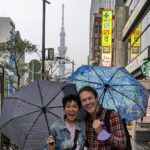
First is Yokohama Chinatown. The tour notes that the area is about 160 years old, with a current population around 3,000 to 4,000. It also points out that today only a few Chinese people still live there, with many residents coming from Guangzhou. You’ll have about 1 hour here, and admission is free.
This stop is less about a single monument and more about atmosphere and flavor. Even if you don’t plan to eat a full meal, you’ll likely enjoy the street energy, signage, and the sense of a distinct neighborhood within the larger city. It’s a practical way to end your Kamakura-and-Enoshima day because you can browse at your own speed and decide on snacks on the fly.
Then you move to Sankeien Gardens. This is a traditional Japanese-style garden that opened in 1906. It was designed and built by Tomitaro Hara, known by the pseudonym Sankei Hara, a silk trader. Admission is not included here, and the stop is about 1 hour.
Sankeien is a good match for the day because it brings the pace down again. After the ocean and Chinatown, the garden feels like a calm reset. I’d treat it as a walking “breather,” not a checklist. Follow the paths, pause where you can see multiple garden elements at once, and let your guide explain what you’re seeing. In places like this, context makes the garden read better, like a story told through water, bridges, and seasonal plant choices.
Timing and logistics: how the 8 to 10 hours usually feel
This tour runs about 8 to 10 hours, which is a full day even if you’re in good shape. The included luxury vehicle helps a lot, because you’re not relying on multiple transit connections on your own. Pickup is offered, and the overview suggests round-trip hotel pickup, which is one of the biggest practical wins for a day trip.
You also get free Wi-Fi and bottled water in the car. Those are small perks, but on a long day they prevent silly problems like battery anxiety or dehydration.
Where the schedule can feel tight is around transfers between sites. Kamakura and Enoshima are close enough to do in one day, but not close enough that you can forget travel time. The private format helps because your guide can adapt based on what you want to prioritize, but you still have a set number of stops.
Also, the tour depends on good weather. If the day is canceled due to poor conditions, you’ll be offered a different date or a full refund. That’s worth factoring in if you’re visiting during a season with frequent rain.
Price and value: is $650 per group a good deal?
The price is listed as $650.00 per group, up to 6 people. That’s not cheap if you’re traveling solo, but it gets more reasonable when you split it.
If you have a full group of 6, you’re effectively looking at about $108 per person for private vehicle transport plus an English speaking guide and driver. That covers a lot of “hidden” costs that otherwise add up fast on public transit day trips: time lost moving between stations, the stress of coordinating entrances, and the cost of getting someone to plan the route and explain the sites.
Still, two costs may come on top. Entrance fees aren’t included for all stops, and lunch is not included. Kotoku-in admission is included, Enoshima and Yokohama Chinatown are free based on the tour notes, while Hase-dera and Sankeien Garden are not included.
So the true value equation looks like this:
- You pay for privacy, comfort, and guided context.
- You budget extra for the specific temple and garden admissions where the tour notes say they are separate.
- You handle lunch separately.
For the kind of day you’re buying, that’s often a fair trade. If your group wants a relaxed schedule, this can be more comfortable than paying for multiple train tickets plus hiring a guide separately.
Who should book this Kamakura and Enoshima private tour?
This is a strong choice if you fit one of these profiles:
- You want to see Kamakura’s main icons plus Enoshima, without jumping through transit hoops.
- Your group values a steady pace and fewer interruptions than standard group tours.
- You like your sightseeing explained, especially at temples and shrines where symbolism helps.
It’s also a good match for mixed-interest groups. You’ve got famous Buddhist sculpture at Kotoku-in, Kannon at Hase-dera, shrine grounds at Tsurugaoka Hachimangu, a bamboo grove at Hokoku-ji, then island and city atmosphere with Enoshima, Chinatown, and Sankeien Garden.
It may be less ideal if you:
- Want a super short day. This one is a long full-day plan.
- Really hate walking or stairs. Temple grounds and shrine approaches often involve uneven steps and changes in elevation.
- Want lunch included. You’ll need to plan on paying for your meal separately.
Should you book? My practical call
If your goal is a calm, well-paced day that hits the highlights of Kamakura and Enoshima, this private tour is easy to justify. The value comes from combining a private car, English guidance, and smart sequencing, so you spend more time at the sights and less time figuring out logistics.
I’d book it if you have a group of up to 6 and you care about not feeling rushed. It’s also a sensible pick if you want your day to finish in Yokohama with Chinatown and a garden stop, instead of ending as soon as you leave the coast.
I’d hesitate only if you’re trying to minimize walking or you have a strict budget for admissions and meals. In that case, you’ll need to plan your extra costs up front.
FAQ
How long is the Kamakura Great Buddha and Enoshima private tour?
The tour lasts about 8 to 10 hours.
How many people can be in a group?
The price is per group, up to 6 people.
Does the tour include hotel pickup and drop-off?
Pickup is offered, and the tour description indicates round-trip hotel pickup.
Is an English guide included?
Yes. The tour includes an English speaking pro guide and driver.
Are entrance fees included?
Some are. Admission is included for Kotoku-in (Great Buddha). Hase-dera Temple and Sankeien Gardens are not included, while Enoshima Island and Yokohama Chinatown are listed as free.
Is lunch included?
No, lunch is not included.
Does the tour provide a mobile ticket and Wi-Fi?
Yes. The tour includes a mobile ticket, and free Wi-Fi is included.
Is bottled water provided?
Yes, water drink bottles are included.
What’s the weather situation like?
This experience requires good weather. If it’s canceled due to poor weather, you’ll be offered a different date or a full refund.
What is the cancellation policy?
You can cancel for free up to 24 hours in advance for a full refund. If you cancel less than 24 hours before the start time, the amount you paid is not refunded.
More Guided Tours in Tokyo
More Tours in Tokyo




More Tour Reviews in Tokyo


Not for you? Here's more nearby things to do in Tokyo we have reviewed












Kamakura Day Trips, side by side.
 ★ 4.5Kamakura & Enoshima Day Trip including Temple TicketsFrom $581,375 reviews
 ★ 4.5Mt. Fuji, Kamakura, Big Buddha, & Lake Ashi Day TripFrom $49867 reviews
 ★ 4.5From Tokyo: Kamakura & Enoshima 1-Day Bus TourFrom $66189 reviews
 ★ 5.0Kamakura Historical Walking Tour with the Great BuddhaFrom $98129 reviews
 ★ 5.0Kamakura Private Tour: Temples, Nature, and the Great BuddhaFrom $98121 reviews
 ★ 5.0Kamakura Walking Tour – The City of ShogunFrom $35100 reviews
 ★ 5.0Kamakura 8 hr Private Walking Tour with Licensed Guide from TokyoFrom $20180 reviews
 ★ 4.1Kamakura & Enoshima Day Tour with Pickup & Train RideFrom $1361 reviews
This tour also belongs to