
Review · ASAKUSA TOURS
Tokyo Morning Tour : Meiji Shrine, Asakusa and Fish Market
Tokyo mornings move fast, in a good way. This small-group route pairs calm forest paths at Meiji Jingu with real market energy at Tsukiji’s outer stalls, then finishes at Asakusa’s famous temple streets while the city is still waking up.
I especially like that you get an English speaking guide who shares practical context, not just facts. Guides like Shoma Sato and Yosuke are highlighted for clear explanations, patience, and a pace that keeps things comfortable. You also get photos taken during the tour, which is a nice safety net when you are trying to enjoy sights without constantly juggling your camera.
One consideration: the tour price covers several entrances and experiences, but public transportation is not included, and you’ll need to plan the trip to the start in Harajuku and the walk to your final stop by Asakusa Station.
Key things to know before you go
- Small group (up to 8) means you can ask questions without shouting over the crowd.
- Meiji Jingu is free and the walking route makes it easy to enjoy the shrine grounds at a slow, morning tempo.
- Tsukiji Jogai market snack time focuses on the outer market vibe, not the old inner auction area.
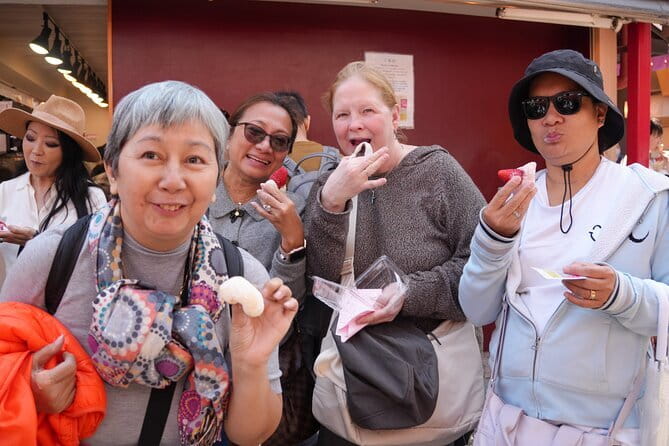
- You’ll try street foods including sweet mochi, sweet potato, and a savory cutlet.
- Photos are included, taken during the tour so you can focus on seeing, not shooting.
- It ends near Asakusa Station, a helpful setup if you’re continuing your day independently.
Why a 4-hour morning plan fits Tokyo travel
Tokyo rewards planning, but not overplanning. This kind of half-day loop works because it hits three big-name areas that can be time sinks when you do them alone, especially early in your trip.
You get a start time early enough to enjoy calmer atmosphere at Meiji Jingu, then you shift into food and street energy at Tsukiji’s outer market, and finally you end in Asakusa near Senso-ji. All of it fits into about four hours, which is ideal if you only have a short stay or you want to get the “big icons” out of the way before crowds rise.
And yes, the guide factor matters. A good guide helps you move quickly between places, understand what you are seeing, and avoid the awkward moment where you are standing in front of a gate thinking, Now what?
You can also read our reviews of more shopping tours in Tokyo
Meiji Jingu shrine: forest calm and torii moments
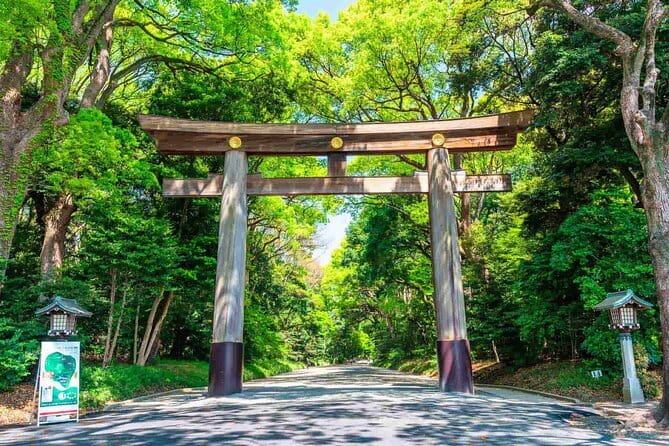
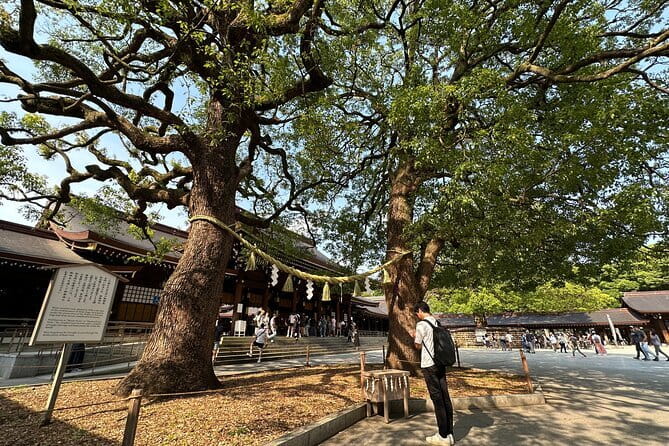
The day starts at Meiji Jingu Shrine, one of Tokyo’s most recognizable Shinto sites, dedicated to Emperor Meiji and Empress Shoken. What makes this stop work on a morning tour is the setting. You’re not just looking at buildings, you’re walking through forested pathways where the whole place feels quieter than the city around it.
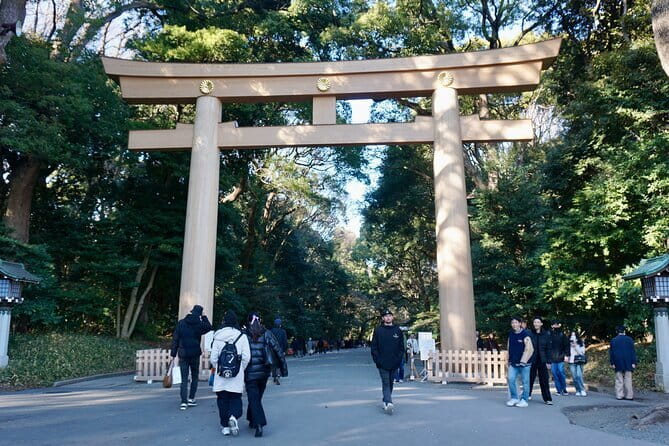
Expect a classic shrine approach: walk the grounds, pass through towering torii gates, and take in the atmosphere as the morning light hits the trees. Since the entry is free and the route is built for visitors, you can enjoy it without feeling rushed or forced into a long program.
Also, this is where an English guide really helps. You’ll get historical insights into the district and what you are seeing, so the symbols and layout make more sense when you’re standing right there. That “I get it now” feeling is hard to recreate if you’re self-guiding with only a map and a dead phone battery.
Tsukiji Jogai market: outer stalls, snack strategy, and fish-market context
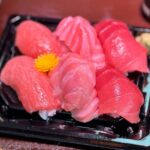
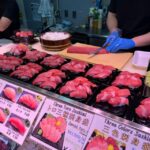
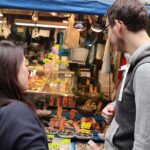
Next comes Tsukiji Jogai Market, Tokyo’s well-known market area. The key detail is that the old wholesale auction setup moved, but the outer market remains a major food stop. That matters for your experience, because you’re not trying to find an auction room that isn’t part of the daily public route. Instead, you’re there for the street-level market culture: food stands, quick bites, and people doing what people do when they know the best places to eat are right in front of them.
You’ll spend about an hour here, which is the sweet spot. Long enough to build an appetite and try a few things, short enough that you don’t end up standing around waiting for your turn to move.
What you’ll actually eat
The food tastings are one of the main reasons people pick this morning plan. You’ll try street foods such as:
- sweet mochi (sweet rice cake)
- sweet potato
- a savory cutlet
That mix is smart for two reasons. First, it gives you variety without making the hour a full meal. Second, it lets you sample market-style snacks without needing to know the menu in advance. Even if your Japanese is limited, you’re not guessing.
A note on the market energy
Markets can be noisy. Expect lots of activity and lots of smells. If you’re someone who gets overwhelmed by tight crowds, you may want to slow down and let your guide lead you to tasting points first, then explore.
More Tokyo tours and experiences for the shortlist
Asakusa and Senso-ji: Kaminarimon to Nakamise-dori
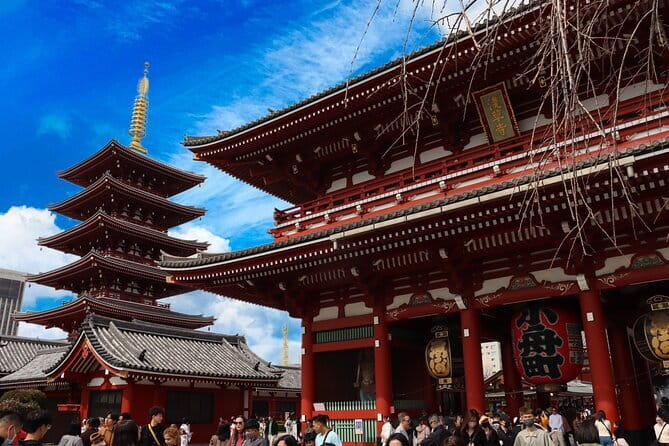
The tour ends at Senso-ji Temple in Asakusa, Tokyo’s oldest Buddhist temple. This is a perfect ending stop because it gives you a “Tokyo postcard” experience, then lets you wander in one of the city’s most famous shopping streets.
You’ll enter through the iconic Kaminarimon (Thunder Gate) and then explore the temple area and surrounding streets. From there, you’ll spend time around Nakamise-dori, the shopping approach packed with stalls and traditional-looking items.
This is where you get your last bit of momentum after Meiji and Tsukiji. The morning tour format helps because you arrive when the area still feels manageable. Later in the day, this district can become a patience test. Here, you get in, see what matters, and still have energy to keep going.
Also, admission is free for this stop as part of what’s included, so you can spend your money on snacks and gifts instead of tickets.
The guide experience: why clear explanations change the day
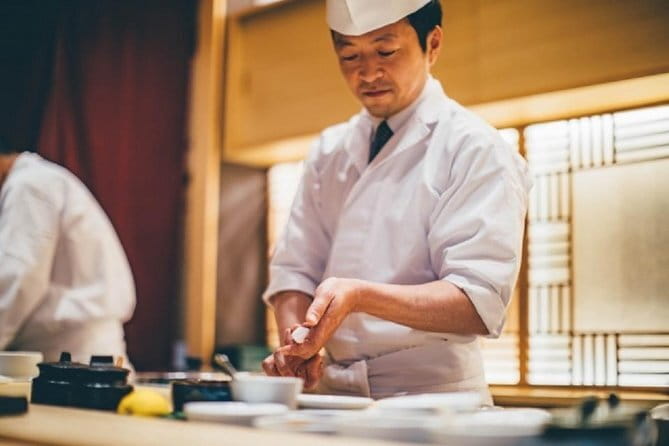
One theme that keeps showing up is how much the guide matters. People specifically praise English explanations, patience, and flexibility. Guides are described as fun and professional, and they spend time making sure everyone can follow along.
Shoma Sato and Yosuke are named in feedback as especially strong at explaining what you are looking at and how to interpret local customs. That matters because Tokyo can feel like it is all signage and no context unless someone puts it in plain words.
It also helps that you travel in a small group, maximum 8 travelers. That keeps things human. You can ask a question and get an actual answer, and you’re less likely to feel like you are being swept along.
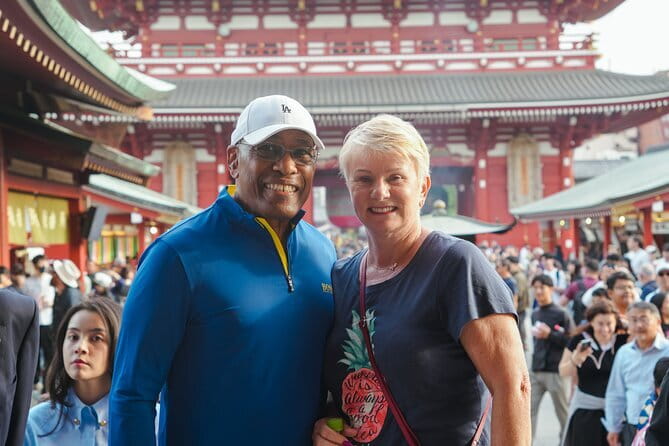
Finally, the tour includes historical insights into the districts, plus photos taken during the tour. If you’ve ever tried to take a decent group shot in front of a shrine gate, you know why that’s useful. You get memories without spending half the stop repositioning people.
Price and logistics: what $72.67 buys you, and what costs extra
At $72.67 per person for about four hours, you’re paying for more than a checklist of landmarks. You’re paying for:
- an English speaking guide
- historical insights as you move between areas
- entry coverage for Meiji Jingu Shrine, the fish market stop, and Senso-ji
- photos taken during the tour
- guided access through three separate neighborhoods that are easier to connect when someone knows the flow
That is real value if you want early morning efficiency. If you have never been to Tokyo before, you’ll feel the difference immediately: you spend less time figuring out where to stand and more time understanding why that torii gate or temple approach matters.
What is not included is your public transportation fare, listed around 550 yen. Plan on that in your budget, especially because the meeting point is at IKEA Sweden Cafe in Harajuku, and the tour ends at Asakusa Station. Even when stations are close, you still need transit time and money to bridge the distance.
So the decision is simple. If you’re the type who likes a plan with local context, this price makes sense. If you’re the type who wants to roam solo without a guide, you’ll probably feel the cost more than the convenience.
Where you start and finish, and why it helps your day
The meeting point is IKEA スウェーデンカフェ 原宿 at the address provided for Jingūmae, Shibuya. The tour finishes in Asakusa, near Asakusa Station.
That end location is more helpful than it sounds. Asakusa is not just a temple stop. It’s also a launchpad for the rest of your day. If you want to continue exploring, you are not stuck far away from transit.
The start in Harajuku also makes sense for a morning itinerary. It’s a central area with access to rail lines, and it positions you to get to Meiji Jingu early without losing time.
What this tour is best for, and who should skip it
This works well if:
- you want to cover three top Tokyo areas in one efficient morning
- you like your sightseeing paired with food tastings
- you appreciate an English guide explaining what you’re seeing
- you travel with time pressure, like a long weekend or a short stopover
It may be less ideal if:
- you want total freedom to linger for hours at one site, because the tour is timed at about four hours
- you dislike structured routes and prefer walking without a schedule
But even if you like freedom, there’s a real advantage here. You still get guided flow for the “hard parts,” then you finish in Asakusa with your own options.
Should you book this Tokyo morning tour?
If your goal is to see Meiji Jingu, eat market snacks, and make it to Senso-ji without wrestling with directions, I think this is a smart booking. The small group size, English guide, included photos, and the street food tastings make it feel like a guided experience rather than just a ticket line pass.
The strongest reason to book is quality of guidance. People highlight guides like Shoma Sato and Yosuke for clear explanations and a calm, patient approach, and that directly improves how much you enjoy the sites. When the guide is good, the whole morning feels easier.
Just go in with one mindset: plan for a small amount of transit outside the tour. Budget the public transport fare, arrive at the start point ready to walk, and you’ll get a smooth, satisfying Tokyo morning loop.
FAQ
How long is the Tokyo Morning Tour?
The tour lasts about 4 hours.
What is the price per person?
The price is $72.67 per person.
Where does the tour start and where does it end?
It starts at IKEA スウェーデンカフェ 原宿 in Harajuku and ends in Asakusa, finishing at Asakusa Station.
Is there an English speaking guide?
Yes, the tour includes an English speaking guide.
How many people are in the group?
The group maximum is 8 travelers.
What food do you try during the tour?
You try street foods including sweet mochi, sweet potato, and a savory cutlet.
Are any admission fees included?
Yes. Entry and admission for Meiji Jingu Shrine, the fish market stop, and Senso-ji Temple are included.
Is the fish market stop Tsukiji?
The market stop is Tsukiji Jogai Market.
Is public transportation included in the price?
No. Public transportation fare is not included, and it is listed around 550 yen.
Is the ticket mobile?
Yes, the tour includes a mobile ticket.
What is the cancellation policy?
You can cancel for a full refund up to 24 hours before the experience starts. Confirmation is received at the time of booking.
More Shopping Tours in Tokyo
More Tours in Tokyo





More Tour Reviews in Tokyo


Not for you? Here's more nearby things to do in Tokyo we have reviewed












Asakusa Tours, side by side.
 ★ 4.8Japanese Dance Cabaret Theater Asakusa-Kaguwa TicketFrom $492,270 reviews
 ★ 4.7Meiji Shrine, Asakusa, Skytree Bus Tour and CruiseFrom $1221,986 reviews
 ★ 4.9Roll and Authentic Sushi Making Class in AsakusaFrom $581,957 reviews
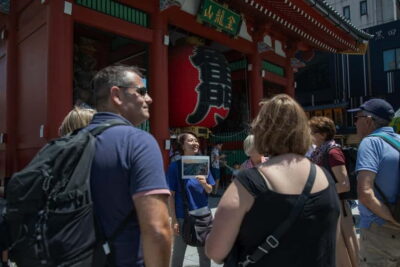 ★ 4.8Asakusa Walking Tour with Sensoji Temple VisitFrom $221,583 reviews
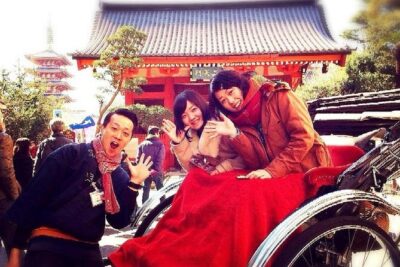 ★ 5.0Tokyo Asakusa Rickshaw TourFrom $421,375 reviews
 ★ 4.5Tokyo Panoramic 1 Day: Meiji Shrine, Asakusa, Odaiba and SKYTREE®From $851,222 reviews
 ★ 5.0Tokyo Go Kart: Asakusa, Skytree, and Akihabara **IDP MUST**From $99988 reviews
 ★ 4.7Asakusa, Skytree & Akhihabara Go-Kart City ExperienceFrom $96761 reviews
This tour also belongs to