
Review · MARKETS
Master the art of Sushi : Toyosu Market Tour & Tuna Cutting
Tokyo smells like ocean early, then becomes sushi school. This tour is interesting because you go beyond restaurant sushi to see how tuna is judged and then learn how it turns into nigiri. Two things I like a lot are the live tuna-cutting show and the chance to compare tuna parts and taste them. The main drawback to consider is that you do a bit of hopping by subway or bus, and that transit time can add up.
You also get a tight group size, capped at 6 people, which helps you actually talk and ask questions. You start at 7:00 am at Shijō-mae Station in Toyosu and finish in Azabujūban, with lunch included (tuna and sushi you help make) and an English guide. If you get a guide like Amy, you’ll likely get food-first suggestions for what to try around Tsukiji, not just a checklist of sights.
Key points before you go
- Toyosu first: you see Tokyo’s wholesale seafood world up close, not just the tourist version
- Live tuna cutting: watch how fish quality gets handled in real time
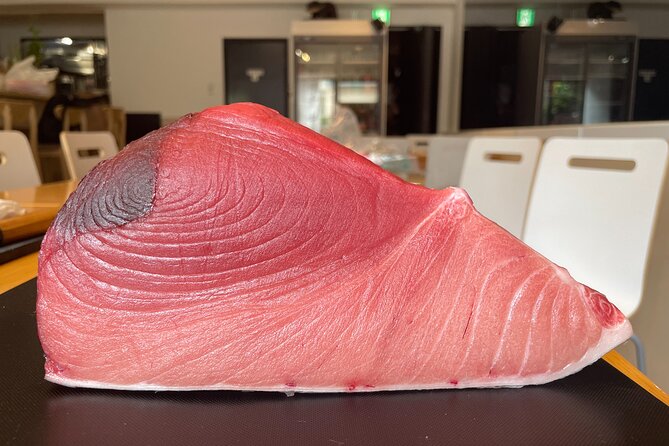
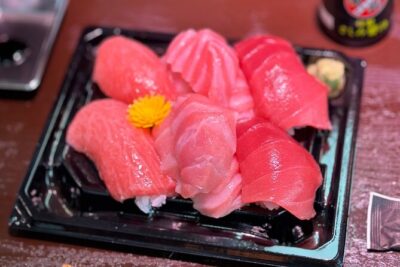
- Tuna-part comparison: fatty, middle, and lean sections are treated differently and eaten differently
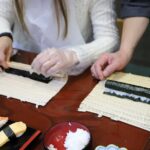
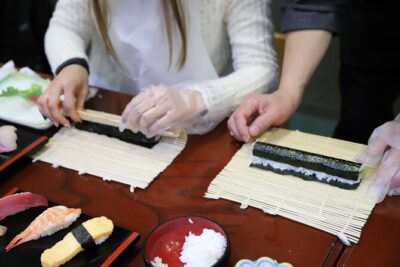
- Hands-on sushi: you cut tuna and make nigiri, then eat what you made
- Small group feel: up to 6 people, so questions do not get lost
- Transit is on you: subway or bus is used, and those rides are not included
Why Toyosu and tuna cutting is the real sushi backstory
If you think sushi is mostly about rice and seafood flavor, this day quietly corrects that. You learn that sushi is also about selection, cutting technique, and how each tuna section is meant to be eaten. The morning starts at Toyosu, Tokyo’s main fish market, where the pace is built for trade, not for photos.
What makes this experience special is the way it connects three worlds. First, you walk and shop at the wholesale level at Toyosu. Next, you compare that with Tsukiji’s older market area through eating and browsing. Then you end in a local restaurant in Azabujūban, where the tuna lesson turns practical and hands-on.
You come away with a sharper mental map of freshness and quality, not just a full stomach. And you get sushi-prep tips you can actually use at home, especially if you like the idea of matching texture and flavor, not just copying a recipe.
The one thing I’d factor in is energy and timing. The day is front-loaded for markets, and you’ll spend real time traveling between stops on public transit, not a private car ride.
You can also read our reviews of more shopping tours in Tokyo
Toyosu wholesale market stop: where tuna quality starts
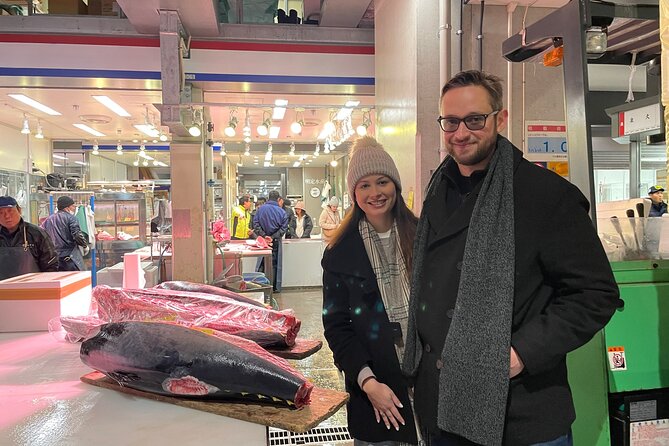
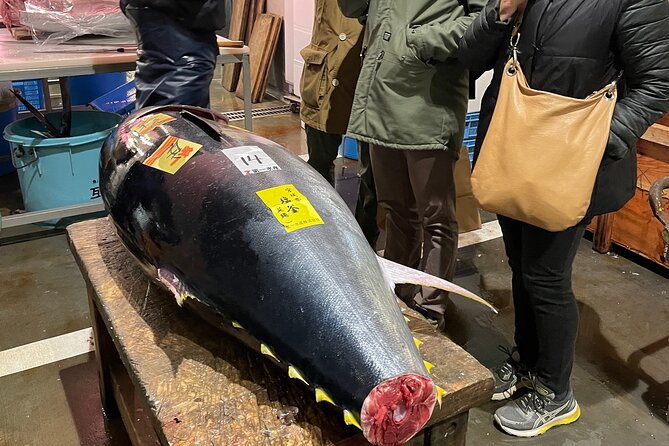
Toyosu is where seafood decisions begin. This is the stop focused on the trade side, with a guide bringing you into a wholesaler market setting where purchasing fish is part of the day. You get about 45 minutes there, and admission for that segment is listed as free.
In a short time window, the goal is not to master everything. It’s to see how the system works and what “freshness” looks like when people are buying for restaurants and auctions. You also get an opportunity to purchase fish at the wholesaler, so if you want to bring a souvenir food item home, this is where you’d ask about what makes sense.
You also get a chance to pick up small, practical observations. For example, pay attention to how fish is handled and how quickly things move. In a wholesale setting, the difference between a quick look and a careful look becomes obvious.
This is the kind of stop that rewards calm attention. If you show up hungry, bring good walking shoes, and keep your questions simple, you’ll get more value from the time you have.
Tsukiji Jogai Market contrast: eating while you compare old and new
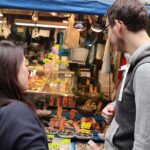
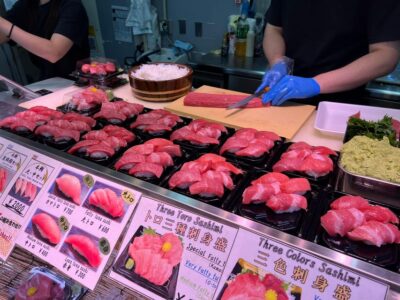
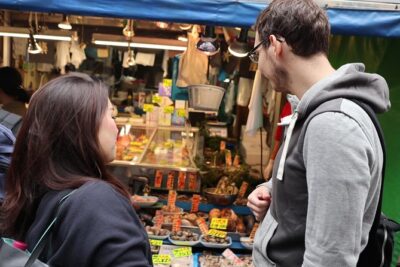
After Toyosu, you shift gears in Tsukiji’s Jogai area. This part of the day is about walking and shopping while you eat at various stores, and it’s explicitly set up so you can notice the differences between Tsukiji and Toyosu.
You’re given about 1 hour here, and the admission is listed as included for that segment. The key benefit is contrast. Toyosu gives you a wholesale buyer’s lens, while Tsukiji Jogai shows more of the street-level market experience, the one people come to for snacks and casual browsing.
Food is part of the learning, not an add-on. A guide like Amy, mentioned in a strong piece of feedback, is the kind of person who can point you toward good places to try, instead of sending you wandering with no plan.
One thing to watch: you are not just walking around the corner. The plan includes travel time between locations, and it can stretch your morning, especially if you end up outside waiting, transferring lines, or moving in warmer weather. I’d plan for that reality. Bring a small layer you can shed quickly, and keep your water bottle handy if you tend to get dry during early starts.
Azabujūban tuna cutting and nigiri workshop: hands-on, not just watching
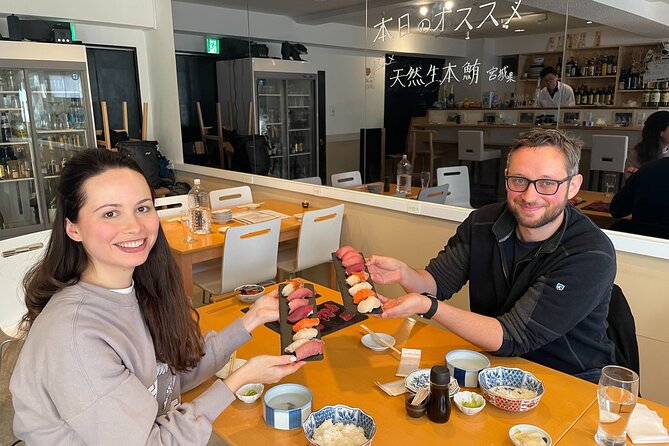
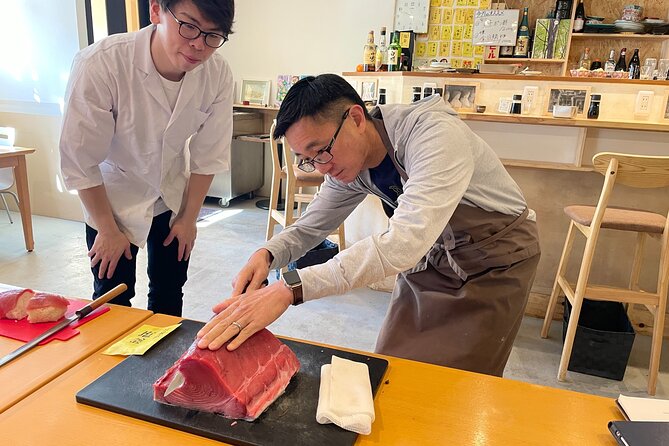
This is the heart of the experience: a chef-led tuna cutting session and sushi prep in a Japanese restaurant. You spend about 1 hour 30 minutes here, and admission for this segment is listed as free.
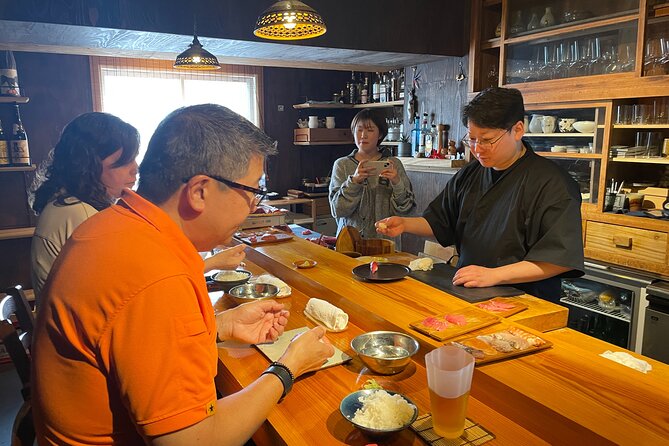
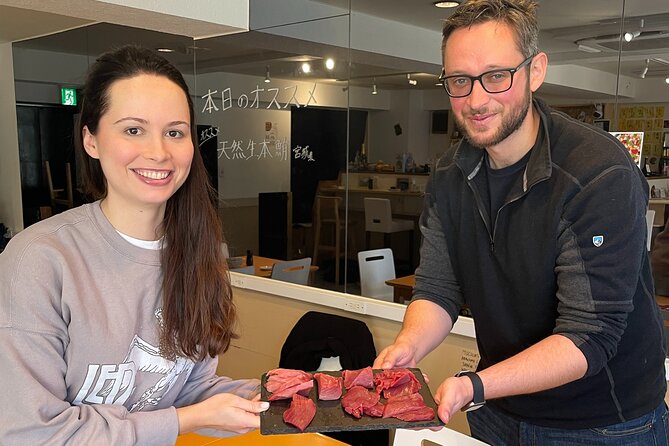
You’ll see the process of cutting tuna and then making nigiri sushi. The structure is built around comparison. You’re able to look at different parts of the tuna and then try different ways of eating it, so you start to understand how fat content affects texture and how that should show up in flavor and bite.
One detail that stands out from past sessions: the class can include cutting a large amount of tuna, with learners working through different sections such as fatty, middle, and lean parts. After the cutting, you make sushi and enjoy lunch that’s tied to what you prepared.
That is where the value really lands. Watching a tuna cutting show in a theater is one thing. Doing the cutting basics, then building nigiri, gives you muscle memory for why certain moves matter. Even if you do not expect to be a sushi chef after 90 minutes, you’ll understand the logic behind the technique.
The setting also matters. Azabujūban is not built for tourist crowds the way some central spots are. You’re sitting down with a real restaurant kitchen rhythm, which makes the skills feel less like a demo and more like a transfer of craft.
Lunch that actually teaches: tuna and sushi you make
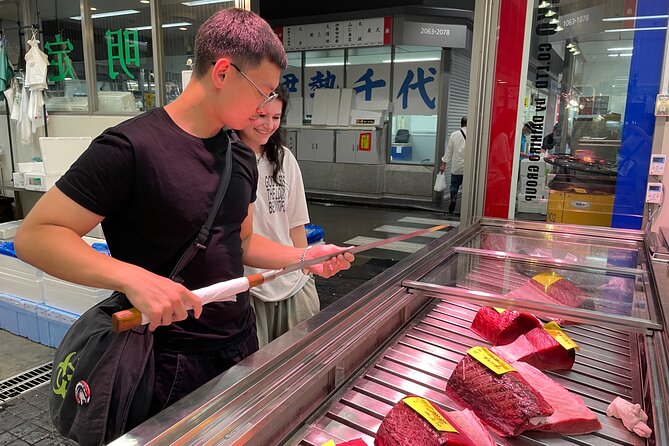
Lunch is included, and it is not just a separate meal you squeeze in. It comes with tuna and sushi made by yourselves, which means your time in the cutting and shaping matters. When you eat what you made, the lesson sticks faster because you connect taste to technique.
Expect tuna in the mix, plus the sushi you helped form. This makes it easier to recognize differences between tuna sections that you might otherwise miss if you only taste one cut in one preparation style.
Also, think about lunch as your quality check. If you’re learning how to evaluate tuna, the meal becomes the proof. You can ask questions before you eat, and then use your first bites to confirm what you think you’re learning about texture and flavor.
If you’re someone who likes to cook at home, you should leave with at least a few practical ideas for prep. For example, you’ll likely come away thinking about portioning, how nigiri feels in the hand, and how to approach different tuna textures rather than treating every tuna piece as the same.
More Tokyo tours and experiences for the shortlist
Price and logistics: is $297.23 worth it for 4 hours?
At $297.23 per person for an experience listed at about 4 hours, you’re paying roughly $75 per hour before tax and any extra spending. That sounds steep if you’re comparing it to a basic market stroll. But this is not a plain walking tour.
You’re paying for three things that usually cost extra in Tokyo. A first stop at Toyosu in a wholesale setting with guide time, a second market segment in Tsukiji for eating and browsing with the guide’s steering, and then a chef-led workshop in Azabujūban that includes tuna cutting and nigiri prep. Lunch is included too, and it ties directly into the hands-on part.
The biggest practical tradeoff is transportation. Movement between stops is by subway or bus, and those ride costs are not included. If you’re traveling on a tight budget, this matters. I’d also consider the day’s early start, since you’ll likely be moving around before the city feels fully awake.
If you want a smoother logistics day, plan your route to match the meeting point and end point. The start is near Shijō-mae Station in Toyosu, and you finish at Azabujūban. That finish point can be convenient if you’re staying in Minato or around that side, but you may need a plan to get back home afterward.
Who should book this tuna and sushi skills tour
This tour is a strong fit if you meet any of these profiles. You’re a sushi fan who wants more than a restaurant meal. You’re curious about seafood culture at the wholesale level. Or you want a hands-on cooking style experience that ends with lunch.
It’s also a good pick if you like smaller group dynamics. With a maximum of 6 travelers, you’re less likely to feel like you’re floating behind a large crowd.
On the other hand, if you hate early mornings or you strongly prefer minimal transit, this may feel like a lot. The day is designed with multiple stops and public transport between them, and you should be ready for that rhythm.
Finally, if you’re traveling with kids or a group that needs constant breaks, keep in mind the day is market-focused and timed. It can still work, but you’ll want to judge your group’s stamina and interest in watching fish handling.
Should you book this Toyosu market tour and tuna cutting experience?
I’d book it if you want a Tokyo sushi experience with real craft attached to it. The combination of Toyosu’s wholesale viewpoint, Tsukiji’s market contrast, and the Azabujūban cutting and nigiri-making lesson is a smart way to learn the “why” behind sushi. Lunch included, plus an English guide and a small group size, makes the pricing feel more reasonable.
Skip it or think twice if you’re mainly after a relaxed sightseeing morning with minimal moving around. The transit between stops is part of the deal, and that can be tiring, especially if the weather is hot or you’re sensitive to heat.
If you’re a first-timer in Tokyo and you’re set on understanding seafood beyond a menu, this is one of the more direct routes to that goal.
FAQ
How much does the tour cost?
The price is $297.23 per person.
How long is the tour?
The duration is about 4 hours.
What time does the tour start?
The start time is 7:00 am.
Where do I meet the guide?
The tour starts near Shijō-mae Sta.6 Chome-3 Toyosu, Koto City, Tokyo 135-0061.
Where does the tour end?
The tour ends in Azabujūban at 3-chōme-3-4 Azabujūban, Minato City, Tokyo 106-0045.
What is included in the price?
Lunch is included, along with an English guide. Lunch comes with tuna and sushi made by yourselves.
Is transportation between stops included?
No. Transportation within the tour is by subway or bus, and those costs are not included.
How many people are in a group?
The tour has a maximum of 6 travelers.
When will I get confirmation after booking?
Confirmation is received within 48 hours of booking, subject to availability.
What happens if the weather is bad?
This experience requires good weather. If it’s canceled due to poor weather, you’ll be offered a different date or a full refund.
More Shopping Tours in Tokyo
More Tours in Tokyo






More Tour Reviews in Tokyo


Not for you? Here's more nearby things to do in Tokyo we have reviewed




Markets, side by side.
 ★ 5.0Tokyo Tsukiji Fish Market Food and Culture Walking TourFrom $993,184 reviews
 ★ 5.0Tsukiji Fish Market Food and Walking tourFrom $301,724 reviews
 ★ 4.9Tsukiji Fish Market Guided Walking TourFrom $221,397 reviews
 ★ 5.0Tsukiji Fish Market Guided Tour and Sushi Making with Pro ChefFrom $104775 reviews
★ 4.7Tsukiji Fish Market Food and Culture Walking TourFrom $96757 reviews
★ 5.0Tsukiji Fish Market Guided Tour and Sushi Making with Pro ChefFrom $104775 reviews
★ 4.7Tsukiji Fish Market Food and Culture Walking TourFrom $96757 reviews
 ★ 5.0Tsukiji Fish Market: Street Food & Culture Walking TourFrom $33669 reviews
 ★ 5.0Tsukiji Fish Market Small-Group Food Walking TourFrom $87621 reviews
 ★ 4.9Tsukiji Fish Market Sushi Making Class with Pro ChefFrom $63506 reviews
This tour also belongs to