
Review · TOKYO CITY TOURS
Traditional Antiques Market Tour Tokyo
A Tokyo antique hunt with a geisha guide is an easy win. This tour uses the credibility of Sayuki, who may be an apprentice geisha, to take you through shrine-area markets where you can hunt for curious souvenirs. I like that bargaining is handled for you, so you spend more time shopping and less time negotiating. One drawback to weigh: a market that is listed on the calendar can still be day-dependent, and if the market is not operating, the whole plan can fall apart.
You’re also not stuck in a mall loop. The experience is built around outdoor stalls outside shrines and the kind of traditional goods you usually only spot if you know where to look, including items tied to kimono culture and classic tourist-friendly curios. The tour runs a short 2 to 3 hours, so it fits cleanly into a day even if you are traveling fast. The main consideration is simple: this is walking time and shopping time, not a long museum-style stop where you can relax.
Key Things That Matter on This Tokyo Antiques Tour
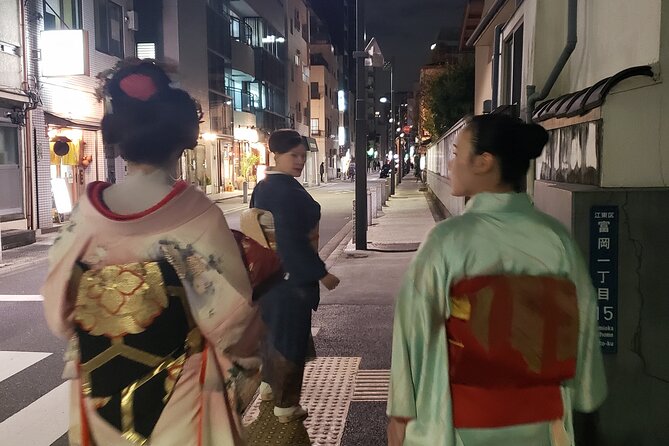
- Sayuki guides the shopping: The plan centers on Sayuki, who may be an apprentice geisha and helps you navigate what is worth your yen.
- You get bargaining help: The tour explicitly includes help negotiating and aims to get you a fair price.
- Start at Tomioka Hachiman Shrine: Your morning begins at the shrine address in Koto City, then you shop around the shrine scene.
- Short, focused duration: Expect about 2 to 3 hours, so you are not committing an entire day to shopping.
- Small group size: Maximum of 20 travelers, which usually keeps things easier than large bus tours.
- Mobile ticket, daytime timing: Confirmation comes at booking and the ticket is mobile, which keeps the morning smoother.
Where You Start, and Why Tomioka Hachiman Shrine Works
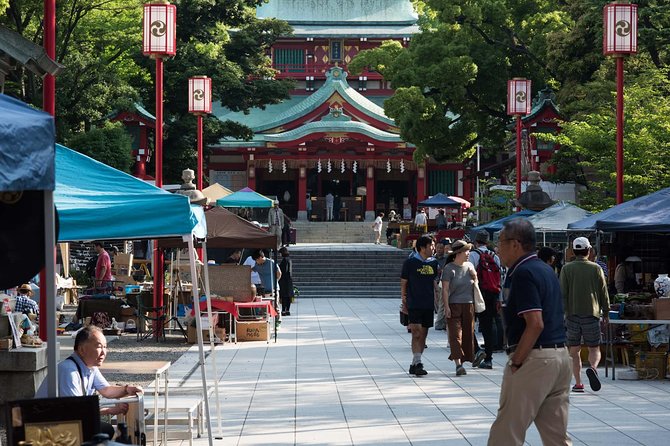
The tour begins at Tomioka Hachiman Shrine at 1-chōme-20-3 Tomioka, Koto City, Tokyo (135-0047). That matters because the tour is designed around a shrine setting, not a generic shopping street. Shrines concentrate small stalls, snack stands, and seasonal antiques in a way that feels more local than department-store shopping.
The start time is 9:00 am, and the entire outing returns back to the meeting point. That round-trip setup is practical in Tokyo, where cross-town travel eats time and energy. It also means you can plan the rest of your day without guessing how you will get home afterward.
One other detail: the tour notes you should wear comfortable walking shoes. That is not just “tour advice.” It is what you need for shrine-area markets where surfaces can be uneven and you will naturally keep shifting positions while you browse.
You can also read our reviews of more shopping tours in Tokyo



The Real Price Story: $170.60 Per Group (Up to 4)
The cost is $170.60 per group, with a maximum group size of up to 4. The value case improves fast if you book as a full group because your effective per-person cost drops. If you are traveling solo or as a couple, it is still workable, but you should be honest about whether you will spend enough during the tour to justify the guided element.
Why does the price make sense on paper? Two things. First, the tour includes bargaining help. Second, the experience is centered on finding authentic Japanese items such as kimono-related goods, not just random trinkets. If the guide helps you focus on quality and fair pricing, that can save you money and time.
There is also a practical point. The tour’s duration is 2 to 3 hours, so you are paying for a compact window. That is good for a travel day schedule, but it also means you should come ready to decide. If you wander slowly and then hesitate at checkout, you may feel rushed when the tour wraps.
Meet Sayuki: A Geisha-Style Guide and the Shopping Advantage
Your guide is Sayuki, and the tour notes she may be an apprentice geisha. That phrasing signals the tour’s tone: you are not just getting directions. You are getting a cultural guide who can interpret what you are seeing and help you shop with more confidence.
The biggest practical advantage is stated plainly: the tour will bargain for you. In many markets, the difference between overpaying and getting a fair price comes down to confidence and communication. If Sayuki does the negotiating, you can focus on fit, material feel, and the story behind an item rather than translating every question in real time.
Another subtle benefit is decision-making. When you are browsing a lot of stalls, it is easy to get distracted by shiny objects. A good guide pulls you toward what is genuinely worth your money. You will still do the choosing, but the guide helps you narrow the field.
What You Actually Do: The 2 to 3 Hour Market Walk
This is a daytime antique and curiosity hunt built around flea markets and stalls outside shrines. The experience is short, so the pacing is usually purposeful: you start at the shrine meeting point, then spend time in the shrine market area and move among nearby stall clusters.
Stop details you should expect:
- You begin with Sayuki at the shrine.
- You spend around two hours in the market environment tied to that shrine setting.
- The tour runs about 2 to 3 hours total, which is long enough to compare a few stalls but not long enough to “finish Tokyo.”
Since the tour description emphasizes “some of Tokyo’s shrines,” plan for multiple market areas rather than one single storefront. Even without a long itinerary list, the structure should feel like this: browse, ask, compare, and bargain, then move on before the group loses momentum.
And yes, it is shopping. Bring energy for that. If you prefer slow sightseeing, this may feel like structured browsing rather than a cultural walk with long pauses.
What You Can Hunt For: Curios, Kimono Culture, and Gifts That Feel Real
The tour is designed for people who want souvenirs that do not look like every other postcard purchase. You are aiming at Japanese curiosities and traditional items that feel tied to local craft and culture.
The highlights specifically point to:
- Authentic Japanese items such as kimono robes
- Traditional wares like geisha-themed pillows and samurai sword-style souvenirs
That list is a big clue to the kind of shopping you will do. You are not just looking for mass-produced keychains. You should expect handmade or traditional-looking goods, often with a story you can learn from your guide as you browse.
A smart strategy is to set expectations early. Decide what you want to buy before you start bargaining. For example, do you want a usable textile item, or are you looking for a smaller display piece? If you want both, that is fine, but you should mentally separate categories so you do not overspend in one area and run out of budget before finding your real priority.
Also remember the tour includes bargaining help, which means you will likely have better results if you are ready to ask for price adjustments and reasonable bundles rather than just browsing passively.
More Tokyo tours and experiences for the shortlist


Bargaining With Sayuki: How to Think About Fair Prices
This tour does something helpful: it treats bargaining as part of the service, not a personal challenge. The description says the guide will bargain and pay a fair price on flea market finds, and the included element notes: let us bargain for you and save big bucks.
Here is how to translate that into real-world expectations. You are not walking in completely blind, but you also should not assume every price will be “cheap Tokyo.” Instead, think of bargaining as improving value in two ways:
- You reduce the chance of paying a tourist markup.
- You get guidance on whether an item is priced fairly based on what it is and how it is made.
Because the tour is only 2 to 3 hours, bargaining works best when you already know what you want and you can compare options quickly. If you spend ten minutes deciding between two similar items, you may still get a good outcome, but it can feel compressed.
If you want the best chance at a fair price, keep your questions simple:
- What is it made of?
- Is it new or used?
- Is there a similar option at a better price?
Sayuki handling the conversation helps you keep the process smooth.
Market Timing Risk: When the Shrine Market Might Not Be There
Here is the caution that matters most. A marketplace at a shrine is often seasonal, irregular, or day-specific. One unhappy booking described a situation where the antique market was not held on the scheduled day, even though it was listed as happening weekly, and the operator did not respond until a refund process was handled.
That kind of issue is rare, but it highlights a real travel reality: event-based markets can shift. If you are planning this as a must-do and you have limited time in Tokyo, consider how you will react if the market area is closed or not operating that morning.
Practical way to protect yourself:
- Keep your schedule flexible around the 9:00 am start.
- Avoid stacking another strict timed appointment immediately afterward.
- Plan a nearby alternative so you still enjoy the shrine area even if the market is thin that day.
Even with a great guide, the market itself has to be operating for the tour to deliver.
Small Group Size and a Less Stressful Shopping Style
The tour caps out at 20 travelers. That tends to make a difference in Tokyo, where big groups can turn shopping into herding. Smaller groups usually mean you can step into a stall, ask questions, and browse without losing the whole group.
It is also a “mobile ticket” experience, with confirmation received at time of booking. That is a practical win. You show up, you meet at the shrine, and you start. In a city full of subway transfers and station exits, minimizing friction at the start helps.
Still, treat it like a market day. You will be walking, looking, and comparing. The tour is not a relaxed café sit-down. Come with a clear sense of what you want to buy and how many gifts you plan to carry home.
How Much Time to Leave in Your Day
Because the tour is 2 to 3 hours, I treat it like a half-day activity. Starting at 9:00 am is helpful. You can do the markets early while your energy is high, then move on to another neighborhood later.
The tour returns to the meeting point, which helps you plan transport. You can also treat it as your “shopping block.” If you try to squeeze in a full sightseeing day afterward, you may feel weighed down by bags.
My practical advice: plan for a second buffer hour after the tour, at least for getting food, resting your feet, and sorting purchases. If you are buying textiles or shaped curios, you will want time to handle them carefully.
Who This Tour Fits Best
This is a strong match if you:
- Like shopping, but want it to feel cultural and specific, not random
- Want help with bargaining without feeling awkward
- Care about finding Japanese souvenirs such as kimono-related items
- Prefer short, structured experiences that fit into a daily schedule
It may be less ideal if you:
- Hate bargaining or dislike any shopping focus
- Need guaranteed access to a specific market event regardless of day
- Want lots of seat time and long narratives
If you enjoy the thrill of markets and you want the guide to do the talking, this style of tour can be very satisfying.
Tips for Booking and Showing Up Ready
You are booking in advance on this one, with an average booking window around 112 days. That tells me it tends to be planned well ahead, which can be good news if you like scheduling with certainty.
Before you go, do two simple things:
- Wear comfortable walking shoes and dress for walking in the open air.
- Decide in your head what you want to buy, even if you stay flexible on the exact item.
Also, because the guide is doing negotiation, you will get more out of the tour if you can communicate your preferences clearly. If you do not care what you buy and just want the experience, that can work too, but your final purchases may be more variable.
Should You Book This Tokyo Traditional Antiques Market Tour?
Book it if you want a short Tokyo antique market outing with Sayuki acting as your cultural shopping guide, and you especially value having someone help you bargain and compare options without stress. The starting point at Tomioka Hachiman Shrine and the structure around shrine-area stalls makes it feel like a real neighborhood experience.
Do not book it if the market itself is your only plan for the day. The scheduling risk is real, and one account flagged a day where the market was not operating even though it was listed. If you are the type who needs everything to go perfectly, treat this as a fun shopping tour you hope will hit, not a guaranteed event.
If you decide to go, build in flexibility around the 9:00 am start, keep your walking comfort high, and go in with a wish list. That is the formula for getting good value from a compact market hunt.
FAQ
Where is the meeting point?
The tour starts at Tomioka Hachiman Shrine, 1-chōme-20-3 Tomioka, Koto City, Tokyo 135-0047, Japan.
What time does the tour start?
The start time is 9:00 am.
How long is the Traditional Antiques Market Tour Tokyo?
The duration is about 2 to 3 hours.
What does it cost, and how many people are in a group?
It costs $170.60 per group, for up to 4 people.
What ticket do I receive?
You get a mobile ticket.
What is included in the tour?
The tour includes admission ticket coverage and bargaining help, described as having the guide bargain for you.
Is there an entry fee for the market?
The information lists no fees to enter the market under not included.
How big is the group?
The maximum number of travelers is 20.
Is the tour refundable or changeable?
No. It is non-refundable and cannot be changed for any reason.
Is it suitable for everyone and can service animals attend?
Most travelers can participate, service animals are allowed, and the meeting area is near public transportation.
If you want, tell me your travel dates and whether you are shopping for textiles, decor, or small collectibles, and I’ll suggest how to plan your day around the 9:00 am start.
More Shopping Tours in Tokyo
More Tours in Tokyo






More Tour Reviews in Tokyo


Not for you? Here's more nearby things to do in Tokyo we have reviewed












Tokyo City Tours, side by side.
 ★ 5.01-Day Tokyo Bus TourFrom $12914,250 reviews
 ★ 4.5TOKYO SKYTREE® Admission ticketFrom $1311,192 reviews
 ★ 4.6teamLab Planets TOKYO Digital Art Museum Entry TicketFrom $259,779 reviews
 ★ 4.0Mt Fuji & Hakone Cruise, Drum Show Bullet Train 1 Day from TokyoFrom $1497,413 reviews
 ★ 5.0Shinjuku Food Tour (13 Dishes at 4 Local Eateries)From $866,603 reviews
 ★ 4.4Tokyo Mt Fuji 5th St & Hakone Cruise Bus Tour w/Bullet TrainFrom $1545,024 reviews
 ★ 5.0Flagship 2-Hours Official Street Go-Kart Tour – Tokyo Bay ShopFrom $644,974 reviews
 ★ 4.5From Tokyo: Mount Fuji Full-Day Sightseeing TripFrom $684,970 reviews
This tour also belongs to