
Tokyo glitters, and Shibuya is the switch. I love how this tour makes Shibuya Crossing feel close and human at street level, then lets you re-see the same scene from a high rooftop viewpoint. I also love the stop in Shibuya Nonbei Yokocho, where tiny bars and street eats set the night mood fast.
One possible drawback to plan around: the rooftop part needs good weather, and you’ll be on your feet through busy streets for about two hours, so comfy shoes and a small day bag matter.
Key highlights to look forward to
- Street-level Shibuya Crossing first, then the same intersection from above at night
- Miyashita Park, a modern hangout built on top of a former parking structure
- Shibuya Nonbei Yokocho, a tight alley of small eateries and nightlife
- Shibuya Center-gai, a pedestrian street packed with shops, cafes, and neon energy
- Rooftop city view with 360° perspective, with the admission ticket included
- Small group size up to 25, which helps on crowded sidewalks
Why Shibuya at night is a perfect match for this format
Shibuya at night does something Tokyo rarely does anywhere else: it turns a neighborhood into a live show. You get the drama of the intersection close up, then you get the calm, wide-angle payoff from above. That two-step rhythm is what makes this tour work so well.
The walk portion focuses on the exact streets you want to see after dark, not just the big postcard sights. Then the rooftop observation deck turns the whole skyline into one big, readable map.
If you like night photos but also like meeting a place at street level, this is a smart use of time. It’s about two hours, and it doesn’t drag.
You can also read our reviews of more walking tours in Tokyo

Meeting at Hachiko Square and getting oriented fast
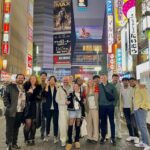
Your tour starts at the Hachiko Statue area in Shibuya (2 Chome-1 Dogenzaka). This is a good meeting point in theory, because it’s famous and easy to recognize. In practice, Shibuya Square is still chaotic at night, so I suggest you arrive early and give yourself time to find the leader before you’re stressed.
Plan to travel light. Large luggage is not allowed, and you’ll want room for a phone, water bottle, and maybe a layer. Also, no pets, and you should not bring food or drinks on the tour.
Because the group is capped at 25 people, the leader can keep everyone together, but the sidewalks can still feel crowded. Your best move is simple: stand still when the group gathers and don’t drift off for one more photo. You’ll get plenty of photo time later.
Shibuya Crossing up close, then from Shibuya Sky heights
The tour’s first big moment is crossing Shibuya Crossing with the group. This is where Shibuya’s fame makes sense. The flow of people is constant, the street signals change on a clock-like pattern, and the whole place feels like it runs itself.
Here’s what I like about doing it on foot with a guide: you’re not just watching from the sidelines. You’re moving with the crowd, so you actually feel how the crossing works in real time.
Then comes the contrast. From the rooftop viewpoint at Shibuya Sky, you get a bird’s-eye view of the same intersection. The night grid makes sense from above: you see how the streets feed into each other, how the buildings frame the crossings, and where the bright signs pull your eye.
If you care about night photography, this pairing is a cheat code. Street level shows motion and density. The rooftop shows pattern.
Miyashita Park: modern Shibuya you can walk onto
After the crossing, the tour heads to Miyashita Park, a modern urban space built on top of a former parking structure. That detail matters. It’s not just a park you pass by. It’s elevated public space where people shop, eat, skate, and hang out in the middle of Shibuya’s core.
At night, the feel changes. You get more social energy and a softer, more relaxed pace than the intersection. You’ll likely notice how the park acts like a buffer zone between chaotic streets and calmer viewpoints.
This stop is also a good reset. The crossing is intense. Miyashita gives you a chance to look around and regroup before the alley and street segments.
If you prefer your Tokyo at night to include places where locals actually linger, Miyashita Park is one of the better choices in Shibuya for that.
Shibuya Nonbei Yokocho: tiny alley bars and street-food vibes
Next you’ll walk into Shibuya Nonbei Yokocho, the kind of narrow alley where Tokyo feels like a secret you don’t want to share. It’s known for small bars and eateries, with neon lights and close-up energy that makes the crowd feel intimate rather than endless.
This stop is one of the biggest reasons the tour feels like more than sightseeing. It’s about atmosphere. You can see how Shibuya does nightlife: concentrated, social, and built around small choices rather than big venues.
Practical tip: alleys can be tight, and people move slowly in groups. Keep your phone handy but don’t stop in the middle of the walkway. Let the group flow, then step aside to take a clean shot.
If you like “walk and look” travel, this is a strong payoff. If you’re expecting wide open spaces, manage your expectations. This is a narrow, lively night world.
You can also read our reviews of more city tours in Tokyo




Shibuya Center-gai: pedestrian street energy without the trains
After the alley, the tour switches to Shibuya Center-gai, a pedestrian street that mixes shops, cafes, and entertainment. This is where the neighborhood’s youth culture shows up fast, with music, signage, and crowds forming a constant backdrop.
What I like here is the texture. After crossing, park, and alley, Center-gai gives you the wider street experience. You can see how the business strip connects to the surrounding areas, and you get a feel for how Shibuya keeps moving after dark.
You might notice that Center-gai is easier to navigate than some other nightlife zones because it’s a straight-up pedestrian corridor. Just stay aware of foot traffic, especially when groups bunch up around storefronts.
The rooftop viewpoint: 360° Tokyo, with the ticket included
The final big move is up to the rooftop observation deck for a 360° view of Tokyo. This is where the tour justifies the price tag for many people.
The walking portion helps you understand Shibuya’s layout, but the rooftop is what turns that understanding into a “wow, I get it” moment. At night, city light becomes a map. Bright corridors and landmark shapes pull your eye across the horizon, and you can spot famous areas from the scale alone.
Here’s how to enjoy it most:
- Stand in a place where you can see multiple directions without leaning or blocking others.
- Take one wide photo first, then do smaller shots after you see which buildings catch the light.
- Give your eyes a moment of adjustment. Tokyo night lighting can be intense, so let it settle before you start aiming your camera.
Because the rooftop admission is included, you’re not stuck making a last-minute decision. You just go, look, and absorb the skyline from above.
Your guide and the small-group advantage
This tour caps out at 25 travelers, which is a big deal in Shibuya. With a smaller group, the leader can manage the flow better on crowded streets and keep the walk moving at a rhythm that still feels relaxed.
One guide named Lily is specifically called out for being fun and caring, and that kind of guide personality matters. You feel it in the pace, the way people stay together, and the small reminders that stop you from wandering off in the busiest places.
If you want the most from the guide, do two things. Ask one question during a natural stop, not while the group is moving. And keep your eyes on the meeting cues. In places like Shibuya, “everyone regroup over here” can save you ten minutes of stress.
Price and value: what you’re really paying for
At $161 for about two hours, this tour is priced like an experience with a paid highlight. The rooftop stop includes admission, while the earlier walking stops list admission as free.
That matters for value. You’re paying mainly for:
- a guided night route through the best-known Shibuya zones,
- the time-saving parts of not having to plan photo spots on your own, and
- the rooftop access that caps off the night with a 360° payoff.
If you were to do everything on your own, you’d spend time figuring out timing, navigating crowds, and deciding where to stand for the best views. This tour bundles that thinking into one package.
Does it feel expensive? It can, if you’re the type who enjoys planning solo. But if you want a guided night in the Shibuya core without juggling logistics, the rooftop included feature is the key value driver.
Weather, night timing, and the one thing you can’t control
This experience requires good weather. That’s not just a fine print detail, it’s the whole point for the rooftop viewpoint.
Tokyo nights can go from clear to rainy fast, and wet conditions can change what you see from above. So, if you’re booking this late in your trip, keep one day of flexibility if possible.
Also note that you’ll be walking through an active area and spending time standing outdoors for views. Dress for the night, not the afternoon. A light layer can save you when the breeze hits the open skyline area.
Who this tour suits best (and who should skip it)
This is a great fit if you:
- want first-time Shibuya orientation with a guided route,
- like street scenes and neon nightlife areas on foot,
- care about night views and want the rooftop included, and
- prefer a manageable group size instead of a huge mob.
It’s less ideal if you:
- hate crowds or need lots of personal space,
- can’t handle steady walking for about two hours,
- or are traveling with bulky luggage or anything that doesn’t fit a small day bag plan.
Most people can participate, which is a good sign for variety of travelers. Just be realistic about the walking and standing involved.
Should you book the Shibuya Night Walking Tour with Rooftop City View?
I’d book it if you want a guided way to see Shibuya’s best night identity, with the rooftop view done in a structured, time-efficient way. The route hits the intersection, then the nightlife streets, and then finishes with that 360° skyline moment that turns all the walking into a single big picture.
You might skip it if your main goal is slow, flexible wandering or if you’re only traveling on strict weather certainty. Since the rooftop depends on good weather, a rainy evening could reduce the value of the plan.
If you do book, arrive early at the Hachiko Statue meeting area, keep your bag small, and let the guide set the pace. You’ll end up with a cleaner night, and better photos, without doing the coordination work yourself.
FAQ
Where does the tour start?
The meeting point is the Hachiko Statue at 2 Chome-1 Dogenzaka, Shibuya, Tokyo 150-0043, Japan. You should arrive at least 15 minutes early.
How long is the experience?
It runs for about 2 hours (approx.).
How many people are in the group?
The tour has a maximum of 25 travelers.
What stops are included during the walk?
You’ll visit Shibuya Crossing, Miyashita Park, Shibuya Nonbei Yokocho, and Shibuya Center-gai, then finish at a viewpoint rooftop observation deck.
Is the rooftop observation deck ticket included?
Yes. The rooftop/viewpoint admission is listed as included for the final stop.
Is it suitable for most travelers?
Yes, it says most travelers can participate.
What restrictions are there on items?
Large luggage is not allowed. Food, drinks, and pets are also not allowed.
FAQ
Do I need good weather for this tour?
Yes. The experience requires good weather. If it’s canceled due to poor weather, you’ll be offered a different date or a full refund.
More Walking Tours in Tokyo


More Tours in Tokyo




More Tour Reviews in Tokyo


Not for you? Here's more nearby things to do in Tokyo we have reviewed












Shibuya Tours, side by side.
 ★ 5.0Official Street Go-Kart in ShibuyaFrom $763,435 reviews
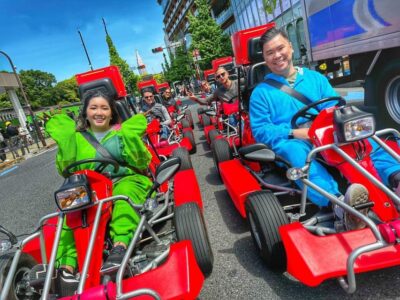 ★ 4.9Street Kart Experience in ShibuyaFrom $741,484 reviews
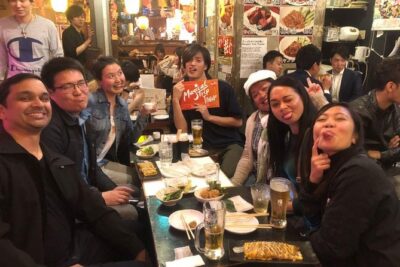 ★ 5.0Shibuya Meltdown Nightlife Tour: All-You-Can-Drink Bar HoppingFrom $1061,058 reviews
 ★ 5.0Shibuya Official Street Go-Kart in Shibuya AnnexFrom $69972 reviews
 ★ 5.0Shibuya Food Tour (13 dishes and 4 Eateries)From $77770 reviews
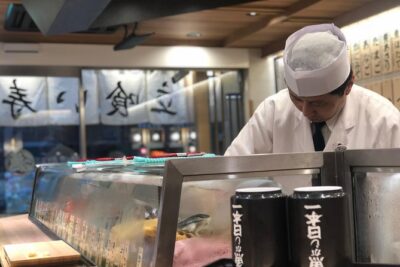 ★ 5.0Best of Shibuya Food TourFrom $217612 reviews
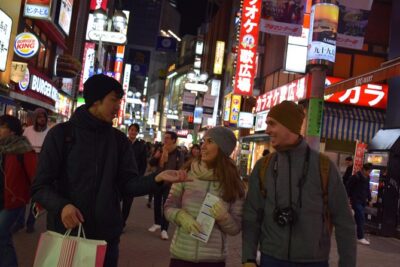 ★ 4.8Shibuya Highlights Walking TourFrom $19601 reviews
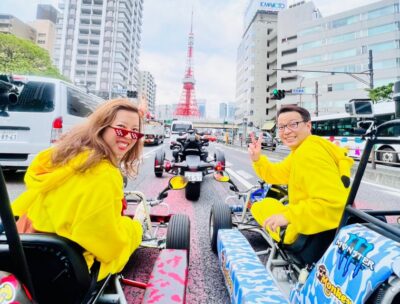 ★ 4.7Premium Go-Kart Tour with Tower & Shibuya CrossingFrom $116528 reviews
This tour also belongs to