
Review · TOKYO TEA & SAKE EXPERIENCES
Tokyo 6 hr Private Guided Tour & Tea Ceremony Experience
Tea, temples, and Tokyo crossroads in one day. This 6-hour private guided tour blends big-name neighborhoods with a traditional tea ceremony, plus a guide who keeps the day moving so you are not stuck on guesswork. You choose 2-3 stops from a menu, which is the smart part if you want variety without burning time.
I like how much you can fit in while still feeling human. Two standouts for me are the hotel-area pickup option from Tokyo’s special wards and the fact that the day includes a real cultural moment through the tea ceremony. The other big win is the flexible stop choices, so you can aim for what you actually care about.
One consideration: you do not get everything. You will be picking only a few sites, and several of the garden visits have admission not included, so you should budget for tickets depending on your selections.
Key points to know before you go
- Tea ceremony included so your day has a quiet, hands-on cultural break, not just sightseeing.
- Pick 2-3 sites from the menu, which helps you avoid an all-day rush of “too much, too fast.”
- Many major sights are free to enter (including Asakusa, Sensō-ji, Meiji Jingu, Akihabara, Tsukiji Outer Market, and more).
- Some gardens cost extra (Hamarikyu Gardens, Rikugien, Koishikawa Korakuen, Shinjuku Gyoen).
- Small group cap with a maximum of 10 travelers, plus a licensed local English-speaking guide.
Is This Tokyo 6-Hour Tour Worth $161.25?
At $161.25 per person for about 6 hours, this is priced like a tour that is doing two things at once: guided movement through Tokyo and a tea ceremony experience. If you were trying to stitch that together yourself, you would still pay for a guide, and you might struggle to line up a ceremony that matches your schedule.
Value gets better because many stops on the menu list admission ticket free. That means your extra spending mostly comes from optional garden entries and whatever you do for lunch. You are also not paying for a private vehicle, since transportation fees are not included, so you keep control over how you travel.
One more practical point: the average booking time is about 64 days in advance. That usually means this tour can sell out for popular days, so if you have a tight plan, waiting can cost you options.
You can also read our reviews of more guided tours in Tokyo

How the guide day works, and why pacing matters
This is designed as a guided, private-feeling Tokyo block of time, but there is still a hard limit on size, up to 10 travelers. In real life, that helps you get questions answered and keeps walking times sensible.
You may get pickup if your hotel is in one of Tokyo’s 23 Special Wards. If pickup is not used, you meet the guide on foot within a designated area in Tokyo. Either way, you should treat the start point like a real meeting time, not a “sometime soon” situation.
One word of caution based on how different guides can run a day: in feedback, one guide named Taka was praised for being fun, fast-moving, and good at building a strong itinerary. Another guide named Kris got criticism for falling behind pace and getting lost at subway exits. Your best move is to communicate your priorities clearly at the start, and ask your guide how they plan to handle tight connections if you want multiple transit-heavy stops.
Tea ceremony: the one experience you should plan around
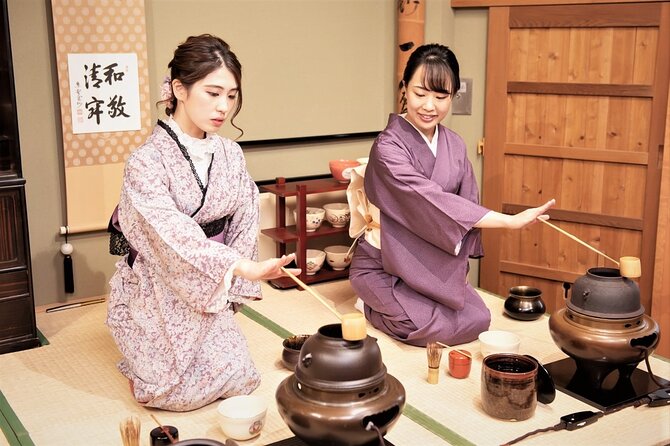
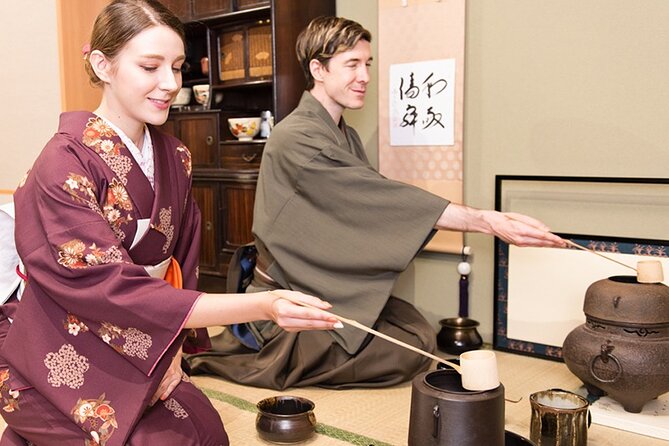
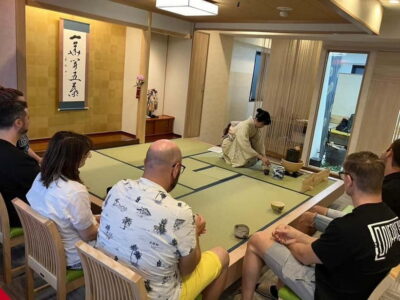
The tea ceremony is included, and it is not just a “show” slot. This is where you slow down, listen, and take part in a traditional ritual instead of photographing another street sign.
Since lunch and entrance fees for some sites are not included, I recommend treating the tea ceremony as your built-in reset. It breaks up the day between neighborhoods that can feel nonstop. If you care about gardens or temples, the ceremony can also make the rest of the walk-throughs feel more meaningful.
Also note that kimono rental is not included. If that is part of your dream tea photo, you will need to arrange it separately, or be ready to enjoy the ceremony without the extra costume step.
Jidaiya, Asakusa, and Sensō-ji: your old-Tokyo start

If you want a more traditional tone right away, start with Jidaiya or head into Asakusa.
Jidaiya culture program (about 1 hour)
Jidaiya is positioned as an alternative to standard Asakusa sightseeing, aimed at people who want a more profound and authentic Japanese experience. The timing is generous at about an hour, and admission is listed as free. If you like structured cultural activities, this is the stop that most directly signals “do something,” not just “see something.”
The main drawback is that it takes a full chunk of your day. If you are the type who wants to maximize photos and roaming, you might prefer a shorter neighborhood walk like Takeshita Street or Akihabara instead.
You can also read our reviews of more private tours in Tokyo

Asakusa neighborhood visit (about 30 minutes)
Asakusa sits in Shitamachi, the low-city side of Tokyo, where you can feel older neighborhoods and past-decade atmosphere. This is about orientation and vibe, and admission is listed as free.
You get the most from this kind of stop if you are okay with walking and people-watching, since it is not about one single landmark.
Sensō-ji Temple (about 15 minutes)
Sensō-ji, also known as Asakusa Kannon Temple, is a Buddhist temple and one of Tokyo’s most colorful and popular temples. Admission is listed as free, and the visit is short, so you are really there to experience the temple setting briefly and keep moving.
If your heart is set on temples, you might combine Asakusa plus Sensō-ji. If you want culture with less walking, you might skip one and go heavier on Jidaiya and tea ceremony time.
Imperial Palace grounds: what you see, and what you do not
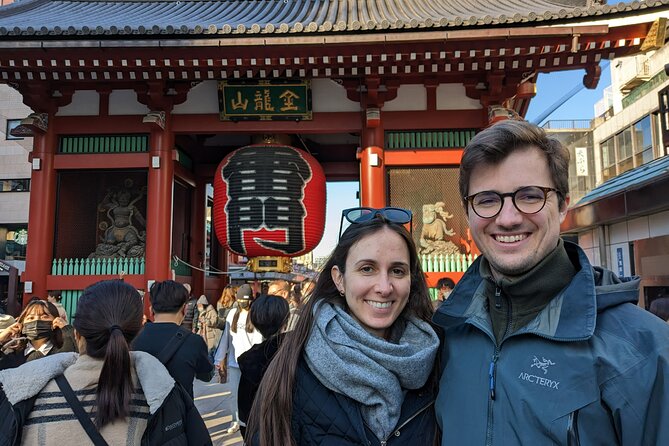
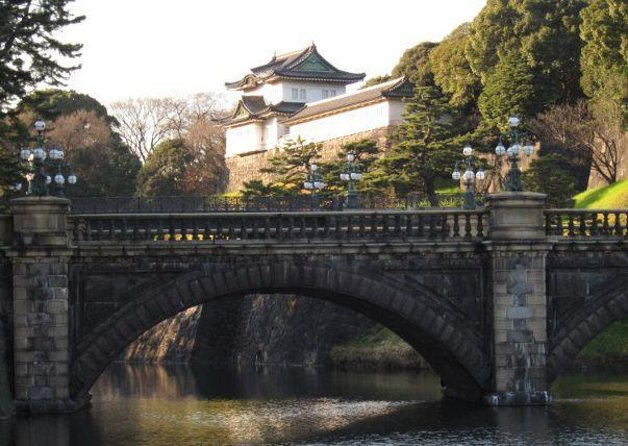
The Imperial Palace stop is designed for views of the area, not a ticketed inside visit. The current palace sits on the former site of Edo Castle, a large park area surrounded by moats and grounds.
This is a good option if you want a calm, open Tokyo break after walking around crowded streets. It is also easy to fit because admission is listed as free and the visit is about 30 minutes.
The key consideration is the one thing you should not misunderstand: the tour does not include access to the inside of the Imperial Palace. If you specifically want interior buildings, this stop will not replace that.
Gardens in Tokyo that may cost extra: Hamarikyu, Rikugien, Koishikawa Korakuen, Shinjuku Gyoen
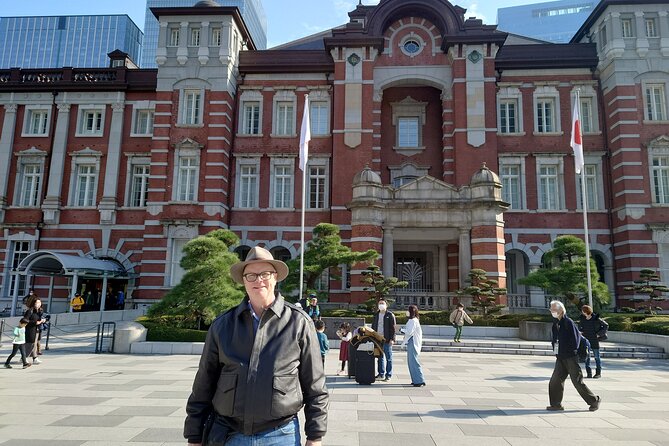
If you like quiet greenery and a slower pace, gardens can be your best “contrast” stop between neighborhoods. But several of these garden admissions are listed as not included, so you may pay on the day.
Hamarikyu Gardens (about 15 minutes, admission not included)
Hama Rikyu is a garden by Tokyo Bay with seawater ponds that change level with the tides. There is also mention of a teahouse, which pairs nicely with the tea ceremony theme even if this particular entrance is not covered.
The visit is short at about 15 minutes, so it works best as a “taste” rather than a full garden day.
Rikugien (about 30 minutes, admission not included)
Rikugien is built around 1700 for the 5th Tokugawa Shogun. It literally means “six poems garden.” Admission is not included, but the time allocation is solid at about 30 minutes.
If you are choosing only one garden, Rikugien is a strong candidate because it gets longer time than some other garden options.
Koishikawa Korakuen (about 15 minutes, admission not included)
Koishikawa Korakuen is one of Tokyo’s oldest and best Japanese gardens and dates to the early Edo period. It is shorter at about 15 minutes.
This is a good pick if you want a garden stop but do not want to lose too much time to tickets and entry lines.
Shinjuku Gyoen National Garden (about 15 minutes, admission not included)
Shinjuku Gyoen is one of Tokyo’s largest and most popular parks. The description highlights spacious lawns, meandering paths, and tranquil scenery. Admission is not included, and the visit is about 15 minutes.
It works well if you are already planning a Shinjuku stop and want a breather before heading back into nightlife or shopping areas.
Shibuya Scramble Crossing, Takeshita Street, and Meiji Jingu in one arc
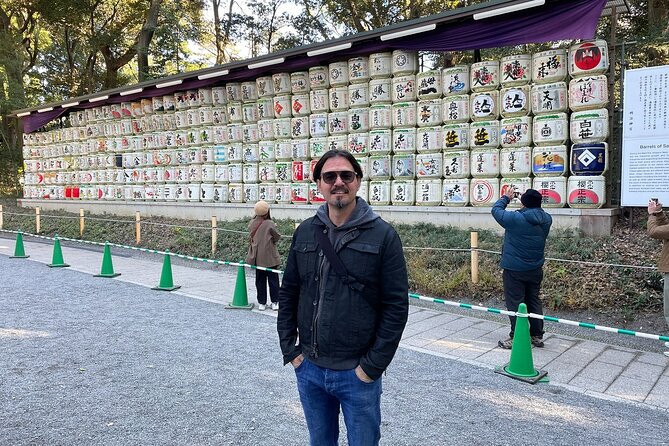
This part of the day is all about Tokyo energy and contrast, from the biggest intersection to fashion culture and then into shrine calm.
Shibuya Scramble Crossing
Shibuya Scramble Crossing is the famous scramble crossing in Shibuya. Expect it to be photo-friendly, busy, and quick-moving, which is why it is often best when you have a guide to keep you on schedule and pointed in the right direction.
Takeshita Street in Harajuku (about 30 minutes, admission free)
Harajuku, centered around Takeshita Street, is described as the hub of Japan’s extreme teenage cultures and fashion styles. Admission is listed as free, and the visit is about 30 minutes.
This is a fun stop if you like street style and people-watching. If you prefer quieter, more historic spaces, you may want to swap it out for a temple or garden.
Meiji Jingu Shrine (about 30 minutes, admission free)
Meiji Shrine is dedicated to the deified spirits of Emperor Meiji and his consort, Empress Shoken. It is beside the JR Yamanote Line at Harajuku, and admission is listed as free with about 30 minutes on the clock.
This is the “breathing room” in the arc. It gives you a shift from trend and traffic to a more reflective shrine setting.
Akihabara and Tsukiji Outer Market: two very different Tokyo cravings
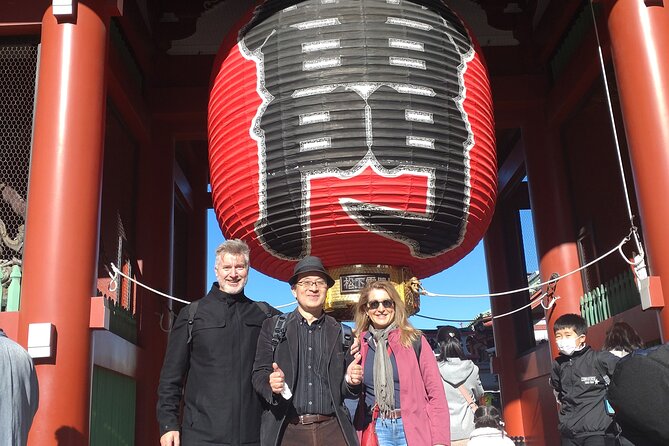
If you want Tokyo that feels current and local, these two options bring different kinds of watching and browsing.
Akihabara (about 30 minutes, admission free)
Akihabara is famous for electronics shops. It is a central area for tech browsing and gadget spotting, and admission is listed as free with about 30 minutes.
This works best if you enjoy walking through stores and comparing products. If you want food, Tsukiji may scratch that itch more directly.
Tsukiji Fish Market / Tsukiji Outer Market (about 30 minutes, admission free)
Tsukiji Outer Market is described as wholesale and retail shops across a few blocks near the former wholesale market site. Admission is listed as free with about 30 minutes.
This is a strong choice if you want a market atmosphere and a chance to snack or browse, even though lunch is not included in the tour.
Shinjuku Golden Gai: the short stop with a strong mood
Golden Gai is a small area in Shinjuku known for its many eating and drinking establishments. The description notes that it began around 1950 when a black market in front of Shinjuku Station moved, and shops set up in the new area.
Your stop is about 30 minutes and admission is listed as free. Because it is short, it is a good fit for your “night mood” building block, even if you are still early in the day.
How to choose your best 2-3 stops (so the day feels right)
Because you select 2-3 sites from the menu, the best strategy is to pick one “culture anchor,” one “Tokyo contrast,” and one optional “slow down.”
A few pairing ideas that match what is on the menu:
- Old Tokyo + tea + a modern rush: Jidaiya (or Asakusa and Sensō-ji) plus tea ceremony, then finish with Shibuya Scramble Crossing or Takeshita Street.
- Temples and calm: Asakusa plus Sensō-ji, then swap the second stop for Meiji Jingu, and use tea ceremony as the bridge.
- Garden day, but not too heavy: Hamarikyu Gardens plus tea ceremony, and add either Rikugien or Koishikawa Korakuen depending on your time tolerance for extra admissions.
- Market and streets: Akihabara plus Tsukiji Outer Market, with tea ceremony as your reset.
Also, remember that transportation fees and lunch are not included. For a smooth day, keep your picks clustered so you are not spending the whole 6 hours just traveling between distant neighborhoods.
Who this tour suits best
This is a great fit if you:
- Want a guided plan but do not want to commit to too many stops
- Like having one structured cultural experience, the tea ceremony, instead of only sightseeing
- Prefer a small group cap of up to 10 travelers
- Appreciate English-speaking local guidance through Tokyo’s major areas like Asakusa, Shibuya, Harajuku, Akihabara, Tsukiji, and Shinjuku
It is not the best fit if you want a single neighborhood all day or if you specifically need Imperial Palace interior access, since that is not included.
Should you book this Tokyo 6-Hour Private Guided Tour with Tea Ceremony?
I would book it if your priority is a balanced Tokyo day that mixes classic sights, modern neighborhoods, and a real cultural experience. The price can make sense because many stops are listed as free, and the tea ceremony is included, not an add-on you have to chase.
Skip booking only if you already know you want multiple paid garden tickets, or you are focused on Imperial Palace interiors, because those pieces are limited or not included. If you do book, make your stop choices early, especially if your travel dates are popular, so you do not end up with fewer combinations than you want.
FAQ
How long is the Tokyo guided tour?
The tour is about 6 hours.
Is hotel pickup included?
Pickup is offered from one of Tokyo’s 23 Special Wards. If pickup is not used, you meet the guide on foot within a designated area of Tokyo.
How many stops can I choose?
The tour is customizable, with you choosing 2-3 sites from the available list of attractions.
Does the tour include entrance to the Imperial Palace inside?
No. The tour does not include access to the inside of the Imperial Palace.
Is the tea ceremony included?
Yes. A traditional tea ceremony experience is included.
Are entrance fees included for all sites?
Not all of them. Several stops list admission as free, but some gardens are marked as admission not included, and those likely require an extra ticket. Lunch is also not included.
Are transportation costs included?
Transportation fees are not included. A private vehicle is not included either.
What is the maximum group size?
The maximum is 10 travelers.
What is the cancellation window?
You can cancel for a full refund up to 24 hours before the experience start time.
More Guided Tours in Tokyo


More Tours in Tokyo






More Tour Reviews in Tokyo


Not for you? Here's more nearby things to do in Tokyo we have reviewed












Tokyo Tea & Sake Experiences, side by side.
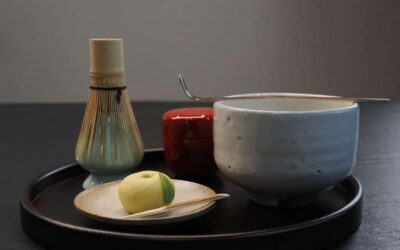 ★ 5.0Traditional Tea Ceremony with a Tea MasterFrom $38528 reviews
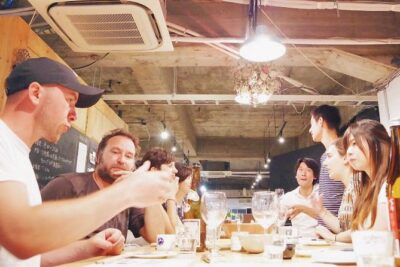 ★ 5.0Sake Tasting Masterclass in Shinjuku (8+ Varieties with a Pro)From $72271 reviews
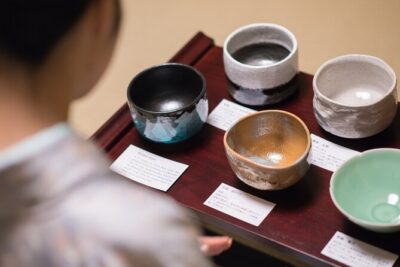 ★ 5.0Tea Ceremony Workshop in Tokyo by the Experienced InstrucorFrom $38189 reviews
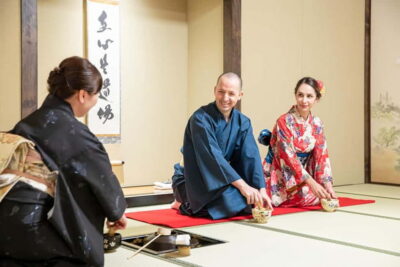 ★ 4.9Asakusa: Kimono Tea Ceremony with Matcha and SweetFrom $66153 reviews
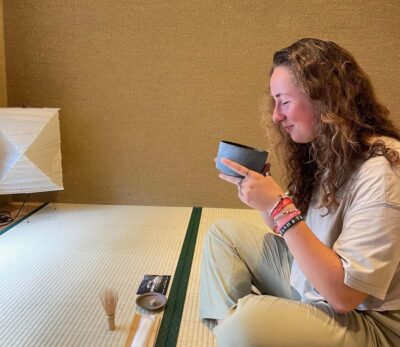 ★ 4.9Tea Ceremony Experience in a Private Tea Room in ShibuyaFrom $30125 reviews
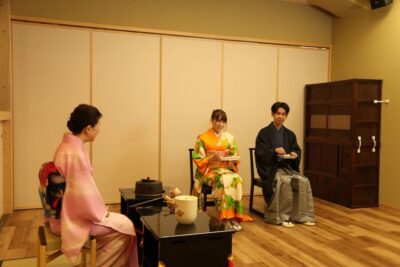 ★ 4.7Practicing Zen with a Japanese Tea CeremonyFrom $63105 reviews
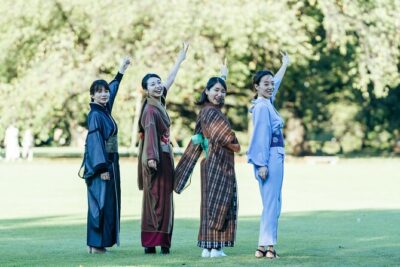 ★ 5.0Matcha Kimono Tea Ceremony in TokyoFrom $59104 reviews
 ★ 4.9Tea ceremony experience in Japanese-style room 60minFrom $4586 reviews
This tour also belongs to