
Review · SHINJUKU TOURS
Tokyo Shinjuku: History, Culture & Hidden Alleys Walking Tour
Shinjuku makes sense on foot. This small-group walking tour pulls you through the neon, the alleys, and the shrine stop with guide-led local context, and it makes the area feel way less overwhelming. One catch: food and drinks are not included, so plan a snack or dinner time around the 5:00 pm start.
I like that you get a clear route and a max group size of 15 travelers, which keeps the pace friendly and questions easy. With a mobile ticket, you spend less time fussing and more time walking the neighborhoods that big bus tours often skip.
Key Highlights Worth Your Time
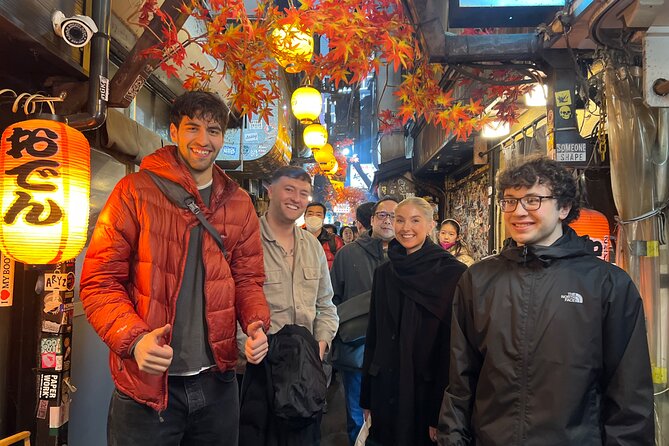
- A 2-hour loop that covers classic Shinjuku landmarks and the in-between lanes
- Small group size (up to 15) for better navigation and better Q&A
- Kabukicho first, so you understand the area before you go deeper
- Omoide Yokocho’s post-war bar alley atmosphere, with admissions included
- Hanazono Shrine as a reset point among the nightlife streets
- Golden Gai’s tiny-bar lanes paired with stories you would miss on your own
Shinjuku on Foot: The Real Goal of This Tour
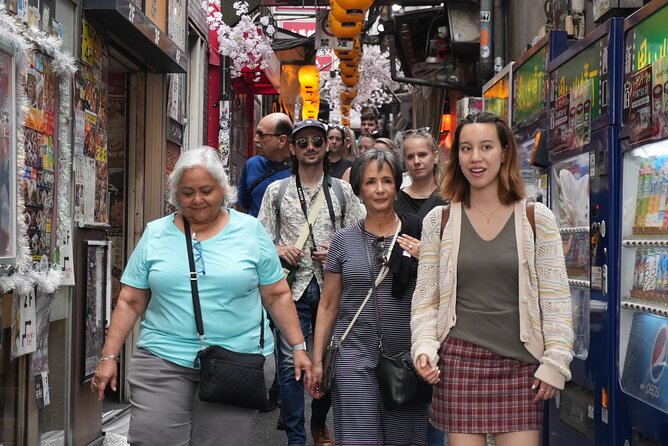
Shinjuku can feel like three different cities stacked on top of each other. You’ve got nightlife, formal Japanese culture, dense street grids, and a lot of signage. This tour’s main value is simple: you get a human route through an area that is otherwise hard to crack quickly.
You’ll walk long enough to feel the neighborhood rhythms, but you’re not stuck for half a day. The total time is about 2 hours, and it starts at 5:00 pm, which is a smart time to see the shift as streets get louder and lights come on.
The “hidden alleys” promise matters too. Even when Shinjuku is crowded, the best bits are often the side lanes and the awkward little turns you’d skip while trying to read your phone map. A guide gives you permission to stop thinking about directions and start paying attention to what you’re actually seeing.
You can also read our reviews of more walking tours in Tokyo


Price and Value Check for $24
At $24 per person for an approximately 2-hour guided walk, this is priced like an efficient evening activity rather than a big-ticket excursion. Since the tour includes the walking portion plus a knowledgeable guide, you’re mostly paying for time, planning, and access to context.
What makes it feel like decent value is that admissions are covered at multiple stops. Omoide Yokocho and Hanazono Shrine are listed with admissions included, and Shinjuku Golden Gai also shows admissions included. Kabukicho itself is free to visit, so you’re not getting nickel-and-dimed just to see the key areas.
You should still budget for your own evening food and drinks, because those are not included. If you know you want yakitori or a late drink, decide where you’ll do it before the tour, or pick a post-tour spot near where you end up.
Start Time, Meeting Point, and How the Tour Flows
This tour starts at 5:00 pm and ends back at the meeting point. The start location is Happy Lemon Keio Shinjuku Shop, 1-chōme-1-4 Nishishinjuku, Shinjuku City, Tokyo 160-0023. It’s also described as being near public transportation, which helps a lot because Shinjuku is served by many lines and you do not want to waste time crossing the wrong streets.
Expect a route that mixes major stops with short walks between them. The itinerary pacing is designed around staying mobile, absorbing stories, and moving at a group-friendly tempo.
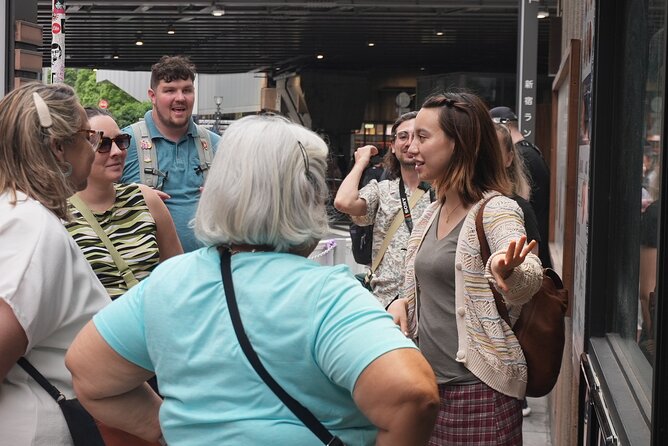
Also note the practical cap: it runs with a maximum of 15 travelers. That size is big enough to feel social, but small enough that you’re not watching a screen while your group drifts ahead. If you’re the type who likes to ask questions like Why is this here, or How did this become famous, that format fits you.
Stop 1: Kabukicho and Why Context Comes First
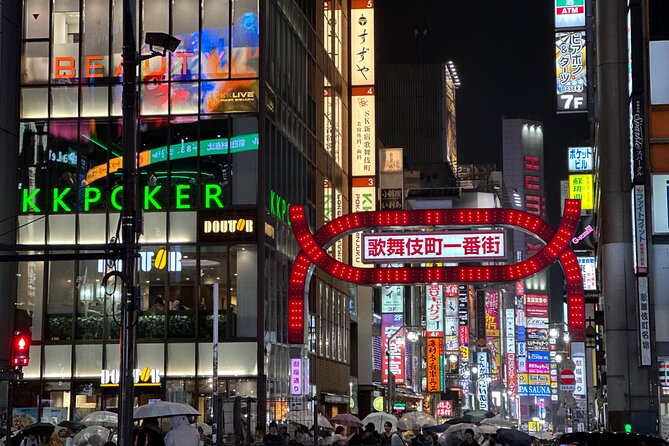
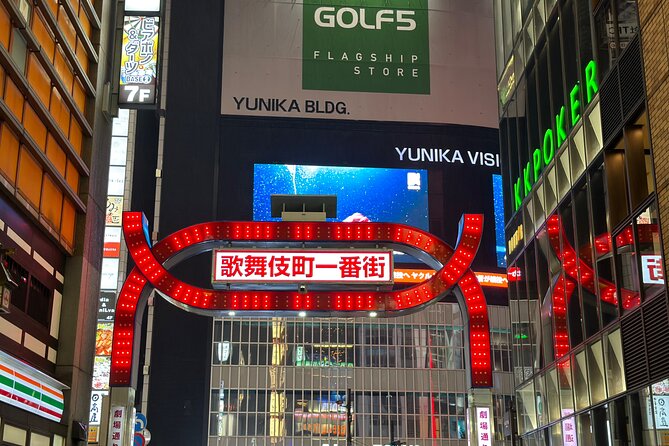
You start in Kabukicho, which is described as Japan’s red light district. Visiting it right away is a smart move because the area can look chaotic if you’re arriving with zero background. With a guide, you get an overview rather than just a visual overload.
This stop is allocated about 30 minutes, and since admission is free, the value here is mostly the commentary. This is where you learn the basic framework for what you’re seeing: why the neighborhood has this reputation, how it fits into Shinjuku’s nightlife identity, and what to pay attention to as you walk onward.
A possible consideration: Kabukicho is adult-oriented in nature. If you’re uncomfortable around nightlife districts or prefer quieter neighborhoods, you might want to mentally prepare for that vibe. The tour is still framed as a cultural walk with explanations, not a party crawl.
Stop 2: Omoide Yokocho, the Post-War Bar Alley
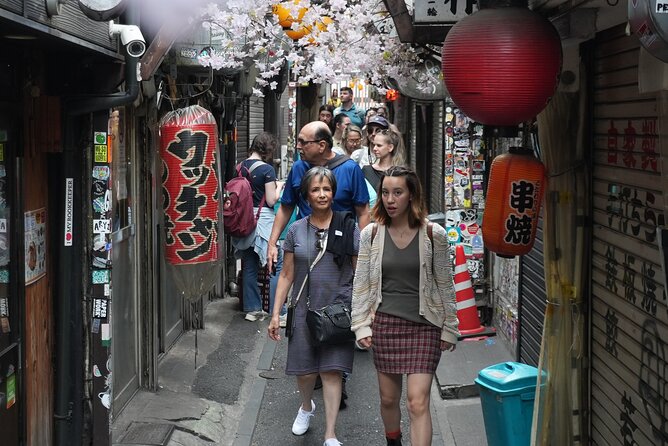
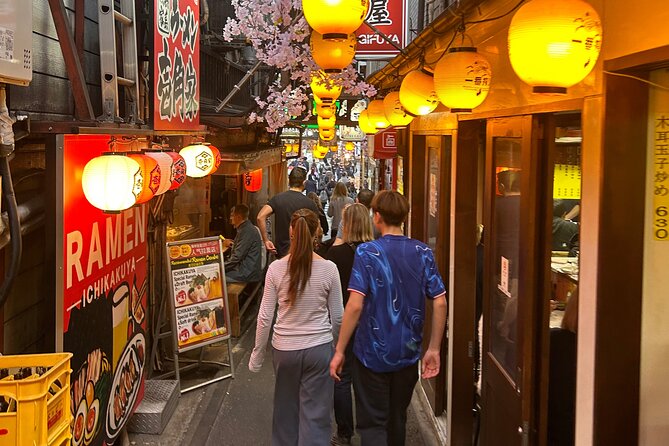
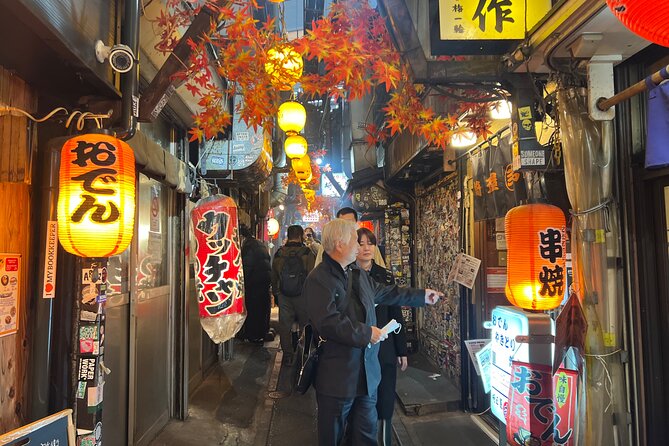
Next up is Omoide Yokocho, also known as piss alley. The nickname sounds like a lot, but the tour framing helps you treat it as a historical neighborhood rather than just a label. It’s described as an alleyway of bars built in the 1950s post-war period.
You get about 30 minutes here, with admissions included. This is one of those places where the physical layout tells part of the story. The narrow lanes and bar-focused design make it feel like a living snapshot of how the area developed.
What you’ll likely appreciate on this stop is the human scale. Instead of broad streets and large venues, you’re in a tight alley environment where people linger and the energy feels direct. Even if you’re not planning to drink during the tour, the atmosphere is part of the experience.
If you want photos, be mindful. This area is small and crowded at times, so the best approach is to keep your camera ready but follow the group and respect the space.
You can also read our reviews of more historical tours in Tokyo

Stop 3: Hanazono Shrine for a Cultural Reset
After nightlife streets, Hanazono Shrine is a reset. This stop is described as one of the oldest shrines in Shinjuku, and it’s positioned as a good introduction to shrines in Japan.
You’ll spend about 30 minutes here, with admissions included. The key value of placing a shrine stop in the middle of Shinjuku is contrast. One moment you’re walking past entertainment zones, the next you’re slowing down for a sacred space, even if you’re only there for a short visit.
This is also a good stop if you want cultural grounding without committing to a full museum or temple-heavy itinerary. Shrines in Japan have patterns you can miss if you’re just walking through quickly. A guide can point you toward the basics so you’re not left guessing what you’re supposed to notice.
Stop 4: Shinjuku Golden Gai and Its Tiny Bar Lanes
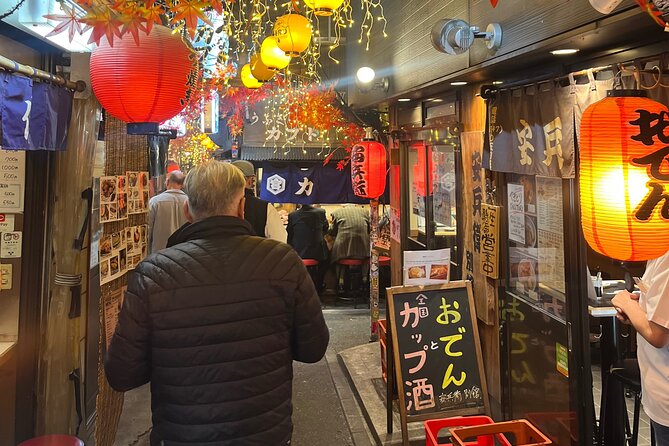
The last major stop is Shinjuku Golden Gai, a street full of small bars, described as featuring some of the oldest bars in Tokyo. It’s allocated about 20 minutes, with admissions included.
Golden Gai works because it’s compact. It’s famous, but it also feels different from the bigger nightlife zones you may expect. The lanes are narrow, the bar spaces are small, and the overall feel is more like a patchwork of micro-neighborhoods than a single venue.
This stop is where the guide commentary often matters most. Without context, you can treat it like a photo spot and move on. With context, you understand why these kinds of bar clusters become known, how they fit into Shinjuku’s after-dark identity, and why people still seek them out.
Practical note: since the time here is shorter, if you care about atmosphere and photos, treat these minutes as precious. Do not try to spend your entire evening doing everything here. The tour is a taste.
What the Guide Adds Beyond the Sights
The tour’s pitch is “put the map away,” and I agree with that philosophy for Shinjuku. The area is vast, and walking without a plan can waste time on the wrong turns. Here, you’re benefiting from guide navigation, so your effort goes into the street-level experience instead of app-level stress.
The best part is how the commentary connects the dots. The stops are not random: Kabukicho gives the nightlife context, Omoide Yokocho adds post-war street history, Hanazono Shrine gives cultural grounding, and Golden Gai wraps it up with a bar-lane identity.
The style of the guide is also a big reason this tour earns strong feedback. In prior departures, guides such as Haydn and Kane were singled out for being social, informative, and happy to answer questions. That matters because you’re not just collecting facts, you’re getting instant answers to the stuff you naturally wonder about when you arrive in an unfamiliar neighborhood.
If you want to plan the rest of your Tokyo trip, this tour is also a useful springboard. Once you understand Shinjuku’s structure a bit, you can make smarter choices about where to go next without constantly backtracking.
Walking Pace, Comfort, and What to Wear
This is a walking tour, and Shinjuku streets can be uneven and busy. Wear comfortable shoes you can stand in and walk in without thinking. If you’re coming straight from dinner, take a second to check your foot comfort before you start.
Because the tour starts at 5:00 pm, it may feel like an early evening rush depending on the day. Bring a light layer if it cools down where you are staying. Tokyo evenings can change fast, and you don’t want to be stuck holding a jacket while your group is moving.
Since food and drinks are not included, I recommend thinking through your timing:
- Eat before you meet, if you want an easy start.
- Or plan a clear stop after the tour so you’re not rushing while hungry.
How to Make This Tour Fit Your Itinerary
This tour is a strong fit for first-time Tokyo visitors because it gives you a fast orientation to one of the city’s most confusing areas. It’s also a good choice if you already did a more traditional area earlier in your trip and want a contrast.
I also think it works well for visitors who want nightlife without feeling completely unmoored. You’re walking through adult-oriented and bar-focused areas, but you’re doing it with explanations and structure, which helps you make sense of what you’re seeing.
If you’re a traveler who hates crowds, consider going in with realistic expectations. Shinjuku is popular, and these neighborhoods are known for being active. The max group size helps, but you can still encounter street traffic and pedestrian density.
Should You Book This Shinjuku Hidden Alleys Walking Tour?
Book it if you want a guided Shinjuku orientation that balances nightlife streets with a shrine stop, and you’d rather spend two hours walking with a route than burning hours figuring out your own plan. At $24, with admissions included for key stops, it’s an efficient value for what you get.
Don’t book it if you want a quiet cultural afternoon only, because Kabukicho and the bar alleys are part of the core experience. Also skip it if you need an all-in price that covers food and drinks, since you’ll be responsible for your own meals and snacks.
If you go, treat the tour like a “set your bearings” evening. After you’re done, you’ll have a much easier time choosing where to wander next in Shinjuku.
FAQ
How long is the Tokyo Shinjuku: History, Culture & Hidden Alleys Walking Tour?
The tour lasts about 2 hours.
Where does the tour start and where does it end?
It starts at Happy Lemon Keio Shinjuku Shop, 1-chōme-1-4 Nishishinjuku, Shinjuku City and ends back at the meeting point.
What is the price per person?
The price is $24.00 per person.
What is included in the tour price?
The tour includes a walking tour of Shinjuku and a knowledge guide. Admissions are listed as included for Omoide Yokocho, Hanazono Shrine, and Shinjuku Golden Gai.
Are food and drinks included?
No. Food and drinks are not included.
Is the tour refundable if I cancel?
The tour offers free cancellation, and you can cancel up to 24 hours in advance for a full refund.
More Walking Tours in Tokyo
More Tours in Tokyo






More Tour Reviews in Tokyo


Not for you? Here's more nearby things to do in Tokyo we have reviewed












Shinjuku Tours, side by side.
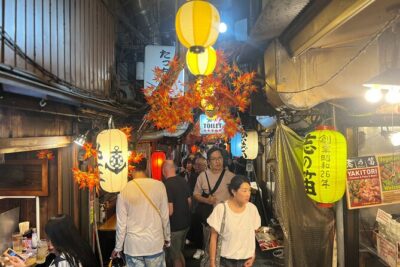 ★ 5.0Shinjuku Food Tour (13 Dishes at 4 Local Eateries)From $866,603 reviews
 ★ 5.0Tokyo Bar Hopping Tour in Shinjuku (All-You-Can-Drink + Dinner)From $1063,587 reviews
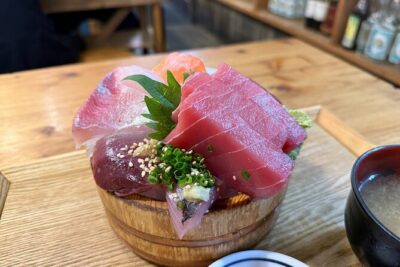 ★ 4.9Shinjuku Food Tour (15 Dishes and 4 Eateries)From $852,033 reviews
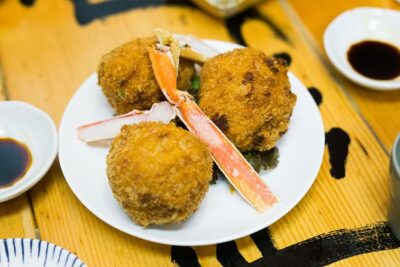 ★ 5.0Best of Shinjuku: Izakaya Food Tour (4 Stops, 14+ Tastings)From $921,863 reviews
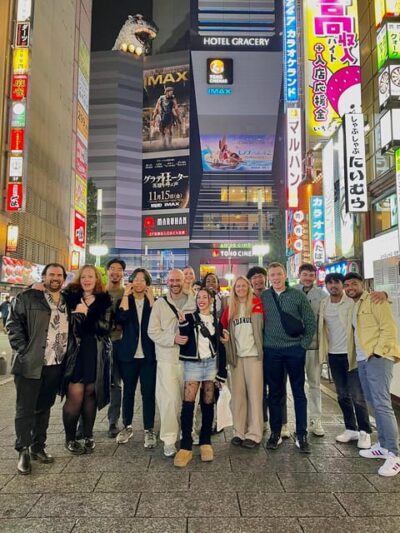 ★ 4.9Shinjuku Local Bar and Izakaya Guided Walking TourFrom $341,794 reviews
 ★ 5.0Tokyo Shinjuku Chopsticks Making ClassFrom $201,763 reviews
 ★ 5.0Tokyo Shinjuku Sumo Show & Experience with PhotoFrom $791,750 reviews
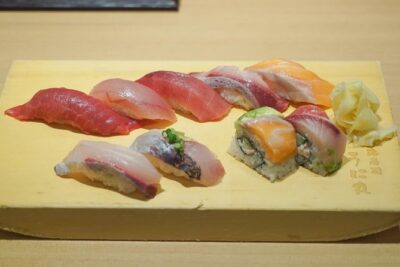 ★ 5.0Tokyo Night Foodie Tour in Shinjuku – Seasonal Sushi, Wagyu BeefFrom $1111,161 reviews
This tour also belongs to