
Review · TSUKIJI MARKET TOURS
Tsukiji Fish Market Street Food & Culture Walking Tour
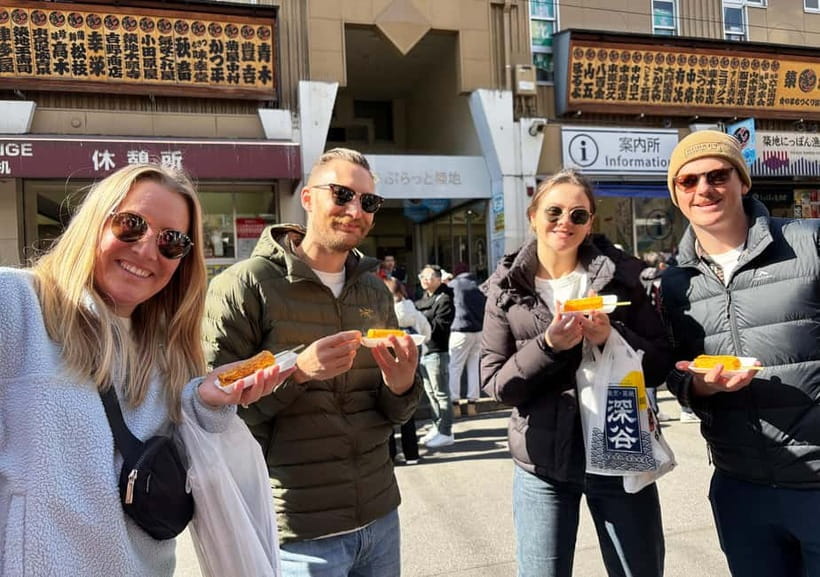
Fish fumes, smiles, and story time in one walk. I like how this Tsukiji Outer Market tour mixes street food sampling with culture context, so you do not just eat, you understand what you are looking at. The walk stays relaxed with frequent stops, plus built-in photo moments for the people in your group.
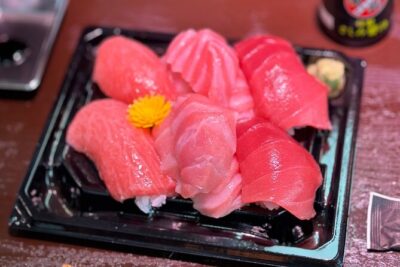
Two things I especially like: first, the guide-led flow means you skip the guesswork of where to eat and what to try in a crowded market. Second, you get a mix of flavors, including juicy savory bites like fatty tuna nigiri and grilled scallops, plus sweet treats, without feeling rushed.
One drawback to plan for: the market is busy, so you will want to keep an eye on personal belongings and go in with comfortable shoes. If you want zero walking and zero crowds, this is probably not your style.
Key things to notice before you go
- 90 minutes that prioritize short walking bursts, frequent stops, and rest time
- English-speaking guide who explains what you are eating and the market’s specialties
- Tastings across savory and sweet, including items like tuna nigiri and grilled scallops
- Tsukiji Hongwanji Temple admission included, adding culture beyond food
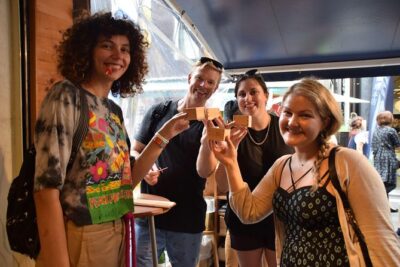
- Edited photos included, handy when market chaos makes perfect shots hard
- You may experience a very small group or even private feel if your date has low turnout
Walking into Tsukiji’s Outer Market scene, with a guide in your ear
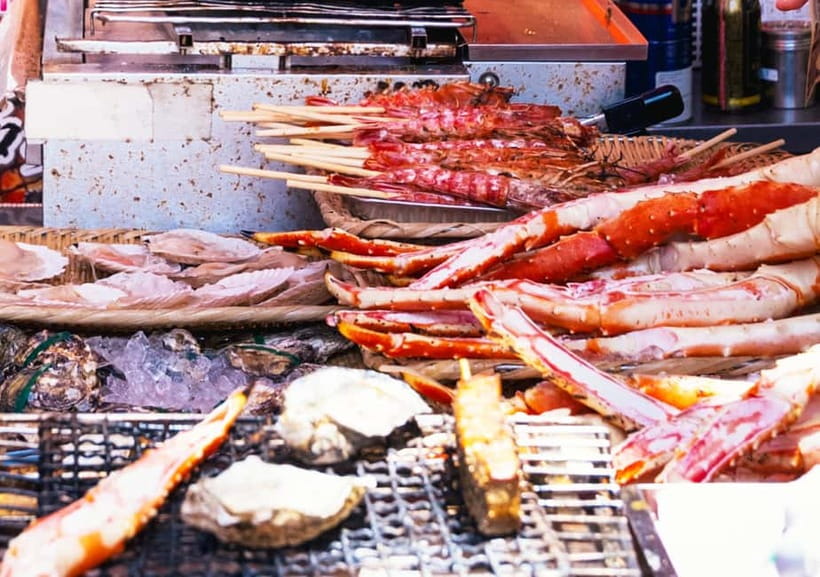
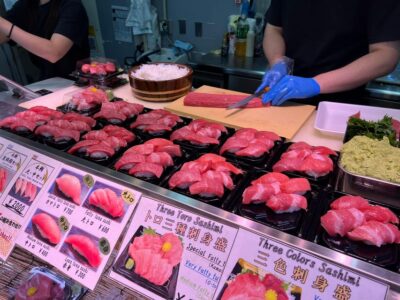
Tsukiji is the kind of place where your senses move faster than your brain. That is exactly why I like a guided format here. You start in the Outer Market area, then you are pointed toward stalls and counters that match what you are craving, while the guide explains how to think like a market regular.
A good tour does not just hand you food. It helps you notice details you would otherwise miss: what makes one cut or one preparation stand out, why certain vendors attract lines, and what different stalls tend to specialize in. In this case, the tour stays conversational and question-friendly, so you can ask about ingredients, preparation, or how the market works day to day.
There is also a practical rhythm built in. This is not a sprint. You get frequent stops, plus enough time to pause, eat, and breathe. For families, it keeps energy from crashing, and for first-timers it prevents the typical overwhelmed feeling.
You can also read our reviews of more walking tours in Tokyo


The easy logistics that keep this tour from feeling like homework
You meet at a Family Mart, which is a simple, easy-to-find reference point compared to vague street corners. From there, the guide handles the route, so you do not need to wrestle with maps while you are trying to taste things and watch where you are going.
The tour is also designed to be low stress in the moment. No long waiting around at fixed locations, and you are not stuck with a strict only-one-bite-per-stop plan. Instead, you get a relaxed walk with frequent photo opportunities, and you can slow down when the crowd thickens.
One practical note: transportation is not included. You will want to plan how you are getting to the meeting point so you arrive without rushing. Also, bring a camera, because the market is visually intense and the photo breaks are part of the experience, not an afterthought.
How the tastings actually work, and why you should plan to eat lighter before
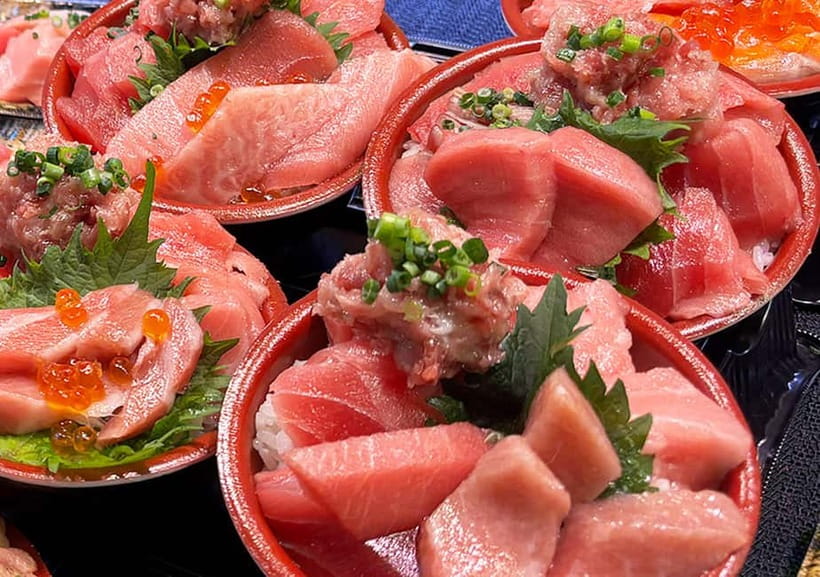
The tour is built around sampling a variety of foods rather than one single highlight. That matters because Tsukiji is not one flavor. It is salty, smoky, buttery, sweet, and sometimes all in the same stretch of lanes.
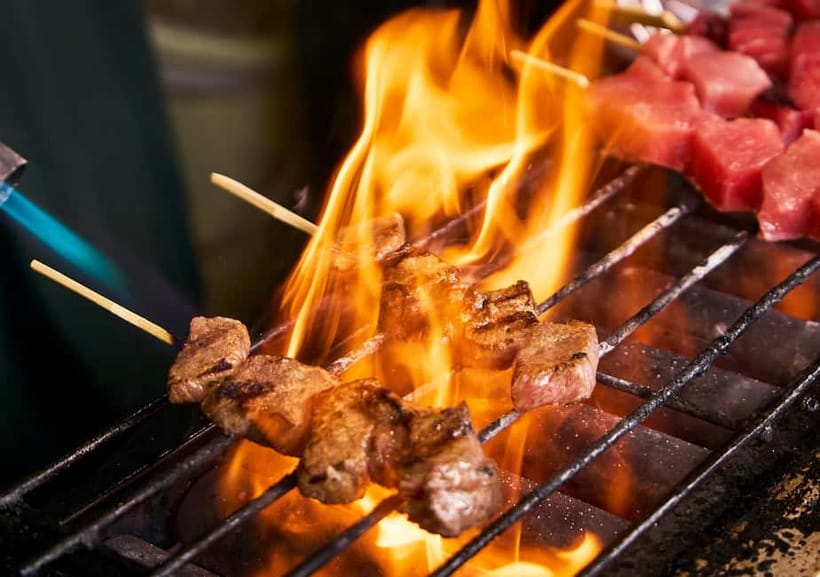
You can expect a mix of items that reflect different parts of the market culture, including savory seafood and meat-style bites. People highlight things like fatty tuna nigiri and grilled scallops, which are exactly the kind of items that show off simple ingredients done well. The tour also includes sweet treats, which keeps the experience from turning into all savory all the time.
Here is what that means for your personal strategy: if you show up starving, you might feel stuffed too fast. If you show up with a small snack already in your stomach, you are more likely to enjoy each stop without rushing. Either way, you will likely want water, but only the tastings are included, so you should keep extra drinks as a personal add-on.
Tsukiji Hongwanji Temple stop, and how it changes the whole tone
This tour includes admission to Tsukiji Hongwanji Temple. That is a smart choice because it gives you a reset between the food noise and the market history.
Even without turning it into a lecture, visiting a temple on a food tour does something useful: it reminds you that markets are not just about commerce. They are part of community life, traditions, and daily routines that existed long before street food became a tourist plan.
The temple stop also breaks up the pacing. You get a moment to step away, take a breath, and re-center. That helps the rest of the walk land better, especially if you are traveling with kids or anyone who gets tired in crowded places.
Tsukiji Jogai Market, where you see the market’s everyday character
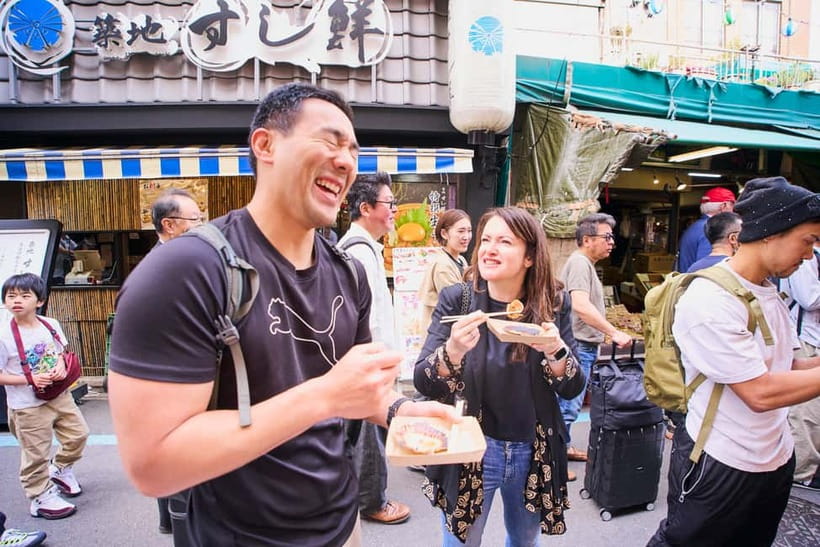
The tour includes admission to Tsukiji Jogai Market, and I like that it is not only about the most famous front-and-center stalls. The Jogai area tends to feel more like the market’s working personality, which is what you want if you are chasing authentic atmosphere, not only photo-friendly displays.
This part of the tour fits well with the guide’s role. A local can help you understand what you are seeing without making you feel like you are failing a quiz. You get context about what vendors do best, and the tour pacing gives you time to notice preparation methods, textures, and how vendors interact with customers.
One more benefit: shopping streets and food lanes change fast depending on the day. By having a planned tour structure, you avoid missing key areas simply because you followed the crowd in the wrong direction.
You can also read our reviews of more food & drink experiences in Tokyo



What I’d focus on tasting first, based on what you’re likely to encounter
If you like a “try the best versions of different styles” approach, this tour’s tastings make sense. People specifically call out items like fatty tuna nigiri and grilled scallops, which are both excellent at showing quality without needing complicated explanation.
Here’s a simple way to prioritize while you are walking:
- Start with the items that need the least waiting, so you do not lose momentum when crowds shift.
- Take a moment to taste slowly once, then switch to faster bites if you are starting to fill up.
- Leave room for a sweet stop, even if savory is your main goal. The contrast tends to make the later bites more enjoyable.
If you have seafood preferences or restrictions, you will want to communicate that to the guide early. The tour is guide-led, and the guide’s job includes making sure stops work for your group.
Photo moments and edited photos, for when the market gets too hectic
Tsukiji is famous for its look. Colorful stalls, busy counters, and rapid-fire activity make it easy to want photos. The tour includes photo breaks, and it also includes edited photos. That second part is more valuable than it sounds, because market crowds can swallow a perfect shot fast.
Even if you are an experienced photographer, edited photos can save you time. Instead of selecting, cropping, and trying to fix motion blur while you are hungry, you get a finished set. It also helps with family photos, where at least one person always ends up turning at the wrong moment.
Bring your camera anyway. Then treat the edited photos as your safety net.
Price and value: what $38 buys in real terms
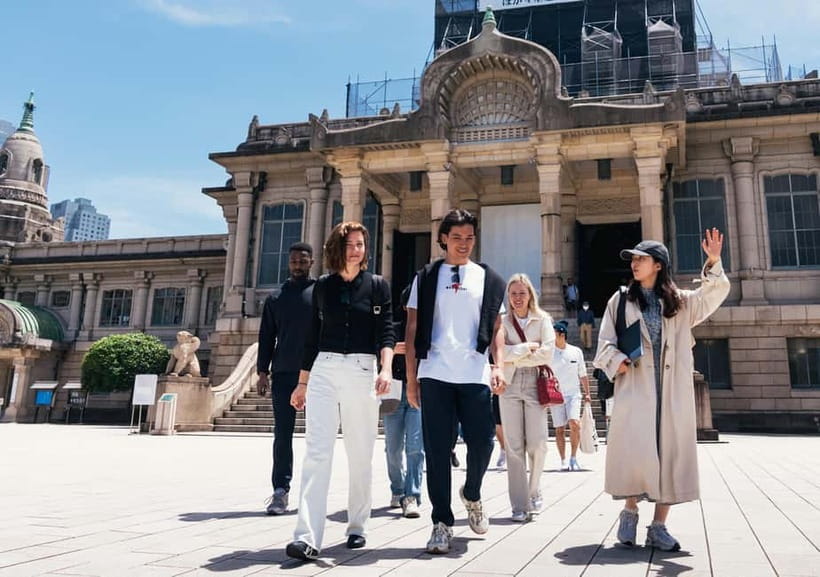
At $38 per person for 90 minutes, this tour is positioned as a food-and-culture experience rather than a budget-only snack crawl. The best way to judge value here is by looking at what is included.
You get:
- A live English guide
- Edited photos
- Admission for Tsukiji Hongwanji Temple
- Admission for Tsukiji
- Admission for Tsukiji Jogai Market
That matters because admissions can eat up your day if you do not plan ahead, and the guide does more than translate. A good guide helps you make sense of the market in real time, and that can change what you enjoy. If you arrive without a plan, you might walk past the right stalls or order something that does not show off what Tsukiji is good at.
So the price feels fair if you want structure and context. It might feel steep if you prefer to wander on your own and pick snacks purely by sight. But if you want a guided route, multiple tastings, and built-in pacing, the cost lines up with the convenience.
Who this Tsukiji street food tour fits best
This is a strong match for:
- Solo travelers who want a local perspective without figuring things out alone
- Families who need a walk that allows stops and rest
- First-timers in Tsukiji who want market culture, not just random bites
- Food lovers who like variety across savory and sweet
It is also worth considering if you care about conversation. Guides here are described as energetic and focused on answering questions, including how food is prepared and what makes certain items special. That kind of interaction makes the experience feel less like a list and more like a story you can taste.
If you are extremely sensitive to crowds or you hate walking in tight lanes, you will need to weigh that drawback against the tour’s relaxed pacing.
Should you book the Tsukiji Fish Market Street Food and Culture Walking Tour?
I would book it if you want an easy, guided way to taste the Outer Market and still understand the culture behind what you are eating. The combination of English guidance, frequent stops, temple admission, and edited photos is a practical package for people who want maximum enjoyment per hour.
I would skip it if you plan to do your own food wandering and you only want one or two bites. In that case, a self-guided approach might be cheaper and more flexible. But if you want a guided route that reduces guesswork, helps you eat a variety of foods, and gives you time for photos and breaks, this is a smart use of 90 minutes in Tsukiji.
FAQ
How long is the Tsukiji Fish Market Street Food and Culture Walking Tour?
The tour lasts 90 minutes.
Where do I meet for the tour?
You meet at Family Mart.
Is the tour guided in English?
Yes, the tour has a live guide who speaks English.
What is included in the price?
The price includes the guiding fee, edited photos, and entry or admission to Tsukiji Hongwanji Temple, Tsukiji, and Tsukiji Jogai Market.
What is not included?
Transportation to and from the market is not included, and personal expenses are not included. Additional food and drinks beyond the tastings are also not included.
What kind of food do you taste during the tour?
You taste a variety of foods, including savory items such as juicy meats and seafood, plus sweet treats.
Do I need to walk a lot?
It involves walking, but it is described as easy and relaxed with frequent stops and time to rest when you need it.
What is the cancellation policy?
You can cancel up to 24 hours in advance for a full refund.
More Walking Tours in Tokyo
More Tours in Tokyo





More Tour Reviews in Tokyo


Not for you? Here's more nearby things to do in Tokyo we have reviewed












Tsukiji Market Tours, side by side.
 ★ 5.0Tokyo Tsukiji Fish Market Food and Culture Walking TourFrom $993,184 reviews
 ★ 5.0Tsukiji Fish Market Food and Walking tourFrom $301,724 reviews
 ★ 4.9Tsukiji Fish Market Guided Walking TourFrom $221,397 reviews
 ★ 5.0Tokyo Sushi Making Class in Tsukiji with Professional ChefFrom $491,177 reviews
 ★ 5.0Tsukiji Fish Market Guided Tour and Sushi Making with Pro ChefFrom $104775 reviews
★ 4.7Tsukiji Fish Market Food and Culture Walking TourFrom $96757 reviews
★ 5.0Tsukiji Fish Market Guided Tour and Sushi Making with Pro ChefFrom $104775 reviews
★ 4.7Tsukiji Fish Market Food and Culture Walking TourFrom $96757 reviews
 ★ 5.0Tsukiji Fish Market: Street Food & Culture Walking TourFrom $33669 reviews
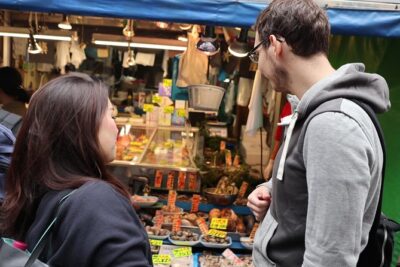 ★ 5.0Tsukiji Fish Market Small-Group Food Walking TourFrom $87621 reviews
This tour also belongs to