
Review · TSUKIJI MARKET TOURS
Tsukiji: Outer Market Walking Tour & Sake Tasting Experience
Tsukiji is where your senses get a workout. This 3-hour tour pairs a real temple stop for prayer etiquette with an expert-led walk through Tsukiji Outer Market, then finishes in a private salon for unlimited sake tasting with a sommelier and snacks. I love how the day connects tradition to food, and how the guide helps you order and snack like you belong.
Two more things I really like: you get a guided path through a huge market, and the sake session is built around tasting differences, not just drinking. The only real drawback to plan around is that the Outer Market portion can feel very busy, and you are on your feet most of the time, so comfortable shoes matter.
Key highlights you will care about
- Hongwanji Temple prayer practice before you hit the market
- Tsukiji Outer Market walking tour with expert recommendations on what to try
- Unlimited sake tasting with 50 to 60 options on offer
- Sommelier-led explanations of each sake’s story, brewery, and flavor direction
- Temperature-based tasting so you taste how sake changes
- Family-friendly touches with soft drinks, tea, and snacks for kids
Hongwanji Temple: learning the rhythm of a local prayer
Most food tours start with food. This one starts with how people show up, and it works. Meet your guide in front of the main entrance gate of Tsukiji Hongwanji Temple, then step in to learn how to pray in the local style.
You do not just watch. You learn the basic etiquette first, so when you follow along, it feels respectful and natural. It is a smart warm-up to Tokyo life in general: before you ask the market for flavor, you learn the etiquette that shapes how people move through shared public spaces.
Also, this opening is a good reset for your group. When the market crowds hit later, you are ready to pay attention. If you prefer clear structure to wandering, this temple start will feel like a gift.
Practical note: the tour runs rain or shine, so the temple portion is also where you get your bearings fast.
You can also read our reviews of more walking tours in Tokyo


Tsukiji Outer Market: how to snack with confidence (not guesswork)
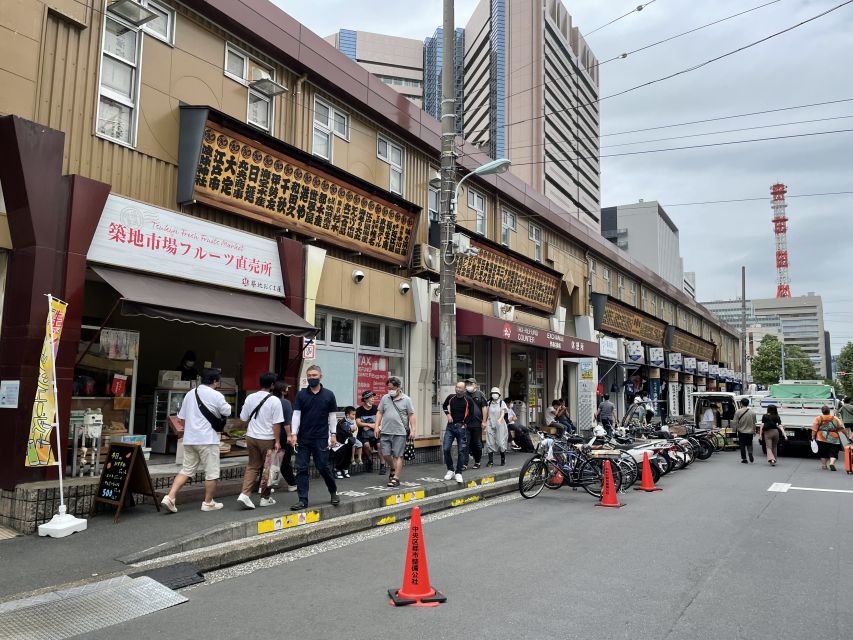
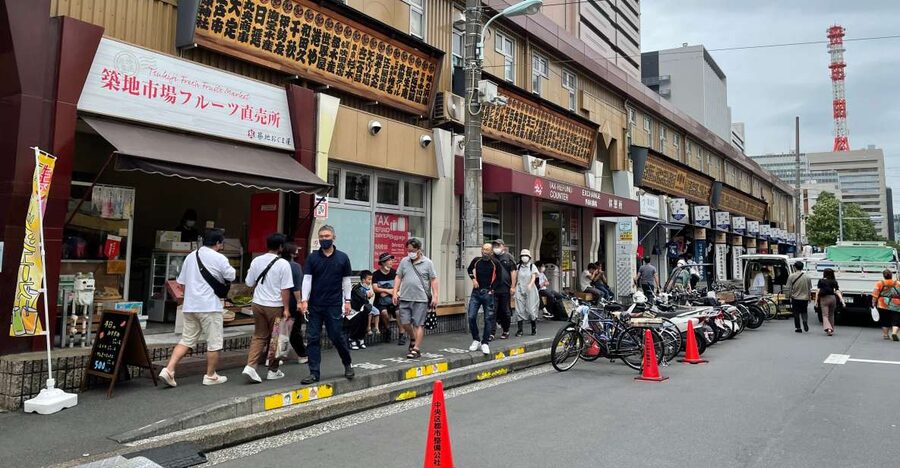
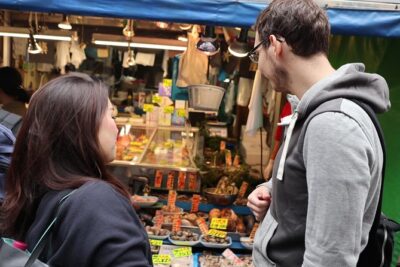
After the temple, you head straight into Tsukiji Outer Market. This is where your guide becomes your secret weapon, because the market is big and visually loud, and it is easy to miss the best spots if you are just following signage.
During the walk, you explore stores with guidance from your local food expert. You choose what to try, from ready-to-eat bites to market specialties, and you can also buy local produce if you want something you can take with you.
Here is what makes this part valuable for you: it is not only about sampling. It is about learning how locals think about food in this neighborhood. Your guide helps you pick items that match what is available right then, and that means less wasted time and fewer “why did I buy this” moments.
Keep expectations realistic. The Outer Market can get crowded, and that is not the guide’s fault. Your advantage is that you are not stuck figuring things out alone. You have a plan, plus a person who can point you to options quickly.
One more planning detail: the Outer Market is closed on Sundays and national holidays, and it may also be closed on Wednesdays for some stores. If your dates land on a closure day, double-check before you book, because this tour’s market section depends on it.
The food you buy and why it matters
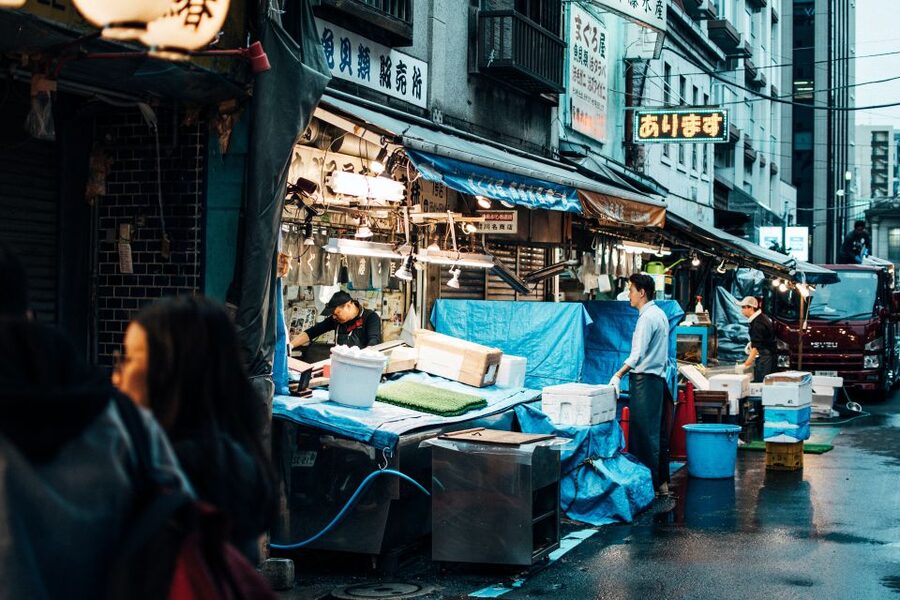
One thing I like about this tour format is that it gives you room to choose your own snack level. You are not forced into a single set menu. If you want more seafood-forward bites, you can lean that direction. If you are craving sweets or quick nibbles, you can do that too.
Just remember what is included. The tour includes the walking tour and snacks during the sake tasting, but food during the market part is not included in the price. So budget for market bites if you want to eat your way through Tsukiji.
If you are traveling with kids, this flexible setup helps. Several guides on similar tours are good at pacing, and in this case kids get soft drinks and tea during the tasting, plus snacks. That makes it easier to keep everyone happy without turning the afternoon into a strict schedule.
Tsukiji sake salon: unlimited tastings, explained like a class
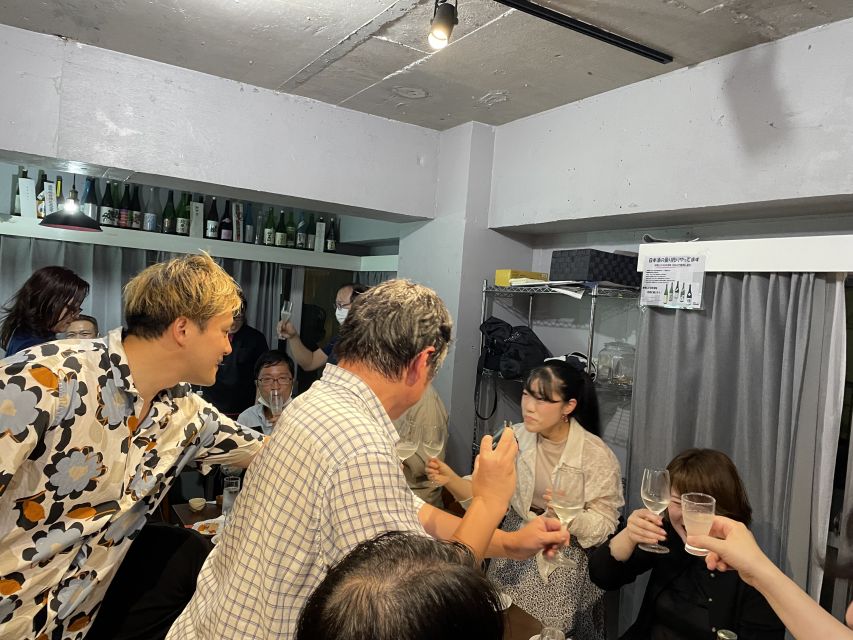
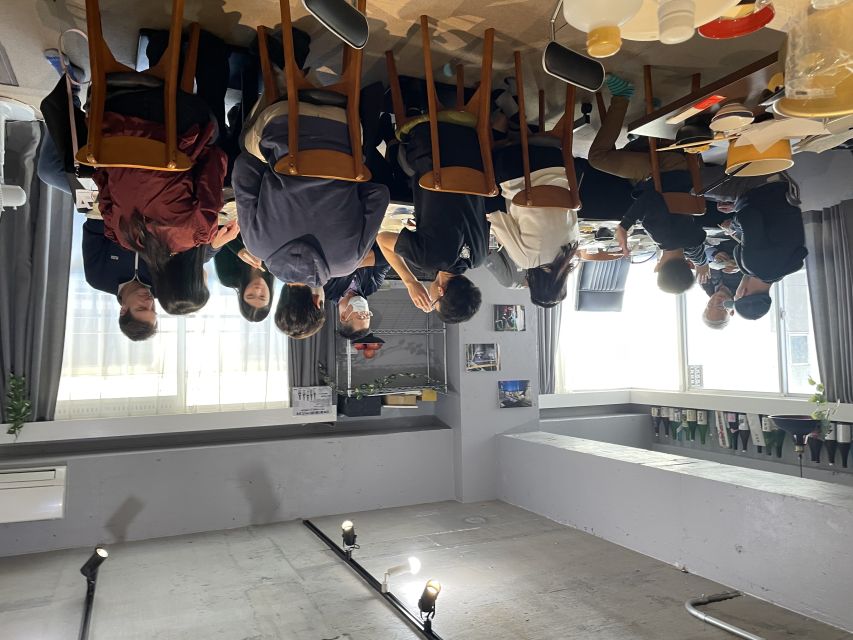
Then comes the reason many people book: the sake tasting in a local salon, just a few minutes from either Tsukiji station or Shintomicho station. You move from the market into a more controlled setting, and that shift is part of the pleasure.
The tasting is led by a sommelier, and it includes unlimited samples with over 50 different kinds on offer, typically described as 50 to 60. That is a lot of bottles, but it does not feel random because your expert gives context for each one.
What you get with the guidance is the “how to taste” part. You learn about the brewery, the history and story behind each bottle, and what to expect from its flavor profile. You also learn how sake is made, plus what to look for as you taste.
This matters because sake can be intimidating at first. In the U.S., most people think they know what sake tastes like. Here, you learn that the range can be huge, and that sweetness, dryness, aroma, and body all move around depending on the bottle.
Tasting at different temperatures: why it changes everything
A standout feature is that you taste the same brewed beverage at different temperatures. That is not a gimmick. Temperature shifts aroma and flavor perception, and it helps you understand why a bottle you might think you dislike can become enjoyable when served differently.
In plain terms, you are not only tasting lots of sakes. You are learning how to control one of the biggest variables that sake makers and sellers use.
And because the salon offers snacks during the session, you are not tasting on an empty stomach. Snacks also help you reset your palate between samples, so you can keep making comparisons.
You can also read our reviews of more food & drink experiences in Tokyo




What you can expect during the 3-hour flow
The total experience is about 3 hours, and it is designed as an afternoon activity. The flow is simple:
- Meet at Hongwanji Temple and learn prayer etiquette.
- Walk Tsukiji Outer Market with your guide, sampling and choosing items as you like.
- Head to the nearby salon for unlimited sake tastings, sommelier explanations, and snacks.
From a pacing perspective, that is a good blend of movement and sitting. You are active during the market portion, then you get a calmer environment for the tasting where you can pay attention to what you are learning.
You also get the benefit of ending close to major stations. When you finish in the salon, it is easy to continue your Tokyo afternoon or evening without hunting for a route back.
Guides that make the difference: names you may recognize
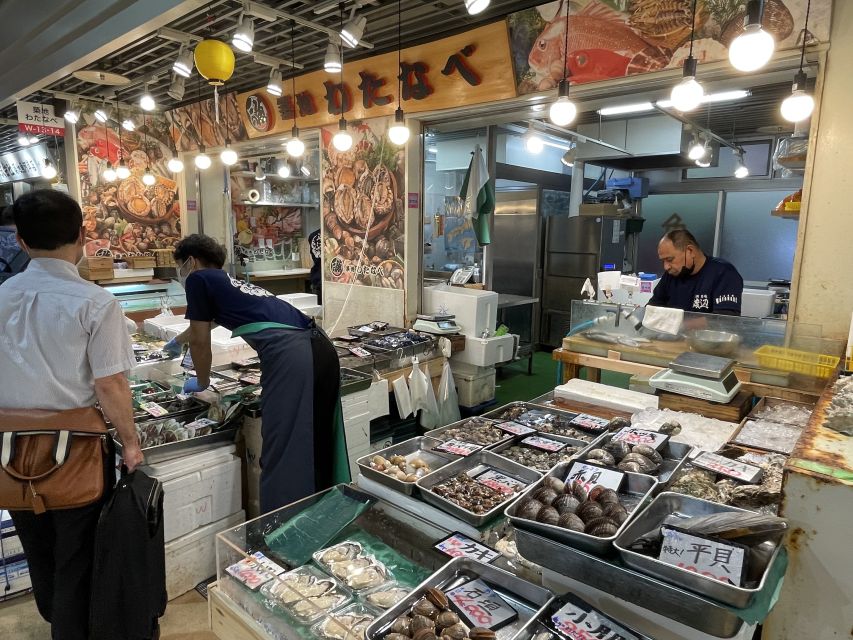
The quality of the tour depends on the guide, and the standout theme from the experience is how warm, adaptable, and instructive the guides are. People have highlighted guides such as Kumi, Kyoko, and Yuki, and even mention helpers like Hatsumi and guides associated with names such as Sarah and Kyoto.
What you should take from that for your booking decision is simple: this is not a scripted “follow the leader” walk. The guide actively helps you choose what to try and keeps the experience moving in a way that fits different interests. If you want explanations without lectures, this format is built for that.
Price and value: $70 for what you actually get
At $70 per person for about 3 hours, this is not a “cheap snack tour.” But it also is not just a market walk.
Your money primarily buys three things:
- Guided market time in Tsukiji Outer Market, where you get help choosing what to eat and where to look.
- A temple introduction that adds cultural depth and structure.
- The big value item, unlimited sake tasting with a sommelier, snacks, and instruction across many bottles.
Food is not included beyond the snacks during the tasting. So if you eat a lot in the market, you will spend extra. Still, you are paying for expert access and tasting volume, not for a pre-set banquet.
If you are a sake beginner, this is where the value feels strongest. You get guidance that can turn future purchases into smarter picks. If you already know sake deeply, you will still benefit from the temperature tasting and the sommelier explanations, because you are tasting wide selection guided by someone who can place each bottle in context.
Who should book, and who should skip
This tour fits best if you:
- Want a first-time-friendly introduction to Tsukiji food culture and sake
- Like learning through tasting, not only sightseeing photos
- Prefer guided structure over aimless wandering in a large market
- Are traveling with kids and want soft drinks, tea, and snacks included for them during the tasting portion
You might skip it if:
- You are pregnant (listed as not suitable)
- You need wheelchair access (listed as not suitable)
- You want a very low-alcohol, short experience, because it is explicitly built around unlimited tastings
Also, if your travel dates are Sundays or national holidays, plan carefully because the Outer Market closes then. The tour is designed around the market being open.
Practical tips before you go
A few small things can make your afternoon smoother:
- Wear comfortable shoes. You will be walking.
- Bring a passport or ID card, and it is okay to use a copy.
- Expect rain or shine. Bring a light layer or small umbrella if that is your style.
- If you want to buy market snacks to keep eating later, factor that into your budget since food is not included.
- Go with curiosity. The tasting portion works best when you taste broadly, not only what sounds familiar.
Should you book this Tsukiji Outer Market and Sake Tour?
If you want an afternoon that mixes culture, street-level food, and a serious sake education, I think this is a strong pick. The standout reasons are the structure, the sommelier-led unlimited tastings across many styles, and the way the temple start gives you a grounded way to experience the neighborhood.
I would book it if sake interests you at all, especially if you are new to it. The $70 price makes sense when you compare what you get: a guided market walk plus a long tasting session with snacks and explanations, not just a short sip-and-walk.
I would think twice only if your dates hit a market closure day or if you cannot be on your feet for a few hours. If you can do those two things, this tour is one of the more memorable “food plus learning” afternoons you can plan in Tokyo.
FAQ
Where do I meet the guide?
Meet your guide in front of the main entrance gate of Tsukiji Hongwanji Temple.
How long is the tour?
The experience lasts about 3 hours.
What is included in the price?
The tour includes the walking tour, unlimited sake tasting, and snacks.
Is food included during the market portion?
No. Food is not included. Snacks during the tasting session are included, but you should expect to pay for items you buy at the market.
What should I bring with me?
Bring comfortable shoes and a passport or ID card. A copy is accepted.
Is the Outer Market open every day?
No. The Outer Market is closed on Sundays and national holidays, and some stores may be closed on Wednesdays. The tour happens rain or shine.
More Walking Tours in Tokyo
More Tours in Tokyo





More Tour Reviews in Tokyo


Not for you? Here's more nearby things to do in Tokyo we have reviewed












Tsukiji Market Tours, side by side.
 ★ 5.0Tokyo Tsukiji Fish Market Food and Culture Walking TourFrom $993,184 reviews
 ★ 5.0Tsukiji Fish Market Food and Walking tourFrom $301,724 reviews
 ★ 4.9Tsukiji Fish Market Guided Walking TourFrom $221,397 reviews
 ★ 5.0Tokyo Sushi Making Class in Tsukiji with Professional ChefFrom $491,177 reviews
 ★ 5.0Tsukiji Fish Market Guided Tour and Sushi Making with Pro ChefFrom $104775 reviews
★ 4.7Tsukiji Fish Market Food and Culture Walking TourFrom $96757 reviews
★ 5.0Tsukiji Fish Market Guided Tour and Sushi Making with Pro ChefFrom $104775 reviews
★ 4.7Tsukiji Fish Market Food and Culture Walking TourFrom $96757 reviews
 ★ 5.0Tsukiji Fish Market: Street Food & Culture Walking TourFrom $33669 reviews
 ★ 5.0Tsukiji Fish Market Small-Group Food Walking TourFrom $87621 reviews