
Review · TOKYO TEA & SAKE EXPERIENCES
Tokyo: 7 Kinds of Sake Tasting with Japanese Food Pairings
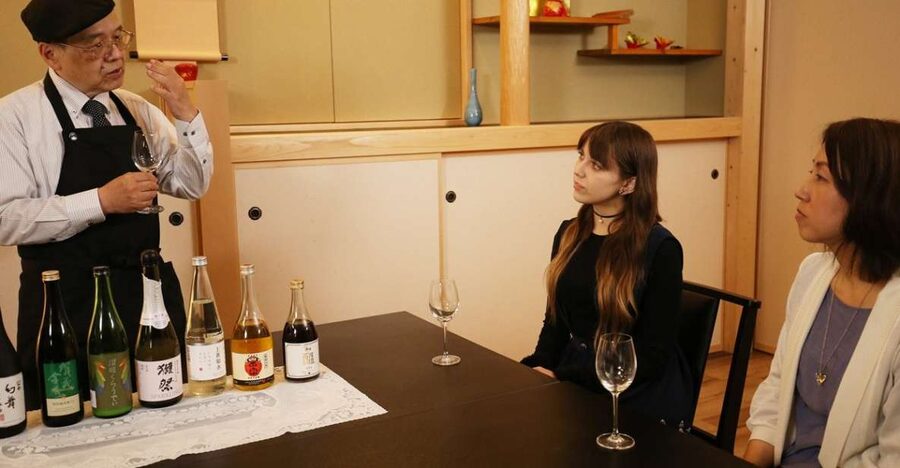
Seven sips, serious flavor education. In a single 75-minute session in Minato City, I like that you try seven distinct kinds of sake alongside purposeful food pairings, all explained by an accredited instructor. My one watch-out: the meeting spot can be confusing at first because this is inside the Kikai Shinko Kaikan building.
This tasting also has a cultural backbone. You learn why sake matters in Japanese religion and tradition, not just how it tastes, and the hosts can bring it to life with friendly, human energy, including guides like Tanaka-san and Taka-san.
The group stays small, up to 10 people, and it is taught in English. One more consideration: it is not suitable for people under 20, so plan accordingly if you are traveling with younger family.
Key things I’d circle in this Tokyo sake tasting
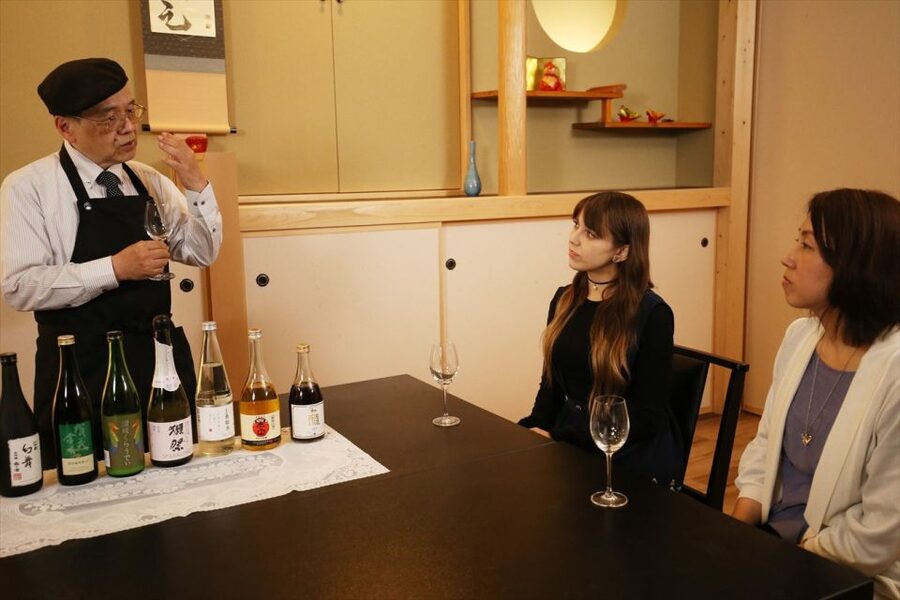
- Seven sake varieties, ranging from sparkling to sweet and ending with dessert-style sake
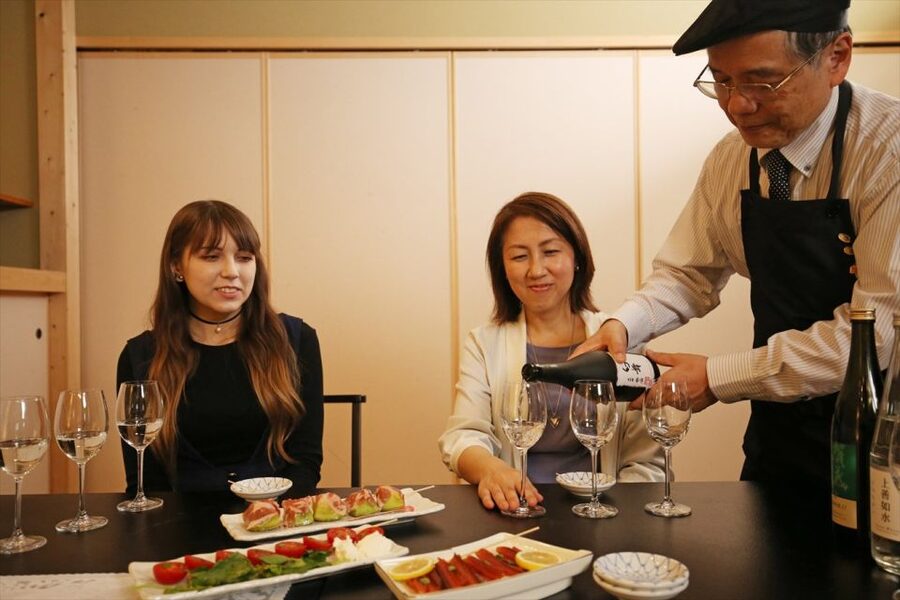
- Food pairings that are part of the lesson, with Japanese and Western dishes across the meal
- An English-speaking, nationally accredited instructor, with history and production in plain language
- Small-group pacing, limited to 10 participants for more Q and A
- Near Tokyo Tower in Minato City, at the Kikai Shinko Kaikan building
Minato City, Tokyo Tower, and the one place you must find
This is a Tokyo sake tasting that starts where you can actually orient yourself: the Kikai Shinko Kaikan building, right by Tokyo Tower. The meeting point is the main entrance on the 1st floor. If you cannot find the instructor, there’s a backup location: head to Room B109 on the B1 floor inside the same building.
Here’s why that matters. When a tour is 75 minutes long, getting delayed at the start is annoying. A few people did exactly that, circled a bit, and had to call for help. So I’d treat the meeting location like part of the experience: arrive a few minutes early, step inside, and look for staff direction right away.
Also, the setting is practical. One review described it as a demo kitchen and lunch-style room inside the building. That’s a good sign if you’re hoping for a hands-on vibe where you can see the meal and taste with attention.
You can also read our reviews of more food & drink experiences in Tokyo


What happens during the 75 minutes (and how the format helps you learn)
The structure here is built for focus. You are not just drinking. You are tasting seven different sakes in a sequence that highlights differences, then pairing each one with specific bites. That pacing is ideal because your palate resets between pours, and you can actually notice why one sake feels sweeter, drier, or more savory in context.
You can think of it as a guided comparison, with food as the “control.” When you taste a sake by itself, you might miss the nuance. When you taste it with the right bite, the balance snaps into view. That’s exactly what this format is aiming for.
In terms of learning, the instructor explains:
- A bit of history of sake
- How sake is made
- How to understand different sake varieties
- How each one pairs with the course you receive
Even if you don’t know anything going in, the flow stays simple. Sample, taste, compare, pair, repeat, then finish strong with dessert-style sake.
The seven pours: how to taste like the lesson is working
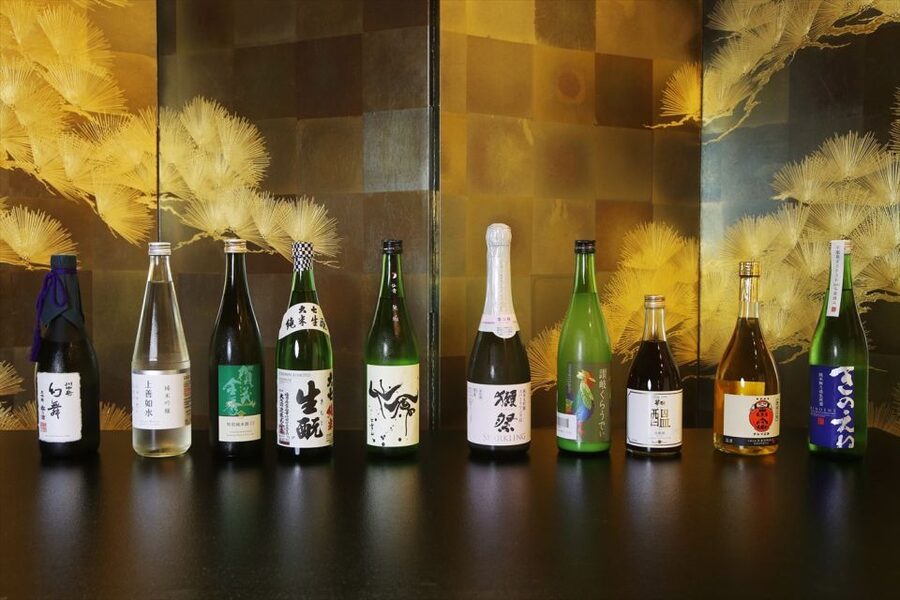
You will try seven sake samples. The collection is chosen to cover a range, including types that tend to surprise first-timers: sparkling, sweeter styles, savory-leaning options, and then a dessert-style sake to close.
What I like about this “ladder” approach is that it prevents the classic first-night problem. Many people arrive thinking sake is just one thing. After the first couple of tastings, you start to realize it’s more like a category with different personalities.
Here’s how I’d actively taste so you get the most from the pairing lessons:
- Take a small sip, then wait a beat before judging. Sake often changes as it warms slightly.
- Pay attention to how the next bite changes your perception. The same sake can feel very different with different flavors.
- Treat the dessert-style finale like the “why it works” moment. If sweet sounds like cheating, this is where it usually makes sense.
Because you’re tasting multiple types back-to-back, your memory matters. If you’re the type who likes details, jot one quick note in your phone after each round: sweeter, drier, lighter, more savory. You’ll be amazed how useful that is when you’re deciding what to buy later.
Food pairings that actually teach something
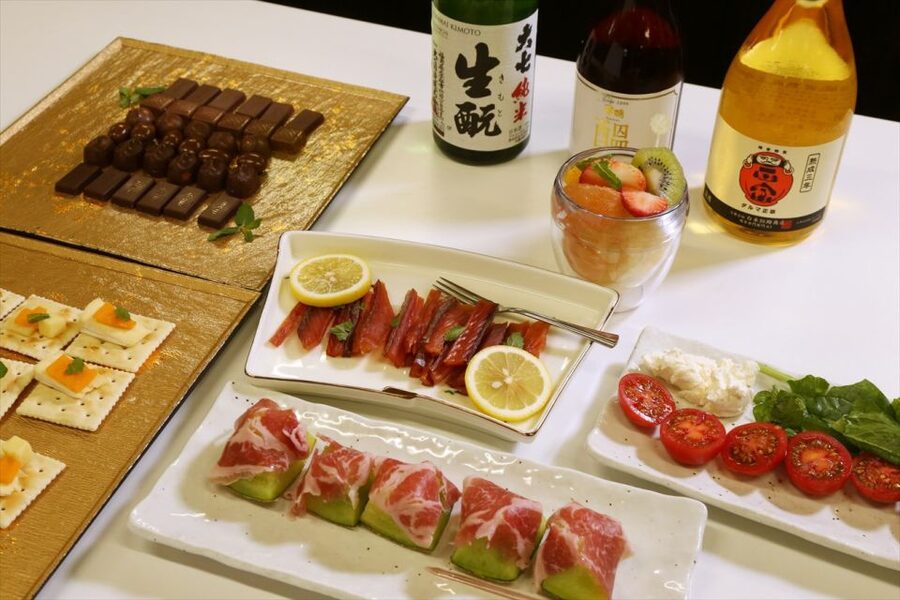
A lot of tastings say food pairing, then deliver random snacks. This one is built around real pairings, and you should notice that the meal is meant to match each sake style.
The course includes both Japanese and Western dishes, and the food is not just served next to the sake, it is served as part of the tasting experience. One review specifically mentioned that some bites were cooked in front of you and that the pairing set included items like Japanese cheese, crudités, and duck.
Why that is valuable for you:
- Japanese food flavors can amplify the clean, rice-forward side of sake.
- Western-style flavors can show you what sake tastes like outside its usual comfort zone.
- Seeing the pairing logic makes it easier to choose at a restaurant later, instead of ordering blindly.
The practical upside for your travel plans is huge. After this session, you won’t just know which sake you liked. You’ll know what kinds of dishes bring out those flavors. That makes your next meal smarter and more fun.
The instructor part: history, production, and how to ask good questions
This experience is taught by a nationally accredited sake instructor, in English, with a small group limit of 10 participants. That combination matters because it usually means you get less crowd noise and more interaction.
From the reviews you shared, two things clearly earn praise: the hosts are friendly and the explanation connects to what you’re tasting in real time. Guides like Tanaka-san and Taka-san were mentioned as fantastic, and many people highlighted how much they learned, especially about production and how to approach sake tasting.
If you want to get your money’s worth in learning, prepare two or three questions. Since the tour covers history, production, and varieties, your questions can stay simple, like:
- What is the practical difference between the styles I’m tasting?
- Why does this pairing make the sake feel different?
- How should I order sake in a restaurant if I liked the sweeter styles?
You do not need to be an expert. The lesson works best when you let the instructor connect the dots for you.
More Tokyo tours and experiences for the shortlist
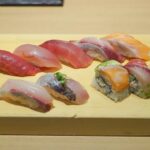


Price and value: $106 for a full tasting with meal, not a quick sip
At $106 per person for 75 minutes, it’s not the cheapest drink experience in Tokyo. But you are also not paying for a quick tasting flight with zero context.
Here’s the value equation that makes sense based on what’s included:
- 7 sake samples
- 7 food pairings
- Instruction by a nationally accredited sake instructor
- A small group format with a 10-person limit
You’re basically buying a guided tasting meal, where each drink has a reason. If you price out a similar experience as separate items, it often turns into a much higher cost in practice, especially once you factor in guided instruction.
So my take: this is good value if you want both taste and explanation. If you only want to drink sake and you are already confident pairing it, you might find alternatives cheaper. But if you’re curious and want to learn how sake fits into Japanese food culture, this is the kind of structured class that saves you time later.
Who this Tokyo sake tasting is best for (and who should skip it)
This is a smart choice if you fall into one of these groups:
- You are doing your first real dive into sake styles and want help noticing differences
- You enjoy food pairings and want a lesson, not just a drink
- You want a small-group setting where you can ask questions
- You are in Tokyo for a short time and want a compact 75-minute experience near Tokyo Tower
It is less ideal if:
- You’re under 20, since it is not suitable for people under 20
- You dislike guided tastings and prefer to explore completely on your own
- You want hotel pickup, because it is not included
Wheelchair access is listed, which is another point in the tour’s favor if you need an accessible format.
Logistics tips that prevent the most common headaches
A few practical notes can make this go smoothly:
1) Arrive early and go inside. This is an office building setup. Wait outside too long and you might miss direction.
2) Use the backup room. If you cannot find the instructor, go to Room B109 on the B1 floor.
3) Eat normally beforehand, but don’t arrive starving. You’re getting a multi-course meal pairing, and you want to taste clearly from the start.
4) Decide your pace for sampling. With seven sakes, you can sip slowly. There’s no prize for rushing.
Also, if you are sensitive to strong alcohol, tell yourself that “small sips” is part of doing this well. The point is comparison and learning, not speed.
Should you book this 7 kinds of sake tasting in Tokyo?
Book it if you want the easiest path to understanding sake beyond stereotypes. The standout value here is the combination of seven sake samples, seven matching bites, and an accredited instructor in a small group. It’s also a solid option if you like being near major landmarks, since Tokyo Tower is right there by the Kikai Shinko Kaikan building.
Skip it if your goal is purely casual drinking with no interest in pairing logic or explanations, or if you want hotel pickup and zero hassle. With a little planning on the meeting point, this tour is exactly the kind of “short and useful” Tokyo experience that pays off the next time you sit down for Japanese food and order with confidence.
FAQ
Where do I meet the instructor for the Tokyo sake tasting?
Meet your instructor at the main entrance of the Kikai Shinko Kaikan building on the 1st floor. The building is opposite Tokyo Tower. If you cannot find the instructor, visit True Japan Tour (Room B109) on the B1 floor.
How long is the experience?
The tasting runs for 75 minutes.
How many sake tastings and food pairings are included?
You get 7 sake samples and 7 food pairings.
Is the tour taught in English?
Yes, the instructor speaks English.
Is this a small group?
Yes, it is limited to 10 participants.
Is the experience wheelchair accessible?
Wheelchair accessible is listed as available.
What is the age requirement?
It is not suitable for people under 20.
Is hotel pickup and drop-off included?
No, hotel pickup and drop-off are not included.
What are the cancellation terms?
Free cancellation is available up to 24 hours in advance for a full refund.
Can I reserve now and pay later?
Yes, reserve now and pay later is offered.
More Food Experiences in Tokyo
More Food & Drink Experiences in Tokyo
More Tour Reviews in Tokyo





Not for you? Here's more nearby things to do in Tokyo we have reviewed












Tokyo Tea & Sake Experiences, side by side.
 ★ 5.0Traditional Tea Ceremony with a Tea MasterFrom $38528 reviews
 ★ 5.0Sake Tasting Masterclass in Shinjuku (8+ Varieties with a Pro)From $72271 reviews
 ★ 5.0Tea Ceremony Workshop in Tokyo by the Experienced InstrucorFrom $38189 reviews
 ★ 4.9Asakusa: Kimono Tea Ceremony with Matcha and SweetFrom $66153 reviews
 ★ 4.9Tea Ceremony Experience in a Private Tea Room in ShibuyaFrom $30125 reviews
 ★ 4.7Practicing Zen with a Japanese Tea CeremonyFrom $63105 reviews
 ★ 5.0Matcha Kimono Tea Ceremony in TokyoFrom $59104 reviews
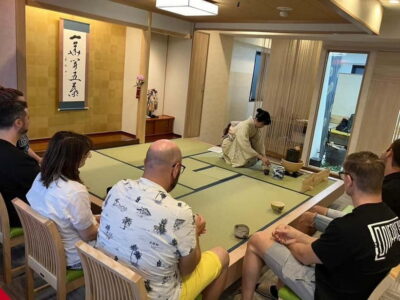 ★ 4.9Tea ceremony experience in Japanese-style room 60minFrom $4586 reviews
This tour also belongs to