
Review · IMPERIAL PALACE TOURS
Tokyo: Edo Castle and Imperial Palace Guided Walking Tour
Stone walls tell Edo stories. I love how the guide ties the Tokugawa Shogunate to the Imperial Palace after the Meiji Restoration, and I love the focus on gates, moats, and the people behind them. The only drawback is the tour is mostly walking the whole time, so weather and shoe comfort really matter.
This is a small-group guided walk, limited to 8 participants, with an English-speaking guide and a compact route that still feels detailed. It runs 150 minutes, and you start at Tokyo Station, which makes it easier to fit into a busy day than tours that start far away.
If you want the Edo Castle story told in the exact places where power was exercised, you’ll likely enjoy this. If you’re expecting long museum-style stops or indoor exhibits all day, you might find the pacing a bit more outdoors than you planned.
Key things I liked on this guided walk
- Starting at the Imperial Palace zone: you set up Edo Castle and Meiji change right from the first minutes.
- Gates as a lesson: Sakurada-mon, Kikyo-mon, Ote-Mon, and more show how access and defense worked.
- Stone walls and moats get real detail: including how different construction styles show up in the walls.
- A strong Honmaru focus: the main hall site gets a longer explanation, not a quick pass-through.
- Questions get answered: the guide’s explanations feel patient and thorough, even when it’s cold.
Finding Tokyo Station Marunouchi South Exit, the yellow dome start
You’ll meet at Marunouchi South Exit of Tokyo Station, on the ground floor. Look for the western-style historic yellow colored dome, which is the quickest visual landmark to confirm you’re in the right place.
If you navigate with a map app, having the coordinates helps: 35.68048457383692, 139.76571024138642. Once you spot the dome, you’ll be oriented in minutes, and that matters because the walk starts promptly.
Plan to show up a little early. Not because the tour is complicated, but because Tokyo Station has plenty of corridors, and you do not want to spend your best energy sprinting in the wrong direction.
You can also read our reviews of more walking tours in Tokyo


Why this walk starts at the Imperial Palace and then goes into Edo Castle
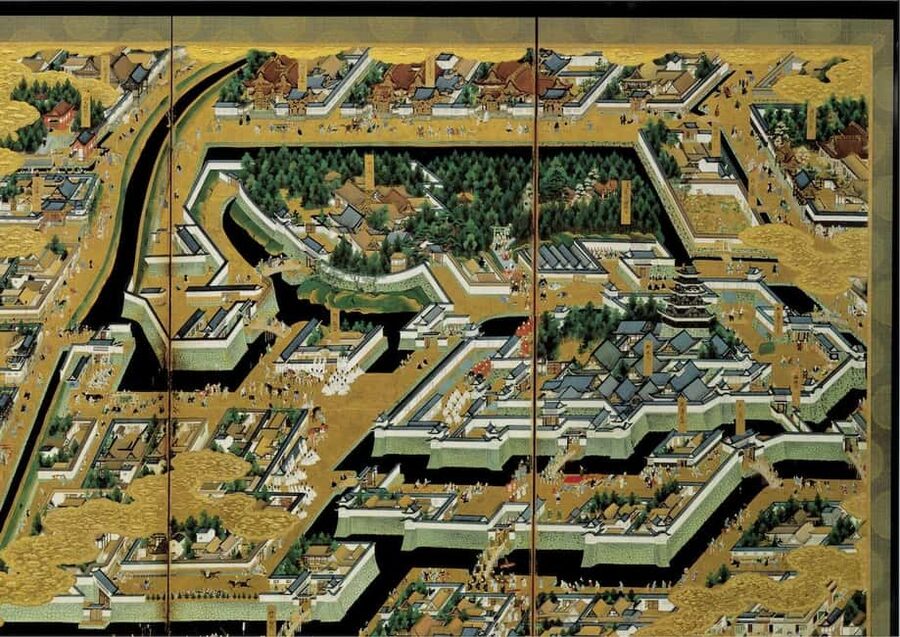
A key idea here is that you are walking the same political geography through two eras. The Imperial Palace is the current residence of the Emperor, but it sits on the grounds that once served as Edo Castle, the center of the Tokugawa government for about 260 years. After the Meiji Restoration, the palace role changed, and the area became what it is today.
I like that the tour doesn’t treat Edo as a separate theme park. Starting at the palace zone helps you feel the continuity, then the disruption, then the transformation. When your guide starts connecting the dots early, the rest of the route reads like one story instead of random gate stops.
And because this is a guided walk, you’re not stuck staring at plaques. You’re getting explanations that connect architecture and layout to how authority worked in daily life.
The first stretch from Tokyo Station toward Sakurada-mon
Right after the start, there’s a short on-foot transfer, about 5 minutes, to the Mitsubishi Ichigokan Museum area. The guide gives you a 10-minute guided segment there, which is a good time to get context before you hit the palace and castle structures.
Then you move on foot again, around 7 minutes, to Sakurada-mon Gate for a 10-minute guided stop. Gates sound simple until someone explains what they meant in a place where movement was controlled. Even if you’re not an architecture nerd, you can feel the logic: certain entrances matter because of security, status, and ceremony.
From there, the tour keeps the rhythm with small walk segments and short guided bits, like a guided timeline you can feel under your feet. That pacing is one of the reasons this works well for a half-day slot.
Sakurada-mon to Kikyo-mon: gates, sightlines, and who belonged where
After Sakurada-mon, the route continues in short legs. You’ll pass through other points along the Imperial Palace area, including a quick guided moment near 坂下門 (the itinerary lists an Imperial Palace police escort and security outpost area by name). These are brief stops, but they signal something important: the palace grounds are not just historical, they’re active space with modern security.
Next comes Kikyo-mon Gate, with a guided segment listed at 10 minutes. Then you’ll visit Sakurada Tatsumi Yagura, a yagura stop that gets 6 minutes with the guide.
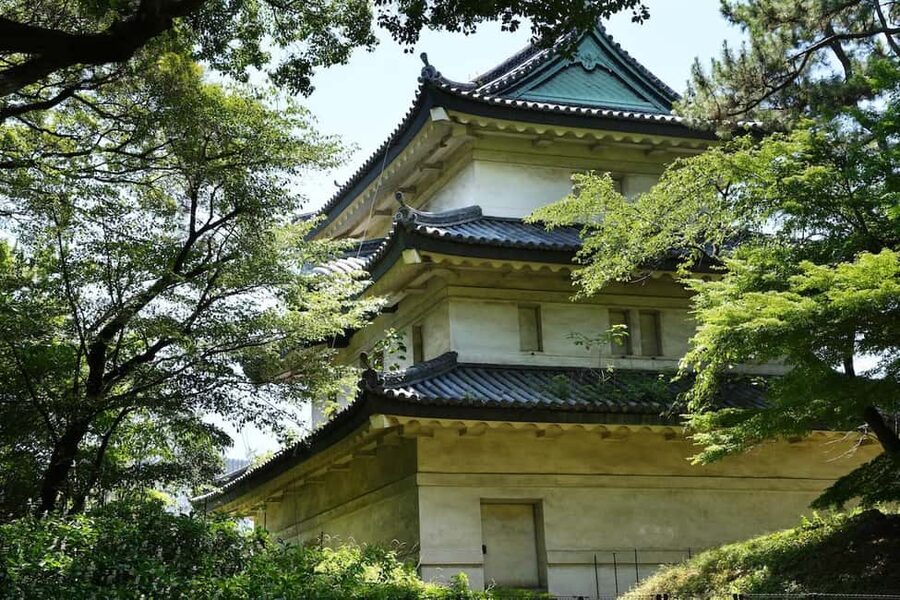
Even if you can’t see everything the original Edo castle once looked like, you can still learn how this place functioned. Gates are about controlled entry. Yagura structures are about observation and defense. When the guide explains them as a system, each stop clicks into place as part of the bigger structure.
If you’re the type who likes to understand why things are where they are, you’ll probably enjoy this section. It’s not just names. It’s meaning.
Ote-Mon Gate and the Ote-San’no Gate Ruins: where entrances turn into stories
From the earlier gate system, the tour moves to Ote-Mon Gate (a short guided stop of 5 minutes). After that, there’s Ote-San’no Gate Ruins with 10 minutes of guided explanation.
This part is useful because it shows you how history survives in fragments. Ruins can feel vague if your guide doesn’t connect them to what once stood there. Here, the explanation helps you translate missing structures into how the castle managed movement and function.
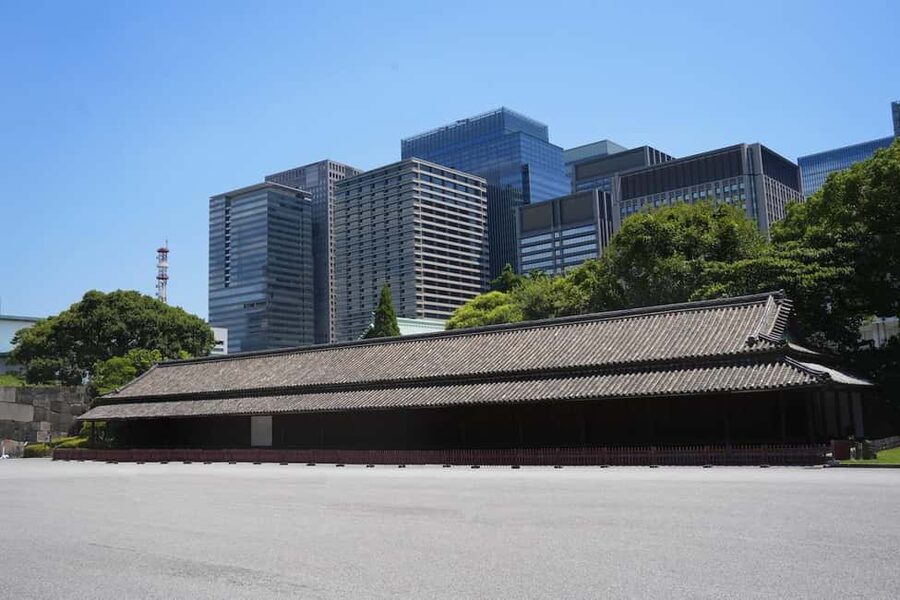
There’s also a stop at Hyakunin Bansho Guardhouse for 7 minutes. “Guardhouse” tells you the obvious purpose, but the guide’s job is to make it real: who would have guarded, what those routines meant, and why a castle had to be more than walls.
If you’re hoping for a tour that is equal parts visual and narrative, this middle stretch is where that balance shows up.
You can also read our reviews of more guided tours in Tokyo






Honmaru Main Hall site: the heart of Edo Castle government
The most time on the route goes to the Site of Edo Castle Honmaru (Main Hall), with 30 minutes guided. This is the center of the Edo Castle story: a place tied to government administration and the shogun’s presence.
I particularly like that the guide makes this more than “this is where rulers stood.” The explanations connect the castle layout to how people lived around power. The tone stays historical, but it’s grounded in cause and effect, like decisions made after disasters and changes in government priorities.
One of the standout pieces from an earlier participant’s experience was the story tied to the Great Fire of Meireki (明暦の大火). The guide described how reconstruction decisions prioritized reviving the city over rebuilding the tenshu right away, even though builders had gone as far as creating the tenshu base. That kind of detail helps you understand Edo not as a fantasy of perfection, but as a society with urgent tradeoffs.
This is also where the tour’s human dimension shows up, including stories related to the Ōoku, the political side of the women’s quarters. The guide’s attention to that angle matters if you think of “power” only as military or political offices. It widens the lens.
If you enjoy explanations that connect big events to practical decisions, you’ll likely find Honmaru the emotional center of the walk.
Stone walls, moats, and Edo’s built-in toughness
Even though you’re not touring a single intact keep, you get plenty of material that matters: stone walls and moats. This is one of the tour’s best values, because it turns what could be a sightseeing walk into a lesson about engineering choices.
A detailed point I loved from a participant’s account was the way the guide talked about the castle’s stone work. Edo Castle is described as having stone walls with subtle differences in style depending on the daimyo contributions, with techniques referenced like cut stone placement (切り込み) and driven stone (打ち込み). That level of specificity changes how you look at what’s in front of you.
You also hear stories about defenses in a way that makes sense without a map in your lap. Moats and wall lines are not just pretty lines. They’re part of how the castle could slow, redirect, and control people.
If you’re the kind of traveler who likes architecture but finds most tours too superficial, this part may feel like someone finally spoke your language.
Finishing at Kita-Hanebashi, 竹橋, Hirakawa Bridge, and 平川門
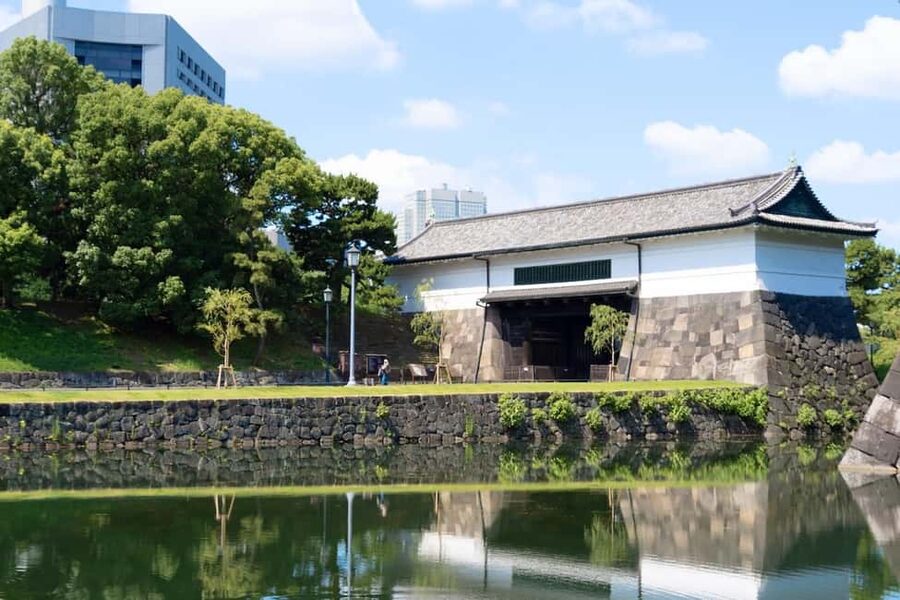
After Honmaru, the walk continues through a series of gates and approach points. You’ll visit Kita-Hanebashi Gate, then walk on to 竹橋 (takes 5 minutes with guided explanation listed at 5 minutes). Next comes Hirakawa Bridge for 7 minutes, and you finish at 平川門.
Bridges and gates are great closing material because they help you understand movement and viewpoint. You can think about who would have crossed, when routes mattered, and how the castle used natural and built features together.
Even as the tour ends, the guide’s explanations keep a consistent theme: you’re watching the castle’s design as a system, not just collecting isolated stops. That makes the ending feel like a conclusion rather than just “we’re done.”
Price and what you actually get for $3.22
At $3.22 per person, this is priced in a way that makes the guided commentary the main value. You’re not paying for a private vehicle, and you’re not paying for meals or entry tickets listed as included.
What you do get is clear: an English speaking guide, a small group limited to 8 participants, and a small gift. The gift isn’t the point, but the guide quality and time with questions is.
Because the group is small, you can usually ask something instead of just listening. One participant specifically noted that the guide answered questions seriously, and that kind of back-and-forth is often what separates a good walking tour from a forgettable one.
So the value here is practical: you get a guided, structured 150 minutes across the Edo Castle and Imperial Palace zone, with an explanation style that rewards attention.
Who this tour suits best
You’ll likely enjoy this tour if you want:
- A guided walk with English explanations
- A manageable duration (150 minutes) that fits a sightseeing day
- Focus on Edo Castle government areas, gates, stone walls, and moats
- The Edo-to-Meiji transition framed through the Imperial Palace connection
It’s also a good match if you enjoy learning how power shaped daily movement. Gates, guardhouses, bridges, and ruins are all “small” elements until you understand what they controlled.
You might not love it as much if you’re looking for a slow pace, long indoor stops, or fully sheltered sightseeing. This route is clearly built around walking and outdoor viewing.
What to bring and how to plan your time
The tour is wheelchair accessible, and it’s designed as a guided walking route. Still, you should plan for a steady pace and time outdoors, so wear comfortable shoes for walking.
Meals and drinks are not included. That means you should plan your timing around your own snack and water needs, especially if you’re touring in cooler months.
Also note the route is set up as short on-foot segments with guided stops. That structure is great for keeping momentum, but it means you’ll do best if you’re comfortable moving in smaller bursts rather than stopping for long stretches.
Should you book this Edo Castle and Imperial Palace walking tour?
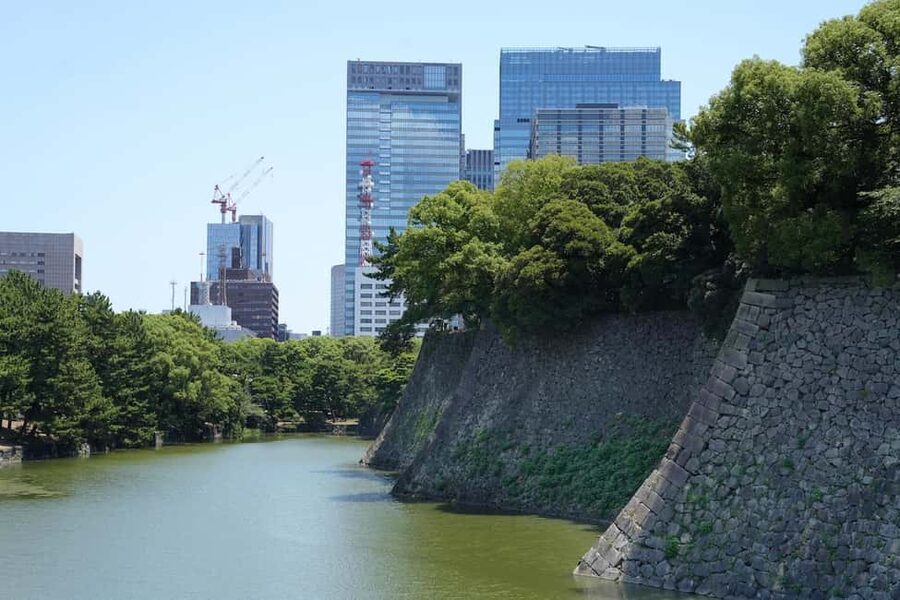
Book it if you want a guided explanation of Edo Castle that goes past the basics. This is especially compelling if you like how the guide ties stories to exact locations, like the Honmaru main hall site, the gate system, and the stone walls and moats that still define the grounds.
Skip it only if you dislike walking for 150 minutes or if you mainly want museum-style indoor time. Otherwise, this is a strong choice for travelers who want the shogunate and Meiji story connected to real spaces you can stand on.
If you’re curious about how Edo was governed and rebuilt, and you’d like that explained by an English-speaking guide in a small group, this tour is an easy yes.
FAQ
How long is the Edo Castle and Imperial Palace guided walking tour?
The tour lasts 150 minutes.
Where do I meet the guide?
Meet at the Marunouchi South Exit of Tokyo Station. The starting point is on the ground floor of the Marunouchi South Exit, by a western style historic yellow colored dome.
How many people are in a group?
The tour is a small group limited to 8 participants.
Is the tour guided in English?
Yes, the tour includes an English speaking guide.
What should I wear?
Wear comfortable shoes for walking.
Is it wheelchair accessible?
Yes, the tour is wheelchair accessible.
More Walking Tours in Tokyo

More Tours in Tokyo






More Tour Reviews in Tokyo


Not for you? Here's more nearby things to do in Tokyo we have reviewed












Imperial Palace Tours, side by side.
 ★ 5.0Imperial Palace and Shogun Historical Walking TourFrom $222,251 reviews
 ★ 4.9Imperial Palace Japanese History Walking TourFrom $32987 reviews
 ★ 4.9Imperial Palace and Shogun Walking TourFrom $16935 reviews
 ★ 5.0Imperial Palace East Garden and Edo Castle Walking Tour in TokyoFrom $25510 reviews
 ★ 4.8Imperial Palace East Gardens Walking TourFrom $19353 reviews
 ★ 4.5Imperial Palace, Sensō-ji Temple, & Tokyo Tower TourFrom $40339 reviews
 ★ 5.0Tokyo Castle, Imperial Palace, Shogun & Garden Walking TourFrom $31211 reviews
 ★ 4.7Edo Castle & East Garden of the Imperial Palace TourFrom $42112 reviews
This tour also belongs to