
Review · TOKYO TEA & SAKE EXPERIENCES
Japanese Sake Tasting and Masu Crafting Experience in Tokyo
Tokyo can be overwhelming. This makes one small corner feel personal.
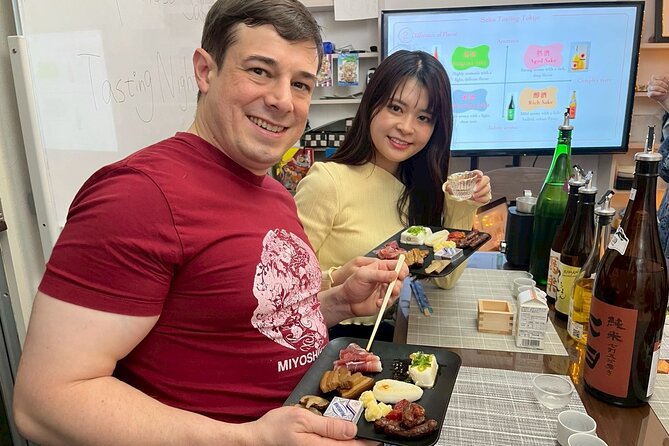
At Manga Dojo Tokyo in Ikebukuro, you get an English guided Japanese sake tasting plus a hands-on craft in about 90 minutes. You sample multiple sakes, including a warm style, while learning how sake changes with temperature and what to notice when you taste.
I particularly love two parts: the way the host explains sake basics in plain terms (so even first-timers can follow), and the fact that you make something you keep, your decorated masu cup using Japanese brush pens. One thing to keep in mind is that there are no vegetarian or vegan options, and the snack menu can vary by season.
Key Highlights Worth Planning Around
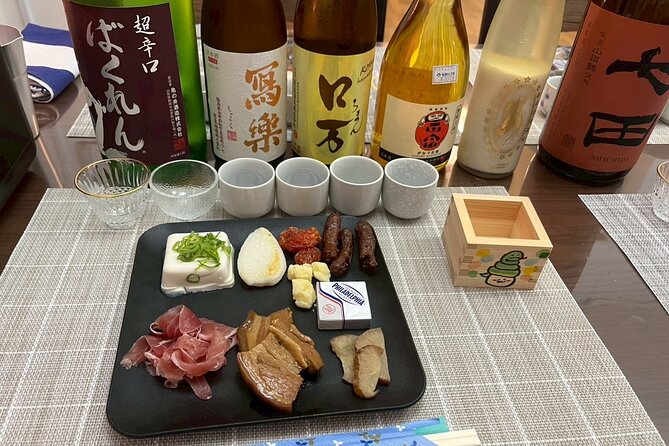
- 5-6 sake tastings with a range of aromas, flavors, and serving temperatures, including hot kanzake
- English instruction focused on how sake is made and how to taste it, step by step
- Snack pairings designed to show how flavors connect, including a surprise pairing like curry bread and sake
- Your own keepsake masu cup, decorated on site with Japanese brush pens
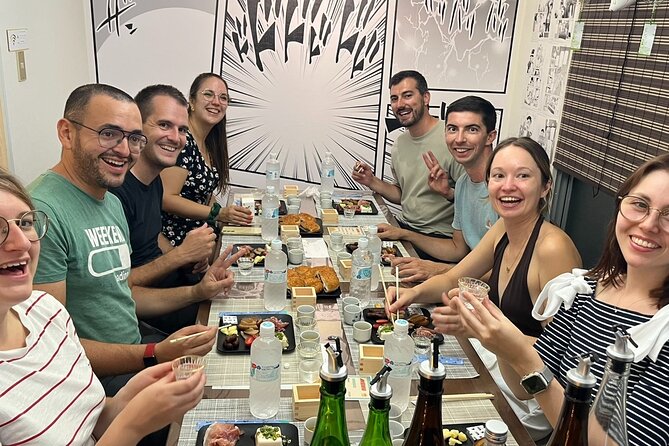
- Small group size (max 8) in a cozy, creative venue near Ikebukuro Station
Where You Go: Manga Dojo Tokyo by Ikebukuro Station
This experience starts at Manga Dojo Tokyo, Japan, 170-0013, Tokyo, Toshima City, Higashiikebukuro, 1-chōme316 三昌ビル 602. The address is specific, which is great because this is not a giant hotel ballroom type setup.
The venue is very close to Ikebukuro Station, and it’s in a creative space with a manga atmosphere. In at least a few accounts, people noted it feels like a room in an apartment-like setting, and they even spotted a manga exhibit. One reviewer also mentioned it is near Animate, which may help you orient quickly if you’re already exploring Ikebukuro.
Timing matters here. The session starts at 6:00 pm, which fits nicely into a day of sightseeing. You will also end back at the meeting point, so you’re not hunting for a second location late in the evening.
Group size is capped at 8 travelers, so you’re not just watching from the sidelines. If you like hands-on, conversational activities, this format tends to work well.
One practical note: drinking alcohol is prohibited for anyone under 20 under Japanese law. So if you fall into that category, plan for the experience as a cultural tasting and craft, but you will not be able to drink alcohol.
You can also read our reviews of more food & drink experiences in Tokyo


How the Sake Basics Get Explained (So You Taste With Confidence)
Before you start sampling, you get a warm welcome and a guided explanation of sake. The focus is not just on what you’re drinking, it’s on how to read it.
You’ll learn the basics of:
- How sake is made
- How to taste sake
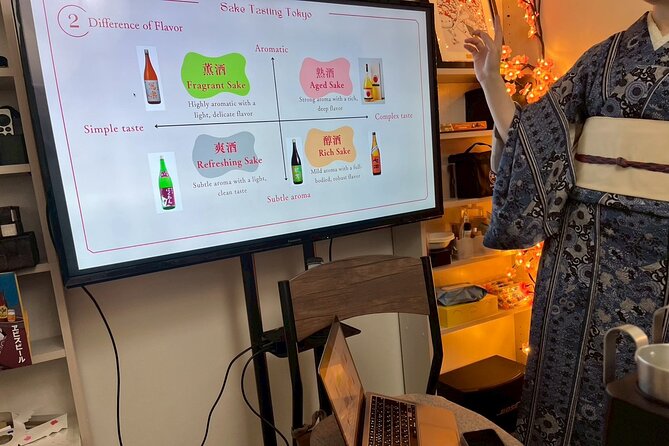
- What makes different styles unique
This kind of guidance is surprisingly useful because sake can taste subtle until you know what to look for. Once someone points out the right things, the tasting becomes more than a sip-and-smile activity.
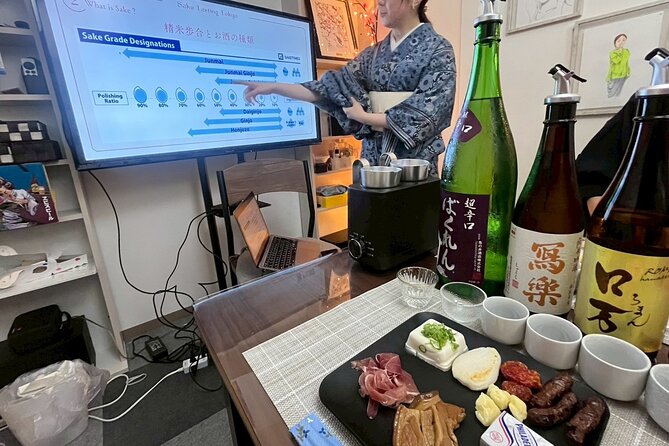
A few details from participant experiences suggest the host ties the discussion to real, recognizable categories. For example, people specifically mentioned hearing about the difference between ginjo and daiginjo. Even if those labels are familiar to you, it helps to understand why they taste different, not just what the names are.
Also, the session is conducted in English, so you’re not stuck guessing. You’ll be able to ask questions and follow the reasoning behind the tasting order and pairings.
The Main Event: Tasting 5-6 Sakes, Including Hot Kanzake
Your tasting portion is the core of the experience. Expect to sample 5-6 distinct sake varieties, with an emphasis on how aromas and flavors shift.
A key feature here is that you won’t just sample at one temperature. You also try a hot sake (kanzake), which is where many first-timers get a real “oh, that’s different” moment. Warm sake often feels rounder, and the aromas come across differently than cold or chilled pours.
Across the set, you’ll notice how sake can range in:
- perceived sweetness
- acidity and crispness
- aroma intensity
- how the finish lingers
You do not need to be a self-proclaimed sake expert to enjoy it. The tasting structure does a lot of the work for you, because you’re guided through comparisons rather than being thrown into a menu where everything tastes similar.
In a few accounts, people highlighted that the selection and explanations made the differences feel clear, not confusing. One person also said they were surprised by how many different tastes there are in sake, which is exactly what this kind of sampling is designed to show you.
Snack Pairings That Make Flavors Click
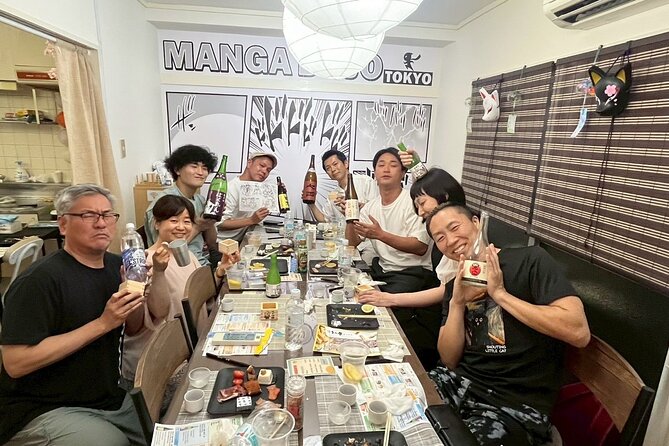
Alongside your pours, you’ll have light snacks served as pairings. This is not just filler. The pairings help you understand why food and sake can amplify each other.
One pairing story stood out: curry bread was mentioned as a surprisingly good match for sake. That’s the kind of detail that makes a tasting memorable, because it breaks the expectation that sake only pairs with the most traditional-sounding foods.
The snack situation also has a couple practical realities:
- There are no vegetarian or vegan options.
- Allergy-friendly options are available if you inform the team in advance.
- The menu may vary by season.
So if you have dietary restrictions, don’t wait until you arrive. Reach out with your allergy needs when you book, since the experience explicitly allows allergy-friendly options but does not promise vegetarian or vegan substitutes.
Even if you are not picky, I recommend paying attention to the pairing logic in the moment. When you taste, ask yourself what changes: does the snack make the sake feel smoother, does the sake sharpen the snack, does the finish shift? That mental check makes the experience feel interactive.
The Masu Craft: Decorating Your Wooden Cup to Take Home
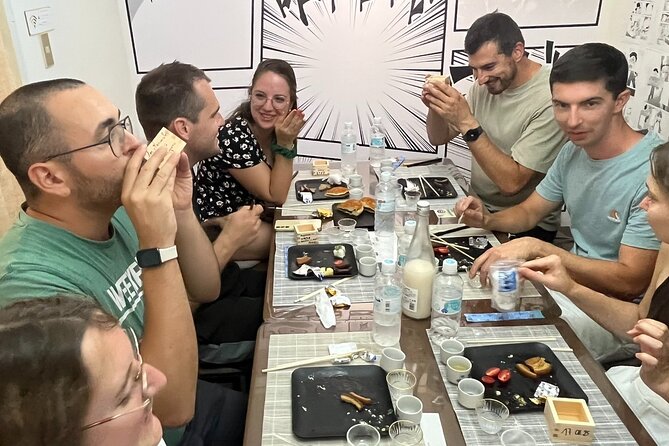
After the tasting, you move into the craft part: decorating your own masu, a traditional wooden sake cup.
This is where the evening turns from tasting-focused to creativity-focused. You use Japanese brush pens, and you decorate the cup on site. The result becomes a keepsake you can take home, which is one reason this tour feels better value than a standard tasting where all you get is memory.
Why masu matters, even if you’re not deep into Japanese culture yet: it connects the drinking ritual to a physical object. When you decorate it yourself, you’re not just learning about a tradition, you’re leaving with a small version of it.
Also, the workshop-style nature of this part can be a relief if you’re the kind of traveler who enjoys activities but finds long lectures tiring. You still get learning, but you also get a tangible task.
If you’re traveling solo, this section can be especially nice because it gives you a way to interact without needing to talk constantly. If you’re traveling as a couple or group, it’s a shared project, and you’ll naturally end up comparing what you each made.
You can also read our reviews of more drinking tours in Tokyo




Who This Tour Suits Best in Tokyo
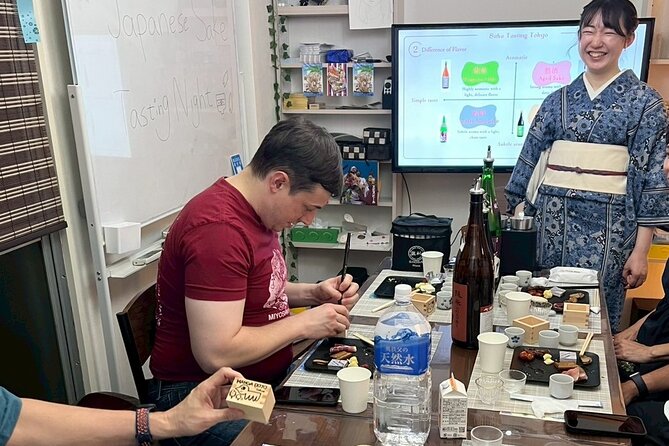
This experience is a good fit if you want cultural learning that doesn’t feel stiff. It works well for:
- sake lovers who want structured comparisons in a short time
- first-timers who want a host to guide tasting basics in English
- solo travelers looking for a small-group setting
- couples or groups that want both food and an activity
People also mentioned getting along well with other guests, which makes sense with a group size of 8 and a format that mixes listening with tasting and crafting.
There are also a few “maybe not” situations:
- If you need vegetarian or vegan meals, this isn’t designed for you.
- If you’re under 20, you cannot drink alcohol in Japan, so you should treat the experience primarily as a craft and cultural session.
- If you want a big, famous landmark feel, this is more of a focused local workshop setting.
Price and Value: Is $60 Worth It?
At $60 per person for about 1 hour 30 minutes, the value comes from stacking multiple elements that you usually pay for separately.
You’re getting:
- a guided tasting of 5-6 sake varieties
- an educational explanation in English
- snacks paired with the tastings
- a hands-on masu crafting session
- a keepsake you make yourself
For Tokyo pricing, that’s a pretty tight bundle. It’s also a small group experience (max 8), which often means you get more attention from the host than you would in a larger tasting.
One more signal: the experience is booked fairly far in advance, with an average of 68 days. That doesn’t guarantee anything, but it does suggest people plan for it, especially if they’re trying to fit a sake activity into a limited Tokyo schedule.
If you’re the type of traveler who likes to leave a city with one or two real souvenirs and a story you can actually explain, this one checks both boxes: the cup in your hand and the tasting experience in your head.
A Few Tips to Get More Out of the Evening
You’ll get the most from this tour if you approach it like a guided comparison, not a drinking spree.
Here’s how I’d do it:
- Pick one thing to notice per pour, aroma, sweetness, acidity, or finish.
- Try the hot sake intentionally, because it can feel like a different drink compared to chilled styles.
- If a pairing surprises you (like the curry bread mention), follow up mentally. Does it make sense because of spice? sweetness? warmth?
- When you decorate your masu, don’t stress about perfection. The point is that it’s yours.
Also, since you’re in an English-guided environment, I’d ask questions if something isn’t clear. The session is designed to explain how to taste, so questions fit the structure.
Should You Book This Sake and Masu Workshop?
Yes, if you want a small-group, English-friendly way to learn sake without needing prior knowledge. The biggest reasons I’d book are the combo of guided tasting (including hot kanzake) and the fact that you make a masu keepsake with Japanese brush pens. That combination makes the evening feel complete.
I would hesitate only if your diet requires vegetarian or vegan options, because the experience specifically notes that those options are not offered. If you have allergies, you can still make it work, as long as you inform them in advance.
If you’re already exploring Ikebukuro, this is also a smart add-on because it starts at 6:00 pm and puts you near public transportation, so you’re not building your whole night around it.
FAQ
What is the price of the Japanese sake tasting and masu crafting experience?
The price is $60.00 per person.
How long is the experience?
It runs for about 1 hour 30 minutes.
How many types of sake will I taste?
You will sample 5-6 different sake varieties, including a hot sake.
Where does the tour take place?
It takes place at Manga Dojo Tokyo at Japan, 170-0013 Tokyo, Toshima City, Higashiikebukuro, 1-chōme316 三昌ビル 602.
What time does the experience start?
The session starts at 6:00 pm.
Is the experience in English?
Yes, the session is conducted in English.
Are there vegetarian or vegan options?
No vegetarian or vegan options are offered.
Can I request allergy-friendly options?
Allergy-friendly options are available, and you should inform the provider in advance if you have any food allergies.
What are the alcohol rules in Japan?
Drinking alcohol is prohibited for anyone under the age of 20 under Japanese law.
Can I cancel for a refund?
You can cancel up to 24 hours in advance of the start time for a full refund. If you cancel less than 24 hours before, the amount paid will not be refunded.
More Drinking Tours in Tokyo

More Food & Drink Experiences in Tokyo

More Tour Reviews in Tokyo





Not for you? Here's more nearby things to do in Tokyo we have reviewed












Tokyo Tea & Sake Experiences, side by side.
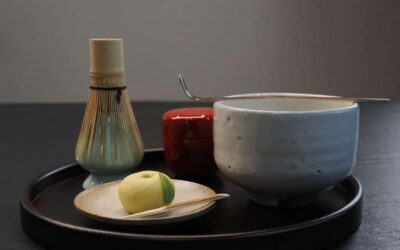 ★ 5.0Traditional Tea Ceremony with a Tea MasterFrom $38528 reviews
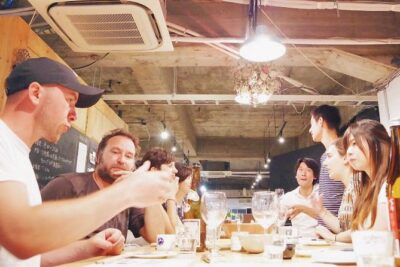 ★ 5.0Sake Tasting Masterclass in Shinjuku (8+ Varieties with a Pro)From $72271 reviews
 ★ 5.0Tea Ceremony Workshop in Tokyo by the Experienced InstrucorFrom $38189 reviews
 ★ 4.9Asakusa: Kimono Tea Ceremony with Matcha and SweetFrom $66153 reviews
 ★ 4.9Tea Ceremony Experience in a Private Tea Room in ShibuyaFrom $30125 reviews
 ★ 4.7Practicing Zen with a Japanese Tea CeremonyFrom $63105 reviews
 ★ 5.0Matcha Kimono Tea Ceremony in TokyoFrom $59104 reviews
 ★ 4.9Tea ceremony experience in Japanese-style room 60minFrom $4586 reviews
This tour also belongs to