
Review · TOKYO CITY TOURS
Small-Group Wagyu Beef and 7 Japanese Dishes Tokyo Cooking Class
Tokyo mornings taste better when you cook. This hands-on class builds from dashi to a full kaiseki-style lunch featuring tender Wagyu in a small group format.
Two things I really like are the tight max-8 class size and the fact that you get real technique practice, not just a demo. My favorite moment was learning from instructors like Aya and Hidemi, then turning their guidance into multiple dishes fast.
One possible drawback to plan for is that the Cooking Sun building can be a little tricky to locate, even though the neighborhood is easy to reach by transit. A quick look at your map before you head in will save time.
Key Takeaways
- Max 8 people means you cook, not just watch
- Dashi-making kicks things off, so the flavor base makes sense
- 7 dishes plus Wagyu gives you a full lunch worth of skills
- English instruction from local cooks keeps it approachable
- Ingredients, apron, and towel are provided, so you travel light
- Sake and green tea come with the meal at the end
Wagyu in Tokyo, the Kaki-Teori Way (Not a Stuffed Ticket)
Let’s be honest, Wagyu gets attention fast. But what makes this class feel different is how quickly it turns into a cooking lesson instead of a food trophy. You start by building dashi, the stock that powers so many Japanese flavors, then you carry that flavor through multiple dishes.
Price-wise, at $72.96 for about 3 hours, you are paying for three things at once: ingredients, recipes, and structured instruction in a tiny group. That combo matters in Tokyo, where cooking classes can drift toward either expensive guided meals or cheaper-but-sketchy instruction. Here, the value comes from quantity plus coaching, not just the presence of Wagyu.
You can also read our reviews of more cooking classes in Tokyo


Cooking Sun Tokyo and the Shinanomachi Finding Game
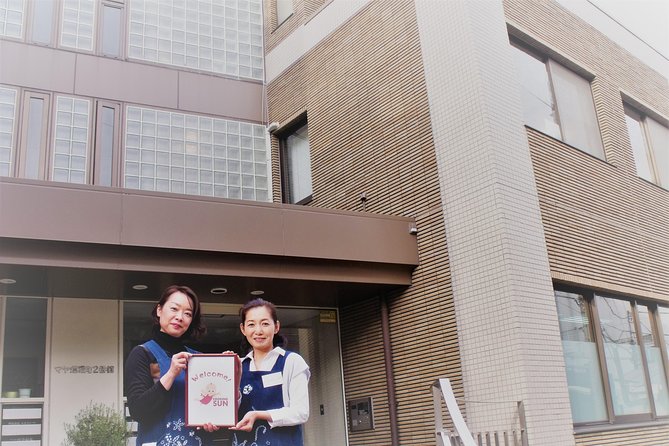
Your starting point is Cooking Sun Tokyo, 18-39 Shinanomachi, Shinjuku City. The class starts at 9:30 am, and it ends back at the meeting point.
The good news: it is near public transportation, so you are not stuck in a long taxi run. The other news: the building can be a little difficult to spot. If you want this to feel smooth, do this one thing: open your map route before you arrive, and give yourself a few extra minutes to confirm the entrance.
Also, no hotel pickup or drop-off is included. So plan on getting there under your own steam.
What Happens in Those 3 Hours: Dashi to Dessert
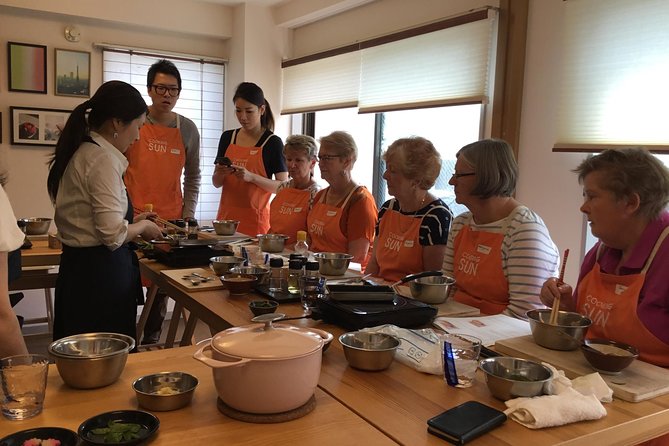
This is a full “course” cooking format. The big picture is simple: you make a full-course lunch by learning multiple recipes, then you eat what you cooked. The instructors keep the pacing moving, and the small group means you are not standing around.
Step 1: Dashi-making, the Japanese Flavor Starter
Japanese cooking often begins with dashi, and this class does it on purpose. You will learn how to make it and why it matters. Once you understand the stock, you can understand a lot more of what you are tasting later.
This is also where the instructors explain typical Japanese seasonings you’ll see again and again. Think of it as your cheat sheet for Japanese home cooking.
Step 2: Techniques and ingredient basics
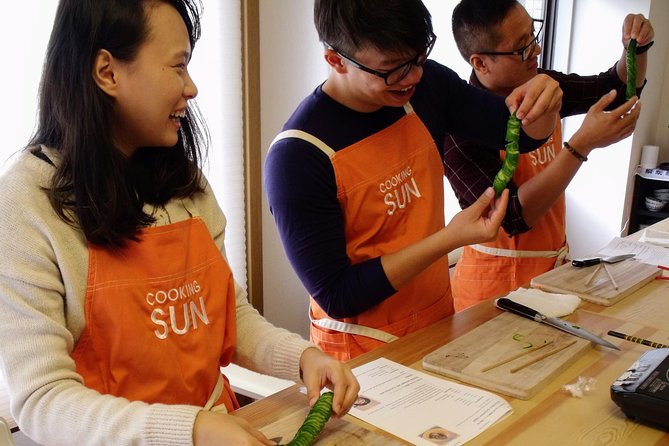
Before the hottest part of the schedule, you get guidance on staple ingredients and practical handling. The class also pays attention to things many home cooks struggle with abroad: cutting, presentation, and using seasonings in the right proportion.
Based on how the class runs, you will spend a lot of time chopping, mixing dressings, and assembling components. The instructors and team handle some items in parallel, like parts of the meal such as miso soup, rice, and potatoes. That is not a flaw, it is how you fit everything into a short timeline.
More Tokyo tours and experiences for the shortlist




Step 3: Seven dishes, one after another
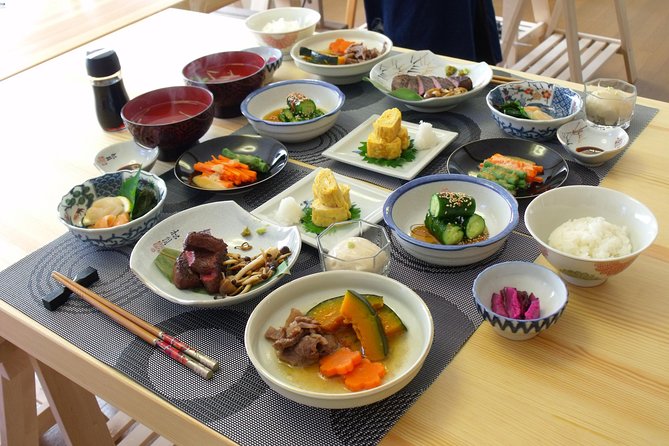
You will cook 7 Japanese dishes during the class, with a main focus on Wagyu beef. Along the way you learn classic and modern approaches, including details like elaborate cuttings and how unique ingredients affect flavor.
Multiple dishes use dashi, so the class does not feel like a random collection of recipes. It feels like a single flavor system you can reuse at home.
Step 4: Then you eat what you made
When cooking is done, it is time to sit down and feast. The meal comes with sake and green tea, and the class finishes with the traditional start of eating, Itadakimasu! It is a small ritual, but it makes the whole morning feel complete.
The Wagyu Beef Part: Tender, But More Important, Understandable
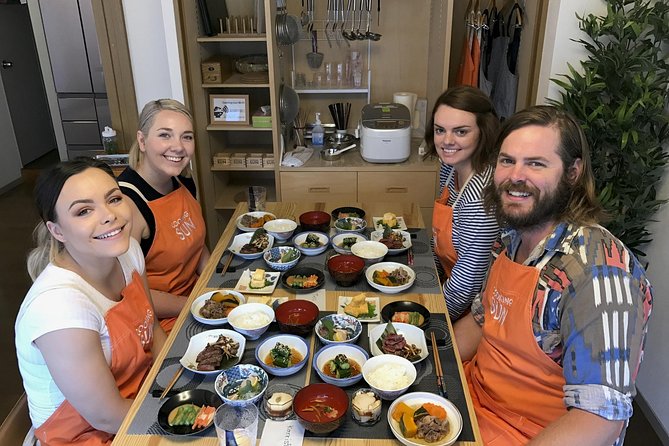
Wagyu can sound like a marketing word. The class turns it into something you can cook yourself. You will learn a main-dish preparation method centered on tender Wagyu beef, while also seeing how Japanese flavor frameworks work around it.
Here’s why this matters for you: if you only learn how to buy and grill Wagyu, you still need to guess the seasoning logic. In a Japanese cooking class like this, the lesson is less about rare beef and more about the balance of stock, seasoning, and technique that makes the dish taste “Japanese” instead of simply expensive.
If you are taking home memories, your best one will be this: dashi is not just for soup. You’ll see it move through the meal, shaping sauces and seasonings along the way.
Plating, Portions, and the Hands-On Realness
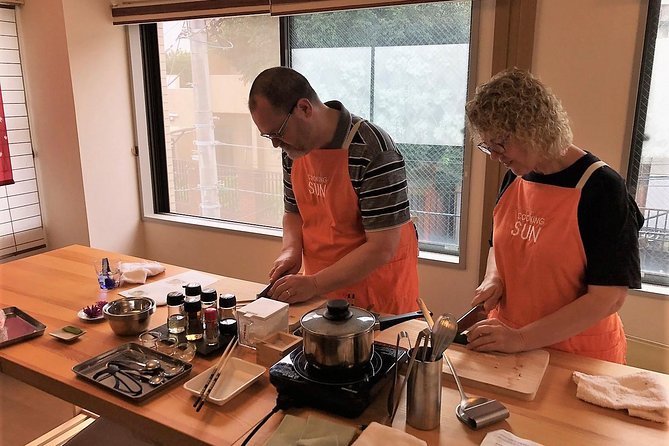
The class is small enough that you get direct feedback while you cook. The instructors are English-speaking locals and patient about steps. Even if you have never cooked Japanese food before, the format is still built for you.
That said, manage expectations. Not every second is “you doing everything.” The structure is hands-on, but the team also keeps the kitchen moving so you can complete a multi-course lunch in about 3 hours. You can still walk away feeling like you cooked, because the biggest tasks are yours: chopping, mixing, assembling, and finishing steps with guidance.
Also, the studio experience is practical. You get the basics that make cooking easier: an apron and a towel are provided, and all ingredients and supplies are included. You are not spending your Tokyo morning hunting for a knife set or worrying about kitchen gear.
What You Take Home: Recipes That Help You Cook Later
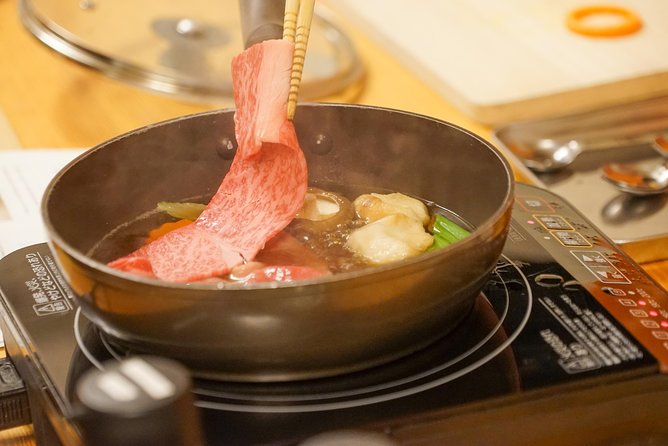
Most classes give you a vague memory. This one gives you a practical bundle: recipes are included, and you learn staple ingredient use as you go. That is the difference between eating a great lunch today and making something you can trust next month.
Because you start with dashi and then use it repeatedly, the recipes you receive are easier to follow. You are not trying to memorize seven unrelated flavors. You are building a toolkit.
If you plan to cook Japanese food at home, this is a real advantage. Many visitors buy ingredients like dashi stock and then stall because they never learned the seasonings and technique that make it work.
Vegetarian Option and Dietary Requests, Handled in Advance
If you want to go vegetarian, a vegetarian option is available. You should advise the team at the time of booking if that matters to you.
If you have any other dietary requirements, also share them when you book. The class is set up to communicate needs ahead of time, which keeps the cooking process smoother.
Who This Class Fits Best
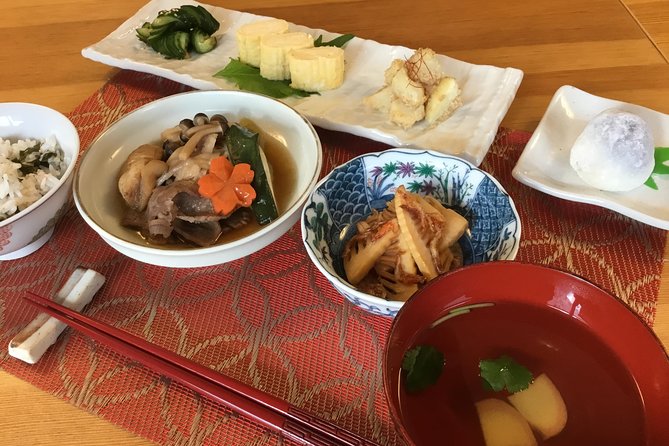
This class is ideal if you want a Tokyo activity that feels more local than a food crawl. You get a window into home-style cooking logic, but with a kaiseki-inspired full-course rhythm.
It is a great fit for:
- First-timers who want Japanese technique without feeling lost
- Food lovers who want more than one dish, and want to actually make them
- People who like structured classes with friendly instruction
It might be less ideal if you want:
- A long, slow deep-dive where every step is leisurely
- A class where you do absolutely every task from start to finish
Should You Book This Wagyu Beef and 7 Dishes Class?
If your goal is to leave Tokyo with both great memories and usable cooking skills, I think this is a strong booking. The small-group size (max 8) is a big deal. It changes the whole experience from passive eating to active learning.
Also, the value stacks up: you get ingredients, recipes, apron and towel, and a multi-course lunch with sake and green tea, all in about 3 hours. That is a lot of outcome for a single morning, and it fits well if you want one memorable food-focused activity without burning your whole day.
My one caution is practical: plan for the “finding the building” moment. Once you’re inside, the class is set up to make you feel confident, fed, and ready to cook again.
FAQ
How long is the Tokyo Cooking Class?
The class runs for 3 hours (approx.).
How many people are in the class?
The class is small, with a maximum of 8 people.
Is the instruction offered in English?
Yes. Instructions are in English.
What time does the class start?
The start time is 9:30 am.
Is a vegetarian option available?
Yes. A vegetarian option is available, and you should advise the provider at booking if you need it.
What’s included in the price?
Included are the local cooking instructor, recipes, ingredients, and apron and towel rental.
Is hotel pickup or drop-off included?
No. Hotel pickup and drop-off are not included.
Where does the class meet and where does it end?
It meets at Cooking Sun Tokyo, 18-39 Shinanomachi, Shinjuku City, Tokyo 160-0016, Japan, and it ends back at the meeting point.
More Workshops & Classes in Tokyo
More Cooking Classes in Tokyo
More Tour Reviews in Tokyo






Not for you? Here's more nearby things to do in Tokyo we have reviewed












Tokyo City Tours, side by side.
 ★ 5.01-Day Tokyo Bus TourFrom $12914,250 reviews
 ★ 4.5TOKYO SKYTREE® Admission ticketFrom $1311,192 reviews
 ★ 4.6teamLab Planets TOKYO Digital Art Museum Entry TicketFrom $259,779 reviews
 ★ 4.0Mt Fuji & Hakone Cruise, Drum Show Bullet Train 1 Day from TokyoFrom $1497,413 reviews
 ★ 5.0Shinjuku Food Tour (13 Dishes at 4 Local Eateries)From $866,603 reviews
 ★ 4.4Tokyo Mt Fuji 5th St & Hakone Cruise Bus Tour w/Bullet TrainFrom $1545,024 reviews
 ★ 5.0Flagship 2-Hours Official Street Go-Kart Tour – Tokyo Bay ShopFrom $644,974 reviews
 ★ 4.5From Tokyo: Mount Fuji Full-Day Sightseeing TripFrom $684,970 reviews
This tour also belongs to