
Review · TOKYO CITY TOURS
Tokyo: Japanese Knife Skills and Sashimi & Tempura Cooking Class
Japanese knives feel different when you learn. This private hands-on class in Tokyo focuses on knife skills first, then puts you to work making sashimi and tempura as you go. You get personalized pacing from guide Amy and her chef team, so it is not just watching, it is doing.
I really liked how the lesson starts with sharpening and proper care, not random cutting tricks. I also enjoyed the tight, practical flow into slicing sashimi and decorative vegetable cuts, then sitting down to eat what you made. One consideration is that if you only want a food tour with zero technique, the knife time may feel like more lesson than meal.
If you enjoy learning by working with your hands, this is a great fit.
Key highlights you will feel right away
- Private class for two with close instruction, so you are not lost in a big group
- Knife care and sharpening taught as a usable skill, not a history lecture only
- Sashimi cutting practice that pushes precision, not speed
- Decorative vegetable cuts that look simple until you try them
- Handmade sashimi and tempura lunch included, so the class ends with a real payoff
- Nishi-Koyama area as a calmer Tokyo setting for a focused workshop
Why this Tokyo knife class is such a useful experience
Tokyo has no shortage of cooking classes. What makes this one more valuable is its order of operations: you learn how to handle and maintain the knife first, then you apply that control to real Japanese food.
That matters because knife technique is not only about making pretty slices. In Japanese cuisine, the cut affects texture, moisture release, and how the fish and vegetables actually taste in your mouth. When you learn the mechanics, you stop guessing at what looks right and you start understanding what produces the right bite.
The format also helps. This is a private class for two, with English-fluent guidance from Amy and a skilled Japanese chef leading the kitchen portion. Reviews consistently note warmth and patience, and that same vibe is exactly what you want when sharpening and precision cutting are involved.
You can also read our reviews of more cooking classes in Tokyo


Getting to the venue without stress
The start point is near Nishi-Koyama Station, and you begin at the ground level exit. You will walk to the venue with your guide, about 10 minutes. The meeting address is listed as 6-chōme-3-10 Koyama, Shinagawa City, Tokyo 142-0062.
This kind of meeting setup is ideal if you like to stay flexible. There is no need to wait for a pickup window, and you can reach the station using whatever rail route suits your day. The tradeoff is you do need to get yourself there. There is no private transportation included.
If you are pairing this with other Tokyo plans, I would treat it like a true afternoon anchor. The class starts at 12:00 pm, lasts about 2 hours, and ends back at the meeting point location.
Knife care and sharpening: the first 50 minutes that change everything
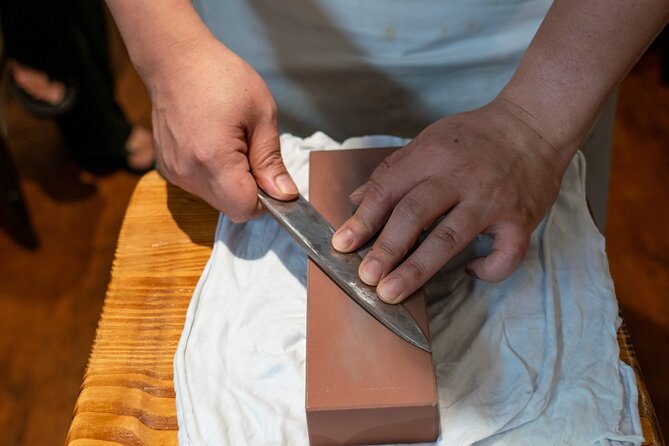
The heart of the class begins with a lecture and practice focused on Japanese knife care and sharpening. You will spend around 50 minutes on this before you touch the food.
This section is not filler. I love that the lesson starts here because most visitors jump straight to cooking. In contrast, you learn why Japanese knives need specific care, and how sharpening connects to cutting performance. Even if you never become a home sharpener, you will leave with a better sense of what makes a knife behave well.
The guidance in this segment is the kind that helps quickly. Amy and the chef team keep the tone friendly, and you are given personalized instruction at a pace that works for you. One review mentioned learning the essence of sharpening directly from Japanese chefs, and that is the right expectation. You are not just hearing about stones and angles. You are being taught how to see, handle, and respect the tool.
If you already own a Japanese knife, this is a big plus. Knives are provided, but you can bring your own purchased during your travels if you want. If you do that, you get extra value out of the care portion, because you can connect what you learn to the exact knife you brought.
Cutting sashimi and decorative vegetables like you mean it
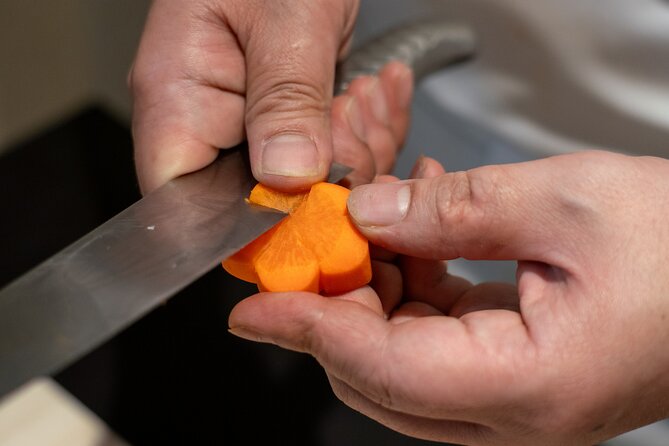
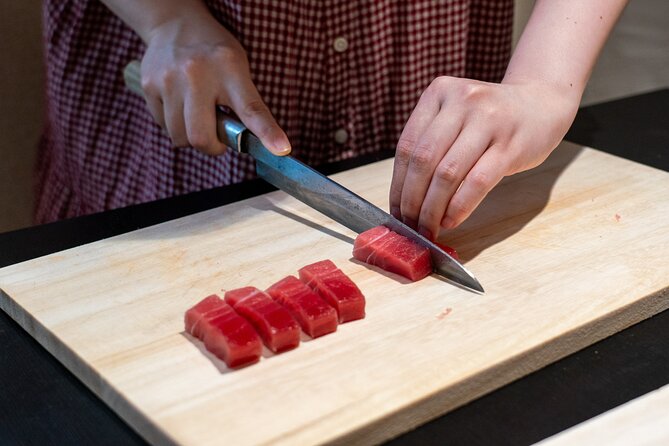
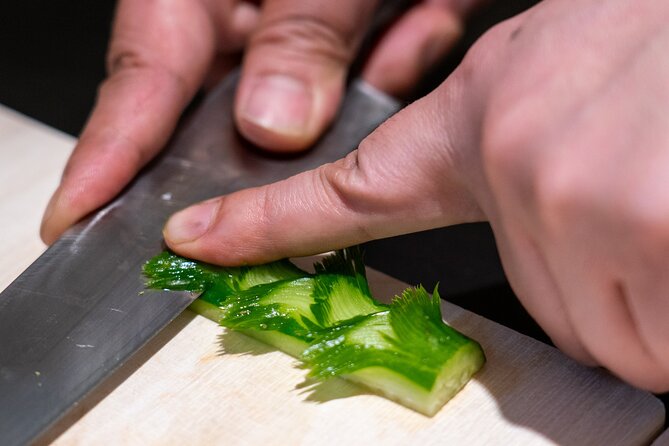
After the sharpening focus, you move into the cooking session for about 30 minutes. This is where you practice sashimi slicing and decorative vegetable cutting techniques.
Sashimi practice is the main draw, but do not expect it to be only about the final slice. The real lesson is how to control the knife, maintain the right approach, and create clean cuts consistently. Japanese knives are designed for certain cutting motions. When you use them with correct technique, the knife feels stable and efficient instead of awkward.
Decorative cutting is the part that surprised many people in the class. Several comments note that decorative cuts were difficult at first, which is exactly the point. You gain respect for chef skill because you understand the effort behind shapes you normally see on a plate.
Here is how to make the most of this portion:
- Slow down your hands. The lesson is precision, not performance.
- Watch what the chef does, then copy the same knife angle and pressure.
- Aim for neatness over speed. A clean slice is a better lesson than a quick one.
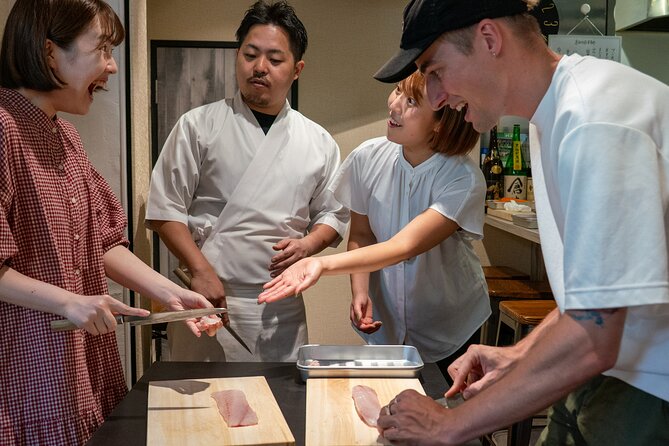
Also, this is hands-on with a private group size. That means you are more likely to get direct feedback when your cut is slightly off. That is where technique classes really pay off.
Tempura and the lunch payoff: what you eat after you learn
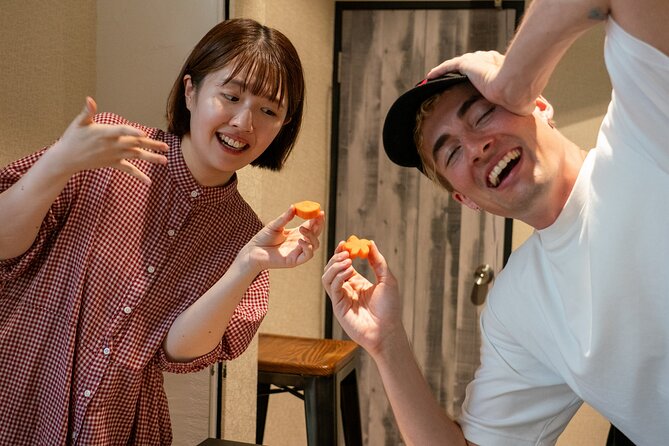
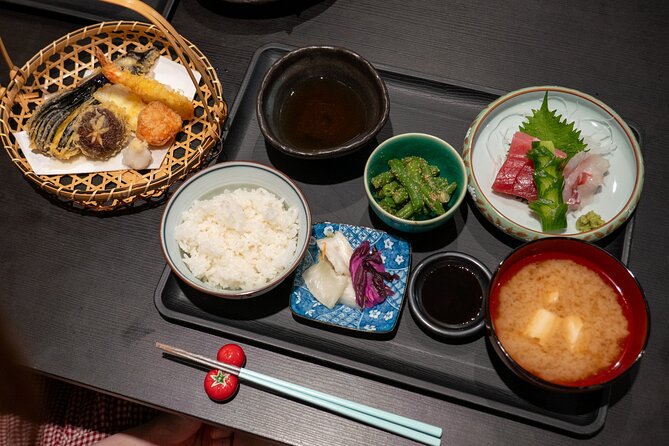
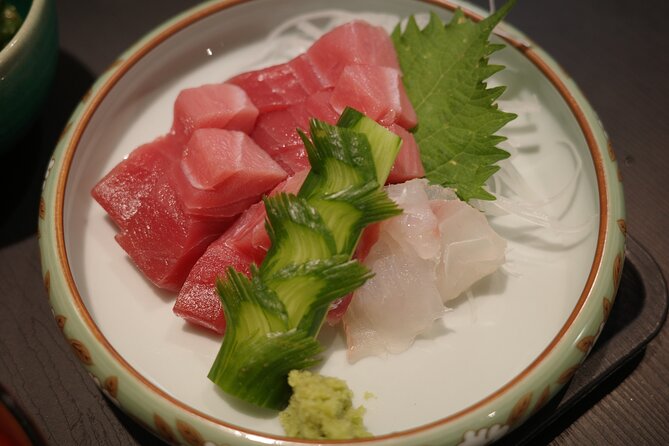
Once cutting is underway, you will prepare a meal that includes handmade sashimi and a tempura platter, then eat what you prepared. The meal time is about 30 minutes, so the total class feels like a complete loop: learn, cook, sit, enjoy.
This is not just lunch in a separate setting. Because you make the food yourself, you get more than calories. You get confirmation that your knife skills translate to taste and texture.
Tempura is also a smart inclusion for a knife class. It gives you a different cooking payoff than sashimi. You are still working with ingredient prep, but the dish variety keeps the experience balanced. The lunch portion also makes the class feel like a real Tokyo experience, not a short demo followed by nothing but questions.
One more value point: you are not trying to recreate this at home right away. You are learning technique and then seeing how it impacts the meal immediately.
More Tokyo tours and experiences for the shortlist



What you should expect from the people leading it
You will be supported by an English-fluent Japanese guide named Amy and a chef team running the technical knife instruction and kitchen practice.
The best kind of class leaders are the ones who can explain technique clearly, then correct small issues without making you feel clumsy. That is what the feedback hints at: warmth, passion for Japanese cuisine, and a patient approach to sharpening and cutting.
You can also expect the class to include some context. At least one comment mentions history shared in a fun way. Even a light touch of context helps you remember what to focus on, like why certain cuts are preferred for sashimi presentation and texture.
Price and value: where $123.79 makes sense
At $123.79 per person, this is not a bargain basement cooking class. But it can be a fair value for what you get if your priority is technique.
Here is the value logic:
- You get a private class for two, which is usually where per-person pricing rises.
- Knife instruction is included, including care and sharpening, which you do not always see in standard cooking workshops.
- Lunch is included, featuring both sashimi and tempura, so you are not paying extra for food.
- The class is short, about 2 hours, which means you are buying focused instruction time, not a half-day schedule.
If you only want to eat Japanese food, there are cheaper options. But if you want a hands-on skill that you can carry home and practice with a knife you own, this pricing starts to look reasonable.
Best for whom, and who might want to skip it
This class is a strong match if you:
- Own a Japanese knife and want to learn how to care for it properly
- Want to practice sashimi slicing in a guided setting
- Prefer learning by doing, with direct feedback
- Like compact, high-impact activities that end with a full lunch
You might choose something different if:
- You mainly want a tasting menu experience with no technique focus
- You hate the idea of spending close to an hour on sharpening and knife care
- You are expecting hotel pickup or door-to-door transport, because you are meeting at the station and walking to the venue
Simple planning tips before you go
This experience is straightforward, but a few prep moves will make it smoother:
- Wear comfortable clothes you can move in. Knife work needs steadier posture than casual sightseeing.
- Come hungry enough to actually enjoy the lunch. The class feeds you, but it is not a long break between lessons.
- If you have your own Japanese knife from your travels, consider bringing it for extra value from the care lesson. Just be aware the class also supplies knives.
Also, you will get a mobile ticket, which makes check-in easier if you like to keep everything on your phone.
Should you book this Japanese knife and sashimi class?
Yes, I think you should book it if your goal is skill, not just sightseeing calories. The private size for two, the sharpening and care instruction, and the fact that you cut sashimi and eat what you made are exactly the kind of combination that turns a Tokyo afternoon into a lasting memory.
If you are on the fence, decide based on one question: do you want to learn what makes Japanese knives work well? If the answer is yes, this class is one of the more practical ways to spend two hours in Tokyo. If you just want to eat and watch, you may prefer a different type of food experience.
FAQ
How long is the Japanese Knife Skills and Sashimi & Tempura Cooking Class?
The class runs for about 2 hours.
What time does the class start?
The start time is 12:00 pm.
Where do I meet the guide?
You meet at Nishi-Koyama Station, ground level exit. The listed address for the meeting point is 6-chōme-3-10 Koyama, Shinagawa City, Tokyo 142-0062, Japan.
How far is the walk from the station to the venue?
After you meet the guide, you walk to the venue for about 10 minutes.
Is lunch included?
Yes. Lunch is included, and it includes what you prepare during the class, including sashimi and a tempura platter.
Do I have to bring my own knife?
No. Knives are provided. If you purchased your own Japanese knife during your travels, you are welcome to bring it along.
Is this class private?
It is a private class for two, with personalized chef attention.
What is the group size?
The minimum number of participants is 2. The maximum is 6 travelers.
Is transportation included from your hotel?
No. Private transportation and hotel travel are not included. You will need to get to the meeting point yourself.
More Workshops & Classes in Tokyo
More Cooking Classes in Tokyo
More Tour Reviews in Tokyo






Not for you? Here's more nearby things to do in Tokyo we have reviewed












Tokyo City Tours, side by side.
 ★ 5.01-Day Tokyo Bus TourFrom $12914,250 reviews
 ★ 4.5TOKYO SKYTREE® Admission ticketFrom $1311,192 reviews
 ★ 4.6teamLab Planets TOKYO Digital Art Museum Entry TicketFrom $259,779 reviews
 ★ 4.0Mt Fuji & Hakone Cruise, Drum Show Bullet Train 1 Day from TokyoFrom $1497,413 reviews
 ★ 5.0Shinjuku Food Tour (13 Dishes at 4 Local Eateries)From $866,603 reviews
 ★ 4.4Tokyo Mt Fuji 5th St & Hakone Cruise Bus Tour w/Bullet TrainFrom $1545,024 reviews
 ★ 5.0Flagship 2-Hours Official Street Go-Kart Tour – Tokyo Bay ShopFrom $644,974 reviews
 ★ 4.5From Tokyo: Mount Fuji Full-Day Sightseeing TripFrom $684,970 reviews
This tour also belongs to