
Review · IMPERIAL PALACE TOURS
Imperial Palace to Tokyo Station Historical Walking Tour
Red-brick Tokyo Station is the finish line. This 2.5-hour walk threads Imperial Palace East Gardens, from fountains and gates to Edo Castle watchtowers, then ends at Tokyo Station.
I love how the Hyakunin Bansho Guardhouse and the other Edo-era spots are explained in a way that makes the layout click. I also love the small group size, max 12, which makes it easy to ask questions and move at a human pace.
One consideration: you can explore the East Gardens, but Inner Palace access is not open to the public, so you are there for exteriors, ruins, and the story behind them, not a full inside-the-palace visit.
Key things to know before you go
- Edo Castle clues, from gates to guardhouses, are read on the ground in the East Gardens
- Photo-friendly timing at Kokyo Gaien National Garden and Nijubashi Bridge views
- A restoration scale model helps you visualize the lost main keep, Tenshukaku
- Every listed stop is free, so your $39.09 goes to the guide and the time
- Small group cap of 12 keeps the tour from feeling like a cattle line
Imperial Palace East Gardens to Tokyo Station, the smart way to connect old Tokyo to new
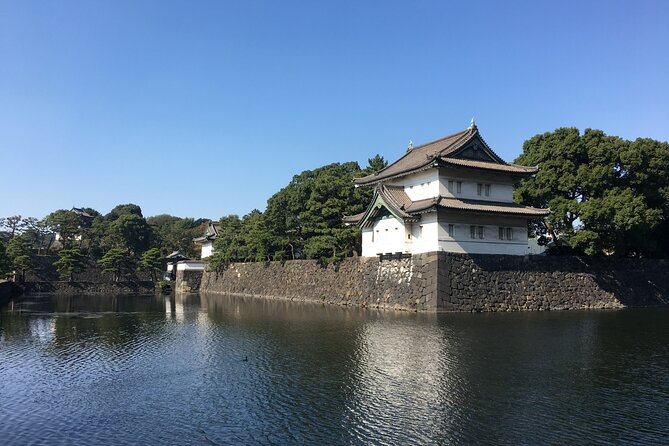
This is the kind of Tokyo walk that lets you see contrast without jumping around on trains. You start near the Imperial Palace gardens, where moats, gates, and stone foundations point back to the shogunate era. Then the route slides into Marunouchi, and you finish at Tokyo Station, the city’s classic red-brick arrival point.
The timing is about 2 hours 30 minutes, which is long enough to cover the key sights without turning into a marathon. You also get a mobile ticket, and the route is built around spots you can enter without paying separate admissions.
One practical note: lunch is not included. So I treat this tour like a “walk first, eat after” plan, and I keep a little cash or a credit card handy for convenience stores, bakeries, or a late lunch near Tokyo Station.
You can also read our reviews of more walking tours in Tokyo


Where the East Gardens story starts, Wadakura Fountain Park and Kokyo Otemon Gate
Wadakura Fountain Park is a good warm-up. It is near the palace grounds, and it has a specific meaning, established in 1961 to commemorate the marriage of Emperor Akihito. That little historical marker matters because it sets the theme for the whole tour: this area is not just pretty landscaping, it is part of Japan’s modern and imperial timeline.
From there, the route moves to Kokyo Otemon Gate, the Ōte-mon Gate, the main entrance to the Imperial Palace East Gardens. The tour frames it as a former primary access point to Edo Castle. Even if you have read about Edo Castle before, standing near the gate helps you understand why so much power centered here, and how movement into the compound was controlled.
Why I like the way this early sequence works for you: you get orientation fast. You can look at the gates and think, oh, this was built for entry, security, and ceremony all at the same time. That makes later ruins and watchtowers easier to understand, not just easier to photograph.
Ote-San’no Gate Ruins and Hyakunin Bansho Guardhouse, where security becomes a lesson
Next comes the quieter part, the type of stop you might otherwise rush past. Ote-San’no Gate Ruins are remnants of a structure tied to Edo Castle’s defensive design. You will be looking at what is left, not at what is fully restored. That can be frustrating if you are expecting museum-level reconstructions. But with a guide, the ruins become a clue trail.
Then you reach Hyakunin Bansho Guardhouse, historically manned by a hundred samurai tasked with security for the castle’s innermost sections. The name alone turns into a real story about vigilance and order. The guide’s explanations make the guardhouse feel less like a random building and more like a system: who protected what, and why.
This is also where the guide quality really shows. In the past, guides like Naoki have been patient with questions and good at slowing down when you want details. If you enjoy asking why something is shaped the way it is, this is a great stretch of the tour to lean into that curiosity.
Ninomaru Garden, Suwa-no-chaya, and Bairinzaka, the breaks that keep the walk enjoyable
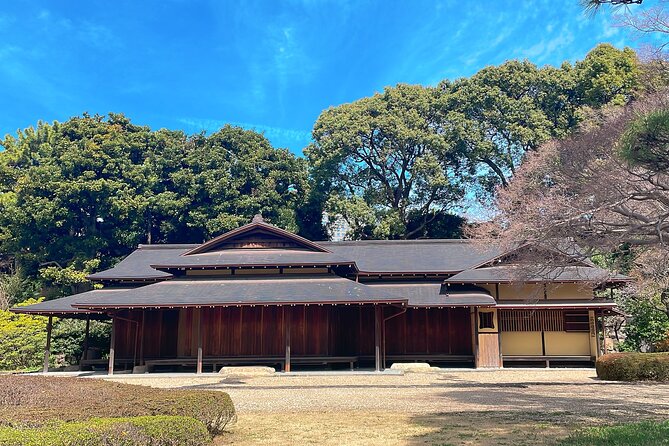
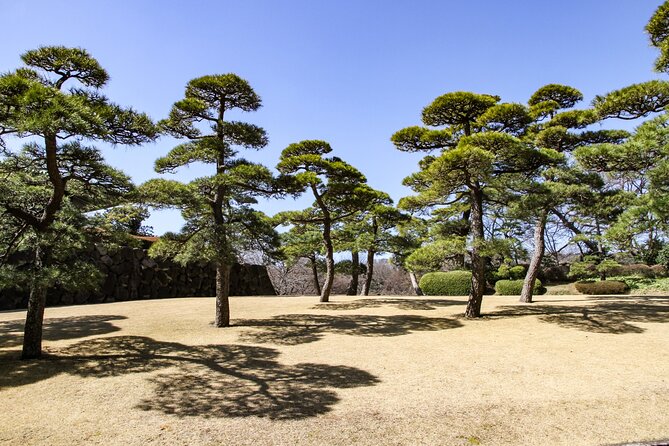
After gates and defense, you get a change of pace in the gardens. Ninomaru Garden is landscaped with the classic Japanese style in mind, with seasonal plants, winding paths, and water features. Even if you visit during a season when fewer blooms are visible, the design still shows you how space was planned for calm and controlled viewing.
Then there is 諏訪の茶屋 (Suwa-no-chaya). The teahouse is historic, but the listing notes the teahouse itself is not operational. So think of this as an ambiance stop. It helps you picture court culture, tea rituals, and the idea that downtime was part of life inside elite compounds, even centuries ago.
Finally, Bairinzaka, also called Plum Tree Hill, is a short uphill breather with a seasonal payoff. During plum bloom time, it becomes fragrant and photogenic. If you are not there in bloom season, it is still a viewpoint moment that gives your legs a gentle change in effort before you head back into ruins and stonework.
If you get tired of straight-line sightseeing, this garden trio is exactly what keeps the route fun instead of tiring. It also sets up the next stops, because once your eyes adjust to open views and water, the stone foundations and watchtower shapes start reading like a diagram.
Edo Castle takehashi gomon ruins and Fujimi-yagura, reading the city’s military side
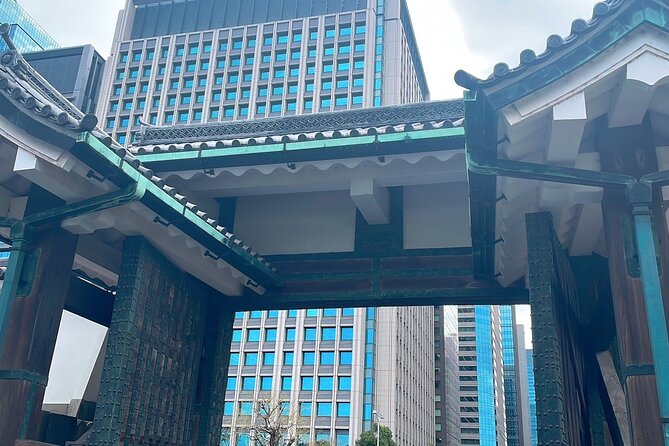
Now you shift into the parts that look simple until you understand what you are seeing. Edo Castle Takehashi Gomon Ruins relate to the main keep area. The original structure was lost, but stone foundations and wall remnants help convey scale and importance. This is one of those places where the guide matters, because the ruins are subtle without context.
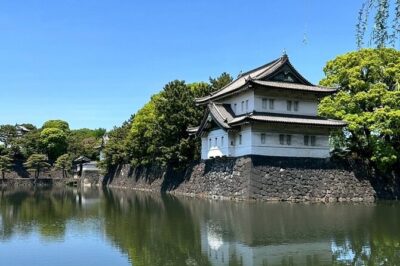
Right after that, you visit Fujimi-yagura, one of the remaining watchtowers. The purpose was surveillance and defense. Standing there, you start to see the landscape differently. Lines of sight, elevated positions, and how people would monitor movement become part of the story, not just an abstract concept from a textbook.
This is also a good section for families and teens, as long as you pick the right mindset. The guide’s job is to turn “old rocks” into a reason the stones exist where they do. When that clicks, the questions start flying. The experience fits best when you are willing to slow down for a minute and let the place explain itself through layout.
You can also read our reviews of more historical tours in Tokyo




The Tenshukaku model and Honmaru, how the pieces connect in your head
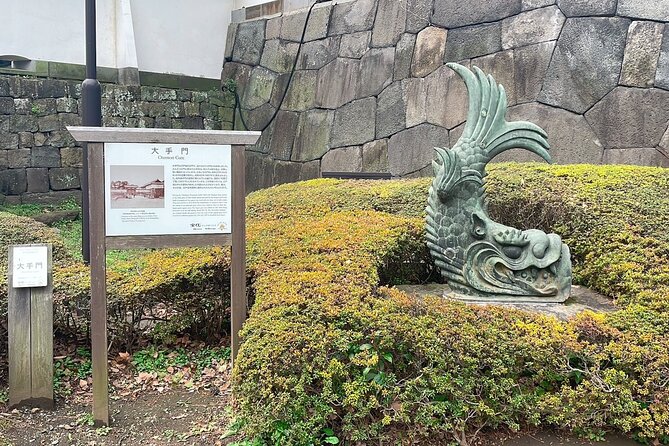
One of the most practical stops on the route is the Edo Castle keep restoration model. Inside the Imperial Palace East Gardens, you will find a detailed scale model of the original main keep, Tenshukaku, reconstructed based on historical records and drawings. That is gold for your brain. Without it, you might struggle to picture what stood there, because the keep itself is not present.
Next is Honmaru (Main Hall), once the central compound of Edo Castle. This area served as the main residence and political headquarters of the Tokugawa shogunate. If earlier stops helped you see security and perimeter, Honmaru gives you the power center.
Here’s why I think these two stops work so well together. The restoration model provides the “what,” and Honmaru provides the “why it mattered.” After that, the entire walk feels less like a list of separate points and more like a single, connected map of governance, defense, and ceremonial life.
Kokyo Gaien National Garden to Marunouchi, the photo window and the city shift
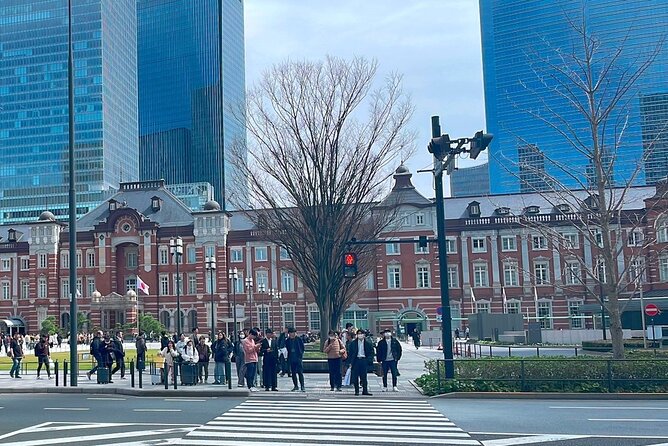
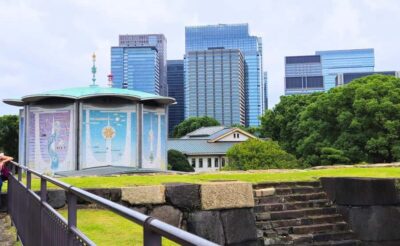
After the East Gardens, you move toward Kokyo Gaien National Garden, an expansive plaza area with clearer sightlines. This section is specifically useful for photography because you get unobstructed views of palace outer structures and the Nijubashi Bridge. That bridge is one of the easiest Tokyo landmarks to recognize, and it is also one of the best “you are really near the palace” reminders on the route.
Once you finish the garden views, the tour walks into Marunouchi, Tokyo’s prestigious business district. Here you get modern skyscrapers, along with older buildings that still carry presence. The area is known for upscale shopping and dining, and there are often art installations around, which helps the transition from imperial grounds into contemporary city life.
This part is where the walking tour becomes useful for non-historians too. Even if you do not care about Edo Castle details, you still learn how Tokyo layers eras. You go from gates and stones to offices and boutiques without feeling like you hopped eras by accident.
Tokyo Station red-brick finale, a great place to end your day
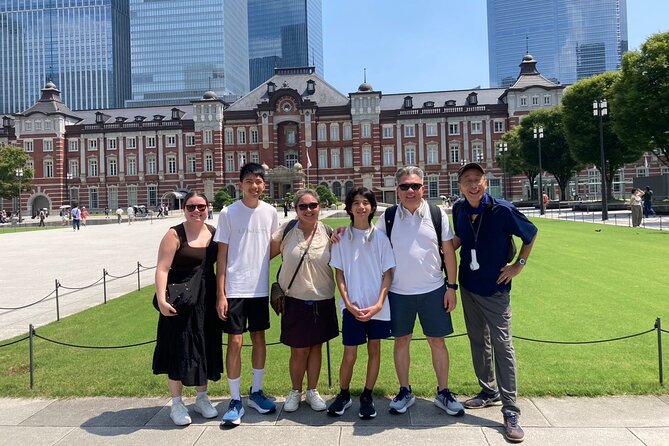
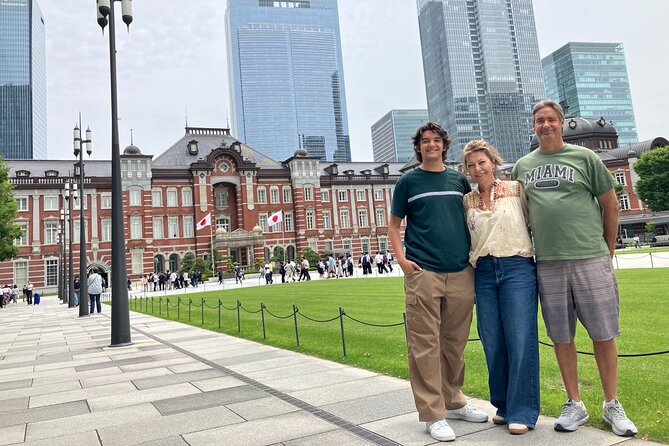
The tour concludes at Tokyo Station, specifically the red-brick façade restored to its 1914 look. That matters because Tokyo’s newer architecture can make the city feel like it jumped ahead in time. Tokyo Station gives you a tangible mid-point, where older style meets today’s transit hub.
Inside, Tokyo Station is a practical place to be after a walk. You can find shops, dining, and services without needing to plan a separate stop right away. The tour’s end point is also easy to use for onward travel, since Tokyo Station is a major connection point.
If you are using the station as your base, I recommend saving your stronger shopping urges for after you arrive. The station is big. You do not want to sprint through it right after a 2.5-hour walk.
Price and what $39.09 buys in a city where time is the real cost
At $39.09 per person, the main value here is the guide and the time you save in understanding what you are looking at. Every listed stop is admission-free, so you are not paying for entrances. You are paying for someone to connect the dots between gates, guardhouses, ruins, gardens, and the model that shows what is missing.
Also, a small group cap of 12 helps. In a large group, you might catch only a few facts at each stop. In a smaller group, you have room to ask. Past experience with guides such as Ms. Futami and Masa-san has highlighted engagement and responsiveness to questions, which is exactly what you want when the sights are partly ruins.
Two things to watch on the value side:
- Lunch is not included, so you will need to budget for food or snacks.
- The Inner Palace is not open to the public, so the tour focuses on East Gardens and surrounding views instead of a full interior tour.
Finally, this kind of tour can book ahead. The average booking timing is around 23 days in advance, so if you have fixed dates, it makes sense to lock it in early.
Who should book this, and who should skip it
This is a strong pick if you want:
- A guided, walkable route through the Imperial Palace East Gardens and Edo Castle remnants
- Clear explanations that help you understand what is left and why it matters
- A smooth finish in Marunouchi and Tokyo Station, so your day does not end at a random street corner
It also works well for families with teens who can handle short walking stretches and prefer learning over just looking. In prior experiences, guides like Mitsuko Shirai (Mitsi) were described as kind and good at keeping families engaged, including younger visitors who still had questions.
You might consider skipping if:
- You specifically want access to the Inner Palace interior, because access is not available to the public
- You dislike walking and want fewer stops, since this is built around multiple points within the gardens and then an urban transition
Final call, should you book the Imperial Palace to Tokyo Station walk?
If you want Tokyo history with actual structure, book it. The East Gardens stops connect into a clear story, and the restoration model plus Honmaru help you understand the whole layout without feeling lost. Ending at Tokyo Station is also convenient, so you can keep exploring or get on a train with less hassle.
If your ideal day is mostly inside buildings or you are chasing a single big landmark, you may find the ruins and garden viewpoints more satisfying than necessary. But for most visitors, this is one of those “few hours, lots of clarity” tours.
My practical advice: wear comfortable shoes, bring water, and plan to eat near Tokyo Station after the tour. Then you get the best of both worlds, palace grounds for understanding, and Marunouchi for easy food and transport.
FAQ
How much does the Imperial Palace to Tokyo Station Historical Walking Tour cost?
It costs $39.09 per person.
How long is the tour?
The tour lasts about 2 hours 30 minutes.
What is included in the price?
The local tour guide is included. Admission for the listed stops is free, and you also receive a mobile ticket.
Where do I meet the tour?
You meet at Starbucks Coffee – Kokyo Gaien Wadakura Fountain Park, 3-1 Kōkyogaien, Chiyoda City, Tokyo 100-0002, Japan.
Where does the tour end?
The tour ends at Tokyo Station, 1 Chome-9 Marunouchi, Chiyoda City, Tokyo 100-0005, Japan.
Is lunch included?
No. Food and drinks are not included and should be purchased individually.
Can I access the Inner Palace?
Access to the Inner Palace is not open to the public.
What is the group size limit?
The tour has a maximum of 12 travelers.
Are service animals allowed?
Yes, service animals are allowed.
What is the cancellation policy?
You can cancel for a full refund up to 24 hours in advance of the experience start time.
More Walking Tours in Tokyo


More Tours in Tokyo






More Tour Reviews in Tokyo


Not for you? Here's more nearby things to do in Tokyo we have reviewed












Imperial Palace Tours, side by side.
 ★ 5.0Imperial Palace and Shogun Historical Walking TourFrom $222,251 reviews
 ★ 4.9Imperial Palace Japanese History Walking TourFrom $32987 reviews
 ★ 4.9Imperial Palace and Shogun Walking TourFrom $16935 reviews
 ★ 5.0Imperial Palace East Garden and Edo Castle Walking Tour in TokyoFrom $25510 reviews
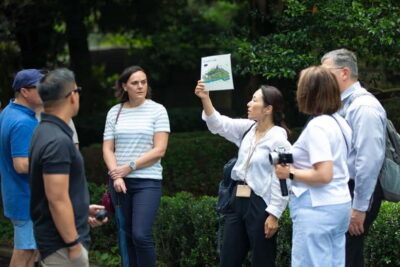 ★ 4.8Imperial Palace East Gardens Walking TourFrom $19353 reviews
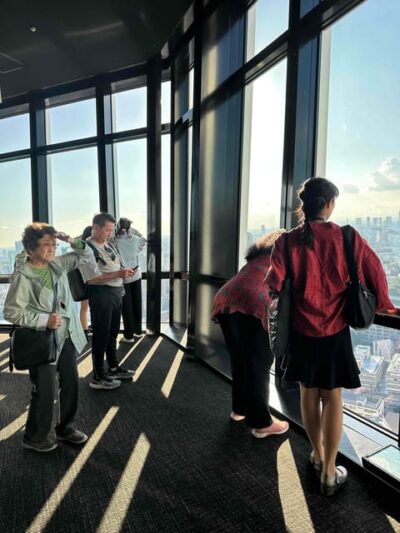 ★ 4.5Imperial Palace, Sensō-ji Temple, & Tokyo Tower TourFrom $40339 reviews
 ★ 5.0Tokyo Castle, Imperial Palace, Shogun & Garden Walking TourFrom $31211 reviews
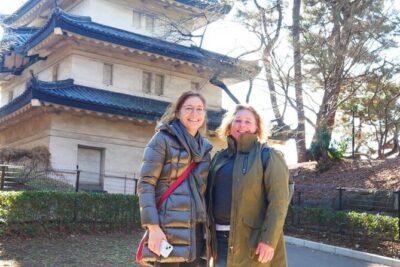 ★ 4.7Edo Castle & East Garden of the Imperial Palace TourFrom $42112 reviews
This tour also belongs to