
Review · TOKYO CITY TOURS
Sushi Cooking Class: AKEMI’s SUSHiKiTCHEN in Tokyo
Cooking sushi at home beats eating out. In Akemi’s SUSHiKiTCHEN, you learn four types of sushi with a real, teacher-led flow, plus the background that turns sushi from food into culture. It takes place in a quiet Tokyo residential setting, so you’re not stuck under restaurant noise while you learn.
What I love most is the combination of personal guidance and a home atmosphere that feels calm and welcoming. The second standout is the ingredient focus: special blended sushi rice from Hachidaime Gihey in Kyoto and fresh fish sourced from Toyosu and Tsukiji. One thing to consider, though, is that this is a hands-on class with a limited group size, so it’s not a private, custom schedule for big parties.
Key Things That Make This Sushi Class Worth Your Time
- Small-group, hands-on teaching with room for questions and slower pacing for beginners
- A chef host with Edomae training who teaches sushi technique and the meaning behind the food
- Premium ingredients, including Kyoto rice and fresh neta from Tokyo markets
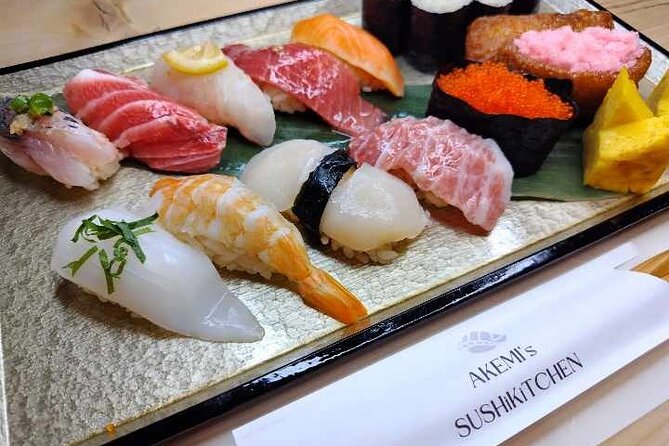
- Four types of sushi made by you, then served as your own meal
- Sushi etiquette and terminology so you can order and eat with confidence
Entering Akemi’s Tokyo Home (Not a Restaurant Classroom)
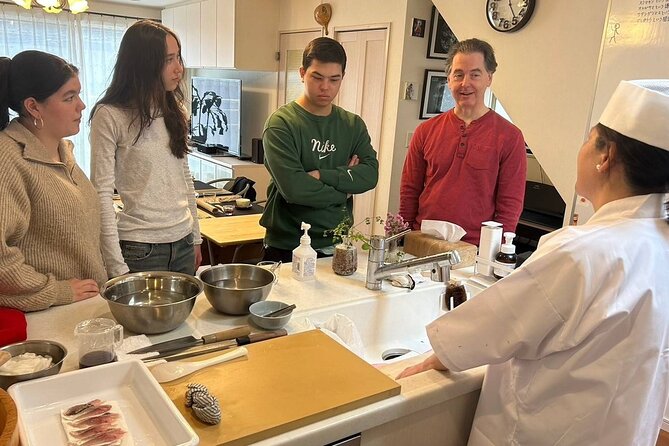
Sushi classes in Tokyo often advertise technique, but this one really leans into place. You meet in Shibuya, then step into a real home in a quiet residential area. That setting changes the whole vibe. There’s less pressure than a restaurant meal where you feel rushed to finish or figure things out. Here, the pace is built for learning.
I like that the experience is described as an at-home environment with a focus on calm, personal attention. With a maximum of six travelers overall, and lessons limited to five students, you’re less likely to get lost in the shuffle. You’ll get closer to what Japanese home cooking feels like, just guided by a professional chef.
Another point that matters: this is taught by Akemi, and her English proficiency is part of the package. That means you’re not relying on guesswork while everyone else nods. You can actually understand the terms, the etiquette, and the reason behind each step.
You can also read our reviews of more cooking classes in Tokyo


Price and Value: What You’re Really Paying For
At $105.68 per person for about 2 hours 30 minutes, it’s not the cheapest food activity in Tokyo. But you’re also not just paying for a meal. You’re paying for instruction, translation support, and ingredients that are treated like the main event.
The best way to think of the value is this: sushi quality is won or lost on details. This class puts money where it counts. Akemi sources blended rice specially ordered from Hachidaime Gihey in Kyoto (est. 1787), and she uses fresh fish (“neta”) sourced directly from Toyosu and Tsukiji fish markets. Those are not casual choices, and they affect how your sushi tastes even when you are still learning.
You’re also getting more than “cook and eat.” The class includes sushi history, terminology, and eating etiquette. That kind of context pays off later when you try sushi in restaurants, izakaya, or even convenience store setups (where quality and expectations can vary a lot).
And because you make the meal yourself, the time feels justified. You’re not watching a demo for the whole session. The lesson culminates in the sushi you hand-prepared and then eat.
Ingredients That Taste Like a Plan, Not a Guess
A lot of sushi experiences in tourist areas feel like a generic “sushi roll workshop.” This one is different because the ingredient story is specific and intentional.
The rice is the foundation. Akemi uses blended rice specially ordered from Hachidaime Gihey in Kyoto. Even if you’ve never cooked sushi rice before, you’ll quickly understand why people talk about the rice like it’s a recipe inside the recipe. Sushi rice is not just cooked rice, it’s seasoned rice with a certain texture and balance that supports the fish and the form of the sushi.
Then there’s the fish. The neta is sourced from Toyosu and Tsukiji markets. That matters because sushi is a freshness-driven dish. If fish quality is mediocre, technique can’t fully save the final taste. Here, the class sets you up with ingredients that can handle learning curves.
You’ll also appreciate that the class doesn’t treat ingredients as background trivia. Learning happens alongside the food. When you handle the rice and build sushi, you start to connect technique to taste right away. That’s the “why” behind the cultural talk, and it makes your meal feel earned.
The Lesson Flow: How Four Types of Sushi Comes Together
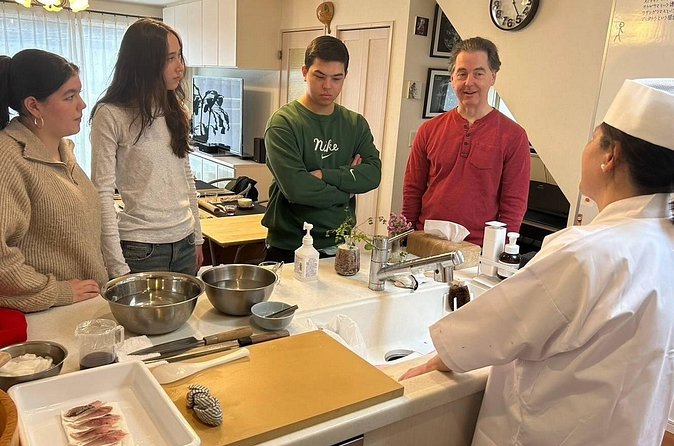
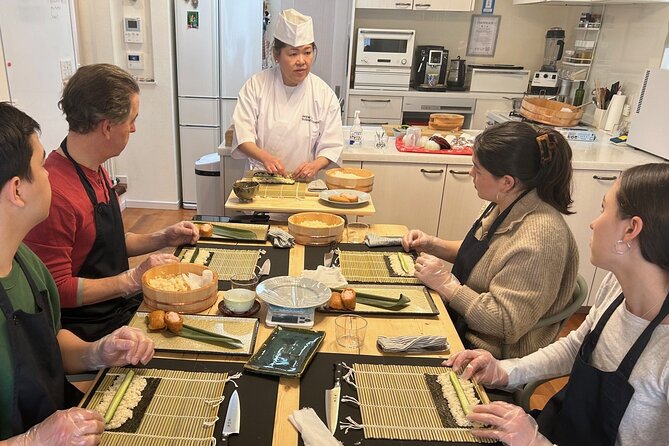
The class covers four types of sushi, and the structure is designed to guide you step-by-step while keeping you actively involved. You’ll start in Akemi’s home with an introduction to what you’re making and what matters for each piece. Expect guidance geared toward your comfort level, including if you’ve never tried sushi before.
Because the maximum group size is small, the teaching can stay personal. That’s important for beginners. Sushi has little “gotchas,” from how you handle rice to how you shape each piece. In a big class, you might only get quick corrections. In this format, you have a better chance to adjust in real time.
Here’s what you can expect as the session builds:
You learn the core method for working with sushi rice, then you move into assembling sushi pieces. Since the class culminates in a meal you make yourself, you’ll be building with the end goal in mind: eat what you create. That makes every step feel purposeful, not like a demo that ends with someone else plating.
As you cook, you’ll also get cultural context blended into the experience. The idea is that sushi is not only technique. It’s also a set of customs and language. That context helps you understand what you’re seeing when you eat sushi later.
At the end, your class outputs become the meal. This is one of those experiences where the final part is genuinely satisfying, because you’re not just tasting sushi, you’re tasting your own work.
Sushi History, Etiquette, and Terms That Actually Help You Order
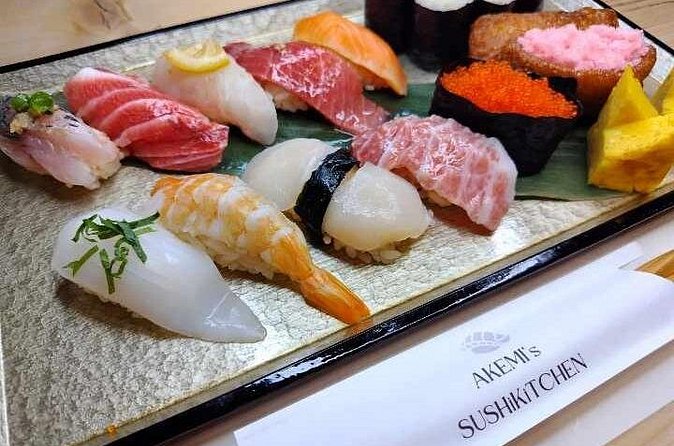
One of the reasons this class stands apart is that it doesn’t stop at how to make sushi. It also explains Japanese food culture and the history of sushi, plus sushi terminology and eating etiquette.
This is where you’ll probably notice the difference between learning “how to roll something” and learning “how sushi works.” Sushi history and culture explain why people care about things like seasonality and presentation, and why some manners are less about being formal and more about respecting the craft and the meal.
Terminology is also a huge win. Even a few useful words can change how you experience sushi restaurants. You’ll be able to follow explanations more easily, and you’ll understand why certain pieces are described a certain way.
Etiquette is practical too. You learn the expected approach to eating sushi so you don’t feel lost when you’re sitting at a counter or sharing a meal. It also helps with confidence. Instead of hovering over questions, you’ll already have a mental framework for what’s normal.
The class also notes that even Japanese participants have shared that they learned a lot about their own food culture. That’s a big deal. It suggests the teaching is more than a simple tourist intro.
More Tokyo tours and experiences for the shortlist




Meet Akemi, Learn From Real Edomae Training
Akemi’s background matters because it influences the teaching quality. She has seven years of experience in the restaurant industry in Japan, and she has completed the Edomae Sushi Technique Acquisition Course at the Tokyo Sushi School.
If you’ve heard of Edomae sushi before, this gives you a clearer idea of what you’re learning. Edomae is a traditional approach tied to Tokyo’s sushi culture, and training like this is built around technique and craft thinking. You can feel it in the way instruction is framed: as a craft with standards, not just a snack to assemble.
The class is hosted in English, which helps you connect with technique without losing meaning. And the small-group format is key here. When you can ask questions and get specific answers, you learn faster and you make fewer repeated mistakes.
There’s also a friendly tone from the hosting setup. The experience notes emphasize that the hosts are super friendly and that the atmosphere of their lovely home makes it easy to relax. That sounds small, but it changes everything when you’re learning something hands-on that can feel intimidating at first.
Timing, Tickets, and Getting There Without Stress
This experience runs about 2 hours 30 minutes and uses a mobile ticket. You’ll start at Tamanosato Sasazukaten 1-chōme-56-18, Sasazuka, Shibuya, Tokyo 151-0073, Japan, and it ends back at the meeting point.
That duration is a good sweet spot. It’s long enough to actually learn and make four types of sushi, but not so long that it turns into a tiring cooking marathon. If you have a packed Tokyo schedule, this is a manageable block that still feels like a full experience.
Because it’s in a residential area, plan for a little extra time the first time you navigate there. Public transportation is nearby, but finding a specific home entrance can take a moment. I recommend checking your mapping app the day before and double-checking the meeting point address.
What You’ll Eat, and How to Carry It Into Your Next Sushi Meal
The highlight of the class is the meal at the end, made by you. That’s not a throwaway line. Sushi is a dish where technique and ingredient quality show up instantly, so when you create the pieces yourself, you learn faster.
After the class, you’ll likely notice you eat differently. You’ll pay attention to rice texture, fish freshness, and the way balance changes with each piece. You’ll also have the vocabulary to describe what you like and to ask questions more confidently at a restaurant.
If you want to recreate it at home, treat this as skill-building rather than an exact copy. Tokyo sushi depends on ingredient sourcing and technique precision. But you can still carry over what matters: respect for rice quality, gentle handling, and an understanding of etiquette.
Even if you never cook sushi at home again, you’ll still leave with a more informed way to enjoy it in Tokyo. That’s the real travel win.
Who Should Book This Sushi Cooking Class in Tokyo
This is a great fit if you want more than a meal and you like learning with your hands. It’s especially good for first-timers because the class is designed to be approachable, and the lesson is structured with personalized guidance.
You’ll also enjoy it if you care about Japanese food culture and want the context behind what you eat. The history, terminology, and etiquette make it feel like a mini lesson in how sushi is understood in Japan.
This may not be the best match if you want a fully private experience. The class limits the number of students, so it’s not designed for a large group. Also, if you’re already an advanced sushi maker looking for a highly technical, competition-level training session, you might find the focus is more balanced toward first-time learning and cultural understanding.
Should You Book Akemi’s SUSHiKiTCHEN?
Yes, if you want a hands-on sushi experience in Tokyo that prioritizes quality ingredients, small-group attention, and useful cultural context. For around $105.68, you get far more than a tasting. You get technique coaching, four types of sushi you make yourself, and the language and etiquette to enjoy sushi better after the class ends.
Book it if you’re curious about Edomae-inspired technique and you want to feel confident when you sit down for sushi in Japan. Skip it only if you need a private large-group setup or you’re looking strictly for a quick food stop. For most people who want a meaningful Tokyo food memory, this class hits the sweet spot.
FAQ
How long is the sushi cooking class?
The class lasts about 2 hours 30 minutes.
What is the group size for the class?
The activity has a maximum of 6 travelers, and the lesson is limited to a maximum of five students.
Where does the class meet?
You meet at Tamanosato Sasazukaten 1-chōme-56-18 Sasazuka, Shibuya, Tokyo 151-0073, Japan.
What will I make during the class?
You will learn how to make four types of sushi.
What ingredients are used for the sushi?
You’ll use blended rice specially ordered from Hachidaime Gihey in Kyoto, and fresh fish (neta) sourced directly from fish markets in Toyosu and Tsukiji.
Is the lesson taught in English?
Yes. Akemi offers an educational sushi lesson using her proficiency in English.
Is it okay if I have never tried sushi before?
Yes. The lesson is designed to be enjoyed even if you have never tried sushi before.
Can I get a refund if I cancel?
Yes, free cancellation is available. You can cancel up to 24 hours in advance for a full refund.
More Workshops & Classes in Tokyo
More Cooking Classes in Tokyo
More Tour Reviews in Tokyo





Not for you? Here's more nearby things to do in Tokyo we have reviewed







Tokyo City Tours, side by side.
 ★ 5.01-Day Tokyo Bus TourFrom $12914,250 reviews
 ★ 4.5TOKYO SKYTREE® Admission ticketFrom $1311,192 reviews
 ★ 4.6teamLab Planets TOKYO Digital Art Museum Entry TicketFrom $259,779 reviews
 ★ 4.0Mt Fuji & Hakone Cruise, Drum Show Bullet Train 1 Day from TokyoFrom $1497,413 reviews
 ★ 5.0Shinjuku Food Tour (13 Dishes at 4 Local Eateries)From $866,603 reviews
 ★ 4.4Tokyo Mt Fuji 5th St & Hakone Cruise Bus Tour w/Bullet TrainFrom $1545,024 reviews
 ★ 5.0Flagship 2-Hours Official Street Go-Kart Tour – Tokyo Bay ShopFrom $644,974 reviews
 ★ 4.5From Tokyo: Mount Fuji Full-Day Sightseeing TripFrom $684,970 reviews
This tour also belongs to