
Review · KAMAKURA DAY TRIPS
Kamakura 8 hr Private Walking Tour with Licensed Guide from Tokyo
A giant Buddha in one smooth day. This Kamakura day trip from Tokyo is a smart mix of temples, coastal views, and old shopping streets, all paced for real life travel. I love the scale of the Great Buddha of Kamakura at Kotoku-in, and I like how Hasedera gives you that ocean view from above while the whole area feels calm and old. The tour also stands out for its flexibility, you can choose the stops that match your mood.
The main drawback is simple: it is a walking day using public transportation, so you will want comfortable shoes and the stamina for stairs and crowds where needed. Also, entrance fees and lunch are not included, so you will budget a bit extra once you are there.
Key things that make this tour work
- A private, licensed guide who adjusts to you, including practical help like navigation and restaurant choices
- Top highlights with real payoff, Great Buddha, Hasedera ocean views, and the bamboo grove at Hokoku-ji
- Easy pacing for a full day, since the guide plans routes and timing within the 8 hours including travel
- Food that is part of the sightseeing, like the dove-shaped biscuits called hatosabure on Komachi Street
- Zen temples without the guesswork, such as Kencho-ji and Engaku-ji when you want a quieter, reflective route
- Bonus sightings when conditions allow, one guide added a Mount Fuji viewpoint in Inamuragasaki
Kamakura is the Tokyo escape you can actually finish
If you only know Kamakura from photos, this is a good way to see why it still feels like its own place. You are mixing ocean air, centuries-old temples, and a town street culture that is easy to wander. It is close enough to fit into a single day, yet varied enough that it does not feel like a rushed stop.
What I like most is that the day is designed around choice. Instead of forcing every temple on every person, you pick a handful of stops that fit your interests. That matters because Kamakura has a lot to offer, and time disappears fast once you factor in travel and crowd flow.
You can also read our reviews of more walking tours in Tokyo


8 hours, trains and walking, and how the guide saves your energy
This is a walking tour, and the time on trains and buses is built into the total 8 hours. That is the right idea for a day trip like this, because the hardest part is not the temples, it is getting in, getting around, and not losing your afternoon to transfers.
In multiple guide stories, the big praise is how well they handle the transport maze. One guide, Hiroyuki, specifically helped with a tricky rail plan with multiple transfers, and another guide focus was building confidence for solo travelers by taking care of the train and bus logistics. If you are coming from central Tokyo, that kind of help is not just convenient, it prevents fatigue from stacking up.
You also get the human benefit of asking on the spot. When you decide you want more time shopping, or you want to skip it, a good guide can rewrite the flow while you are on the move. That is what turns a day trip into a day that feels like your own.
Your best stops: Great Buddha, Hasedera, and the bamboo grove
When you want the “wow, I came to Kamakura” moments, these three are usually the core.
Kotoku-in Great Buddha of Kamakura
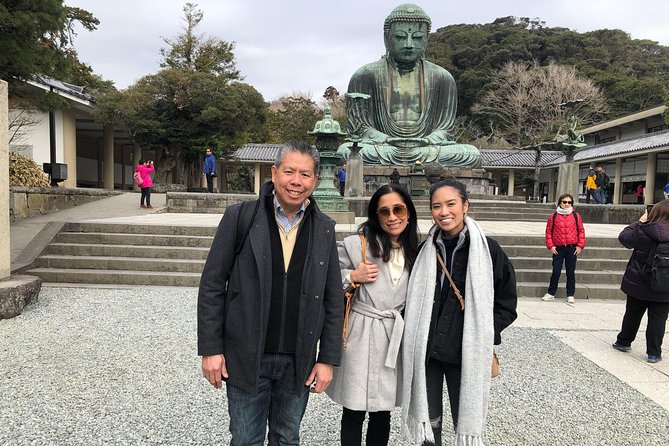
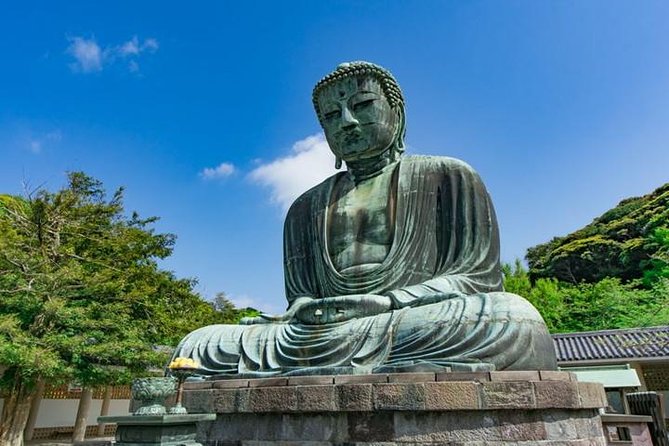
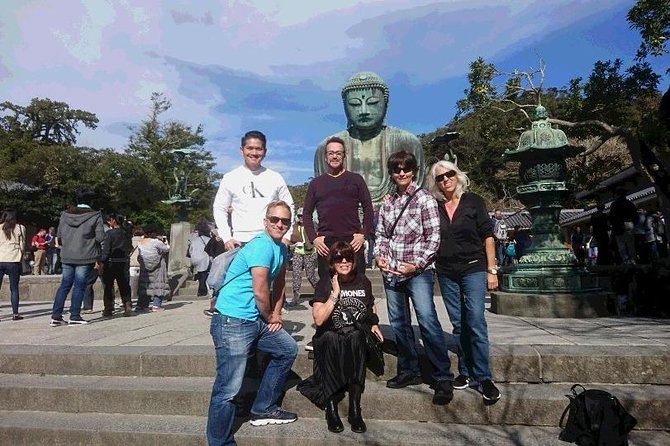
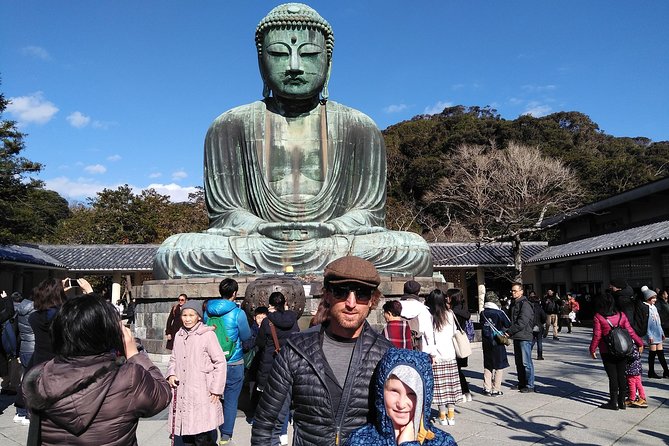
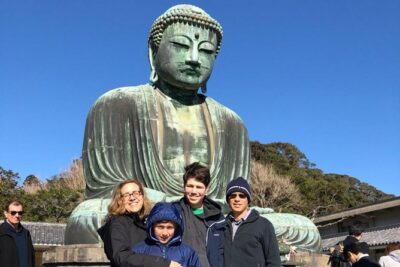
At Kotoku-in, the Great Buddha is the headline: a bronze Amida Buddha statue standing about 11.4 meters tall. It is not subtle. You feel it immediately, and it is one of those sights where photos do not tell the whole story because the scale hits you in person.
This stop is also a good anchor point for the rest of the day. After you see the statue, you are in the right mindset for the rest of Kamakura’s spiritual architecture.
Hasedera Temple with ocean views
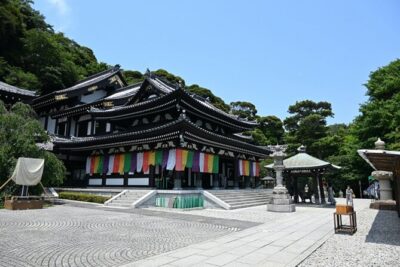
Hasedera is famous for its eleven-headed statue of Kannon, the goddess of mercy, and the gilded wooden image is listed as 9.18 meters tall. What really pays off for most people is the viewpoint feeling. You get to view the ocean from the highest point of the temple area, which turns a temple visit into something with air and space.
If your travel style is photos plus atmosphere, Hasedera is usually worth the time. If your travel style is quiet and reflective, it still works, because the temple setting naturally slows you down.
You can also read our reviews of more guided tours in Tokyo


Hokoku-ji bamboo grove
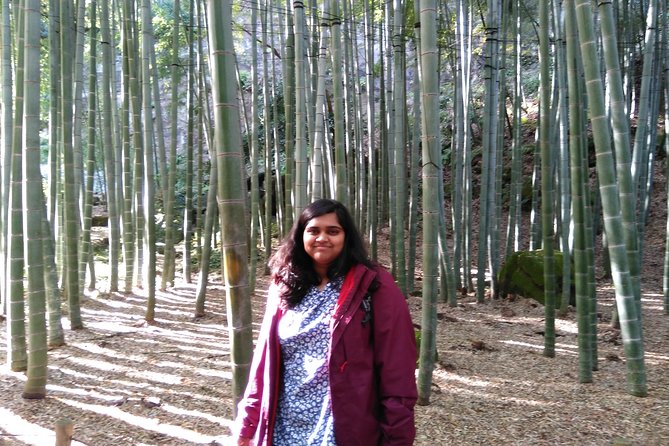
Back behind Hokoku-ji’s main hall, you get a bamboo grove with over 2,000 bamboo stalks. The paths are narrow, so you get that tunnel-like walk feeling without needing to go looking for it.
This is where the day gets balance: after stone and incense, the grove gives you texture and shade. It also makes a nice break from longer temple halls.
Tsurugaoka Hachimangu and Komachi Street, where shopping is part of the story
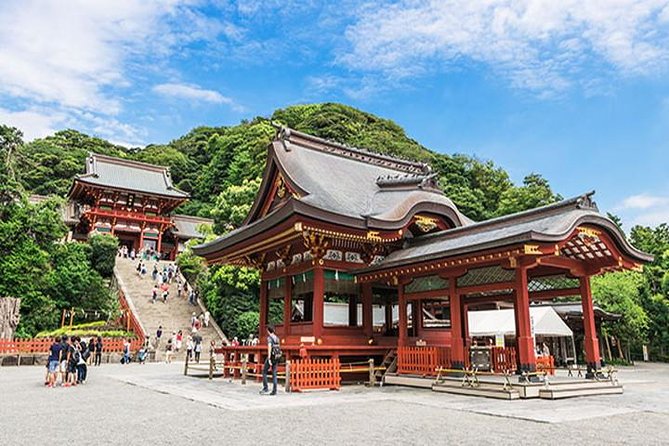
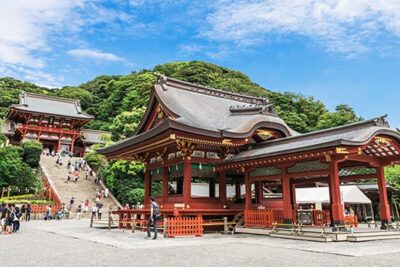
Kamakura’s big shrine atmosphere starts at Tsurugaoka Hachimangu. The shrine is dedicated to Hachiman, the patron god of the Minamoto family and samurai in general. Even if you do not read every plaque, you will feel the scale and the ceremonial layout of the place.
Then comes Komachi Street, where the trip turns into a town day as much as a shrine day. This is where you can pick up snacks and browse, and it is also where you might try the dove-shaped biscuits called hatosabure. Those are a very Kamakura kind of souvenir, not just a random candy shop item.
One guide detail that I love: several tours leave time for browsing and help with ordering food. That is especially helpful if you want to try a local lunch but do not want to turn your day into a restaurant scavenger hunt.
Zen temples and side trips you can add if you still have energy
If you like Buddhism beyond the headline sites, Kamakura has a strong Zen layer. This is where a private guide really earns their fee, because it is easy to miss what you are looking at when everything is just “a temple” from a distance.
Here are some of the optional stops you might include based on what you want:
Kencho-ji and Engaku-ji
Kencho-ji is listed as the number one of Kamakura’s five great Zen temples and the oldest Zen temple in Kamakura, founded in 1253. Engaku-ji is listed as the number two of the five great Zen temples, founded in 1282.
Both are good for travelers who like the calm rhythm of temple grounds, not just the big architecture photos. If you want your day trip to feel less like a checklist and more like a journey, these fit well.
Zeniarai Benten shrine, coin washing
At Zeniarai Benten Shrine, people visit to wash their money. The meaning is right there in the name, zeniarai literally points to coin washing, and the belief is that money washed here will do well. It is a small stop, but it is memorable because it is interactive and local.
This is also one of those “lightweight” activities that helps when you are mixing temples with shopping and food.
Meigetsuin, the hydrangea connection
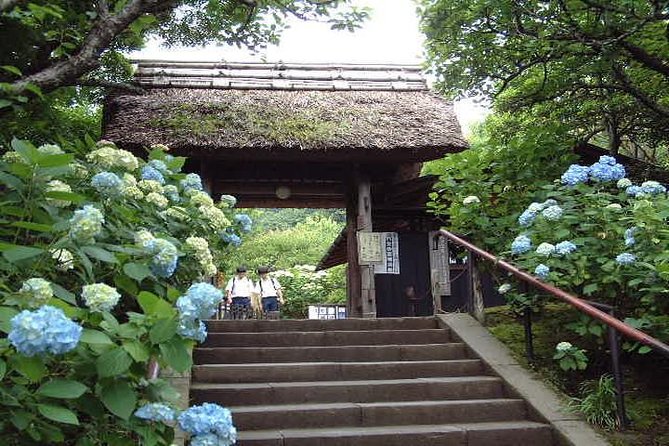
Meigetsuin is known as Hydrangea Temple because of hydrangea blooms on the grounds. If you happen to be there during bloom season, this one can turn into a standout. If not, it is still a calm Zen stop, just with a different visual emphasis.
Enoshima island for sea air and variety
Enoshima is only a short train ride west of Kamakura. It is an island connected by bridge, and it offers shrines and other attractions. If your day needs a coastal contrast after hours of temples, Enoshima is the easy add-on.
Also, the ocean theme in Kamakura is not one-note. You can go from Hasedera’s viewpoint to Enoshima’s sea energy and feel like the day got bigger, not just longer.
Kamakura hiking trails, the long-view option
Kamakura is surrounded by the ocean to the south and wooded hills in other directions, and there are hiking trails connecting temples along the way. If you want a more “walk through nature” feel instead of another stair-and-hall cycle, you might swap in a stretch of these trails.
Just be honest with yourself: if you are aiming for max temple count, stick to the shorter time slots. If you want fresh air, trails are where the day changes.
Lunch, snacks, and the surprise value of a good guide
Lunch might not be included, but a strong guide can still make it feel built in. Several guide stories highlight planning for specific dietary needs and finding restaurants that fit. One guide even went out of the way to find gluten-free options, which is not something most day-trip guides can pull off reliably.
That same approach shows up in how guides handle ordering and pacing. If you want to eat well without losing the afternoon, the guide can recommend a spot and help you time it so you are not eating at the end of your day with everything closing.
And do not underestimate the snacks. Hatosabure on Komachi Street is a simple moment, but it makes the day feel local rather than staged.
Price and value, what you are paying for
At $201.51 per person, this is not a cheap throwaway day trip. But it is also not just “a driver with a map.”
You are paying for a licensed local English-speaking guide, a private format, and the ability to choose your stops rather than follow a fixed crowd route. The guide also includes the key pain-point solution for Tokyo to Kamakura travel: navigation using public transportation while keeping you on schedule within the 8 hours.
What is not included matters for budgeting. Transportation fees, entrance fees, and lunch are on you. That said, you will likely spend less time figuring things out, and that time savings is real money when you are traveling.
If you are traveling with a partner or small group and you want a smoother, more personal day than a bus tour, the value starts to make sense fast.
Who should book this Kamakura walking tour
Book it if you want:
- A private guide who can adjust the day when you change your mind
- Great Buddha plus sea views, plus at least one nature-focused stop like bamboo
- A worry-reduced way to handle Tokyo to Kamakura travel by train and bus
- English guidance that helps you understand what you are seeing, not just where to stand for photos
Skip it, or choose a lighter plan if:
- You hate walking and crowds
- You want a super leisurely day with lots of free time, because this format is designed to cover major areas within the 8 hours
- You are strict about costs and do not want to add entrance fees or lunch later
Should you book this Kamakura day trip?
Yes, if you want to make the most of one day outside Tokyo and you like the idea of tailoring your route. The best part is not any single temple, it is the way the guide keeps the day moving while still leaving room for what you care about, whether that is Zen stops, ocean viewpoints, or eating something specific on Komachi Street.
If you are the type who enjoys choosing your own highlights and letting a local guide handle the logistics, this tour fits very well. Just pack comfortable shoes, and plan a little extra for entrances and lunch so the day stays stress-free.
FAQ
How long is the Kamakura private walking tour?
The tour is about 8 hours, and the travel time from Tokyo to Kamakura is included in the total.
Is this tour private or shared with other people?
It is a private tour/activity, so only your group participates.
How many places can I visit in Kamakura?
You can choose your stops, with options described as 3 to 4 sites for a personalized tour, and the experience also notes choosing about 4 to 6 sites from the included list of possible places.
Do I get picked up in Tokyo?
Pickup is offered, and you meet the guide on foot within a designated area of Tokyo.
What is included in the tour price?
A licensed local English-speaking guide is included, along with a customizable tour of the sites you choose, plus a mobile ticket.
What is not included in the price?
Transportation fees, entrance fees, lunch, and other personal expenses are not included.
Are admission tickets always free at the stops?
Not always. Some sights are listed as free, while others note that admission tickets are not included.
Is there free cancellation?
Yes. You can cancel up to 24 hours in advance for a full refund. If you cancel less than 24 hours before the start time, the amount paid is not refunded.
Are service animals allowed?
Yes, service animals are allowed. The tour is near public transportation, but it is still a walking tour.
More Walking Tours in Tokyo
More Tours in Tokyo


More Tour Reviews in Tokyo

Not for you? Here's more nearby things to do in Tokyo we have reviewed


Kamakura Day Trips, side by side.
 ★ 4.5Kamakura & Enoshima Day Trip including Temple TicketsFrom $581,375 reviews
 ★ 4.5Mt. Fuji, Kamakura, Big Buddha, & Lake Ashi Day TripFrom $49867 reviews
 ★ 4.5From Tokyo: Kamakura & Enoshima 1-Day Bus TourFrom $66189 reviews
 ★ 5.0Kamakura Historical Walking Tour with the Great BuddhaFrom $98129 reviews
 ★ 5.0Kamakura Private Tour: Temples, Nature, and the Great BuddhaFrom $98121 reviews
 ★ 5.0Kamakura Walking Tour – The City of ShogunFrom $35100 reviews
 ★ 4.1Kamakura & Enoshima Day Tour with Pickup & Train RideFrom $1361 reviews
 ★ 4.8Kamakura: Private Guided Walking Tour with Local GuideFrom $10660 reviews
This tour also belongs to